Category: Wild Foodism
Sassafras: Beauty and Utility
How To Find Mushrooms In Dry Weather


Any forager will tell you that mushrooms are abundant when rainfall is plentiful.
The reason for this correlation is simple: fungi love water.
Nearly every stage in the life cycle of a fungus requires water — from spore germination, to nutrient uptake, to reproduction, to spore dispersal.
But water isn’t always plentiful. Sometimes it’s scarce. During prolonged absences of rain, many foragers have difficulty finding mushrooms.
I count myself as someone who finds fewer fungi during dry spells, but I’ve also learned how to improve my chances of finding at least a few prized mushrooms when rain is scarce.
In a brand new video, I share 5 tips that will help you find mushrooms in dry weather.
You can watch the brand new video here.


Even when rainfall is plentiful, you probably won’t find many mushrooms in alvars. Instead, you’ll see rare plants that grow nowhere else. To learn about a federally endangered plant that thrives in alvars, check out this recent Instagram post.
Thanks for reading and watching!
— Adam Haritan
SUMMER SOLSTICE “BLACK BALSAM”: A DIVINELY FEMININE LIBATION
Love That Lovage

By Maryann Readal
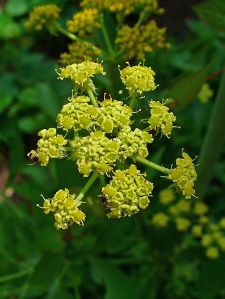 Lovage, Levisticum officinale, is The Herb Society’s Herb of the Month for June. It can be a difficult herb to find in nurseries where I live in Texas. This spring, though, I did find a nice-looking lovage plant and decided to give it a try. After doing some research, I learned that lovage is native to the Mediterranean area and Southwest Asia. It is an easy-to-grow perennial that can reach a height of six feet and a width of three feet. Needless to say, I had it planted in the wrong place, and I had to move it to give it more room to grow. It dies back in the winter, but returns in the spring. It can be cut back in midsummer to control its height. Lovage thrives in sun or partial shade and needs well-watered soil. If it does not receive enough water during the…
View original post 746 more words
Is This Edible Mushroom Toxic On Certain Trees?
Greetings,
Before I share a brand new video, I’d like to remind you that Trees In All Seasons is currently open for enrollment until Monday, May 22.
This online course teaches you how to confidently identify over 100 trees in every season — spring, summer, fall, and winter. When you enroll, you gain immediate and unlimited access to over 75 exclusive videos that lay the groundwork for successful tree identification.
You can register and learn more about the course here.
Tree identification is an excellent skill to learn if you are interested in foraging mushrooms. Many edible mushrooms grow in association with trees. When you learn the basics of tree identification, your understanding of fungal ecology improves.
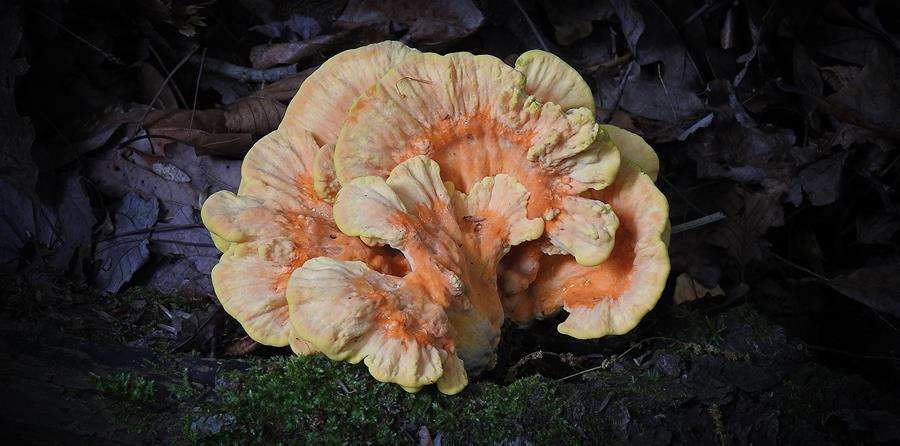
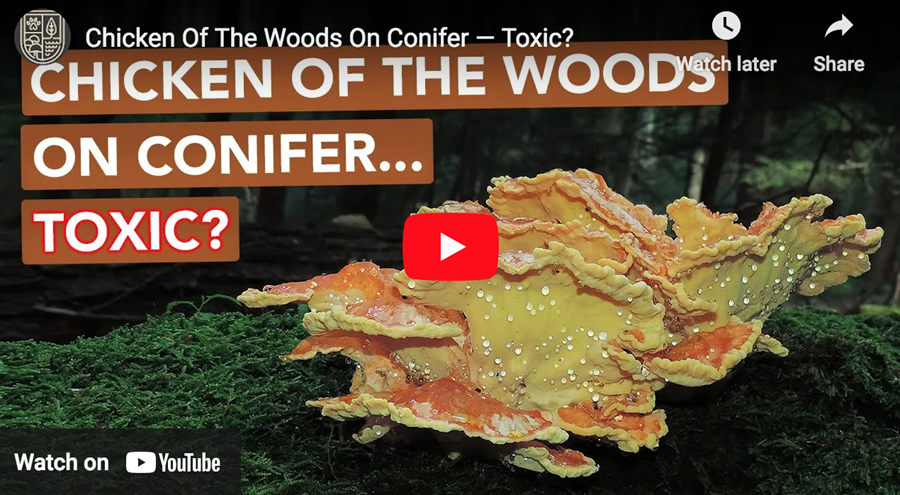
One popular mushroom that grows in association with trees is chicken of the woods. Despite its popularity, chicken of the woods sometimes has a questionable reputation. When this mushroom grows on certain trees (e.g., angiosperms), foragers praise it and consider it undeniably edible. When this mushroom grows on other trees (e.g., conifers), some foragers vilify it and consider it suspect.
I recently spent some time in a conifer-rich woodland and decided to film a video in which I share my thoughts on this controversy.
Is there any truth to the claim that conifer-derived chicken mushrooms are potentially toxic?
You can watch the new video here.
Thanks for reading and watching. If you’d like to improve your foraging skills by learning how to identify trees, consider enrolling in Trees In All Seasons by Monday, May 22.
—Adam Haritan
Not Every Conifer Is A Pine

Greetings,
Before I share a new video with you, I’d like to mention that I’ll be opening up registration for my online tree identification course on Monday, May 15.
Trees In All Seasons is an online video course designed to teach you how to successfully identify over 100 trees in every season. Registration will be open for one week only — from Monday, May 15 to Monday, May 22. Once you register, you will have immediate and unlimited access to the course.
If you’re interested in improving your tree identification skills, check your email on Monday for more information on how to register.
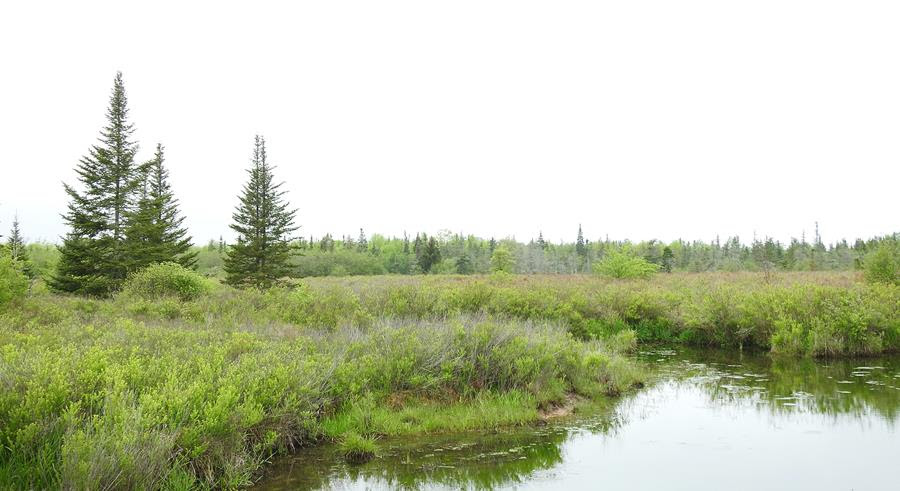
Two years ago, I explored a remote bog in northern Pennsylvania. It was the peak of the autumn mushroom season, but I wasn’t there to look for mushrooms. Archery season had just begun, but I wasn’t there to harvest deer either.
After a few hours of wandering through the bog, I eventually encountered the only person I’d see the entire day. His name was Bill and he was heading home for the day.
Taking one good look at Bill, I immediately knew why he was in this isolated part of Pennsylvania. He was hunting deer.
Bill, on the other hand, wasn’t too sure why I was there. He noticed that I had no hunting gear, no camouflage, no truck, and no apparent desire to look for deer.
Instead, I had a tripod, a camera, and a paper map printed off the internet.
After exchanging formalities, I explained to Bill why I was in the bog: to film and photograph balsam fir.
Bill was a lifelong woodsman. He hunted. He fished. He knew his way around the woods better than most people did. Bill spent his entire life in Pennsylvania, but he had never heard of balsam fir.
“We call them all pines,” he said as he watched me point out a few balsam fir trees.
Pines. I wasn’t too surprised to hear that response. Heck, I could even relate. Years ago, I called every conifer a “pine.” It didn’t matter if I was looking at a spruce or a fir. As long as the tree had evergreen leaves and woody cones, it was a pine.
Today, things are different. Disciplined tree study has allowed me to appreciate the beautiful differences between conifers. I now love observing the distinctive Christmas tree shapes of balsam firs. I love watching fir cones fall apart in the autumn season. I love smelling fir leaves (they smell better than any conifer I’ve ever smelled). And I love knowing that firs, despite being in the pine family, aren’t true pines. They’re firs, and thank God they are.
Noticing the distinctions between conifers is an important skill if you want to learn how to identify trees. Tree identification skills are important if you want to improve your ecological literacy.
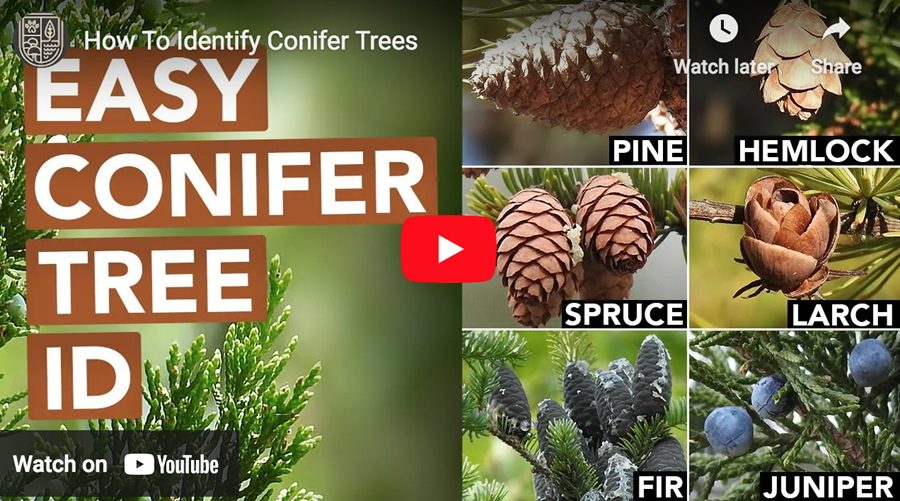
To get you started, I created a video in which I teach you the major differences between conifers.
You can watch the brand new video here.
Thanks for reading and watching. If you are interested in learning how to identify over 100 trees, check your email on Monday for information on how to register for Trees In All Seasons.
-Adam Haritan
Foraging The Most Inconspicuous Edible Wildflower

A typical walk in nature can be slow. From an outsider’s perspective, it can be painfully slow. A 1-mile walk might take a naturalist 4 hours to complete — a pace 12 times slower than the average walking speed.
While it’s true that a turtle could probably outpace a botanist walking through a flowering floodplain, the point of any nature excursion isn’t momentum.
It’s observation, education, and integration.
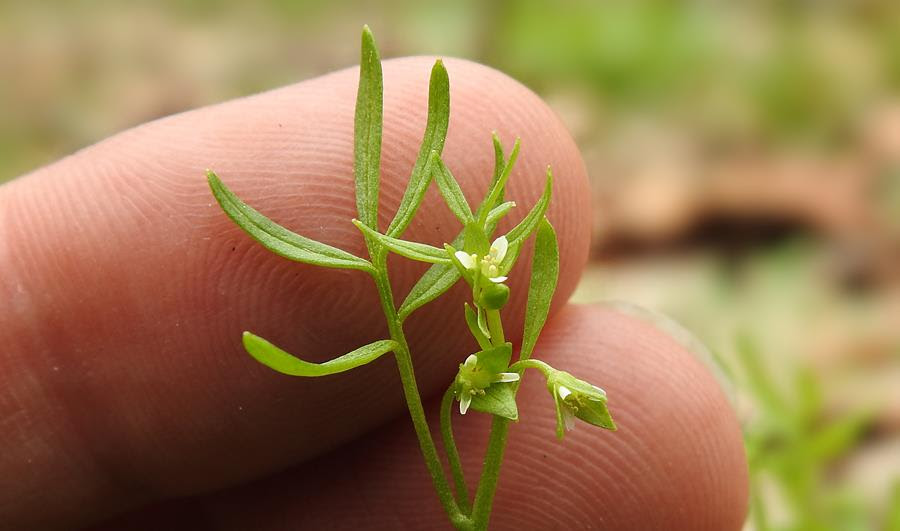
On several walks this year, I’ve halted my pace in order to observe a particular wildflower. Known as false mermaidweed, this plant grows in floodplain forests along rivers and streams.
False mermaidweed is unlike other plants for a few reasons, one of which is the size of its flower. Only a few millimeters wide, this flower is among the smallest of any wildflower in nature. It’s rarely seen by people walking through the woods, which is why even a slow pace isn’t recommended for proper observation.
Rather, complete stillness is.
Despite its small size, false mermaidweed offers immense value. Its stems, leaves, and flowers are edible and can be harvested during the spring season.
To learn more about this inconspicuous edible plant, check out the brand new video!

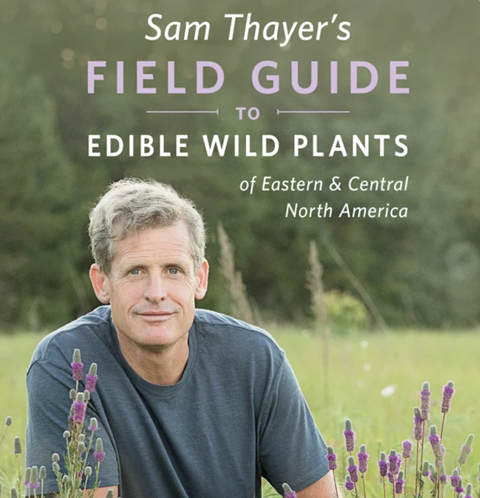
Speaking of edible plants, Sam Thayer is releasing his 4th book on edible plants of North America. Sam is a renowned author, forager, and teacher who travels the continent in search of wild food. His brand new field guide features over 650 edible species and 1,700 color photos, as well as an innovative system for identifying plants during their edible stages. Anything that Sam publishes is brilliant, and this book will be no different. You can pre-order your copy here.
Thanks for reading and watching, and thanks for your continued support!
-Adam Haritan
Perennial Herbs for the Garden
By Peggy Riccio
 I love being able to step out into the garden and snip fresh herbs whenever I need them. Yesterday, I was making ham and bean stew in the crockpot. I was inspired to add thyme so I cut off a few sprigs from the thyme growing in the front of the house. I looked around and snipped even more herbs: cutting celery, oregano, sage, and rosemary. Except for the cutting celery, these are perennial herbs that should be in everyone’s garden. They can be tucked in the ornamental bed just like any other perennial plant. In the spring, you can purchase the small plants from a nursery or you can ask a friend for a cutting or division. Once you have them in your garden, you can enjoy them year-round and nothing will bother them, not even deer.
Cutting Celery
 Botanically speaking, the cutting celery is a…
View original post 702 more words
Ancestral Spring Greens: “Viva La Italia”! — Gather Victoria

I am passionate about ancestral foods and none are more ancient than the wild greens known today as weeds. So in honor of International Women’s Day, I’ve decided to share these spring recipes from Gather Victoria Patreon, Wild Green “Erbazzone” Pies, and Wild Green Pancotto Soup. What, you may ask, do wild weedy greens such…
Ancestral Spring Greens: “Viva La Italia”! — Gather Victoria
 Paths I Walk
You must be logged in to post a comment.