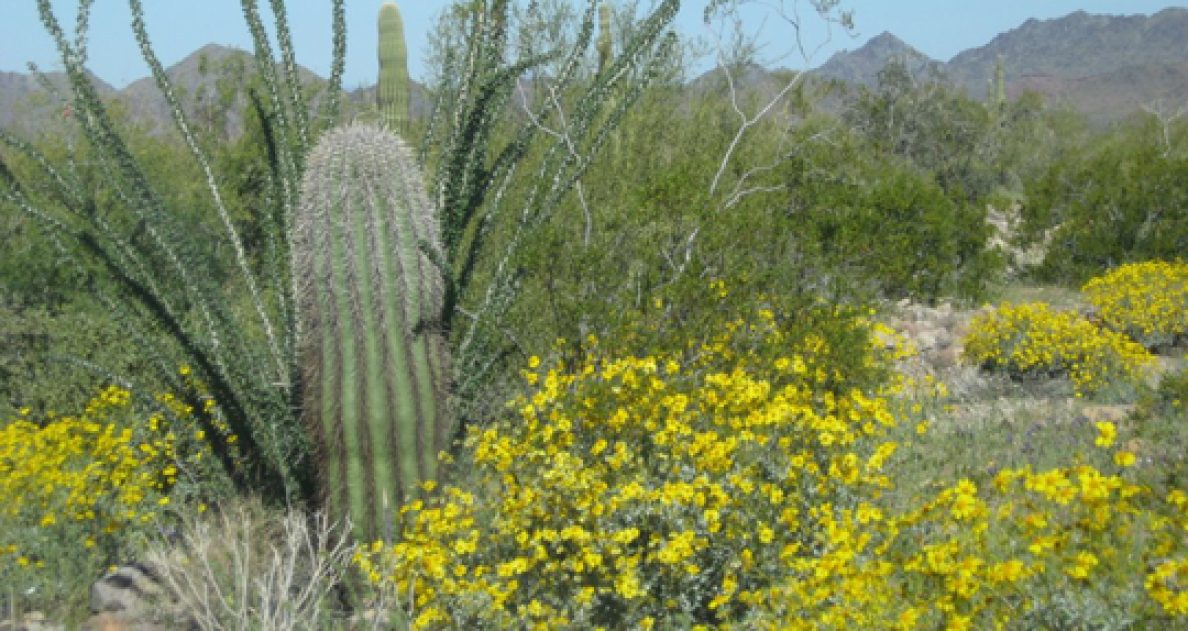
“Our relation to the natural world takes place in a place.”
The American poet Gary Snyder wrote those words. I don’t think he’s wrong.
Every time we harvest a wild mushroom, we do so in a place. Every time we add a new bird to our life list, we do so in a place. Every time we gather spring water and admire a wooded valley, we do so in a place.
Alvars, bogs, fens, forests, marshes, prairies, savannas, and swamps are all places where life abounds. When we refer to these places specifically as “ecosystems,” a few interesting things happen: We see important connections, we see intricate relationships, and we see where humans fit into the story.
If you want to strengthen your connection to nature by learning these fascinating ecosystems, consider enrolling in Exploring Wild Ecosystems. This is my newest online course designed to improve your ecological literacy.
First, I want to say thank you to everyone who registered for the upcoming Old-Growth Forest Ecology Outing on May 31 and June 1. Both programs are sold out. Stay tuned for more Learn Your Land events this year!
I also want to mention that Exploring Wild Ecosystems will be open for enrollment on Monday, May 12. Thisis my newest online course intentionally designed to improve your practical knowledge of ecology. If you’re looking to develop ecological literacy and become a better naturalist, consider enrolling on Monday, May 12.
And now on to the newest video…
If you’ve spent enough time in tick-prone areas, you’ve probably seen ticks sucking the blood of deer. Logically, it makes sense that deer would at least be carriers of the Lyme disease spirochete. After all, white-footed mice and other mammalian tick hosts can be reservoirs for the bacteria.
But white-tailed deer are different. Their blood isn’t like the blood of other animals.
Scientists have been studying the relationship between deer and Lyme disease for decades. The newest research is quite fascinating, and in a brand-new video, I address some of the misconceptions surrounding the role of deer in transmitting Lyme bacteria.
Do deer ever get Lyme disease? If they don’t, what is it about deer that makes them immune? If deer are immune, why do ecologists still advocate for a reduction in the deer herd as a way to reduce Lyme disease rates in humans?
I’m really excited to announce that I’ll be leading an Old-Growth Forest Ecology Outing in a few weeks, and I’d love for you to join me.
This outing offers a unique in-person opportunity to learn the rich ecology and distinctive features of older forests.
We’ll begin the day by walking through a mature upland hardwood forest and discussing forest ecology. In the afternoon, we will explore a magnificent old-growth conifer forest and discuss old-growth forest dynamics.
In addition to learning key characteristics of mature and old-growth forests, participants will learn tree identification techniques; mushroom ecology and identification; the influence of geology on forest development; ways to interpret forest history; the role of fire as an ecological agent; old-growth forest misconceptions; and much more.
This event will take place in Cook Forest State Park. Located in northwestern Pennsylvania, Cook Forest is home to one of the last remaining old-growth forests in the entire region, currently hosting 11 old-growth areas totaling over 2,300 acres. One of the areas within the park, the Forest Cathedral, contains arguably the finest concentration of old-growth trees in the northeastern United States. This remarkable area is home to dozens of old-growth eastern white pine and hemlock trees, many over 300 years old and towering above 140 feet in height.
This outing is the perfect opportunity to learn, explore, and connect with nature in a truly spectacular setting.
Interested? Here are the details:
When: Saturday May 31, 2025 or Sunday June 1, 2025 (Choose one date; both programs will cover the same material.) Where: Cook Forest State Park, Pennsylvania Time: 10:00 am — 4:00 pm
To maximize your learning experience, space is limited and registration with payment in advance is required to secure your spot.
Years ago, I didn’t know anything about morel mushrooms. I didn’t know what they looked like. I didn’t know how they tasted. I didn’t even know they existed.
Then one day I attended a mushroom program with a local club. Experts in the club introduced me to morels. “Here’s what morels look like,” they said. “You’ll find them all over this park.”
“Great,” I thought to myself. “I now know everything I need to know.”
Except I still hardly knew anything.
Sure, I quickly learned how to identify morels, and I heard a few things about looking in certain areas: “Look for elms, apples, and poplars. Morels really like sweet soil.”
But where would I find elms, apples, and poplars? What the heck is sweet soil?
It soon dawned on me that knowledge of mushrooms wasn’t enough. If I really wanted to improve my skills, I needed to learn tree identification. I needed to learn ecology. I needed to learn geology.
And so I learned as much as I could. Slowly but consistently, I developed a wider set of skills. Eventually, I became a better mushroom hunter.
Today, I interact with wild landscapes a bit differently than I did back then. I now look for connections. I look for relationships. I look at the bigger picture.
All this to say, if you want to find morels this year, I strongly encourage you to learn the connections that bind morels to their ecosystems. In a brand new video, I discuss how to approach morel mushroom hunting through a more holistic lens.
Speaking of learning, consider enrolling in Foraging Wild Mushrooms to improve your foraging skills.
I created this 4-season online course to help you become a successful mushroom hunter. Included in this course are instructional videos on mushroom ecology, mushroom biology, common edible mushrooms, medicinal mushrooms, poisonous mushrooms, cooking techniques, and medicine-making.
To find good medicine, look in a forest. In a forest, you’ll encounter plants that have the ability to heal human ailments.
Many years ago, I learned about the medicinal properties of a particular woody plant. This woody plant, when applied to my face as an extract, improved my poor complexion.
Over the years, I’ve been able to maintain a decent complexion thanks to this plant (and thanks to significant lifestyle changes). While I no longer rely on this plant to heal my physical ailment, I do rely on it to address an existential problem.
Plaguing the human species, this problem can be solved if we know where to look.
I’d also like to mention that I’ll be part of the Wild Ones Western PA Chapter’s annual symposium on March 26, where I’ll be joining a panel discussion focused on strengthening communities and native habitats.
Humans try to avoid these four conditions. Old trees embrace them.
This is why I advocate taking long walks in the woods. In wooded ecosystems, we sometimes discover the ragged splendor of old trees.
On a recent walk in a hardwood forest, I rediscovered a tree I had first encountered many months ago. Rough, weathered, worn, and warped, it’s one of the most remarkable trees I have ever seen.
If you want to find morel mushrooms this year, here’s a tip: don’t wait until spring to begin your hunt.
This might sound like unconventional advice. After all, current temperatures are too cold for morels. Wood frogs haven’t even bred yet. Spring is still another 50 days away.
All these things are true. But this next statement is also true: you can drastically improve your future chances of finding morels by doing a few things right now.
In a brand-new video, I discuss several tactics we can implement immediately. I also share my predictions for the upcoming season. Will the mushrooms be plentiful this year? Will they be scarce?
In anticipation of the winter season, I am excited to announce that two Learn Your Land online courses are on sale this week.
To improve your foraging skills, consider enrolling in Foraging Wild Mushrooms.This 4-season online course is designed to help you safely and successfully harvest wild mushrooms from the forest, from the field, and even from your backyard.
To improve your tree identification skills, consider enrolling in Trees In All Seasons. This online course teaches you how to identify 100 trees in every season. If you want to develop the confidence to look at a tree and say, “That’s black spruce, no doubt about it,” or “That’s most certainly sourwood,” or “That can’t be anything but mockernut hickory,” consider enrolling today.
These courses are self-paced and presented entirely online. Once enrolled, you can start, stop, and resume at any time.
It isn’t an easy question to answer, but I try my best to explain what it is about trees that makes me feel good.
I love the food trees offer. I enjoy the medicine trees provide. I like the shade trees cast. And I admire their beauty.
But there’s something else about trees I really appreciate: their ability to tell stories.
As it turns out, trees tell remarkable stories of peace, tragedy, death, and — believe it or not — democracy.
One notable tale that trees tell quite well is the story of America’s birth as a nation. While many people associate this story with icons like the Liberty Bell and the Declaration of Independence, the founding of the United States is also strongly connected — both physically and symbolically — to one particular tree.
Tall, majestic, and extremely useful, this tree has been famously labeled “the tree that built America.”
Speaking of trees, I was recently interviewed on Harvesting Nature’s Wild Fish and Game Podcast. In the interview, we discussed how trees can help you become a better hunter and observer of wildlife.
You must be logged in to post a comment.