Queen of Sheba – secretsoftheserpent

By gserpent

Source: Queen of Sheba – secretsoftheserpent

The tale of the Queen of Sheba has been embellished by several groups of people or religions that try to claim her as their own Queen. It is not enough to just reject the lie. Everyone has to make up their own version of the lie to get in on the money train. The Queen of Sheba was the title for several ladies in history, but not one of them is outside of Egypt. I’m going to show you who the Queen of Sheba was and why there were other ladies with this title.

If you have read my Patriarch Pharaohs post, you already know who the Queen of Sheba was. In this post I will go into more detail and give a few surprises. Again all the credit to finding Queen of Sheba goes to Ralph Ellis. This post will use his research with some of my own interpretations. We can’t talk about the Queen of Sheba without mentioning King David or King Solomon. King David and King Solomon were identified as Lower Egyptian Pharaohs. King David was Pharaoh Psusennes and King Solomon was Pharaoh Sheshonq(See Patriarch Pharaohs).

King David’s official title was Pa-seba-khen-nuit and it means “My Star Appears or Shines in His City”. King David is known for the Star of David, but what was this star? Researchers will tell you it is the morning star and had to do with the rising of Venus or the sun. Jesus was said to be of the line of David and he has a star in his story too. What is up with all the stars? Just like Pharaohs in Egypt had several names, so did the royal females. The Pharaoh had to have a wife from the bloodline in order to rule. Just like the Pharaohs were considered gods on earth, all royal ladies were considered a version of Isis. Isis was the Queen of the Heavens or Queen of the Stars. The royal wives were considered God’s wife and when they had a son that would become ruler, they were considered God’s mother. In somewhat the same manner, when a daughter was born of the bloodline, one of her titles was Bathsheba. Bathsheba means ‘daughter of Sheba’ or ‘daughter of the star’. When she became Queen she was known as ‘Queen of the Stars’ or ‘Queen of Sheba’. The Star of Isis is the Star of David.

Why would all these ladies be considered to be a star? The lower Egyptians were considered the watchers of the Pyramids. This didn’t mean they literally watched the pyramids themselves. It was astronomical. They watched the stars or heavens from them. That is what the platform on the top of the Great Pyramid was for. What the patriarchs don’t want you to know is that it was a priestess who did the observing. Whether is was the actual Queen or a priestess that represented her, it is hard to tell. I think that on really important occasions it was the Queen herself and maybe on lesser important events it was a priestess representing her. Another title the Queen had been was ‘Mother of the Breasts’. The breasts were the Great Pyramid and the Second Pyramid. The Pyramids were the breasts of Isis. The Pyramids were seen to cause the flooding of the Nile and it brought them nourishment. Sheba or Seba in Egyptian had four different meanings: star, oath,seven and door. Every seven days the BathSheba or a priestess would open the door to the Great Pyramid then goto the top. This ceremony was called the Shabbath or Sabbath. Why is a Queen or priestess on top of the Great Pyramid leading the ceremony? Because the sacred feminine is the capstone to the Universal Temple. Even though King David and King Solomon are heroes to the patriarchs, they did these ceremonies. They also built temples to several gods. A priestess or Queen of the Stars on top of the Pyramid is why people put a star on top of a Christmas tree. The tree is the Great Pyramid. It used to have a lighted walkway that spiraled all the way to the top. Just like Christmas tree lights. The star the wise men were following at Jesus’ birth was Mary. She was Egyptian, so she was a Queen of the Stars or a Queen of Sheba.

In Patriarch Pharaohs I showed you the famous Queen of Sheba was the daughter of King David. Her real name was Maakhah Tamar. King David raped this daughter and got her pregnant, so he married her. Her mother must have been too old to have anymore children or maybe something happened to where she couldn’t have anymore kids. The texts only say she became a widow. This is usually what happens when the Queen gets to old to have kids and the Pharaoh takes on another wife of the bloodline, usually one of his daughters. Maakhah Tamar went from Bathsheba(daughter) to Queen of Sheba, just like the legends and texts say. She had a boy and they named him Sheshoq or Solomon. Fourteen years later King David was on his death-bed. They brought a prostitute in named Abishag to try to screw him out of his death, literally. Abishag means ‘to ravish my father’. This is where the term ‘to shag someone’ comes from. They brought another daughter or maybe a son in to do this. Maybe it was Maakhah Tamar herself, the texts are vague. When it was obvious that sex wasn’t going to work, Maakhah Tamar brings Solomon in to King David and pleads for him to make Solomon Pharaoh of Egypt. David agrees and calls for the priests. The priests and family make him King Solomon at age 14. They bring Naamah in from Upper Egypt to be his bloodline Queen. At this time Maakhah Tamar goes back to Upper Egypt to rule at the age of 32 or 33.

This is where the legends of the Queen of Sheba begin. It is said that she was the Queen of the South and she was a dark or dusky maiden. Upper Egypt is south of Lower Egypt. She was coming from Thebes and going to Tanis. So she was the Queen of the South. Being dark or dusky is the same as calling Mary the black Madonna. It is code for the black or dark lands of Egypt. It had to do with the Nile flooding and making the land black or dark(fertile soil) after it receded. Saying that she came from Ethiopia is because of the Kebra Negast. When this book was found the patriarch George had to bring it in line with the Bible. Couldn’t let this book give away all the lies of the last 1300 years. So he made everything that had to do with Upper Egypt into Ethiopia. Ethiopia was a province of Egypt, so he was being loose with the truth. In this manner she was the Queen of Ethiopia.

By now you understand that Maakhah Tamar is the Queen of Sheba. In the legends she wanted to meet this wise king and bring him gifts. It had been seven years since she had seen her son. He was given the crown at 14 and she went back to Thebes. She had heard how well he was doing and wanted to go see for herself. I have a little trouble excepting this because in the Egyptian texts it says that all the gold, silver and spices she was bringing was to pay tribute, so he wouldn’t attack Upper Egypt. I don’t doubt she wanted to see her son, but she wasn’t bringing all the treasures just because he was wise. He wanted to rule all of Egypt and she was in charge of the south. She brought all the treasures to calm him down and seal the deal by marrying him and having sexual relations with him. And people wonder where incest came from. She had a son from this encounter and named him Menelek. Once he was old enough he wanted to go see his father. While he was there he decides to steal the Ark of the Covenant. I showed in the Ark of the Covenant post what the Ark actually was. All Pharaohs had one and Menelek had a right to be the next Pharaoh. Problem was that Solomon had sons all over the place. Menelek stole it and took it back to Upper Egypt to show everyone he was the rightful heir to the throne.

Mainstream archeologist will say that the Queen of Sheba came from Saba in modern Yemen. They have it wrong. It is the other way around. The story of Jeremiah in the bible is how the people got to Saba. Nebuchadnezzar invaded Israel and Judaea in 597 BCE. A group of people left Judea and headed toward modern Yemen to a town they called Marib. Marib means wisdom of Maakhah. It was not named Saba till much later. Jeremiah was blaming this group of people for the fall of Jerusalem. They worshipped the Queen of Heaven, Maakhah Tamar or Isis. All are the same. When they got to Yemen they built the Marib damn, so they could grow their spices and became very rich. Spices in these ancients texts usually refers to hemp or marijuana. They got rich off of the left-handed cigarette. This group of people had the Tanakh with them. The Tanakh was an ancient book that Joseph Flavius couldn’t get his hands on because it had left Jerusalem with these Sheba worshippers. About 630 CE the Marib damn breaks and this group of goddess worshippers head back to Jerusalem. They are met by Mohammed and his thugs. He kills all of them and takes the Tanakh. He uses it to write the Koran. Mohammed, real name Lothar Schmalfus, was a pope reject. All he wanted was revenge on Christianity. He took the Tanakh and filled it with hate to get people to fight for him. This is why there is historical truth in the Koran. Other than that it is a book of hate to get people to fight a war.  Make no mistake, I am not taking up for Christianity.  As far as I am concerned, this planet would be better off if all religions were thrown off of it.

The rulers of this world make sure the masses stay in ignorance, superstition and fear. All this history was hidden and lost. Very few people know the true history of this world. That is why I started this blog. If people can be shown the truth, ignorance goes away and hopefully superstitions will follow. Getting rid of fear is up to you. Realize the power that you have as an individual. I have found that knowledge is power. Ignorance is the darkness of chaos and knowledge is the light of the Cosmos.

I Am A Pagan-Buddhist Witch

Connection as the Core Spiritual Philosophy in the Druid Tradition | The Druid’s Garden

It seems that religions/spiritual paths have a set of core orientations or philosophies that form the underlying foundation upon which the religion/practice rests. This core philosophy is like the seed from which the entire “tree” of the religion grows–the tree might branch in different directions, but all of those branches eventually lead back to that single seed. For example, in many forms of Christianity, we might see that core seed as salvation; this seed forms the bulk of Christian thought, belief, and action. In some forms of Buddhist thought, the seed is freedom from suffering. These underlying “seeds” or philosophies makes that particular path unique, form the foundation of what is considered right thought and right action on that path, give the path purpose, and that offers particular gifts to its practitioners or to the broader world.  And most importantly, this seed drives a number of underlying morals, values, and assumptions that practitioners of that path hold.


Seeds for new traditions!

Druidry is many things to many people, and the joke is that if you ask five different druids about what druidry is, you’ll likely get seven different answers. As scattered and diverse as the modern druid movement seems to be–I believe, we too, have a core philosophy (with at least three expressions of that philosophy), and I’m going to explore this underlying “seed” of our tradition in today’s post.


Sources of Inspiration

The flow of awen for this post comes from a few places, and I want to acknowledge those first. Part of my insight comes from being in a leadership role in a major druid order in the US. I serve as the Archdruid of Water in the Ancient Order of Druids in America, and in that role, I interact with a lot of different kinds of druids at multiple points along their paths. I interact with people when they find druidry for the first time–what they are seeking, what they hope to find, and later, I see them as they move through our curriculum deepen their own understanding and interaction and the insights they have. I get to read their exams at the end of their time working through parts of our curriculum–so I’m hearing of the experiences of many on the druid path who have taken up this spiritual practice in a serious way. Additionally, part of my inspiration is personal – it comes from my experience in working through the complete curriculum in two druid orders, the AODA (1st, 2nd, and 3rd degrees) and the OBOD (bardic, ovate, and druid curricula) and coming to deep understandings over decade of time about that work.  Finally, I have attended and been part of a lot of gatherings, online groups, and various initiatives, so I interact with lots of druids frequently.  This is a synthesis of what I’ve read and conversed with others, and what I’ve generally understood over a period of time. But there is also another piece here– I’m also considering the overall trajectory of the druid tradition itself–not what we are, or were, but where we are heading and what potential exists for druidry in the future.


Therefore, this post is my take on the “seed” of our tradition, the underlying or core philosophy that drives much of druid practice. You might disagree with me, or want to add or subtract from this list–please do so and share in the comments what your own thoughts might look like.


On the Druid Revival

To understand the underlying core philosophy of druidry, we first need to delve back into the history of the druid revival and then move into the present day.

It is no coincidence that the very roots of the druid revival came about at the same time that industrialization rose in the British Isles. Farmers and peasants who had lived, sustained, and tended the land for countless generations were driven from their homes to work in factories (see, for example the “Highland Clearances” and “Enclosure Acts” in Scotland). During this time, the rise in machine-based worldviews, that is, that humans are machines (and cam work like machines, act like machines), and that nature is just another machine, became dominant (we see the outcome of this thinking everywhere today, particularly, in industrialized agriculture).


Our spiritual ancestors watched this scene unfolding: the land stripped of her resources for industrialization and progress, the growing emphasis on produced goods over communities, the rampant pollution and exploitation industrlization was creating, the relegating of humans, animals, and the land to that of a machine. It was during this period of time that our spiritual ancestors reached deep–and creatively–into their own history to return to an earlier time where humans and nature were connected. The druid revival movement, then, sought to reconnect with nature throug ancient roots in a time where society was heading in the opposite direction. I believe it is the same reason that people today are so drawn to the druid tradition–there is “something” missing for them and it is that connection to nature.


Now, a lot of the early druid revival works and authors have been discredited for creating “ancient” texts, drawing upon “found” materials that they had created, I find these attempts to discredit them problematic because they do not understand the context. These early attempts at bringing back the ancient druid traditions had a lot to do with people’s response to living in an age that was quickly stripping the lands of their resources and filling the skies and rivers with pollution. The important thing here is that druid revival tradition that we practice today was a spiritual response that emerged during the very beginnings of this current age of industrialization, and, therefore, offers us much wisdom as we are living with the outcomes and consequences of this same movement.


Industrialization, with so much promise at the time, much harm not only to our living earth, but to the pre-industrial communities and customs of the common people (a topic I picked up in some depth in my last series of posts on “Slowing down the Druid Way”). It is unsurprising, then, at the persistence and growth of the modern druid tradition in these times. For over 300 years, the ancient druids have offered our tradition sources of inspiration and reconnection. It is in this perpetual seeking of reconnection that we can see how druidry is, in some ways, a very human response to the larger wheels of industrialization that have been thrust upon most of us in the Western world.


[…]

Source: Connection as the Core Spiritual Philosophy in the Druid Tradition | The Druid’s Garden

The Holy Grail – secretsoftheserpent

By gserpent

images

The Holy Grail was basically started by the Arthurian legends. The legends were coded with heretical information about the blood line of the biblical Jesus. That is why medieval writers came up with an alternative for the Holy Grail. San greal means “Holy Grail” and sang real means “royal blood”. I’m going to give you the true meaning of the Holy Grail and it was around way before Christianity or any other patriarch religion.

Different traditions describe the Holy Grail as a cup, dish, stone or bloodline. I have shown you that the biblical Jesus was royalty and he had several children, but I also showed you that he did not die on the cross(see His Royal Jesus). The legends saying that Joseph of Arimathea used this cup to catch the blood of christ is code. Joseph of Arimathea is Josephus Flavius and he is the one the devised Christianity and the bible. The code is showing who wrote the bible(see Ralph Ellis’ work). These legends have grown men running around looking for a physical cup. The number one way I know the cup legend is not real is that Da Vinci left the cup out of his Last Supper painting. Da Vinci knew it wasn’t a cup, but he did know the true history. That is why Mary Magdalen is in his painting. The other clue he left was the V shape of empty space between Jesus and Mary Magdalen.

When the Holy Grail is referred to as a bowl it is vessel or womb. It is not only referring to Mary Magdalen’s womb caring the blood line of Jesus, but also to the boat that carried her to France. The legends say the boat was without oars or mast. This means there are no men on the boat. The oval-shaped boats were always considered female, while the forces that make them move and steer were considered masculine. This is why all cars, boats and planes are known as she. But were back to the heretical bloodline of Christianity and that is not the original meaning.

When stones are referred to in the legends of the Holy Grail, they are referring to stones that fell from the sky. Most of all the religions have their own sacred stone. The Shetiya stone, the sacred stone at Mecca, the Omphalos stone, the Lingam stone and the Benben stone to name a few. All of them were meteorites and probably were magnetic. Why would all these religions have sacred stones that fell from the sky? As I showed in Lemurian Magic, meteorites fell from the sky as a result of the destruction of Tiamat. These stones could be sacred because they are a remembrance of the history of this world or they could see them as a piece of the actual remains of Tiamat. Most researchers will say they saw the meteorites as a piece of the sun, but Tiamat was known as the second sun.

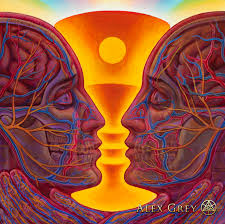
The original meaning of the Holy Grail has to do with the sacred feminine. The ancient symbol for the sacred feminine was always a V shape or a chalice. This is why Da Vinci put the V shape in his last supper painting. The legends of the Holy Grail usually say that it has miraculous powers that provide happiness, eternal youth or sustenance in infinite abundance. That is just what happens when you find the sacred feminine. You don’t search outside of yourself for happiness, you feel young and you have an abundance of love, forgiveness and energy . The sacred feminine is the key to the underworld(see Goddess Maat). You communicate with the sacred feminine subconsciously. The sacred feminine is your higher self. No matter what these patriarch religions have told you, spirit is feminine. The ancients knew man(and woman) came from the Goddess and would return to her. They even buried people in the fetal position. Nature is the living subconscious and the living sacred feminine.

To see how to really connect with your subconscious or the sacred feminine, see my Magic post. Be warned, you have to be ready to be seen. Seen by yourself. Are you ready to be alone with yourself? Are you ready to monitor your thoughts? The true meaning of baptism was symbolizing the soul falling into the amniotic fluid, then the person being born and taking your first breath as a child of the Goddess. This world does anything and everything to whip you into the masculine to lose that connection. The masculine human has thrown out the feminine. All humans are in masculine. This causes people to fear the feminine because they don’t understand it. When a person reconnects with the Goddess(sacred feminine), the ego or masculine becomes and agent for her. They find their authentic self. They start to see the lies of this world, which there are many, and they don’t fall for them anymore. They become an individual and take their first breath again. They are no longer the autumn leaf that can’t hold on, They are the tree of life. To the ancients a holy person was a whole person. The Holy Grail is the sacred feminine.

“The human child is born into the very lap of nature, his nurturing mother, and he accepts her fostering ministrations gratuitously. His relation to her is instinctive and spontaneous, and most intimate. But when with maturity and the emergence of intellect and reflection, the matter of maintaining his salutary relation to his benignant mother becomes an obligation demanding the exercise of a phase of his genius which is little known to average humanity and is developed only by the highest culture of his psycho-spiritual capability. It was never enough simply that he dwelt with nature as a chick under her wings, that he partook of her lavish gifts for his sustenance, that he accommodated himself harmoniously to her requirements, or even that he received her bounty with gratitude and delight. For the ultimate exaltation of his being from his cradling in her lap there is demanded a refinement of his aesthetic and intellectual faculties that is beyond the attainment of common humanity and has been rarely achieved by exceptionally evolved souls”.- Alvin Boyd Kuhn

Source: The Holy Grail – secretsoftheserpent

Dryads, Trees & the Fifth Element – Good Witches Homestead

The dryad is the spirit of the tree, its essential pattern. It is a living being linked to the tree and growing with it, but at the same time, it is a trans-temporal and trans-spacial creature, living in the Astral dimension as much as in the mundane world. When a branch falls off a tree or is pruned, the dryad spirit is still in the wood. It is not really correct to speak of “parts” of a spirit, but one might consider the spirit of the wand to be part of the tree’s consciousness.
Some writers suggest that trees withdraw their life from a branch when they sense it is going to be cut and there is doubtless something to such observations. Nevertheless, in my experience, the spirit always remains to some degree and can be awoken by enchantment when the branch is crafted into a wand.
Now, of course, orthodox mundane botany does not usually accord consciousness to trees. In the Alferic tradition and in most schools of Druidry, trees are considered to have spirit, mind, and consciousness, as well as will and emotions. Indeed, in my experience, trees have a larger proportion of emotion than intellect in their souls. They do not ratiocinate the way we do, but they do ponder and brood.
As Prof. Tolkien so rightly observed in Lord of the Rings, many trees today are sleepy. If the druid touches them and makes contact with their dryad spirit, they sometimes at first seem sluggish and hard to reach. Other trees respond immediately to such attention with the same kind of reaction many of us would have if suddenly touched by the mind of another being.

Still, it is misleading to anthropomorphize dryads. They share many of the spiritual qualities with us, but they do not think or live like human beings. In their present incarnation, trees are fixed and immobile. A great deal of their attention is directed into the ground through their roots and outward into the air through their branches and leaves. They do move, of course, in the process of growth and in harmony with the winds, rain, and sunlight. Deciduous trees drop their leaves and grow new ones, many drop seeds or flowers.

So there is a great deal of activity in trees but it is the sort that, in humans, remains largely unconscious. We too produce seeds and eggs, grow hair and nails and new skin, and throughout childhood, our whole body is growing. Even in adulthood, the body changes shape.

But trees have very different bodies and their spirits are diffused throughout their bodies without the distracting narrow focus of a brain steeped in language. Thus trees, unlike humans, have never suffered from the dichotomy of mind and body. If their consciousness dwells on different parts of their being, it is on the roots, the trunk, and the branches. The leaves are the most sensitive organs of trees, but the bark is also very sensitive, flowing with tree-blood underneath, just like skin.

Although many of the woods are traditionally associated with one of the four classical elements (Air, Fire, Water, Earth), dryads are spirits that do not fall simply into one of these elements. Rather, they embody the fifth element recognized in the Taoist system: Wood. They are representative of all of the four elements combined into a fifth that is a living organism.
Trees are the pinnacle of the plant kingdom, as humans are often imagined to be the pinnacle of the animal kingdom, filled with nobility, grandeur, often great age, and wisdom that comes from a long life in one place. We are indebted to them in ways that are often incompletely realized: in the gift of oxygen, wood, and paper trees have made human civilization possible. They are, thus, mystically speaking, the midwives of all intelligent life and human creativity. The Quintessence is often described as Spirit, but it is enlightening to consider this “Fifth Element” as Wood for the trees point upwards to the sun, stars, and heavens, to the invisible Spirit, which is not an “element” at all, but the essence that underlies all manifestation.


The Magical Properties of Trees

The Celtic Oghams and druid traditions identify certain properties with certain sacred trees. The oghams of old are rather enigmatic, to say the least. In Gaelic “ogham” is pronounced oh-um while in Elvish the word is spelled ogam and pronounced og-am, with a short “o.” The Irish oghams seem to have originated as a counting system and the numerical values later given phonetic values, and then poetic ones as part of a complex mnemonic system used by the bards in the Middle Ages. In Elvish the word itself might be translated as correspondences; that is, the use of runes to symbolize a complex of associations and archetypes.

The Elvish Rianar (or “runes”) which are in a form similar to Norse Futhark, are more than just letters and their use as symbols of different trees is highly significant to their use. Ogam, in Elvish, might also be translated as “mysteries.” The Irish ogham reconstructed by the poet Robert Graves in his book The White Goddess has been adopted by many modern druid orders. While some of these properties or characters accords with the Alferic Ogam, there are also differences. In the latter system, each wood is linked to a rune which symbolizes the complex of magical correspondences embracing not only wood, but also stone, bird, animal, color, and time.

I have included here only those types of wood that are currently available for wand making. Some are more plentiful than others. the exotics are available only in milled stock but the others are mostly taken from natural branches. I have here indicated their primary Elemental association, connections to the Mellarin (the Mighty Ones), and correspondences through the elvish ogam system to the solar calendar and principal festivals. These are according to the Elvish traditions, but I have also included associations with divinities from other pantheons and folklore from other sources.

Some magical applications are listed for each wood, but it should not be thought that any wand is limited to particular types of magic. Rather, I intend to indicate those powers that are especially suited for each respective wood and best fit the common character of a species. At the end of each entry are also included links to other web pages containing articles on each respective tree.

Trees of Elemental Earth

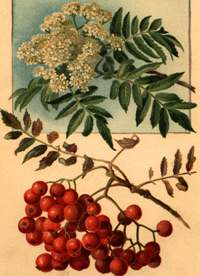
Rowan (Luis)
Also called the Mountain Ash, and Quickbeam for its powers of bestowing and enhancing life, Rowan is sacred to Capricorn. It especially bears the power of the Dark Goddess, the Crone aspect of Mother Earth, and through her the power of fiery Abban, Vulcan, Lord of craft, mountain, and metalwork. Rowan flowers and bright orange berries are marked by the pentagram, symbol of the five Elements; the berries, often retained through Winter, symbolize the endurance of Life through the dark of the year. Also called Witchen or Witchbane Rowan has been considered the enemy of all evil witchery, and protects against one being carried off to Faerie against one’s will.

A tree of astral vision and protection, particularly good for warding off evil spirits, Rowan traditionally is said to avert storms and lightning and bring peace. The fondness of songbirds for Rowan berries gives the tree a link to the bards, and the Goddess Brigid in her role as Muse of poets. It is a tree associated with serpents and dragons and sacred places, the leylines or dragon-lines of Earth energy. The dragon embodies primal energy, a strong force of creativity and natural flow, which cannot be “slain” or “tamed”. Indeed “slaying the dragon” in Christian legend is sometimes confused with modern technology’s notions of dominion over Nature.

Dragon energy is drawn into harmony when we enter into a partnership with it through the erection of standing stones at intersections of the dragon lines, or by directing it in a Rowan wand. Rowan’s power is doubled by the inclusion of a dragon-scale core when it is fashioned as a wand. It’s Elvish name, Luis, comes from the root lu “time” also found in luras “to judge.” Elves frequently hold their judicial assemblies under old Rowans. Especially suited for magic giving form and order, ritual, growth, fertility, protection, women’s autonomy, poetry, weaving and spinning, and geomancy or work with ley lines.
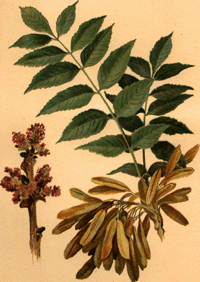
Ash (Nuin)
Sacred to Virgo and its ruler Mercury, the planet of intellect and reason, Ash is a wood associated with many divinities. The number of its house is nine (thrice three). The Ash appears in Norse myth as Yggdrasil, the World-Ash or Tree of Life from which all the worlds spring. In this respect, it is the pathway or bridge by means of which the wizard may travel among the worlds. Mystically, Ash signifies the Astral dimension and its myriad doorways. Beneath the World-Tree, Yggdrasil, the three Norns or Fates dispense judgment over gods and men. A dragon lives in the roots of the World Ash and an eagle in its branches; the goat of Odin feeds upon the leaves and turns that food into Ambrosia, the drink of the gods that provides immortality.

Hanging upside down on the Ash tree, Odin drank of the spring of destiny at its roots and the runes were revealed to him. Tradition holds the Ash also to be sacred to Llyr and the Greek Poseidon, Lord of Sea, horses, and metamorphosis. Like the Sea-Goat Capricornus, Ash unites Earth and Water in the primordial energy in which all potential lies. Poseidon, Odin, and Thor each wielded a spear of Ash, symbolic of an irresistible magical Will and invincible protection. The Greek goddess Nemesis carried an ash wand as a symbol of divine justice. With it, she ensures that fortune (good or ill) is shared among all people and not only by the few. Nemesis is also called “Nemesis of the rainmaking ash” identified as Andrasteia, daughter of the sea god Oceanus.

One of the few surviving Druid wands of old, found in an archeological dig, was made of Ash with a sunwise spiral design, symbolizing Ash’s links to the Sun. So generally magical is the Ash that it is the wood used for Yule logs and Maypoles and in some traditions the brooms of witches. In the Alferic pantheon Olobaal, the Sea Mother, whose body moves with the moon is a feminine figure. She is the devouring Mother who consumes, swallows, and gives birth to all life. She is the goddess of water, sea, and ocean, twin sister of Vashaan, the Wind Lord, as Poseidon is the brother of Zeus. She is great and terrible when incited to Tempest by her brother; calm and beautiful when she is embraced by the Sun Obraash; fecund when touched by the Moon. She can take any form and is also a goddess of war.

In Alferic tradition, it is out of ash-wood that Olobaal fashioned her scepter and the haft of her magical harpoon. Thus, it may be seen that Ash is as much attuned to Elemental Water as Earth, and so is the consummate wood of growth and fecundity, mothers and daughters, and female sovereignty. It is a wood of balance and the marriage of opposites. Well-suited for shamanic magic, protection, and to enhance one’s skills at any art or craft, the magic of wells and caves, Earth as the vessel of water, finding roots or working with plant roots, the magic of horses, oceans, conquest, justice, and weather working.
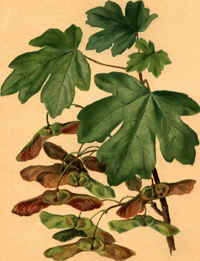
Maple (Shorin)
Sacred to Alban Elved (the Autumnal Equinox) because of its fiery red and orange colors as its leaves turn — a bold celebration of the season and the cycle of death and rebirth. Poised on the equinox, it is linked to both Libra and Virgo, Hazel and Ash. Maple’s sacred bird is the Great Horned Owl who is the herald of the coming Feast of Samhuinn with its magic and mystery. The owl is a bird associated with wizards and wisdom, and the bearing of messages in the night.

In North America, especially in its northern parts, the Maple is a dominant tree with many varieties, including the sugar maple from which maple syrup was made by the Native Americans. As such it is associated with the life-giving sap of the trees, providing food and sweetness for those who treat it with respect and care. Alban Elved is also known as the Feast of Mabon, dedicated to the reborn son-consort of the Great Mother. The Dying God is also the Giant Ymir of Norse myth, from whose body the world was made. Maple is a strongly masculine wood, somewhat rebellious and tough, but with a beautiful smooth grain; hard, yet excellent for carving. Well-suited to spells of sending and communication, binding, transmutations, creation, revolution, rebirth, healing, beauty, art, and abundance.

Elm (Elma)
One of the tallest ancient forest trees, graceful in its chalice shape, Elm is sacred to the Great Goddess in her form as Wise Grandmother. She is the Qabbalist’s Briah, manifest in the planet Saturn. Elm is also called “Elven” for its connection to the Elves and Faerie mounds, and so to burial mounds, and to death as the doorway eternal life.In recent times, as many ancient Elms have been killed off by Dutch Elm disease, the tree has come to symbolize and embody the struggle of Nature against humanity’s destruction of the old forests through short-sightedness or the transportation of diseases from other parts of the world. Elm’s spirit is majestic and expansive, rooted and wise. Well-suited to the magic of Earth and invocation of the Goddess, healing, fertility, gardening, rebirth, destiny, wisdom., a passage from one life (or phase of life) to another, metamorphosis, endurance.

Blackthorn or Plum (Emrys)
Plum wood is not a wood expressly included in the sacred tree lists of the Elves or the Celts; however, it is closely related to its sister, the Blackthorn, which is known as a Faerie tree of dark omen, strong in protective magic. They are treated together here because I have better access to plum than to blackthorn. Besides this, when it comes to wandmaking, I feel that it is better not to mess with the blackthorn tree. Plum trees are much less severe and do not seem to be used by the Good People to guard their hollow hills.

Sacred to Abban, God of Craft and Mountains, Plum is a fruit wood and so bears powers of fertility but its thorns evoke powers of great reserve and protection, the setting of boundaries, and the ability to dissolve them. Abban, like the Greek Hephaestos, is a jealous spirit of creative fire, whose devotion to art transcends all other concerns. The wood itself is harder than Apple but has a similar creamy color, and the branches are tough, knotty, and thorny.

Thus Plum is a consummate wand wood for the creative artist or anyone desiring to focus on magic that will enhance skill, overcome barriers, keep people or disturbance at bay, evoke toughness and persistence, patience, protection, and healing, especially of the blood. It is also well-suited for the divining of precious metals or minerals.

Trees of Elemental Air

Hawthorn (Huathe)
Hawthorn or Whitethorn is sacred to Aquarius and Vashaan, the Windlord, the Thunderer, whom the Elves call Valma. He is the Norse Thor and the Greek Zeus, god of Sky and storm. This is a tree of defense with its twisted branches and sharp thorns, and it holds the power of lightning. Some loremasters say it can detect the presence of magic because it is a tree in which magical powers enter the manifest world from beyond. Its sacred color is violet and it is especially attuned to this band of the magical spectrum with its focus on powers over other kinds of magic.

Well-suited for all protective magic and all magic aimed at strengthening one’s magical powers, spells of control, or warding, sending, detection, concealment, weather working. and protection against lightning and evil spirits.

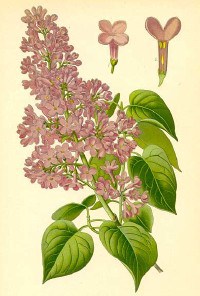
Lilac (Galad)
Sacred to Gemini, the Twins, lilac brings the root energy of expansion and growth, that underlies intellectual and spiritual prosperity. Such energy is the burgeoning of Spring flowers, sacred to the androgynous and quicksilver Mercury, whose domain is writing, speech, song, reason, and travel by sea, air, and star.

Lilac is sacred to bards and its intoxicating fragrance bespeaks erotic and creative power. Galad comes from the root gal, meaning “gift” from which other words derive: galian “hospitality,” agalla “sexual pleasure,” gaellië “delight,” melengal “mystic union.” All of which suggests the mysteries of gifts and giftedness, talent, and the communication of love through delight.

Lilac wood is close-grained, creamy, and smooth, excellent for carving intricate interlace patterns. Well-suited to the magic of union, attraction, enhancement of sexual pleasure, intellectual pursuits, imagination, information, mental concentration, travel, illusion, detection, divination.

Hazel (Koll)
Sacred to Libra and the Celtic goddess Arianrhod, called Shava and Ardiana by the Elves – the White Goddess of Stars and the Queen of Heaven. In Roman and Greek myth she is Venus and Aphrodite, goddess of love, but for the Elves, she is the goddess not so much of carnal love itself, but of the enchanting power of beauty. She is named Danu by the Celts, the grandmother, and is called Spider Grandmother because she created the starry net of the night sky. Her web is manifested in the twining limbs of the forest trees as they reach upwards in the worship of her.

Hazelnuts feed the Salmon of Wisdom in its deep pool. Its color is midnight blue, its stone lapis lazuli or blue sapphire. It’s bird is the crane. Shava is considered the teacher of enchanters and all worthy wizards and bards are summoned to her table. Sacred to Shava, Hazelwood is imbued with magical power. It’s nuts feed the Salmon of Wisdom in its deep pool. The hazelnut is also connected magically to the heart chakra. Well-suited to the magic of wisdom, beauty, charm, love, stars, navigation, and creativity.

Cedar (Chakris)
Sacred to the cross-quarter feast of Imbolc, which in the Elvish tradition, is the Feast of Shava, Queen of Stars. Yet it Cedar is also associated with the goddess Sezh or Persephone in her Underworld time, withdrawn from the mundane surface of existence during the season of snows. Evergreen Cedar is sacred, like Juniper, for the promise of eternal life. Its number is thirty, its color pale yellow, and its bird the goldfinch. Chakris recalls the Cedars of Lebanon, the wood from which the great Jewish Temple of Solomon was built. Associations with Solomon are, of course, always magical, that great king being legendary for his powers of magic and ability to bind spirits to his service.

Cedar is a wood of protection and preservation. Imbolc or Oimelc is also, traditionally, the time of the lambing when the milk of the ewes comes, thus the linkage of the festival to milk, as well as to light. Chakris symbolizes and embodies the light in the darkness, and the brilliance of the Star Goddess in the inky blackness of the interstellar void. Cedar is especially powerful for clearing negativity from an area prior to magical work. The tree is also called Arbor Vitae, Tree of Life.

Especially suited to preservation of sacred places, forests, and groves, the dedication of sacred space for worship and magic, bringing of light out of darkness, star magic of all kinds, and summoning of helpful spirits.

Apple (Queris)
Sacred to the Feast of Lughnasa and the Celtic Goddess Rhiannon, who is also one of Shava’s masks, as Goddess of Stars and also of horses. Apple harvest comes on and after the feast of Lughnasa (August 1st) and marks one of the major foods of the Elves, often associated with the Faerie realms and the Isle of Avalon. Thus the wood has the power of Avalon and the immortality of the Faerie realms. The Q-rune is also called Quenda, in Elvish Eranor, which is the Rose bush whose bright colors evoke the spirit of light and love in the season of Lugh, or Obraash, Mellar of the Sun. It’s sacred number is seventy; its sacred bird the rose-breasted grosbeak.

Shamans and ancient poets are often described carrying apple branches as symbols of their office and the famous Silver Bough of Apple provided entry to Faerie. Especially suited to opening the doorways into Faerie, spells to do with horses or travel, illumination, enhancing any skill, love, harmony, and beauty, harvest, and magic of divine, shamanic madness or visionary experience.

Linden (Ohm)
The Linden, also called Basswood and Lime-tree, is the tree most sacred to the goddess Shava, who may be found in Celtic Arianrhod, and Greek Aphrodite: Queen of Stars and Love. Her nature is as much fiery as airy being the spirit of Divine Light. Linden wood is laden with the power of attraction that underlies not only love, infatuation, and harmony, but also the very fabric of the material cosmos in such forces as magnetism, adhesion, and gravity. It is a wood of truly cosmic power on every dimension and sphere of the Tree of Life. Linden is a very light, airy, and smooth wood, excellent for carving and capable of supporting fine details.

Especially suited to star magic, spells of creation and transmutation, illumination, love, attraction, healing, enhancement of beauty and peace, and acts of enchantment.

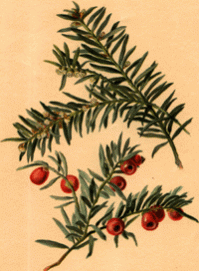
Yew (Ioho)
Sacred to Mercury, the spirit of intellect, thought, and communication and master of magic, incantations, and runes. He is also the psychopomp, guide of souls from one world to the next. As such, the evergreen Yew bears powers over travel between the worlds. In the Elvish pantheon, Mercury is Islaar, a shape-shifting, androgyne who is both the great Teacher and the mischievous Trickster. Patron of thieves as well as Poets and Seers, Islaar is a mystic power as well as the divine spirit of thought. As Trickster, he is the inspirer of wit and eloquence. The Yew is the tree of the Ovate, the seer and healer in Druid tradition. As such it bridges the worlds and opens doorways into the Otherworld.

Yew is especially suited to spells of transformation and transfiguration, illusion, astral travel, mediumism, necromancy, the conjuration of helpful spirits, guides and ancestors, and also spells to bestow knowledge, eloquence, or persuasion.

Trees of Elemental Fire

Oak (Duir, Dwyr)

The most powerful and sacred of Druid woods, Oak is magically linked to the constellation Leo. It holds power to draw lightning or the bolt of inspiration. The Sun, which rules Leo, is the source of life and light. Psychologically it is the center of the Self. Oak symbolizes all solar heroes, those who venture out from their homelands to achieve great deeds and bring home wondrous treasures. Oak traditionally provided not only one of the most durable woods for construction and fuel, but also the acorn from which the early tribes fed their pigs throughout the winter.

Oak is one of the longest lived trees, thus embodying great wisdom as well as strength. The name Duir is related to dwyn, “door,” or “portal,” the great door of a manor dwelling. It is also, of course, often linked to drwyd, “druid” or “wizard.” As the wizard wood, there is no more magical wood for wand making and it is especially noted for enhancing the endurance of spells against time and counterspell. The acorn is associated magically with a helmeted head and so to the crown chakra.

Natural branches of Oak are often twisted and gnarly and have a coarse, dark grain. It is a hard and heavy wood. Especially suited to the magic of kingship and wise rule, personal sovereignty, authority, power, protection, sealing or opening doors, endurance, and invocation of wisdom, fertility, and abundance.

Holly (Tinne)
Associated with the Holly King who defeats the Oak King at Midsummer each year and reigns until the Winter Solstice, Holly is one of the fieriest of woods and second only to Oak for its sacred regard by the Druids. The Gaelic “tinne” is thought to mean “fire.” Its rune in the Alferic Ogham is the same as the Futhark rune Tyr, and like that rune is associated with the Spear, one of the magical weapons of the Tuatha de Danann, and also of Odin. The spear is one of the prototypes of the magical wand, a phallic , yang instrument for projecting will and inseminating matter with life and creative seed-forces.

Mars, or in Elvish the god Ambash, rules Holly. Ambash is also associated with the Wildman of the Forest, the untamable power of the forest depths and its procreative essence. It is associated with Midwinter but actually reigns over the “dark half” of the year when the solar tide is waning, from Midsummer to Midwinter. Oak rules the waxing tide of the sun. It is calendrically associated with Capricorn as the Constellation presiding at the Winter Solstice; however, the Alferic tradition also associates it with Aries, a constellation ruled traditionally by Mars.

Holly has been regarded as a powerful protective wood, good against evil spirits, poisons, angry elementals, and lightning. It is also associated with dream magic and fertility and is well-suited for any magic dealing with the overthrow of old authorities, success in business or endeavor, or spells seeking progress to a new stage of development. Holly wood is very fine-grained, hard, and smooth, and almost ivory in color if it is not stained. It is a truly exquisite wood for wands.

Redwood/Sequoia (Thor)
The giant redwood is the most magnificent of all conifers and its Elvish name, Thor, draws an association with the Norse god of that name, the spirit of thunder, storm, and lightning. As an evergreen, Redwood is the embodiment of life and the assertive phallic striving upward to the sky. Its rune in the Alferic Ogham looks like a doubling of Tinne (see Holly above), a twin spearhead, barbed perhaps, and also resembling the stately conifer form itself. It is associated with the constellation Sagittarius, the Archer, and the Centaurs. It is also associated with the Stag-god Orion, who in Greek tradition is the archetypal Hunter. Ambash, the God of Beasts is the Hunter in the Alferic tradition, but his counterpart, from whom he is inseparable, is Orion, the hunted Stag of Summer.
The Stag or White hart is the magical animal of the deep forest whose appearance invariably leads the heroic hunter into some adventure in the Otherworld. Orion is in fact regarded as a spirit most closely linked to the planet Uranus and the Greek Titan Prometheus, bringer of fire and teacher of all arts to humankind, a spirit, as the poet Shelley argued, of rebellion and revolution. However, there is also a feminine side to the redwoods, for they grow in vast groves and these resonate with the power of the Great Goddess. Such groves are called by the Sarithin, the Halls of Yavanna.
Magically, Redwood is excellent for drawing down power from Heaven to Earth, spells of religious seeking and discipline, spells of mystical union with nature and wild animals, hunting magic, the martial arts as a spiritual discipline, and spells for innovation and sudden revelation. We usually use milled redwood for wands, which has a very broad and beautiful grain, is quite lightweight and soft, and which has a dark red color without the need of any stain. The wood tears easily as so is not well-suited to detailed carving.
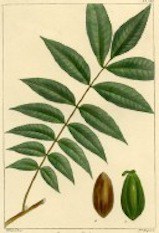
Hickory (Axara)
Hickory is sacred to Obraash, God of the Sun, who is also Lugh and Apollo. His color is golden yellow, his stones citrine, and yellow topaz. His sacred birds are the Phoenix and the peacock. Obraash is one of the principal fire spirits whose domain is kingship, the wise use of power, unification of peoples, and wholeness, both of the individual personality and of a society.

Hickory is a hard and close-grained wood, with solar energies similar to Oak. Because of its durability, it is traditionally used for making bats, sticks, and clubs — the primitive prototypes of the magic wand or royal scepter, signifying power to command and direct action. The Eranor word axara shares a root with axalla “majesty” and lex “crown.” The hickory nut is linked to the solar plexus chakra.

Hickory is especially suited to the magic of abundance, wholeness, power, presence, command, discipline, acquisition, giving of gifts, and the finding of direction.

Cherry (Oadha)
Cherrywood is sacred to Ambash, God of the Hunt, of Beasts, and of War. He is also Ares, Mars, Herne, Teutates, Tyr. Cherry is sacred likewise to female deities of hunt and battle: Artemis, Morrigan. Cherrywood is red in color and darkens with age and exposure to the sun. Its companion stones are obsidian and sard. Its sacred bird is the Red-tailed hawk. The sound of the rune Oadha carries with it the aspiration of Thor (Redwood) and the vibratory qualities of Duir (Oak).

Cherrywood carries the energy of the magical Will through which magical intentions are directed into the outer world of manifestation. Cherrywood is imbued with the power of making and doing achievement, and self-assertion over obstacles and critics. It is the pure energy of Will and desire. The cherry fruit is magically linked to the root chakra and so to sex and birth: the life force of attraction and renewal. Its sweet-scented flowers evoke eroticism and the power of love in its more subtle forms as well as the essence of springtime with its powers of renewal.

Especially suited to invocations and blessings of sacred fires, spells of finding, hunting, conflict, war, competition, sex, passion, communion with animals, unification of groups or tribes, and the amplification of magical will.

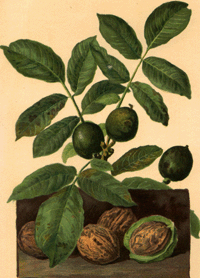
Walnut (Yuin)
Sacred to Vashaan the Lord of Winds and Lightning, Walnut partakes of Elemental Air and Fire. It is perhaps the consummate wood for weather magic. The shape of the walnut nut connects it magically to the head, and so to the crown chakra. Its color is turquoise blue, its stones turquoise, blue topaz, and sardonyx. Vashaan’s sacred bird is the Eagle, particularly the Bald Eagle. The rune Yuin depicts the “First Swirlings” of the universe. It is the centripetal force of outward movement or expansion that complements Shava’s powers of attraction. Thus Yuin has power over all magical acts of expansion: expansion of wealth, horizons, the mind, the feelings. Its scope is limitless and its age unfathomable.

The nut of the walnut tree is linked to the Windlord’s creation myth, in which his tempests shake the walnut tree so that the nuts fall to earth and are buried by the squirrels. From these nuts spring forth the race of Elves. So the war-helms of the ancient Sarith knights, the Shazarin, are shaped like half of a walnut shell. Vashaan is called by the Elves Valma and is associated with the gods Zeus, Jupiter, Thor, and Vishnu. Walnut wood ranges from light to very dark and is well-suited to wand carving.

Walnut is especially suited for wind and weather magic, spells of expansion, vortices, enhancement of the powers of breath, spells to cast or avert lightning, teleportation and astral travel, and inspiration.

Beech (Sultan)
Sacred to Obraash the Sun lord, whom the Elves call Alba, Beechwood is closely related to Oak. The Beech tree is a large and spreading tree that bears edible nuts. It was particularly valued by the ancient Celts — and the Elves — as a nut used to fodder animals, especially the sacred swine. Beech is the family of trees to which Oak belongs, thus is Beech sometimes called Atarya Dwyrion, “Grandfather of Oaks.” The name Beech relates to the Germanic word for Book and tradition tells that beech wood was used to make the first writing tablets for the runes. Hence, Beech is deeply associated with learning and lore, and with the divinatory power of the runes.

Like Greek Apollo, the Elvish Alba drives his sun-ship across the sky each day and passes to every world of manifestation, sources of light, beauty, and life. Apollo is also considered to be a spirit of youth, archery, and prophecy, the latter because of his conquest of the Pythian serpent at Delphi and subsequent assumption of the powers of the Delphic oracle. In Celtic tradition, many gods are associated with the sun’s light, among them Ogma Sunface, god of eloquence who created the ogham letters, and Oenghus mac Og, god of love and youth. The wood of the Beech has a superb grain that finishes most beautifully. The Elvish rune Sultan is the same as the Norse rune Sol, the solar rune which has also been interpreted to mean “victory.”

Magical operations especially applicable to Beech include spells of information, especially seeking old wisdom; invocation of ancient guardians or Ancestors; research into old writings and the runes; the magic of the Summer Solstice, the culmination of desires; the magic of victory.

Osier or Dogwood (Zallis)
Osier is a tree most sacred to Agni, the primordial Fire. Zallis is held, by the Elves, to be sacred to the spring fire festival of Beltane (or Agnianna as they also name it). Agni, who is not numbered among the twelve Mellarin, may be equated to the Celtic god Belinos (for whom Beltane is named). He is called Atarya Tulkazo, “Grandfather of Tulkas,” who is the fire of passion, desire, and will. Agni is often considered to be a mask of Olan, the Great Spirit who goes before all and encompasses all.

The Elves sing that Agni is the father of Shava, Star Queen, and also of Abban, the great subterranean Father of volcanic fire and the forge. The red-barked Osier is associated with fertility and sexual attraction. For Agni is not only the sacrificial fire but also the fire of loins and procreation, the energy of bud and flower. The rune Zallis, shaped like an X, is considered one of the most powerful runes for magic invoking the protective and creative power of fire and is often used alone as a sign for banishing disruptive forces and deception. By association with the Futhark rune Gifu, it also bears a sense of happiness and warmth or comfort.

The wood’s name “dogwood” also carries associations with the Irish hero Cuchullain, whose name meant “the dog of Chullain” referring to his loyalty. This gives the wood magical links to the warrior heroism and superhuman physical prowess of the hero and links to domesticated dogs, their healing and protection and their loyalty and affection too.

Magical operations especially applicable to Osier include magic of flowering; the evocation of one’s Ancestors; renewal of cycles of fertility; consecration of ritual or hearth fires; giving of comfort or healing, and spells of banishment and protection.

Trees of Elemental Water

Alder (Fearn)
Alder is sacred to the constellation Pisces, the Fishes. It is a wood which lasts a long time submerged in water and is often found on river and lake banks. When first cut its wood appears red like blood and so was traditionally viewed as ill-omened but this is an oversimplification. It’s bloody appearance may have influenced Alder’s popularity as a wood for warrior’s shields in Celtic tradition. In Elvish Eranor Fearn comes from the root feä, meaning “fey” or Faerie magic. This rune invokes astral protection as well as physical and can open the mind to the deep wisdom of the watery element in the form of dreams. It can protect one from the emotions of others, especially warlike anger or bloodlust.

Alder is particularly potent for protection against drowning or disaster by storm or flood. Its use in bridges, half submerged, symbolizes not only its power as a bridge between worlds but its mentality, amphibiously aware of the conscious and unconscious worlds, the above and below, the overt and the hidden. Fearn’s ruling Mellar is Ulmaren, the Water Mother.

Magical operations most applicable to Alder include protection against drowning and death; death curses and shielding against them; shielding against all ill-omens and destructive emotions; cultivation of the vision of inner and outer worlds; bridging of the above and below; preparation for conflict; shielding against unwanted intrusions from beyond.

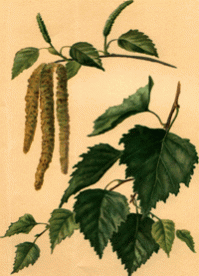
Birch (Beith)
Sacred to the festival of Alban Eiler (Vernal Equinox). Its number is forty and its bird the white egret. In the Celtic Ogham Beith is accorded prestige as the first tree, one of the trees that emerges first to establish a new forest, a harbinger of youth and springtime. It is often associated with the beginning of the year, and in the Alferic tradition is linked to the beginning of the cycle of growth and renewal in Spring. It is a tree of beginnings in general and of the Bards, as the first grade of the Druid order.

The Bards are according to first honor as the singers of the Creation epics, those who sang the worlds into existence. Birch is also a wood with great powers to purify and discipline, to create the new forest in service to the great trees that will come after, such as the oak and ash and maple. Birch forest is young and so birch is linked to youth and all things new.

Especially suited to the magic of new beginnings, spells of youth and fresh starts, bardic enchantment, creativity, procreation, renewal and rebirth, purification, and spells for discipline and service.

Willow (Awn)
Sacred to the Moon, Omulan or Diana, Willow is a wood of the Water Element. Willow is a tree of emotion, love, intuition, and poetic inspiration. Awn is pronounced ahh-oon and is related to as the Druid term awen, the sacred word of inspiration. It is linguistically rooted to Eranor awë, “inspiration” and hwenwë, “breath.”

Omulan is the White Goddess, who has affinities with both the Celtic goddesses Rhiannon and Arianrhod. She is the daughter of Shava and Vashaan, and sister to Islaar, god of magic and thought. As the Moon she rules the cycles of female life and becoming: menstruation, birth, and menopause. By extension, she is mistress of hearth and home and all whatever is considered the traditional sphere of motherhood.

As the great luminary of the night, she also is Astarte, goddess of witchcraft and moon magic, which is to say magic that aims at transformation and natural harmony. Willow is especially suited to works of the New Moon, magic related to cycles of fertility or creativity, spells of glamor and bewitchment, change, relationship and female rites of passage.

The Dark Moon, as it is called, is the time best suited for spells of dissolving and banishment, the time to get rid of old habits that no longer serve a good purpose in your life. Traditionally associated with witches, willow is the perfect wand wood for the ritual of “Drawing Down the Moon.” As the source of salicylic acid, the main ingredient in aspirin, willow is also a wood appropriate for spells intended to remove pain and give comfort.

Poplar or Aspen (Kenning)

The poplar or its sister the aspen are trees with very soft wood and a pithy core. Their bark is white which is descriptive of their delicate and sensitive character. This tree is sacred to the Lady Nienna, lady of sorrows, of memory and forgetting. Its magic is that of emotion. The subtlety of poplar lends itself to emotional healing work, but may also be used in spells designed to create particular emotions such as fear or anxiety. It is nearly impossible to use poplar to create anger or any of the more assertive passions, but it can be effective in dispelling anger or fear.

As an aid to meditation, a wand of poplar will promote a sense of peace and alertness. These trees have leaves that flutter in the wind. The aspen is sometimes called “quaking aspen” for this reason. If you desire to delve into your own emotions to heal the roots of many health problems, and larger life problems, then poplar would be a good choice for a wand.

Exotic Hardwoods


Ebony
Ebony is an exotic hardwood that comes from various sub-tropical climes. It is a wood that is used extensively for carving in Bali and in Africa because of its density and hardness. It is extremely difficult to carve, but the end result is a superb black wood (sometimes with the lighter grain) that is very heavy and magnetically powerful.

Ebony is not one of the sacred woods of the Celts, nor is it included in the version of the Elvish Ogham known to me. However, from working with this wood I have come to see it as a wand perfect for Dark Moon magic, those operations that seek to banish, dissolve, dissipate, or cast off evil or outworn influences.

The Elves tell me that it is a tree strongly attuned to Nienna, goddess of Memory and Forgetting, Joy and Sorrow. I also feel that it carries the energy of the dark of the moon, or of eclipses. Ebony is quite a popular wood for wands and is unquestionably very handsome. It’s presence and energy is very strong, and so it is not a wood for the faint of heart.

Purpleheart
Purpleheart is another exotic tropical hardwood that is readily available in milled stock. It is a wood with very long coarse fibers and so difficult to carve without splitting. This bespeaks the wood’s sensitivity and flexibility. It is a medium density and heaviness and can be finished to a lustrous smoothness which captures its remarkable purplish-red color.

Like Ebony, Purpleheart is not a wood that has attached to it any Celtic lore, or Elvish lore that I am aware of. However, from my own work with this wood, I have come to the conclusion that it is very well-suited for work with the heart chakra. This means that it is good for emotional as well as physical healing, for opening up the seat of compassion and generosity, and for any work involving the blood. Its color gives it attunement to the violet and ultraviolet frequencies of magic, which is those centered on control, especially over other magic.
Continue reading “Dryads, Trees & the Fifth Element – Good Witches Homestead”

Activation Oil | Witchery Wednesday

Activation Oil

activation-oil-edit

For use anointing spelling tools, candles, or even added to a pre-working ritual bath.  Designed to help when you are feeling sluggish, having difficulty raising energy, or trouble focusing.

1 c. oil
¼ c. dried lavender
2 tbs. dried mint
2 tbs. dandelion seeds and fluff

In today’s batch we are using organic soybean oil and peppermint, but you may choose both the oil and mint to your own preference.  Some combinations are more mellow, while some carry more oomph, so use your instincts and go with what feels right to you.

Place all herbs in the bottom of a 16 oz. (or larger) bottle or jar.  Pour in oil and swish or gently shake to allow the herbs to bloom.  Set in a cool dry place for one month, swishing occasionally to help redistribute the plant materials.  Strain well before use.

Source: Activation Oil | Witchery Wednesday

Shadow Work Mega-Masterpost – Into The Deep

#LAVENDER healing — WHAT IS GROUNDING? Grounding is a set of simple…

What Is Prana? – Good Witches Homestead

By Diana L. Jones

Prana is the vital life force that sustains life. In a human, it is all the cosmic Energy that causes the physical actions within one’s body. Prana is the fuel for our bodies, from the food we eat to the air that is breathed.

Prana is energy, vitality, power. Prana is the foundation and essence of all life; the energy and vitality that permeates the entire Universe. Prana flows in everything that exists.

Furthermore, Prana is the connecting link between the material world, consciousness, and mind. It is what makes life on the material level possible. Prana regulates all physical functions, for example, the breath, the supply of oxygen, digestion, elimination and much more. The function of the human body is much like a transformer, receiving energy from the Universal flow of Prana, distributing that energy, and then eliminating it. If a person or a room has a healthy, harmonious vibration, we say: “There is good Prana here”. Illness, on the other hand, disturbs or blocks the flow of Prana. As we develop the ability to control Prana, we gain harmony and health, of both body and mind. In addition to this, with long and consistent practice an expansion of consciousness is experienced.

Prana is divided into ten main functions:

  1. The five Pranas – Prana, Apana, Udana, Vyana and Samana.
  2. The five Upa-Pranas – Naga, Kurma, Devadatta, Krikala and Dhananjaya.

The Five Pranas

PRANA

Prana is that special function of the Cosmic Prana, which supplies the human body with essential oxygen. Its energy flows from the nostrils to the level of the heart.

Clean air is vital for health, however, on its own air, is not the decisive factor in good health. Some people are prone to illness, even though they are frequently out in the fresh air. On the other hand, people who live in rooms or suburbs with relatively poor air quality remain healthy. Our health is not influenced by external factors only. Health is also governed by our inner condition, by the power of resistance and the inner will – Atmabala – the inner vitality. When Atmabala is strong within, external forces can barely harm us. The practice of “Yoga in Daily Life” strengthens our vitality. Certain techniques, in particular, activate Prana Shakti, these are Bhastrika, Nadi Shodhana, and Ujjayi Pranayama.

APANA

Apana Prana influences the lower part of the body from the navel to the soles of the feet. This Prana regulates the elimination process. Diseases that affect the lower abdomen, intestines, kidneys, urinary tract, legs, etc., are the result of disturbed Apana Prana. The techniques of Nauli, Agnisara Kriya, Ashvini Mudra and Mula Bandha serve to strengthen and purify Apana Prana.

VYANA

Vyana Prana flows through the nerve channels of the human body. It has an effect on the whole body and particularly on the Nadis. Poor circulation, impaired nerve stimulation and nervous breakdowns, originate from a deficiency in Vyana Prana.

Vyana Prana is activated and strengthened in the practice of Kumbhaka (breath retention). With each natural, relaxed breath that we take, there is an automatic pause between inhalation and exhalation. In the practice of Pranayama, this pause is consciously lengthened. When we retain the breath, we withhold energy in the body with a resultant build up in pressure. This pressure has the effect of releasing energy blockages. Kumbhaka stimulates the nervous system. Anyone who has combined the techniques of Kumbhaka and Maha Bandha knows the subsequent, pleasant sensation of peace that flows through the body. This is the reason for being able to meditate well after this practice. The feeling is produced by the increased flow of Vyana Prana throughout the whole body.

It is highly recommended to perform the following breath exercise several times a day.

  • Inhale deeply and exhale once
  • Again inhale and hold the breath for as long as comfortable (counting to 20, 30, etc.)
  • Exhale and hold the breath again for a while
  • Repeat this exercise 4-5 times.

The benefit of this simple breath exercise is quickly noticed and our nerves are truly grateful.

UDANA

Udana Prana is the ascending energy that flows from the heart to the head and brain. Udana Prana accompanies the awakening of the Kundalini Shakti. It is with the assistance of Udana Prana that the Astral body separates itself from the physical body. A strong Udana Prana eases the phase of death.

With the control of Udana Prana, the body becomes very light and one may gain the ability to levitate. When Udana Prana is in our control, external obstacles such as water, earth or stones no longer obstruct us. Intense practice of the Yoga breath exercises also gives the possibility of walking on water or even floating in the air. Fakirs who sit or lie on a bed of nails possess the ability to control their Udana Prana. Yogis who live in the forest and remain unaffected by heat, cold, thorns, and insects, etc., are protected through the control of Udana Prana. Udana Prana is activated by the practice of Ujjayi Pranayama, Bhramari Pranayama, as well as Viparitakarani Mudra.

Bhramari Pranayama Technique

  • Close the ears with the fingers and inhale. While exhaling through the nose, hum like a bumble-bee (the mouth remains closed).
  • After about 5-7 breaths sit motionlessly and breathe normally with the ears still closed. Concentrate on your inner space and listen to the inner sound.
  • This exercise will calm the nerves and thoughts, promote concentration and bring you into contact with your Self.

SAMANA

Samana is a very important Prana that connects two main Chakras – Anahata and Manipura Chakras.

Samana Prana distributes the energy of nutrition throughout the human body. We are aware that food not only influences our physical body but also affects our psyche and consciousness. The quality of our Prana (all types of Prana), is directly associated with the quality of our food. Pure, sattvic, vegetarian food and the practice of Pranayama will provide a healthy and balanced body for life.

Samana Prana has an influence on the Manipura Chakra, whose corresponding element is fire. When Yogis are able to control Samana Prana it is a pure flame within them. Those in whom Samana Prana is completely pure are surrounded by a radiant aura, which is even noticeable by those who do not have the ability to see auras.

This Prana is strengthened through the practice of Agnisara Kriya and Nauli. The practice of these two Kriyas prevents digestive problems and Diabetes. It also improves one’s resistance to infectious disease and cancer, due to the digestive fire that is awakened in the whole body, which purifies and cleans.

The most effective technique for awakening Samana Prana is Kriya Yoga. The practice of Kriya Yoga warms the entire body. This is due to the rising of Samana Prana. A very aware person can observe the aura of a Kriya practitioner becoming brighter and stronger with each round of practice.

The Five Upa-Pranas

The five Upa-Pranas regulate important functions in the human body.

NAGA – Burping

Removes blockages of Prana and Apana and prevents gas formation in the digestive system. Constant suppression of Naga can lead to Cardiac Arrhythmia. Other functions include triggering of the vomit reflex due to indigestion and dissolving blockages of Samana Prana.

KURMA – Blinking

This Upa-Prana functions in the area of the eyes, controlling opening and closing of the eyelids. The energy of this Upa-Prana is active when we are awake and is revitalized when we sleep. Kurma protects the eyes from the penetration of dust and foreign bodies etc. Disturbance of this Upa-Prana causes uncontrolled blinking and twitching of the eyelids. The practice of Trataka provides balance and strength to Kurma, as does the chanting of OM, placing warm palms over the eyes and Asanas where the head is bent forward.

DEVADATTA – Yawning

The function of Devadatta is similar to that of Samana Prana. Yawning expels gas, reducing tiredness after eating. Certain foods such as grains, onions, and garlic cause fatigue. Many Yogis only eat vegetables and some milk products in order to sustain their level of vitality and thereby reduce lethargy.

KRIKALA – Sneezing

Clears blockages in the respiratory system. Sneezing can also ease a headache as it releases energy blockages in the head and neck. A sneeze should not be suppressed, as this may affect vertebrae in the cervical spine. In folktales, it is said that he who sneezes loudly and strongly, has a long life. Weak sneezes indicate weak vitality.

DHANANJAYA – Opening and Closing of Heart Valves

Dhananjaya resides close to the Heart. It influences the whole body and in particular the muscles of the heart by opening and closing the heart valves. Cardiac Arrhythmia and even Heart Attack may occur due to a serious disturbance of Dhananjaya.

There are four areas in the human body where the flow of Prana is particularly intensive – through the sole of each foot and the palm of each hand. The feet are closely related to the earth element and represent negative polarity. Therefore one should never concentrate on the feet in meditation. Conversely, the energy of the palms originates from the heart. It is related to the air element and produces positive polarity.

There is an exercise through which we can very clearly feel Prana in the hands.

Raise the arms out to the sides of the body with palms facing to the front. Keep the arms straight and move them in a half-circle to the front of the body, slowly bringing the palms towards each other. Remain completely relaxed, slowly reducing the distance between the hands. As the palms become closer, you will be conscious of a growing sensation between the hands, or a feeling of pins and needles in the palms. Bring the palms closer until the distance between them is only about 1 centimeter. Now, due to the energy that streams from your hands, it feels as though the hands are really being pulled towards each other. Prana causes this. If you now move the hands apart again, you will feel pressure on the back of the hands, producing the opposite effect. This is also Prana because Prana flows without hindrance throughout the entire body.

Prana is distributed throughout the whole body, through the network of the Nadis (nerves). There are 72,000 Nadis in the human body. Of these, there are three Nadis of particular importance.

  • IDA, the “Moon System”, correlates with the left nostril and the Parasympathetic Nervous System.
  • PINGALA, the “Sun System”, correlates with the right nostril and the Sympathetic Nervous System.
  • SUSHUMNA, the “Central Nadi”, penetrates the spinal column and correlates with the Central Nervous System.

The practice of Asanas and Pranayamas, harmonize the Ida and Pingala Nadis and has a purifying, strengthening and balancing effect upon the energy flow in all 72,000 Nadis. Pranayama and Meditation practice enhance energy flow in the Sushumna Nadi. When spiritual energy begins to flow in the Sushumna certain brain centers and Chakras are activated, creating a development and expansion of our consciousness to higher spiritual levels.

Prana itself is totally pure and neutral, just as the spring-water of a river is clear and clean. In its course, the river picks up many substances which change the quality of the water. Exactly the same occurs with Prana. Prana flows into the body clean and pure, but how it departs depends on the individual – on their lifestyle, their inner qualities and feelings, the type of food consumed and the environment and company in which one lives. The quality of the Prana that radiates from people impacts on both the surrounding environment and the individuals themselves.

The level of vitality existent in the blood and individual cells determines the condition of the human body.

The more cells that die, the weaker one becomes, and the quicker one ages. When the flow of Prana is restricted, the result is the same. The flow of Prana is affected by the worries we create for ourselves. The more we feel disheartened or depressed, the weaker the flow of Prana, leaving us more susceptible to illness, and the aging process occurs more rapidly. On the other hand, those who are balanced and content radiate vitality, and their strength reaches out to touch fellow human beings. Therefore, we should always endeavor to radiate positive Prana.

The Prana that we radiate (our “vibration” or “aura”), is clearly perceptible to others. The type of aura depends upon the purity of our thoughts and feelings, and also our internal Biorhythm and physical state of health. Mental unrest, inner tension, and illness are clearly seen in the aura, as is a harmonious balance of body, mind, and soul.

It is most advantageous for others, and ourselves to cultivate positive, confident, trusting and good thoughts. Above all else, negative, self-destructive and hostile thoughts are most harmful to us. With such a mental attitude we poison ourselves. That is why Yoga aspirants always endeavor to keep their thoughts and feelings pure and positive. The practice of meditation and Mantra maintains pure Prana and the practice of Pranayama increases our capacity to store Prana.

When the soul leaves the body and death comes, the life energy also escapes from the body. It is our destiny to die one day, but we always forget this fact. When we die we leave everything behind – our body, worldly possessions, friends and also enemies. So wherein lies the meaning of life? The purpose of life is to recognize reality. This reality is the Divine Self (Atma) within us. This is what we seek in meditation when we ask ourselves the question: “Who am I?”. When we recognize our Self, we have Realised our Self.

In order to achieve this, physical exercises and breath techniques alone are too little. One’s whole life must be directed towards the good. When we are free of hatred, greed, anger, envy, jealousy, passion and dependency, and live in love, harmony, and understanding with the environment and ourselves, all our problems will be resolved. When daily practice and a positive way of life merge with each other in such a way that they become one, our practice has become effective and successful.

Source: What Is Prana? – Good Witches Homestead

Mercury Retrograde April 2017 ~ Angry Damsels by Darkstar Astrology

The 2nd Mercury Retrograde 2017 lasts from April 9 to May 3 and travels from 4º Taurus back to 24° Aries. Even though Mercury retrograde starts in the beginning of Taurus, the whole retrograde period has a fiery Aries theme as Mercury will spend half the period in Aries and will ignite heroic themes of courage and rescue. This is because the major star being activated will the ‘damsel in distress’ star Mirach in princess Andromeda’s girdle.

Perseus, rescuer of the princess is an Aries archetype in that he is heroic and brave. In the Greek myth Andromeda’s father agreed to sacrifice his daughter to Poseidon in order to save his kingdom. (What is it with these Neptunian gods always demanding child sacrifice?!) It looks like this Mercury Retrograde will start off extremely challenging with Venus retrograde square Saturn. Saturn is on a poisonous star too. Etamin in the right eye of Draco the Dragon is associated with the scattering of poison. (In modern days this could even be chemical weapons.)

Damsels In Distress

If that wasn’t enough, there is a cardinal T-square with Jupiter retrograde (Religious zealots) square Pluto (Globalists) square a Sun/Eris/Uranus stellium. (Persephone child abduction theme overlaps child sacrifice theme.). Mars is conjunct Ceres (The rape of mother earth and pagan principles.) in a decan hotspot that contains stars Algol (Medusa’s head) and Capulus the slayer.

When this Andromeda Mercury goes retrograde then, we have an opportunity to do in-depth research in this very volatile area that it travels through. Facing the disturbing topics of child sacrifice and abduction is unavoidable. All news and alternative media will become super-dramatic, and the themes mentioned in this post should play out, whether they are truthful or not! Mercury is one of three visible planets that are retrograde at this time which makes it even more challenging. (At least until Venus turns direct on April 15.).


Mercury Retrograde April Dates & Times

March 27 ~ Mercury Pre-Shadow Period starts at 24° Aries.
April 9 ~ Mercury Retrograde at 4° Taurus.(11.14 pm UT.)
May 3 ~ Mercury Direct at 24° Aries. (4.22 pm UT.)
May 19 ~ Post-Shadow ends at 4° Taurus


April 9 to 19 ~ Mercury Retrograde 2017 In Taurus Decan 1

RAGING BULLS. In the personal realm, those touched by this retrograde will either talk until the cows come home or be very reticent. Much depends on how confident they are feeling. The shy ones might become surprisingly chatty after a few glasses of wine. Words could get them into trouble.. a lot. Mercury in this decan create terrible gossip, and bring out tactless behavior. There are rousing speeches however, but a need to temper getting carried away. Overconfidence leads to moving towards Taurus decan 1’s dictatorship potentials. It will be hard to contain political rants and protests. Having said all that, Mercury is very powerful here in terms of its dignity as it rules this decan in the Chaldean system. This position, even retrograde, can assist merchants, orators, singers and writers. Use this time to prepare for an important business meeting, interview or public performance.

Apr 19/20 ~ Sun conjunct Mercury at 0º Taurus on Mirach

Mercury Retrograde 2017Midway through the Mercury retrograde 2017 cycle opens a window of wonderfulness where we can stand in the eye of the hurricane but miraculously come out in one piece. This way you can avoid the vacillation generally of Mirach but also gain its more positive attributes mentioned below. You can make use of the special Sun exact conjunct Mercury moment (Cazimi in traditional astrology). Either send a romantic message that really hits the mark or pitch an artistic idea. Try as close to these times as you can. Apr 19: 11.03pm PDT. Apr 20: 2.00am EDT, 7.03am UT, 8.03am CEST, 4.03pm AEST. (Sorry I know they are quite impractical for those in the US, Cazimi lasts about 3 hours either side of the hour.)

Mirach 0º with Mercury “Vacillating, unstable, peculiar events, many travels and changes.” 

Mirach is found in the girdle of Andromeda. Despite the ‘peculiar events’ driven by Mercury on this star, it is generally extremely fortunate “portending renown and good luck in matrimony.” [1] The myth has Princess Andromeda chained to a rock as a sacrifice to Cepheus the sea monster. All to appease an offended Neptune! It all ends well however, as Andromeda was rescued by brave Perseus whom she married. Robson echoes the myth saying Mirach “gives personal beauty, a brilliant mind, a love of home, great devotion, beneficence, forgiveness, love, overcoming by kindness, renown, and good fortune in marriage.” The Ebertins emphasize a creative side saying Mirach endows “Many interests, tendency to inspiration and medium-ship as a base for artistic creations, altruism, cheerfulness, happiness, love of company. These people have a stimulating effect on others, they make friends easily and are helped on in life by others.” [2]

April 21 to May 3 ~ Mercury In Aries Decan 3

BOUNTY HUNTERS: Small words make big impressions during this time! Those touched by this part of the retrograde journey are aided in oratory and giving a persuasive sales pitch. The mind will be brilliant too in a way that weaves many different ideas into one cohesive ideology. Mercury has no dignity here so the gift during this time is its power of persuasion, rather than innate genius. However those with genuine talent will have the ability to transmit their message with great emotional punch. This almost guarantees that their ideology or products will reach a large audience. Mercury Aries 3 can be as seductive as it is highly critical. At its most negative it can inflict emotional abuse on others in the form of mental cruelty. Verbal attacks can feel like one is being machine-gunned with words. On the positive side Mercury here can use words to heal and uplift also. You can use this period to sweet-talk lovers with the most heartwarming poetry. Words are a big turn on!

May 3 ~ Mercury Direct

Mercury direct is a far more positive chart! The Yod to Jupiter is interesting in that it could be used for positive, spiritual transformation. The Sun/Neptune midpoint between an earthy Taurus the moisture of Pisces could bring some healing… mud. Mercury itself joins hands with rebellious, independent Uranus to bring, freedom of speech? With ever increasing censorship on alternative media we can only hope.

There is a nice balance from Saturn by trine to this Mercury direct. What was Saturn’s Draco poison in the Mercury Retrograde chart could be made into anti-venom perhaps? During this Aries/Taurus Mercury Retrograde we learn how transmute offensive words and turn their energy around for defense, much like in martial arts.

Source: Mercury Retrograde April 2017 ~ Angry Damsels by Darkstar Astrology