Wild Food Profile: Yellow Dock (Rumex crispus) Seed Flour & Yellow Dock Pancake Recipe

Dana's avatarThe Druid's Garden

Harvested dock seed with a ready-to-harvest yellow dock plant

This past month, I had a chance to visit Silver Acres, my friend’s 5 acre farm in the thumb of Michigan, where she is practicing rewilding, restoration agriculture, and permaculture.  We were walking through her field and found a good deal of yellow dock that was in seed form–which for the Midwest US, usually happens around Lughnasadh (August 1st) and continues to the Fall Equinox.  While I’ve eaten the young leaves and used the roots as medicine, I haven’t had a chance to try making any seed flour yet–so we set about our task joyfully.  I’m quite impressed by how easy this flour is to make (compared to say, acorn flour) and it cuts nicely with other flours.

Foraging for wild foods is not only a fantastic way to connect deeply with the land but also allow us to reconnect…

View original post 1,166 more words
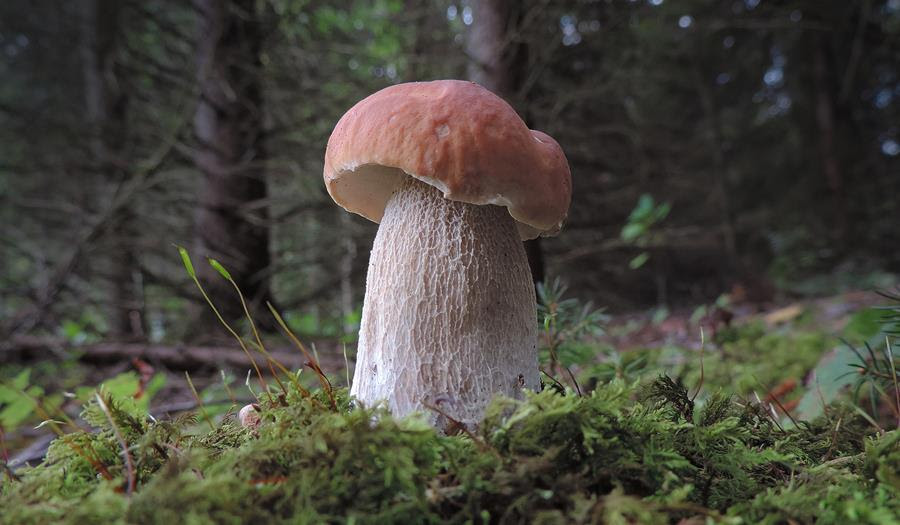
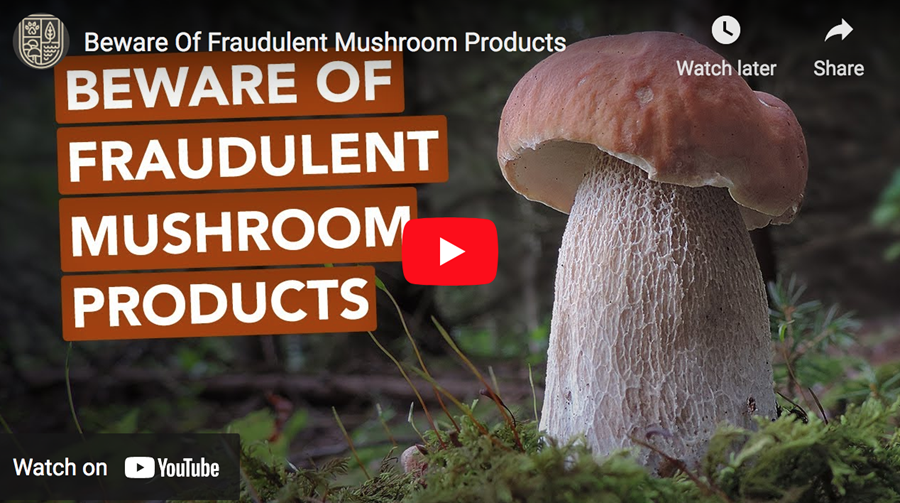
Beware Of Fraudulent Mushroom Products (Many Of Them Are Mislabeled)

A common sentiment among non-foragers is that harvesting wild mushrooms for consumption is dangerous.

“I’ll stick to the mushrooms sold in grocery stores,” the non-foragers say. “They’re much safer.”

Turns out, that’s not always the case.  Commercially sold mushroom products are often mislabeled.  In some instances, the mislabeled products sicken consumers.

A brand new study exposed the widespread inaccuracies associated with commercially sold mushroom products.  Here are 3 major findings from the study:

  1. Many commercially sold “wild” mushrooms are actually cultivated mushrooms.
  2. Of the mushrooms that are actually wild, many of them are not the same species that are listed on the labels.
  3. Some products contain species whose edibility is at best dubious, and at worst potentially toxic.

To shed additional light on the topic of fraudulent mushroom products, I filmed a brief video in which I dig a bit deeper into the study’s discoveries.

You can watch the brand new video here.

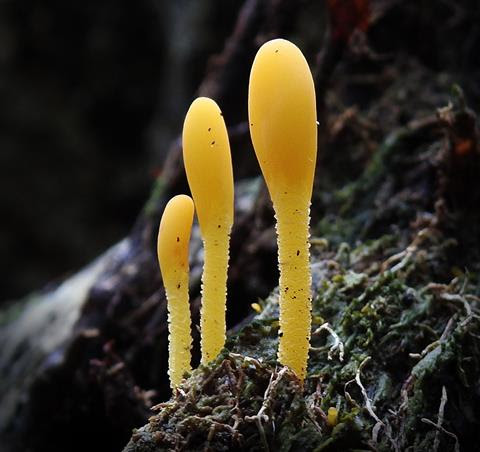
You’ll never see this fungus sold in products intended for consumption (unless the product is mislabeled, of course), but you will find it growing in coniferous forests this time of year.  Have you seen anything like it?  To learn more about this club-shaped species, check out the latest Instagram post!Click to view post

Thanks for reading and watching, and thanks for your continued support!

-Adam Haritan

HSA Webinar: Herbal Hues

The Herb Society of America's avatarThe Herb Society of America Blog

by Sasha Duerr

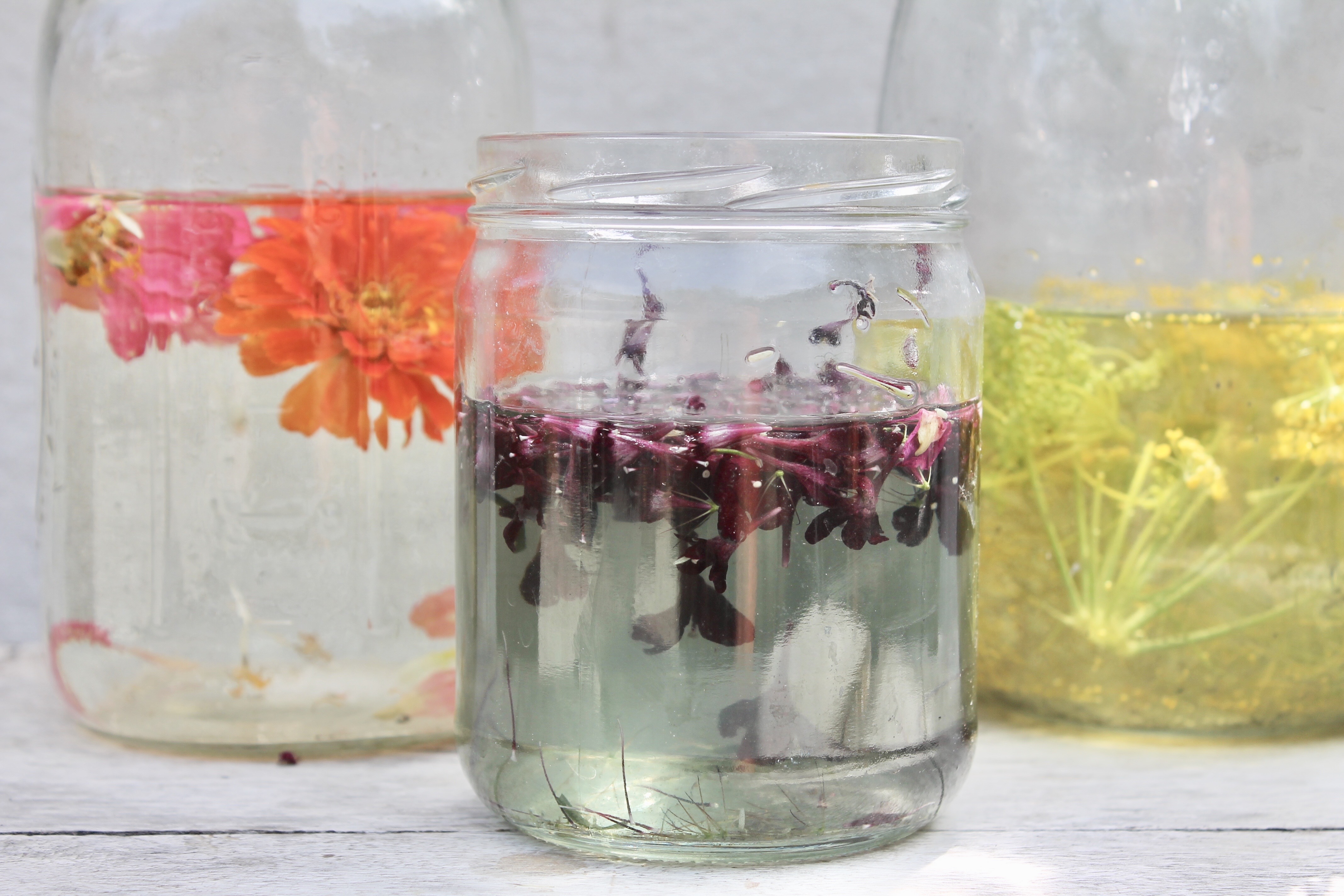
Sasha Duerr is an artist, designer and educator who works with plant-based color and natural palettes. Join her this Thursday, August 26 at 3pm Eastern as she explores creating natural dyes. 
Our webinars are free toThe Herb Society of America members and $5.00 for guests. Become a member today, and enjoy all of our webinars for free along with access to the webinar library with over fifty program titles. To register, visit  www.HerbSociety.org/hsa-learn/hsa-webinars/ 


IMG_7166For those who love color AND plants, natural dyes connect you instantly to a vast range of artisanal hues that are truly vital, vibrant, and inherently meaningful through the ingredients themselves.
Plant-based palettes tell stories that are inherent to places, people, and the plants, and plant-based colors can be conjured seasonally from weeds, yard waste, florals, and food. There is an intertwined overlap with natural colors that are awe-inspiring and a…

View original post 1,097 more words

Three Principles for an Ethical Foraging

Dana's avatarThe Druid's Garden

Foraging for wild foods, mushrooms, and wild medicines is something that is growing as a pastime for many people. The joy of foraging from the land connects us to our ancient and primal roots and allows us a chance to build a more direct connection with nature. But with any practice rooted in nature comes the need for balance and responsibility. Thus, the following principles can help wild food foragers and wild food instructors harvest ethically, sustainably, and in a way that builds wild food populations rather than reduces them.  I share both the principles in text below as well as graphics.  The graphics are (full size and web-sharable versions, see links) and they are licensed under a Creative Commons license.  Anyone who teaches plant walks or wants to use them in foraging, wild foods, and herbalism practice is free to download them, print them, and share them! The…

View original post 2,431 more words

Sacred Trees in the Americas – Black Willow (Salix nigra) – Magic, Mythology, Medicine and Uses

Dana's avatarThe Druid's Garden

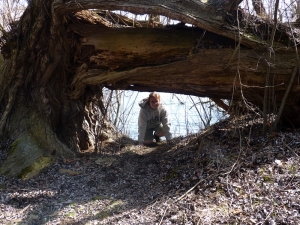
Me under a giant fallen, but yet living, willow tree! Me under a giant fallen, but yet living, willow tree!

One of my earliest memories was of three ancient black willow trees that were down by a little creek where I lived.  Although we lived on a busy crossroads in town, the stream and willows in the backyard were a quiet place, guarded by those three old willows. They looked like gnarled old women, sitting by the edge of the stream, their long branches swaying gently in the wind.  When the stream waters would rise, sometimes they would look like they were wading there, branches swaying in the current.  The Black Willow is an incredible tree, the largest Willow native to North America, and a great tree to get to know.

The Black Willow is also known as the Swamp Willow, Sauz, Dudley Willow, or the Gulf Black Willow.  It is native to all of Eastern North America, from the…

View original post 2,181 more words

Cayenne Pepper – Herb of the Month

The Herb Society of America's avatarThe Herb Society of America Blog

By Maryann Readal

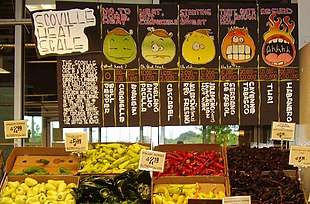
Hot! Hot! HOT! – but not the hottest! Cayenne pepper, Capsicum annuum, is hot, but it reaches only 30,000 – 50,000 Scoville Heat Units (SHU) on the Scoville Heat Scale. For comparison, the ‘Carolina Reaper’ pepper reaches 1.4M – 2.2M SHU, and the jalapeño pepper just a meager 2,500-8,000 SHU. The Scoville Scale was developed by pharmacist Wilbur Scoville in 1912 to determine heat levels based on subjective sensitivity to capsaicinoids in peppers. Although modern lab methods are used today to determine the heat level of peppers, the Scoville Scale is still the common way to classify pepper heat intensity (Mountain Rose Herbs, 2021).

Cayenne pepper, a member of the Solanaceae, or nightshade, family, is native to tropical North and South America. The term “cayenne pepper” can generically refer to any of a number of peppers within the Capsicum annuum Cayenne Group, which is characterized by being…
View original post 882 more words

Summer Savory – Herb of the Month

The Herb Society of America's avatarThe Herb Society of America Blog

By Maryann Readal

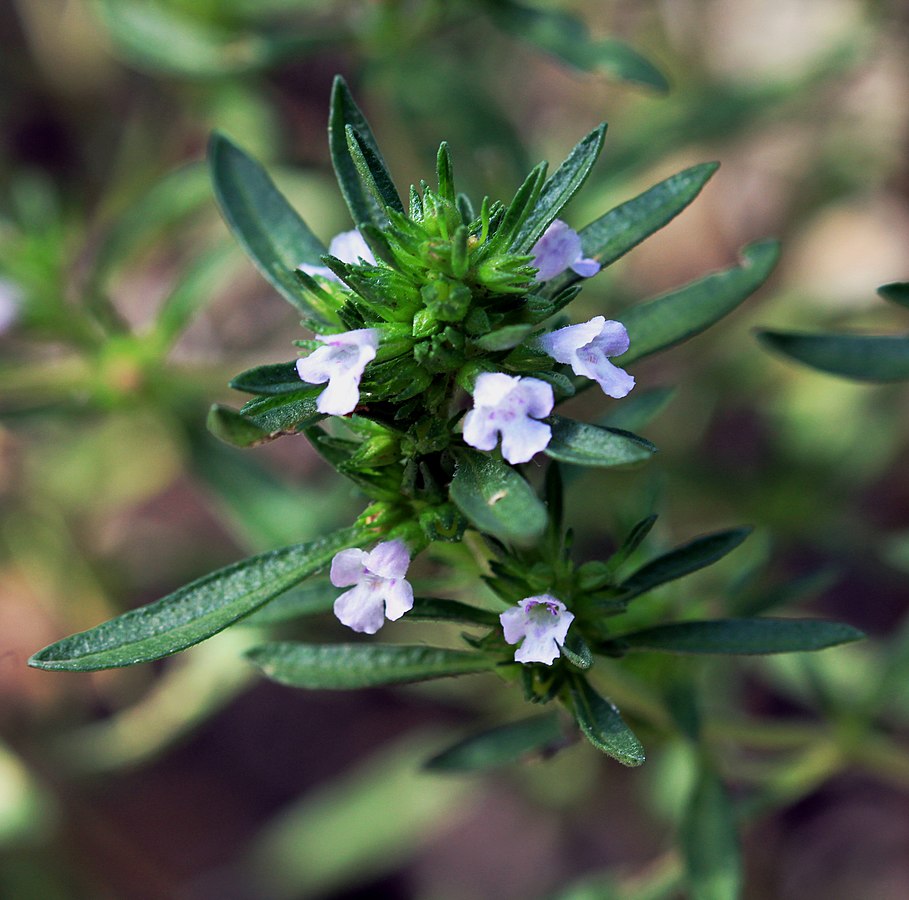
Satureja_hortensis_Prague_2011_3 by Karelj via wikimedia commonsIt is summer and a perfect time to learn about summer savory, Satureja hortensis. If you have this spicy herb growing in your garden, plan to start using it this summer. It is an easy-to-grow, low-growing annual with white to pale pink flowers and narrow leaves. When in full bloom, the plant looks to be “covered with snow” (Clarkson, 1990). Summer savory requires full sun and good drainage, and can easily be started from seed. It may reseed if given enough sun and water. The leaves are very fragrant and have a warm, peppery taste, which is stronger before the plant flowers. Trim summer savory throughout the summer to encourage new growth. The leaves dry easily and can be stored for later use. Winter savory, Satureja montana, is its stronger, perennial cousin.

Like mint, sage, rosemary, thyme, and oregano, summer savory is in the Lamiaceae…

View original post 879 more words

Herbal Trees and Shrubs of the Plains and Prairies

The Herb Society of America's avatarThe Herb Society of America Blog

By Katherine Schlosser

From place to place, season to season, and year to year,

the colorful mixtures and combinations of flowering herbs

are influenced by permutations of weather, grazing,

competition with grasses, and seed abundance.

~David S. Costello

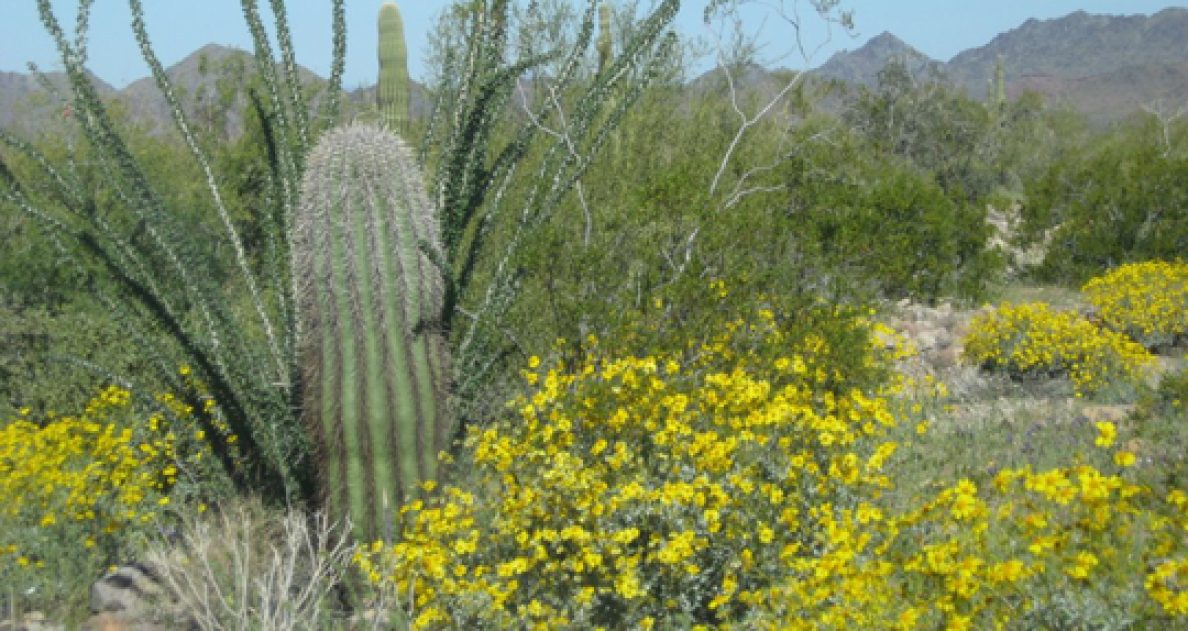
Since childhood the words “For amber waves of grain, For purple mountain majesties, Above the fruited plain” colored my impression of the landscape of the western part of our country. Visits to grandparents, aunts and uncles, and masses of cousins didn’t disappoint my vision. It wasn’t until adulthood that I fully understood that those words were essentially a drone fly-over.

For some of us, it takes paying attention not only to the larger landscape, but to the details as well to appreciate the enormous botanical diversity of our country. From the tallest coast redwood (Sequoia sempervirens) to the tiny littleleaf pyxie moss (Pyxidanthera brevifolia)and its 1/4-inch flowers peering…

View original post 1,665 more words

The Practice of Deep Gratitude

Dana's avatarThe Druid's Garden

At the heart of the challenges, we face in transitioning from a life-destroying culture to a life-honoring one is to disentangle the many underlying myths and narratives that subconsciously or consciously drive our behaviors.  These myths include the myth of progress, the myth of infinite growth, the lure of materialism, and the assumption that nature is there only to serve our needs. These myths have, in part, been the underlying forces that have driven us to the present challenges of our age. I believe many of these myths are rooted in colonialism, and if we are ever to end this awful practice and its centuries-old impacts, we must address them. They drive both larger systems at play as well as each of us. And while we can look to broader

A nature mandala offered in thanks for our land that provides so much to us.

systems of power and privilege…

View original post 1,731 more words

Wildcrafting Your Druidry: A Local Materia Medica and Herbalism Practice

Dana's avatarThe Druid's Garden

As we continue to explore the concept of wildcrafting druidry and sacred action that is, developing a spiritual practice and daily life that is fully localized and aligned with nature right outside your door, it is a useful time to consider the role of herbalism and developing a local materia medica.  In herbalism terms, a materia medica is a body of herbal and plant knowledge for the curing of diseases and the promotion of good health.  For example, any book on herbalism that includes entries on herbs and their healing properties is a materia medica.  By starting to develop a local materia medica for your area, you can learn more about the incredible healing properties of plants in your area and develop a sacred connection with them.  You can start entering into a mutually beneficial, reciprocal relationship with the land and support your own health–this is because not only are…

View original post 1,752 more words