Public Lands Issues effect on wildlife and wild horses and burros | Straight from the Horse’s Heart

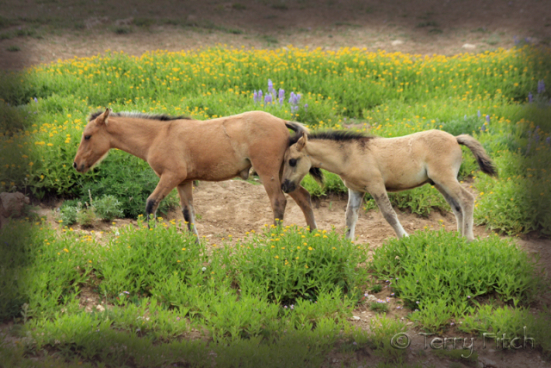
photo by Terry Fitch of Wild Horse Freedom Federation

by Bonnie Kohleriter

Our public lands are now under attack which has enormous consequences for our wild horses and burros and for our wildlife.  The attacks are coming from Trump’s cabinet members, particularly the Dept. of Agriculture and the Dept. of the Interior, and from Congressional Republicans.

First, Rep. Jason Chaffetz R UT, introduced a bill early in January, 2017, to sell off 3.3 M acres of Federal land to states.  With an outcry from conservatives and sports groups, he withdrew that bill.

Then Rep. Jason Chaffetz R UT, introduced a bill later in January, 2017, called the Local Lands Act, wherein Federal law enforcement on our Federal Forest Service (FS) and Bureau of Land Management (BLM) land, will be supplanted with State law enforcement with the States being given block grants.  The bill is currently in the Natural Resources Committee: Subcommittee on Conservation and Forestry.

Then Rep. Don Young (R) AK, moved a bill, House Joint Resolution 69, through the Congress in February, 2017, wherein the Federal Fish and Wildlife Service (FWS) on Federal Alaskan lands will no longer manage its Federal wildlife, and its Federal wildlife will be managed by the State of Alaska.  Resolution 69 went to the Senate, where Sen. Lisa Murkowski (R) AK and Sen. Dan Sullivan (R) AK, moved the resolution through the Senate in March, 2017.

It is concerning as attempts are in process to take away Federal land and give it to the States, to take away Federal law enforcement on Federal lands and give it to the States, and to take away Federal management of Federal wildlife on Federal land and give the management to the States.  What’s next?  In addition to give aways, the Senate voted 51-48 to kill the 2.0 plan which was developed by the Dept. of the Interior.  That plan authorized public lands stakeholders to give input into the use of the land.  The killing of the 2.0 plan is designed to give the local and state governments more control over the Federal public lands for development such as use for businesses.

Now Ken Ivory, a Rep. in the Utah State Legislature, under House Concurrent Resolution 22, is asking the President and Congress to repeal the Wild Free-Roaming Horses and Burros Act of 1971 and grant authority and resources to the States to manage feral horse and burro populations within their jurisdictions.  The Legislature and Governor maintain the horses and burros are damaging the rangelands for wildlife and livestock that share the same areas.  This bill would authorize the States to geld the stallions.  Some outspoken ranchers and hunters want our public land for their gains.  The ranchers in Utah have expressed they want to “harvest” (slaughter) the horses and burros like they harvest cattle.

What else is coming?  Environmental groups have identified “Public Lands Enemies.  Interestingly they are all Republicans. They are:

Sen. Mike Lee           Utah    Sen. Lisa Murkowski Al    Rep Mark Amodei        NV

Sen. Orin Hatch        Utah    Sen. Dan Sullivan      AL    Rep Dean Heller           NV

Rep. Rob Bishop       Utah    Rep. Don Young        AL    Rep Tom McClintock   CA

Rep. Jason Chaffetz Utah    Sen. Jeff Flake           AZ     Rep Doug La Malfa      CA

Rep. Chris Stewart    Utah   Rep. Paul Gosar        AZ     Rep Steve Pearce        NM

Rep. Mia Love            Utah   Sen. Barrasso            WY   Rep Raul Labrador       ID

In California, McClintock is from the Central Valley and La Malfa is from NE California.  La Malfa is a 4th generation rice farmer and has received $ 5M in federal commodity subsidies starting in 1995, or on average a quarter of a million dollars every year from the federal government.  Now that’s the real “welfare” food stamps subsidy.

While Republican Congressional Representatives primarily supported by ranchers and hunters in their respective states, wrangle in Congress to take from the Federal government and give to the States, the Wildlife Services within the U.S. Department of Agriculture yearly brutally kills millions of carnivores and omnivores on our public lands to appease the hunters and ranchers.  The hunters claim the carnivores and omnivores kill the herbivores they want to hunt and the ranchers on our public lands claim the carnivores and omnivores kill their livestock.  The killings are brutal: aerial gunning, cyanide poisoning, steel jaw and leg trapping… In 2016 the Ag Dept. Wildlife Services killed 2.7 M animals on our public lands.  415 gray wolves, 77,000 coyotes, 407 black bears, 334 mountain lions, 997 bobcats, 21,000 beavers, 4000 foxes, …

Our public lands are to have a multiple use mandate, but it seems the powerful, monied hunting and ranching lobbies, as well as now, the gas, oil and mining lobbies in Washington are dictating what will go on with our public lands through their elected congressional representatives.  Get involved.  Contact your elected congressional representatives, especially those on the natural resources, agricultural, and appropriations committees in the House and the agricultural, nutrition, forestry, and environmental and public works and appropriations committees in the Senate.  Tell your representatives what it is you want on our public lands.

Source: Public Lands Issues effect on wildlife and wild horses and burros | Straight from the Horse’s Heart

‘Horrific incident’: Family speaks out after pet dog killed by ‘cyanide bomb’ | Xtreme Idaho | idahostatejournal.com

By Shelbie Harris sharris@journalnet.com

POCATELLO — As he walked his dog along the ridgeline of the hillside just south of his family’s home on West Buckskin Road, 14-year-old Canyon Mansfield noticed what he thought was a sprinkler head protruding 6 inches from the ground.

Like many curious teenagers would, he bent down and touched the pipe, which erupted with a loud popping noise that knocked Canyon off his feet. A hissing sound ensued and Canyon noticed his clothing and face were covered with an orange, powdery substance. After quickly washing his face and clothes in a nearby patch of snow, he called for his dog, a 3-year-old Lab named Casey.

But Canyon’s best friend didn’t respond.

“He just stayed on the ground mumbling,” Canyon said. “I thought he was playing with his toy, but I saw the toy a couple yards away from him. … So, I called him again and got really scared. I sprinted toward him and landed on my knees and saw this red froth coming from his mouth and his eyes turning glassy and he was having a seizure.”

Within minutes, Casey was dead.

“My little brother is lying in bed crying next to me,” said Canyon’s sister, Madison Mansfield. “He spent yesterday in the emergency room after stumbling upon an unmarked cyanide bomb in the woods directly behind my home. He watched his best friend suffocate as sodium cyanide was deposited in his mouth.”

Canyon was taken to Portneuf Medical Center, where he was treated and released. But he must continue daily follow-up appointments to check toxicity levels.

On Thursday afternoon, Casey joined thousands of other non-targeted animals — both wild and domestic — that have been mistakenly killed by one of the most lethal tools at the disposal of the U.S. Department of Agriculture — spring-loaded metal cylinders that are baited with scent that shoot sodium cyanide powder into the mouth or face of whatever or whoever touches them.

Known as M-44 devices, the Animal and Plant Health Inspection Service (APHIS) division of the USDA deploys these sodium cyanide capsules throughout the West to protect livestock from coyotes, wild dogs, and red and gray foxes.

M-44s are hollow metal tubes 5 to 7 inches long that are driven into the ground, loaded with 0.9 grams of sodium cyanide and coated with the smelliest bait possible.

Though the devices are legal methods of controlling local predators, the legality regarding the manner in which the device that killed Casey was planted remains under investigation.

On Friday, APHIS released the following statement regarding the incident:

“APHIS’ Wildlife Services confirms the unintentional lethal take of a dog in Idaho. As a program made up of individual employees many of whom are pet owners, Wildlife Services understands the close bonds between people and their pets and sincerely regrets such losses. Wildlife Services has removed M-44s in that immediate area. Wildlife Services is completing a thorough review of the circumstances of this incident, and will work to review our operating procedures to determine whether improvements can be made to reduce the likelihood of similar occurrences happening in the future.”

The spokesman for APHIS, R. Andre Bell, said in a Friday statement that “the unintentional lethal take of a dog is a rare occurrence (and Wildlife Services) posts signs and issues other warnings to alert pet owners when wildlife traps or other devices are being used in an area for wildlife damage management.”

The statement also said that M-44 devices are only set at the request of and with permission from property owners or managers, and that this is the first unintentional take of an animal with an M-44 device in Idaho since 2014.

“The USDA’s statement regarding the horrific incident that happened to my family yesterday is both disrespectful and inaccurate,” Madison said. “The USDA intentionally refers to the brutal killing of our dog as a ‘take’ to render his death trivial and insignificant.”

She continued, “They also claim that the killing of an unintended victim is a rare occurrence, but this is entirely untrue. In fact, this issue is nationally recognized due to the lack of selectivity of cyanide bombs, and there have been many reported incidents in which unintended animals and people have been targeted.”

On March 11 near Casper, Wyoming, a national nonprofit advocacy organization called Predator Defense reported that two families out on a hiking trip, including an 8-year-old girl, watched two of their four canine companions die after uncovering unmarked cyanide devices.

When deploying these “cyanide bombs,” applicators must adhere to several guidelines that include requesting permission from the landowners and posting warning signs in both Spanish and English.

However, Canyon said he did not see any posted signs.

“The guy that planted them there said he got consent,” Canyon said. “And he said he put signs up but I would have noticed it because I go up there all the time.”

There were no obvious warning signs, according to Bannock County Sheriff Lorin Nielsen, but as of Friday afternoon, his deputies were still investigating.

“The trapper that set those for the federal government did show up, we were able to interview him and he has disarmed those that are in that area, and hopefully the rest of the county,” Nielsen said.

The identity of the individual who set the cyanide traps could not be confirmed as of Friday afternoon, but Nielsen did confirm the individual is an employee of APHIS.

The Bannock County Sheriff’s Office believes the incident happened on Bureau of Land Management land south of the Mansfield’s property. However, the BLM said Friday the incident did not happen on its land.

“I’ve been sheriff for 20-plus years and I have never heard of these before,” Nielsen said about the cyanide bombs. “It just doesn’t make a whole lot of sense to have a landmine-type device that disperses cyanide gas.”

Cyanide is notoriously known as one of the fastest-acting poisons to ever exist. Yet it’s so uncommon that the Bannock County Sheriff’s deputies, Canyon’s father, Mark, who is a local doctor, and the doctor at the emergency room didn’t immediately know how to handle the situation.

The poison works by binding to hemoglobin, the molecule in red blood cells responsible for transporting oxygen throughout the body. It then prevents the cells from using oxygen to make energy molecules. Essentially, cyanide suffocates the victim exposed to it from the inside out.

“Not only is cyanide unethical, the antidote is highly ineffective and can rarely be administered in time to treat it,” Madison said. “My dog suffered as he struggled for breath while my brother stood helplessly nearby. This is not humane, and no animal, dog or coyote should ever be killed in such a gruesome manner.”

APHIS agency records show that more than 3,400 animals have been mistakenly killed by M-44s between 2006 and 2012. These include black bears, bobcats, raccoons, opossums, ravens, ringtails, red fox, gray fox, kit fox, swift fox, turkey vultures and dogs, according to the Sacramento Bee.

At least 18 employees and several members of the public have also been exposed to cyanide over the past 25 years. None died, but many were treated for nausea, blurred vision and other symptoms, the Sacramento Bee reported.

“The placement of these unmarked devices in a residential area without notifying the families and the authorities is grossly negligent,” Madison said. “The individual who placed the bombs is most certainly not ‘highly-trained’ as the USDA claims. If he was, he would have noticed the homes clearly beneath him and this tragedy could have been easily avoided.”

Some of the cyanide devices used to control predator populations are manufactured at Pocatello Supply Depot in Pocatello.

In July 2014, Pocatello Supply Depot transitioned from being a private company and became a fully federalized facility operated exclusively by Wildlife Services, according to documents posted to APHIS’s website.

Canyon’s mother, Theresa Mansfield, said she wants to make the public aware of this situation and doesn’t want to see another pet or child put in danger.

“This is horrific,” Theresa said. “This is like terrorism in my backyard.”

Source: ‘Horrific incident’: Family speaks out after pet dog killed by ‘cyanide bomb’ | Xtreme Idaho | idahostatejournal.com

Feel Good Sunday: Video-Mini Horses Say Goodbye to Winter | Straight from the Horse’s Heart

“Recently we ran a Mini Video on Feel Good Sunday and received many notes calling for another, so here you go folks.  Old Man Winter is only hours away from succumbing to Spring so it is only fit that the little equines who capture everyone’s heart have a final romp in the snow before the arrival of fresh green grass, flowers and foals.  Have a great and wonderful day where ever you are and never give up on the good fight.  Keep the faith my friends.” ~ R.T. Fitch

Source: Feel Good Sunday: Video-Mini Horses Say Goodbye to Winter | Straight from the Horse’s Heart

Yellowstone and Montana are Killing the Last Wild Buffalo

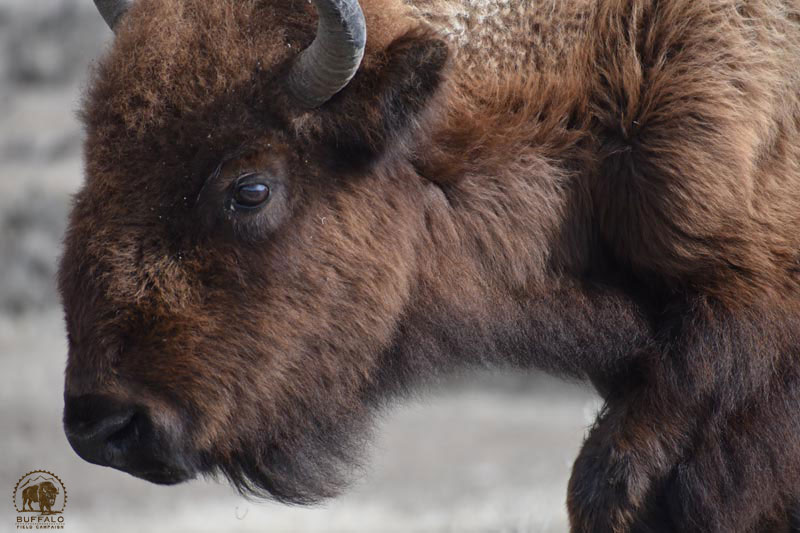
2017 03 16 01 003 YoungBull BFCseay2017

More than 1,200 of America’s last wild buffalo have been killed this winter, and it isn’t over yet. Hunting along Yellowstone’s boundaries has taken the lives of more than 400 buffalo. Hunters are still in the field making kills. It’s a terrible time of year to hunt. The buffalo — like other wild grazers — have used up all of their fat stores, and are showing ribs and bony hips, waiting for the re-greening of the Earth so they can again replenish their huge bodies. This is also the time of year when the long, harsh winter takes her toll, too. There will be many buffalo who will not survive into spring, but the government is not accounting for these deaths in their mad rush to reduce this most significant and vulnerable population. Further, hunters are still killing adult female buffalo who will begin having their calves in about six weeks. All too often, BFC patrols make heartbreaking discoveries of finding fully-formed baby buffalo in their mother’s gut piles.

2017 03 16 01 002 YNPtrapBFCseay2017

Additionally, Yellowstone National Park — shamefully complicit in Montana’s livestock industry’s war against wild buffalo — has captured close to 800 buffalo, all of whom have been or will be sent to slaughter. The trap is emptying quickly, though Yellowstone continues to attempt to capture. Recently, some buffalo have resisted these attempts, while others have not been so lucky. On Monday in Gardiner, BFC patrols documented as five Yellowstone wranglers on horseback tried to trap fifty-five buffalo; all but one got away, running to the hills for their lives. The unfortunate mama buffalo who was trapped caught the attention of another family group of twenty-two. Coming dangerously close to the trap, they sealed their own fate as the wranglers, hungry to capture, took advantage of the situation. Hundreds of wild buffalo are gone forever. BFC’s Mike Mease and Stephany Seay attended the second media tour of Yellowstone’s trap last Thursday, where we again witnessed Yellowstone park rangers, wranglers, and biologists doing the service of the Montana Department of Livestock as they loaded wild buffalo onto stock trailers headed for the slaughterhouse, then proceeded to move more through the trap. It has become business as usual for these buffalo abusers, just another day in the park. They tell us that they don’t like doing this, that they want slaughter to end, but their actions say something else. Yellowstone National Park is not without significant power, but they have shown they are without courage. They can stand up to Montana and refuse to participate. But they don’t. Their cold routine of capturing, testing, sorting, and shipping the country’s national mammal to a horrific death — as they don the image of this sacred being on their uniforms and rake in millions from the people who come to adore them — has become just another day at work. They attempt to put the task of change on the public, shirking responsibility for their part in these crimes. While it is true that a current Montana law – MCA 81-2-120 — is the driver behind the cumulative mismanagement plans and practices, Yellowstone should not have the luxury of of passing the buck. The world’s most well-known national park has astounding influence that they choose not to use. Instead, they kill America’s last wild buffalo. By the end of March, this should all be over.

Please continue to keep pressure on Montana and Yellowstone. Do not ease up. Be relentless and don’t accept their excuses. Laws, decisions, and management plans can be changed.
* Yellowstone National Park Superintendent Dan Wenk 307-344-2002
* Montana Governor Steve Bullock 406-444-3111

And contact your members of Congress to tell them that this must end once and for all. Congress holds the purse strings and can end the funding.

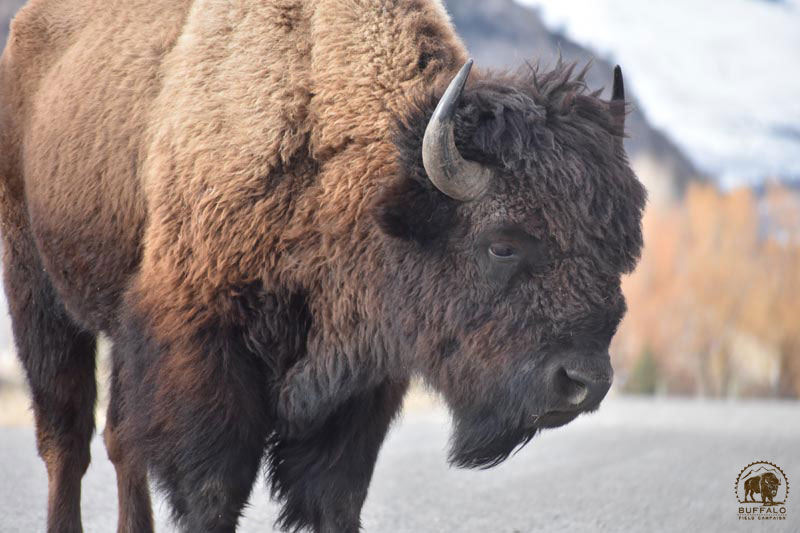
2017 03 16 01 001 RedHead BFCseay2017

The coming of spring is beginning to benefit the buffalo, and we are thankful. The Gardiner Basin is swiftly losing all of its snow and the earth is beginning to turn green again. This is encouraging buffalo to migrate away from the vicinity of the trap and away from the boundary where hunters still wait. In the Hebgen Basin, west of the park, however, there is still a significant amount of snow covering the ground. It’s beginning to melt, and south-facing slopes are opening up, but with so much snow there’s still a long way to go. Buffalo here are making their living along creeks and rivers, eating the sedges that are exposed. Soon spring migration will begin in earnest, as family groups — hopefully by the hundreds — will make their way to their calving grounds around Horse Butte. BFC patrols will soon shift our focus to the highway, helping to warn motorists as the buffalo move through this important corridor to their birthing grounds. The Montana Department of Transportation has recently installed new 55mph signs for night time drivers, but without enforcement this change will not benefit buffalo very much. A few other mitigation measures have been or will soon be put into place as well, including new wording on three marquee signs that alert drivers to “BISON” on the road, as well as an incident alert for a mobile app to alert truckers and other travelers that they should expect buffalo on the road along this section of highway. These things will help, but safe passage infrastructure is the only thing that will make a real and lasting difference. Until then, and as we always are, BFC will be out day and night helping to warn traffic, trying to keep the buffalo safe.

BLM Seeks Public Comment on Plan to Rip More than 1,000 Wild Horses Out Of Wyoming | Straight from the Horse’s Heart
“This is Your Chance to be a Voice for the Horses…”

Destruction of Wyoming’s Adobe Town herd by the BLM ~ photo by Carol Walker of Wild Horse Freedom Federation

The Bureau of Land Management offices in Rock Springs and Rawlins are launching a 30-day public scoping period prior to preparing an environmental assessment on proposed deadly wild horse stampedes in the Salt Wells Creek, Adobe Town, and Great Divide Basin Herd Management Areas.

The war on Wyoming’s last remaining wild horses is allegedly scheduled to begin in the fall of 2017.

Written comments should be received by April 4, and should be e-mailed to blm_wy_adobetown_saltwells_hma@blm.gov. (Please include “2017 AML Gather” in the subject line).

Mailed or hand-delivered comments can be made during regular business hours (7:45 a.m. to 4:30 p.m. local time) at: BLM Rock Springs Field Office, 2017 AML Gather, 280 Highway 191 North, Rock Springs, WY 82901.

To verbally express your disdain, please contact the BLM at 307-352-0256.

For more details on how the BLM plans to destroy wild horse families and strip them of their freedom visit (HERE)

Source: BLM Seeks Public Comment on Plan to Rip More than 1,000 Wild Horses Out Of Wyoming | Straight from the Horse’s Heart

New Rule Tightens Canadian Horse Processing Imports | TheHorse.com


Beginning in March 31, all horses imported from the United States into horse processing plants in Canada must be held in U.S.-side feedlots for a minimum of six months. The regulation is intended to address food safety concerns expressed by European Union (EU) buyers.

While some equine welfare advocates hope the regulation will increase paperwork and decrease profits for exporters of horses into Canadian processing firms, others believe the rule won’t reduce the number of horses exported for processing every year.  

Under the new regulation, exporters must certify in writing that the U.S. horses exported into Canada for processing haven’t received any drugs within the prior 60 days. But said horse welfare advocate Jerry Finch, founder of Habitat for Horses, the horse-processing industry has long had a reputation for falsifying paperwork connected to exported horses.

 “False documentation (has) been a proven fact for years, yet nothing is ever done about it, so any such regulation is nothing more than a PR effort to make the consumer believe they are receiving the very best horsemeat available; like so much of the food supply, the image of wholesome, healthy, and safe food is a far cry from the reality,” said Finch. “The killer-buyers simply sign the form, the buyers for the slaughterhouse sign it, and done deal. A horse bought at the racetrack in Kentucky on Monday will still be in the food chain by Wednesday.”

The Canadian regulation mirrors one long in place at processing plants in Mexico, which did not eliminate the EU’s food safety concerns. After a 2014 audit, the EU’s Food and Veterinary Office (FVO) banned the sale of horsemeat processed in Mexico on grounds that exporters falsified processed animals’ medical and drug treatment records.

An uptick in sales to Russian and Chinese markets resulted, said horse processing proponent Dave Duquette. He expects the same after the Canadian rule become effective.

“All the ban did was up sales to Russia and China–and they don’t have the same welfare (regulations) as the EU or that we do,” Duquette said. “The regulation is a (horse) welfare issue, and it lessens the welfare of horses.”

Tom Lenz, DVM, MS, Dipl. ACT, said that an estimated 5 million horses are processed for human consumption worldwide each year.

“The last time I checked, China was processing roughly 2.5 million horses a year for food,” he said.

Meanwhile, the number of U.S. horses exported to both Mexico and Canada has stabilized between 130,000-150,000 per year, he said.

“I don’t see that changing much,” Lenz said.

In any case, Lenz said import/export rules won’t make tracking the number of U.S. horses exported for slaughter any easier in the future.

“It’s my understanding that starting this year the U.S. Department of Agriculture is no longer keeping track of the number of horses exported for slaughter,” Lenz said. “So, we really won’t know in the future if the numbers are increasing or decreasing no matter what regulations are established on either the Canadian or Mexican side.”

About the Author

Pat Raia

Pat Raia is a veteran journalist who enjoys covering equine welfare, industry, and news. In her spare time, she enjoys riding her Tennessee Walking Horse, Sonny.

Source: New Rule Tightens Canadian Horse Processing Imports | TheHorse.com

Glimpse into Horse Slaughter – Eagle Pass, Texas (raw video)


“Quietly and behind the scenes the Equine Welfare Alliance and Wild Horse Freedom Federation have been watching, taking note and documenting more than just the unnecessary roundups of wild horses and burros by the BLM; but also paying attention to where tens of thousands of American horses and donkeys (domestic and wild) disappear to without even so much as a final wave goodbye. Horse Slaughter has not been banned in the USA instead it has only moved across our borders and both our beloved domestic equines and our protected wild horses and burros continue to end up on the dinner plates of foreigners across the globe. Below is simply raw video of what the horses go through as they cross the border from Texas to Mexico in the final hours of their precious lives. No commentary, no music, no opinions as the footage speaks for itself. We have simply released it to emphasis the need to act, of things to come and to remind those who participate in this predatory blood business that we are watching and taking names. Yes, we are paying attention as the victims cannot speak for themselves but we can. Let the kill buyer beware. Keep the faith, my friends. We are paying attention.” ~ R.T.

via Glimpse into Horse Slaughter – Eagle Pass, Texas (raw video) — Straight from the Horse’s Heart

Video supplied by investigators from EWA and WHFF

Feel Good Sunday: Icy Roads Leave Semi Driver Stranded Overnight. But When He Looks out Window, He Spots Horse…

…warming hearts across the world.

Canadian winters can be harsh. Motorists can easily find themselves stranded on roadways, because of heavy snow and icy conditions. That’s exactly what happened to semi-truck driver Peter Douglas.

The Winnipeg driver was captured by highway cameras after getting stuck on highway 10 south of Brandon. Looking at the footage, it’s easy to see why; conditions were fierce.

He was forced to sleep in his cab overnight, hoping the weather would clear up by next morning. Instead, he woke up to find someone quite surprising knocking on his door.

Eighteen-year-old Eileen Eagle Bears was watching the traffic cams with her mother, when they spotted the stranded truck driver just over 3 miles from their home. She told herself if he was still there when she looked again in the morning, she wanted to help.

The next morning, Douglas was still stuck, so the teen got her horse, Mr. Smudge, and headed Douglas’ direction. The trip would be roughly one hour in the cold.

“There was a lot of ice on the road from the rain that we had got and drifts were bad in a few places,” Eagle Bears told CBC News.

Imagine Douglas’ surprise when he awoke to see a young woman, her horse, and a thermos filled with hot coffee outside his window. A gesture those same highway cameras caught on video.

“She had to walk that horse half a mile up that hill and half a mile down because it was so icy. Blew me away,” said Douglas to CTV News. “She said she saw me on the camera. Her and her family were watching.”

Douglas was so grateful for her kind gesture, and she promised him that if he were still stuck there later in the day, she would return with a hot meal. “He was just really glad that someone knew that he was there and that someone cared,” said Eagle Bears.

She did, in fact, return later that evening with another thermos. This time it was filled with stew and potatoes. She also brought him water.

“I thought he would be getting pretty hungry, and that’s not a good feeling, I just put on extra clothes and did what I promised I would,” Eagle Bears stated. What an amazing young woman!

Douglas was stuck there for a total of 28 hours before finally being towed and able to get safely back on the road to finish his work. He still has Eagle Bears thermoses and plans to return them on his next run through the area.

Since hearing about her heroic story, Eagle Bears has been inundated with support and appreciation from strangers. “It is overwhelming. I had gotten back and my mom had posted just a post on Facebook,” she said.

“And there was a few likes at the beginning, but we went back and there was just more and more, and it just totally blew up,” said the teen. That’s not hard to understand, because hers was an act of kindness in the cold that is warming hearts across the world.

Source: Icy Roads Leave Semi Driver Stranded Overnight. But When He Looks out Window, He Spots Horse…

BLM Set to Wage War on Wyoming’s Wild Horses, AGAIN! | Straight from the Horse’s Heart

Sources: Multiple

“Using poor science and bad numbers the BLM continues to ensure that the wild horses of Wyoming will have no families, freedom or future.  Unedited, propaganda article posted below. (Herds do not double in size every four years – Fake News)” ~ R.T.

Adobe Town ~ photo by Carol Walker

ROCK SPRINGS, Wyo.  — The Bureau of Land Management is proposing to remove about 1,000 wild horses from three herd management areas, including Adobe Town, in southwest Wyoming in order to meet population level objectives.

Kimberlee Foster, field manager for the Rock Springs BLM field office, said there are too many horses on the land, and rules require them to remove horses when they are above management levels.

Foster said the gathered horses will go to the Rock Springs Holding Facility where they will be put up for adoption.

The BLM plans to remove 210 horses from Adobe Town, 584 from Salt Wells Creek and 235 from Great Divide Basin.

There are many reasons the BLM must carefully maintain certain population ranges for wild horses in Wyoming. For one, there are no natural predators for horses in the state and equines can be prodigious breeders.

“Typically a herd management area can double in size every four or five years,” Foster told the Rawlins Daily Times (http://bit.ly/2mayVKA ).

If wild horse populations become too large, the natural forage on the land won’t be able to support them.

Herd management is based around the usage of the land, Foster said, as well as the amount of available forage for the animals. Additionally, the BLM has agreed to act to reduce herd sizes should population levels reach a certain point.

The BLM is accepting public comment until April 4 on its horse roundup plan.

Source: BLM Set to Wage War on Wyoming’s Wild Horses, AGAIN! | Straight from the Horse’s Heart

Yellowstone & Montana Can Stop the Bison Slaughter Today | The Buffalo Field Campaign

This winter’s Yellowstone buffalo death toll has breached one thousand, and continues to climb. Counting the few hundred still trapped inside Yellowstone’s Stephens Creek capture facility and the continued hunting pressures just outside the park, the government agencies will likely surpass their goal of killing 1,300 ecologically extinct wild, migratory buffalo. This does not even include the significant number of buffalo deaths due natural causes from the severe winter. Hundreds of thousands of people are seeing and sharing BFC’s stories and images of Yellowstone’s shameful crimes against wild buffalo. These actions are being conducted with your tax dollars on behalf of Montana’s livestock industry.

This morning BFC will be attending a second “media tour” inside the trap. The atrocious actions we’re witnessing and documenting continue despite thousands, if not tens of thousands, of calls, emails, and letters to Yellowstone Superintendent Dan Wenk and Montana Governor Steve Bullock. Most people who reach these decision-makers are meeting with frustration; being told lies in condescending tones by the governor’s office that Yellowstone is responsible for the slaughter while Yellowstone officials say that it’s all Montana’s fault and there is nothing they can do to stop it. As the number of slaughtered buffalo climbs due to their actions, these same decision-makers toss up their hands in mock helplessness. However, they are both responsible and they can both take immediate and necessary actions today to end this senseless war against wild buffalo. These decision-makers work collaboratively within the Interagency Bison Management Plan to devise and carry out agreed upon management schemes, and their deceptive, pass-the-buck strategy of shirking of responsibility is pushing the country’s last continuously wild buffalo herds towards the brink of extinction.

Please continue to make these calls! If you are outside of the U.S., send letters and emails. Be relentless and don’t accept their excuses.
Phone calls are the most effective because they cannot be ignored.

  • Yellowstone Superintendent Dan Wenk, #307-344-2002
  • Montana Governor Steve Bullock #406-444-3111

Here are some important points to consider – No agency’s hands are tied!

Read the article in its entirety at its Source: The Buffalo Field Campaign

Storytime with Rachel F Hundred

Creating stories for pleasure

Sibyl Moon

Shh I'm Writing

Sylum Clan

Nothing is True. Everything is Connected.

Laura Bruno's Blog

Medical Intuition, Astrology, Soul Readings, Intuitive Coaching, Tarot, Reiki: Inspiring and Empowering Visionaries, Artists and Healers

Fire Family Conflagration

Weekly Challenge from the 118, 126, & 113

Kiayea's Corner

all things fanfic...

Crystal Dawn Books & Gifts

Crystals, and all things Magical

Starkindler's Realm

welcome to the inner workings of my mind...

The Herb Society of America Blog

Learn • Explore • Grow

Dr. Gary Samuelson

A Journey of Discovery

Kylia's World

Where Canon has No Meaning and Universes Collide

originaltempus

Just another WordPress.com site

Profilers For Christmas

The Crime Drama Advent Calendar

Entangled Wood

Just another WordPress.com site

brokenamethystwrites

Here there be Dragons

Toasterpop's Fiction

Fanfiction and original stories from Toasterpop

Breakaway Consciousness

Seeking Ideas Beyond Conventional Thought

gypsysue

Writting, Drafts, Ideas

Ellywinkle

All Things Wicked and Wonderful

Natalie J. Case

Author, Editor, Photographer, Artist

Your Stories. Your Wall.

Honoring their service and building their legacy. The official blog of the Vietnam Veterans Memorial Fund.

00Q Reverse Big Bang!

Art and Stories for all things 00Q, since 2014

The Wild Hare Project

Where the Writer Comes First.

Anthea Davis

FanFiction Author

Every Fandom Bangs

The home of the Every Fandom Bang and Reverse Bang!

Penumbria

n. pl. pe·num·brae (-br) or pe·num·bras 1. A partial shadow, as in an eclipse, between regions of complete shadow and complete illumination.

This Crooked Crown

Witchcraft for the Everyday and the Extraordinary

This is who I am...

... and this is what I like

Fanfiction Recommendations by Isabelle Disraeli

Fanfiction Recommendations ~ Slash, Femslash, & Het Fanfic Recs

Ellywinkle

EVIL AUTHOR DAY

Convivial Supper

Recipes from the Past

Kaethe Vaako's Fiction

what my demented mind comes up with

Sylum Archive

Nothing is True. Everything is Connected

Quantum Bang

The Multi-Fandom Fix-it Big Bang

by Geep 10

a place for me to share what I've written

Good Witches Homestead

Enchanted World of Magical Gardening ~ Crystals & Gemstones ~ Locally Grown Organic Herbs

tkbenjamin

m/m original fiction and fanfic for adults only

Chestnut NOLA

It's All About The Romance

Loam Ananda

Spiritual Journeys in Druidry