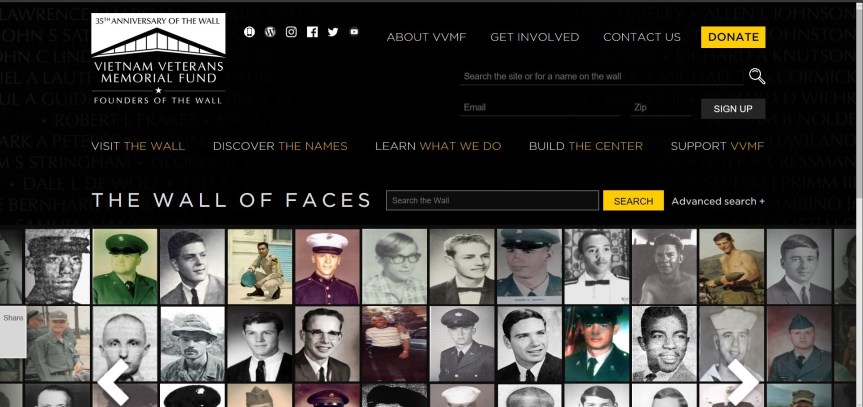
Source: Vietnam Veterans Memorial Wall of Faces
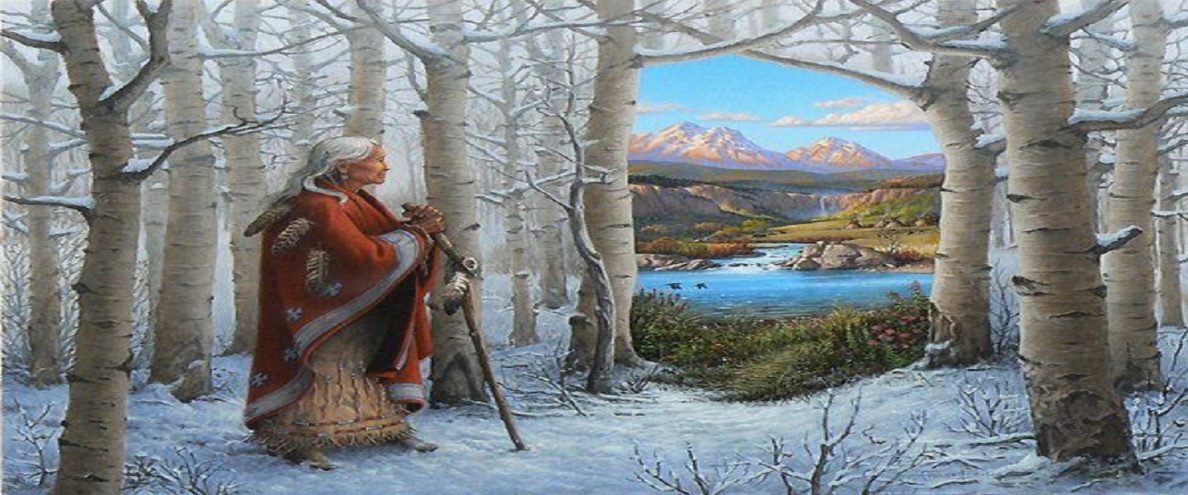

Reprint from Saratoga Stalls
 Memorial Day is a day of remembrance that echoes throughout the United States. Families, friends and loved ones often gather in celebration of those who have given the ultimate sacrifice for their country. The last Monday in May, and the weekend beforehand, is a much needed break in our routine. Some families take this moment to teach about our country’s history and past relatives who laid down their lives while others simply enjoy the long weekend off of work. If you view Memorial Day as an opportunity to revisit the sacrifices that have made our country great, don’t forget about the amazing horse cavalry of the American Revolution, Civil War, World War I and World War II.
Though there are still small examples of horse regiments in modern day warfare…
View original post 533 more words
After doing some research on military horses in WWI, and the HUGE number of animals killed in battle we would be remiss to not honor not only the horses, but the military K-9.
All gave some … Some gave all … Billy Ray Cyrus
by Jocelyn Pierce as published on Equitrekking.com
Memorial Day is a day of reflection and remembrance to honor those who gave the ultimate sacrifice and lost their lives while serving in the military. Perhaps the most largely unrecognized, and sometimes altogether forgotten veterans are the horses that served alongside man.
Since the domestication of the horse, humans and horses have shared a partnership that has been integral to the thriving of civilizations. Horses were essential in agriculture, transportation, and warfare, not to mention companionship in some of history’s darkest hours and in the face of humankind’s brutality.
Throughout the United States’s military history, the horse played an indispensable role. In wartime, the horse was used to transport cavalry troops, supplies, and artillery weapons as well as for charges, scouting, raiding, and communication. While serving man and country…
View original post 1,793 more words
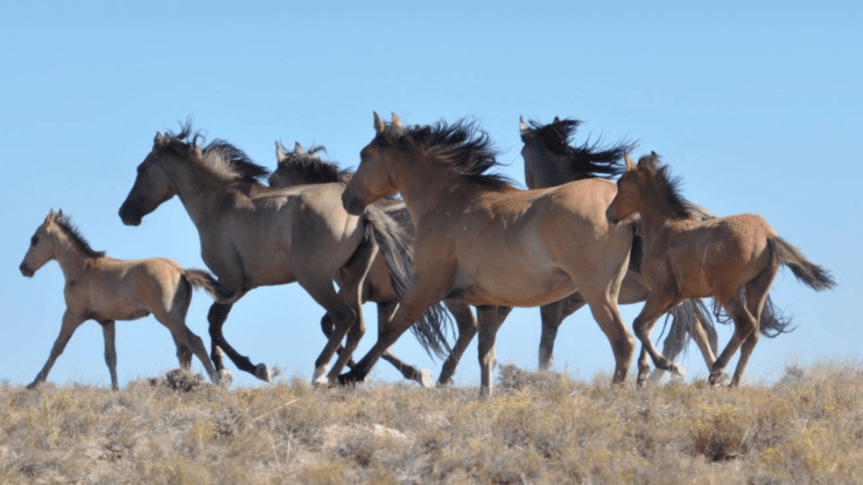
Members of the public interested in adopting a wild horse or burro should contact the BLM Boise District Office at (208) 384-3300 to provide their contact information.
BOISE, Idaho (KBOI) – The Bureau of Land Management has temporarily suspended wild horse and burro adoptions at the Boise BLM Wild Horse Corrals due to strangles, or equine distemper, in several horses.
Strangles is an upper respiratory tract infection in horses and although usually not fatal, is highly contagious.
While the symptomatic horses are quarantined and being treated by a veterinarian, the BLM has decided to close the corrals to adoptions and public visitors as a precaution until further notice.
“Our priority is the safety of the horses at our facility and the potential of the disease being transmitted to privately-owned horses,” said Raul Trevino, BLM Boise Corral Manager. “We just don’t want to take any chances while we wait for the disease to run its course. As soon as it is safe to do so, we will resume adoptions.”
Horses showing sickness were first observed on May 17.
Lab results later confirmed the presence of strangles in one horse, with six others being symptomatic.
All of these horses are presently stable or showing signs of improvement.
Strangles cases are not rare and have happened at other private and wild horse facilities throughout the country.
Members of the public interested in adopting a wild horse or burro should contact the BLM Boise District Office at (208) 384-3300 to provide their contact information.
They will be contacted to schedule an appointment after the corral reopens for adoptions.
For more information, contact the Boise District Office at (208) 384-3300.
Source: Boise BLM wild horse adoptions on hold due to equine distemper | KBOI
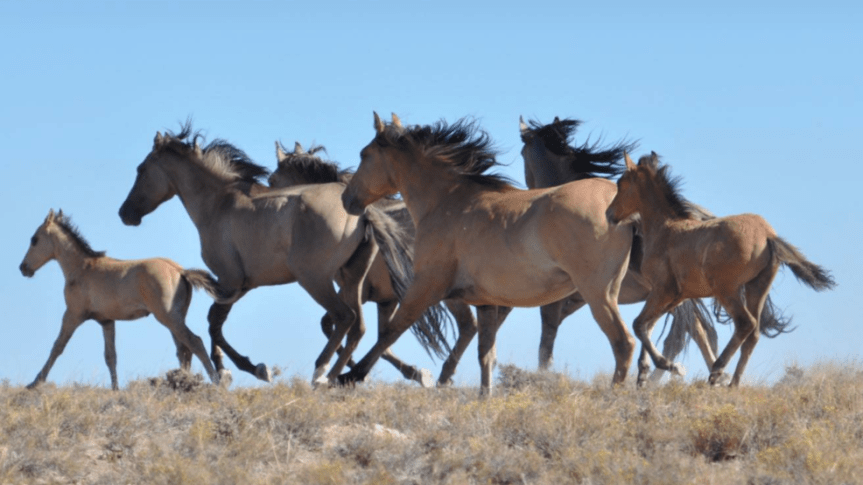
The horses receive an abundance of feed tailored to their needs each day, along with a constant supply of fresh water through automatic watering troughs.
BOISE, Idaho (KBOI) – The BLM in Idaho will offer a public tour of the Bruneau off-range corrals on Thursday, June 8.
Two public tours will be offered — the first will begin at 10 am and the second will begin at 1 pm.
Each tour will last about two hours and can accommodate up to 20 people.
Spaces will be filled on a first-come, first-served basis.
The public can sign up to attend and receive driving directions to the facility by calling BLM at (208) 329-4534.
Please RSVP for one of the two tours by June 5.
Details about the tour:
• Tours start promptly at the scheduled time, so be at the facility a few minutes early or the wagon may leave and we cannot come back to pick you up
• Bring comfortable shoes and clothes. Hats and sunscreen recommended
• Bring your own water
• Cameras and video cameras welcome
• Visitors will not be able to walk around the facility unaccompanied. They must travel with the group in the wagon at all times
The Bruneau off-range corrals are located at 28536 Jacks Creek Road, and are privately owned and operated.
About a 75-minute drive southeast of Boise, the facility provides care for over 1600 wild horses.
The facility encompasses 80 acres containing 39 large holding pens, each pen measuring 70,000 square feet that will safely hold approximately 100 horses.
The horses receive an abundance of feed tailored to their needs each day, along with a constant supply of fresh water through automatic watering troughs.
Free choice mineral block supplements are also provided to the animals in each pen.
A veterinarian routinely inspects the horses and provides necessary medical care as needed.
The BLM strives to place horses removed from the range into good, private homes.
Source: Public tour of Bruneau off-range corrals offered in June | KBOI
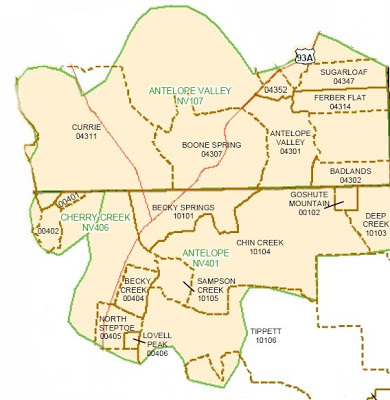
Antelope Valley grazing allotments (2008)
Before you read BLM’s version of this “emergency” below, be sure to read Cindy MacDonald’s 2008 article “The Devil’s in the Details” on American Herds Blogspot. We have to wonder how many acres of public lands that the “private land owner” (mentioned by the BLM below) uses to graze their own private livestock, since it seems the entire HMA is used for livestock grazing. The BLM seems to be giving the public the same ongoing bullshit (literally). – Debbie
“traditionally the wild horses spend the summers in Antelope then migrate to Antelope Valley for the winter ~ except the Nevada Department of Transportation (NDOT) strung up a new fence up on Hwy 93 effectively trapping the horses and in one area, completely cut them off from any water at all.
Speaking to BLMs Kyle Hansen in the Ely Field Office, Mr. Hansen explained range conditions were so bad due to drought that it “looked like an atom bomb went off” and provided photos as evidence of the dust bowl conditions the wild horses would be forced to try and survive in over the winter in if they were not immediately removed.
He also stated compounding the problem was a local rancher who had allowed wild horses to drink water from his property for years but finally “had enough”, fenced the area and now the horses that remained would probably die of thirst.” – Cindy MacDonald
Source: BLM
Progress as of Monday, May 22, 2017
Purpose of Gather:
The Bureau of Land Management (BLM) Elko District, Wells Field Office, in coordination with the BLM Ely District will begin a wild horse water bait trap gather to remove wild horses on private lands near the Boone Spring Area. The gather is taking place due to a request from a private land owner to remove the excess wild horses.
Details of Gather:
BLM plans to humanely gather approximately 60 wild horses through the use of a water bait trap.
Public Observation:
Because of the nature of the water gather method, wild horses are reluctant to approach the trap site when there is too much activity. In addition, the gather operations are being conducted on private land. Therefore, only essential gather operation personnel will be allowed at the gather site during operations.
Adoption Information:
The wild horses removed from the range will be transported to the Indian Lakes Off-Range Corral in Fallon, NV to be prepared for the BLM’s Adoption Program. Learn more about how to adopt a wild horse or burro from the BLM.
Background:
This gather will attempt to remove excess wild horses from private land near the Boone Spring area of the Antelope Valley Herd Management Area. The private land owner has requested removal of the horses. The Antelope Valley HMA has an Appropriate Management Level (AML) of 155-259 adult wild horses. As of March 1, 2016, the BLM estimated the population at 1,013 wild horses (not including foals born this year). The BLM Wells Field Office has determined that even though there has been above average amounts of precipitation this winter and spring, there are still no known water sources in the area for wild horses to obtain water later this spring and summer. Learn more about the Antelope Valley HMA.
er later this spring and summer. Learn more about the Antelope Valley HMA.
SOURCE: postregister.com
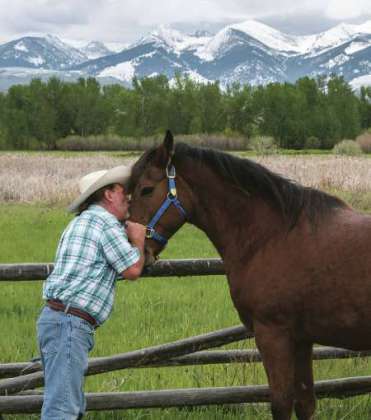
Steve Drippon displays affection to Rooster; loving a special horse. Jerry Slagle / for the Post Register
SALMON — A horse named Rooster is an equine without equal if you ask the volunteers and staff at Whitewater Therapeutic and Recreational Riding Association.
The Salmon-based association offers horseback experiences to riders of all ages whose challenges can include everything from a physical disability to a psychological trauma.
In the decades since the accredited nonprofit was founded, dozens of horses have been either selected or donated for the purpose of providing equine therapy but few have gained the profile and elicited the adoration of Rooster.
Whitewater workers say Rooster has all the mannerisms of a courtly gentleman even though he once was a wild horse from the Challis area before adoption through a U.S. Bureau of Land Management program.
“I’ve dealt with a lot of good horses but Rooster has a special place in my heart,” said Joyce Scott, Whitewater’s executive director. “He’s an elegant and powerful horse who personifies peace and calmness. Everyone who rides him falls a little bit in love with him.”
In a first for Whitewater, Rooster has been nominated in the regional round of a contest for therapy horse of the year with the Professional Association of Therapeutic Horsemanship International.
Read the rest of this article HERE.
JACKSON, Ky. (Source Article) — Curtis Bostic is an attorney, a politician and — for a few weeks in 2016 — an accused horse thief.
On a cold December day in the rugged hilltops of Breathitt County, Bostic was trying to rescue some horses he said had been abandoned and were malnourished. But he was arrested by a sheriff’s deputy, who said the horses belonged to two men who follow the local custom of setting them free in the winter to wander the wilderness of the county’s abandoned coal fields.
The charges were later dismissed after the sheriff’s department said it didn’t have probable cause to make the arrest. But during the night Bostic spent in jail, he came up with an idea: A few weeks later, he leased the land where he had been arrested. He sent a letter to the two men who had pressed charges against him. Now, they were the trespassers, and Bostic ordered them to come get their horses before he put them up for adoption.
“I can’t change the full county. But I can say you are not going to come to my property and drop your horse off in the cold winter,” Bostic said.
Bostic wants to turn 4,000 acres of former coal mines into a horse sanctuary. It’s the latest idea on how to tackle the growing horse population in the mountains of Kentucky, a state known more for pampered thoroughbreds on pristine farms than bony horses roaming free.
Bostic’s descriptions of thousands of horses suffering at the hands of cruel owners have offended the locals who say he doesn’t understand their culture.
Clifton Hudson, 30, owns five horses that he sets free to wander land he doesn’t own near his home in Breathitt County. He said he provides 600 pounds of salt each month for the horses. He stopped hauling hay bales to the land because the horses were not eating them, a sign he says means they have plenty of grass to graze. The locals often bring their children to the mountains on the weekends to pet and feed the horses.
“It’s just really it’s more of a pastime than anything else with the people of the county,” Hudson said. “So far the only person really had an issue with it has been Mr. Bostic.”
Wild horses have been a familiar sight in the Kentucky mountains for decades. But following the Great Recession and the thousands of jobs lost because of the disappearing coal industry, more horses have been set loose. Read the full story »
Source: WCPO Cincinnati. Report originally filed by the Associated Press. Written by Adam Beam . Featured image by Jervis Pics.
Source: Kentucky lawyer leases land to protect horses, plans sanctuary in coal country – Tuesday’s Horse
From Rewilding Europe
“At the rate that the BLM is decimating our last remaining free roaming herds of wild horses and burros we may find ourselves taking notes on how the Europeans are bring wild equines back to their rightful ranges.” ~ R.T.
Raising the grazing

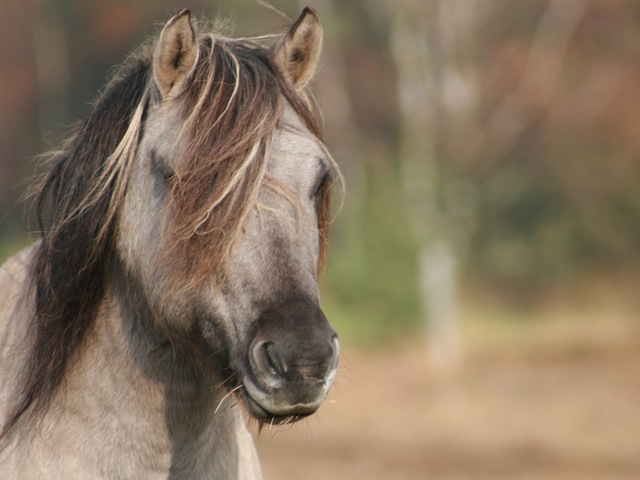
Free living Sorraia horses in Faia Brava nature reserve, Western Iberia rewilding area, Portugal. Juan Carlos Múñoz / Rewilding Europe
Rewilding Europe wants Europe’s native herbivores to return in significant, naturally balanced numbers to the lands where they once belonged. With domesticated livestock numbers on the decline in many European countries due to land abandonment, such herbivores can play a vital grazing role, opening up landscapes and enhancing biodiversity.
To this effect, Rewilding Europe now supports natural grazing in 16 different pilot areas across nine countries. In Faia Brava, one of our largest natural grazing pilots located in northern Portugal’s Middle Côa Valley, wild Garrano horses are the herbivores now reshaping the landscape in a way that benefits a wide range of local flora and fauna.
Thanks to the efforts of Associação Transumância e Natureza (ATN), our partner in the Western Iberia rewilding area, another site in the Middle Côa Valley will soon benefit from wild equine grazing too. The Portuguese NGO has this year started the so-called Zebro Project, carefully selecting and cross-breeding Sorraia horses to maximise their wild characteristics. These animals will eventually be released as a herd at a site close to (but separate from) Faia Brava.
“Our eventual aim is to recreate wild, free-roaming horses that will replace those that have been lost from the Iberian ecosystem,” explains Pedro Prata, the Western Iberia rewilding area team leader and ATN’s executive coordinator.
“We want rustic equine and cattle breeds to take back their ancestral grazing role in the Middle Côa Valley in a natural and sustained way,” continues the Portuguese. “These herbivores can reduce weed density, create clearings, promote seed dispersal and favour populations of wild scavengers and predators.”
An equine experiment
The rewilding of horses began back in 2005, when ATN introduced five Garrano horses into Faia Brava. Further introductions since then have seen the number of free-roaming horses in the reserve rise to an estimated 60 to 70 animals. These are now part of Rewilding Europe’s European Wildlife Bank.
Like the Garrano, the Sorraia is an ancient horse breed that was once found wild across the Iberian Peninsula, but whose populations decreased dramatically under pressure from hunting and the rise of domestic livestock and mechanised agriculture. The Sorraia has a particularly interesting history, having once been called the “zebro” or “zebra” in Portuguese, due to its striped markings.
Hardy native animals that lived off uncultivated lands and salt marshes in Iberian river valleys, zebros were occasionally captured by farmers for agricultural work. A small population of Sorraia horses, thought to be direct descendants of the zebro, was discovered in the 1920s. It is from this stock that the lineage has been preserved, although the breed remains rare.
In its attempt to recreate the zebro, or a genetic approximation of this ancient wild equine, the challenge is to identify the right horses for breeding.
“It is difficult to find modern-day horses with the genotype, phenotype and behaviour of ancient breeds,” explains Pedro Prata. “We are looking for animals with more rusticity, which are strong enough to survive in adverse conditions, resist pathogens and diseases, and generally adapt to wild conditions. These are now quite scarce.”
Since the beginning of 2017, ATN has acquired several stallions and mares displaying the Sorraia phenotype. The plan is to acquire further animals this year, using part of the ATN membership fee for acquisition, transport and habitat management, and to launch a new line of merchandising to celebrate the project.
While the European wild horse is officially extinct, its genome is not lost and still exists across several types of old horse – from Exmoor ponies in the United Kingdom to the Hucul ponies of Eastern Europe’s Carpathian Mountains. These primitive animals still boast many of the characteristics and genetics of their ancestors, making them particularly suitable for rewilding and the grazing of wild habitats.
Rewilding Europe’s brochure on rewilding horses can be viewed here.
https://www.rewildingeurope.com/news/something-old-something-new/
Source: Something Old, something New | Straight from the Horse’s Heart
I believe in happy endings...
Creating stories for pleasure
Shh I'm Writing
Nothing is True. Everything is Connected.
Medical Intuition, Astrology, Soul Readings, Intuitive Coaching, Tarot, Reiki: Inspiring and Empowering Visionaries, Artists and Healers
30th Anniversary Edition
Weekly Challenge from the 118, 126, & 113
all things fanfic...
Crystals, and all things Magical
welcome to the inner workings of my mind...
Learn • Explore • Grow
A Journey of Discovery
Where Canon has No Meaning and Universes Collide
Just another WordPress.com site
The Crime Drama Advent Calendar
Just another WordPress.com site
Here there be Dragons
Fanfiction and original stories from Toasterpop
Seeking Ideas Beyond Conventional Thought
Writting, Drafts, Ideas
All Things Wicked and Wonderful
Author, Editor, Photographer, Artist
Honoring their service and building their legacy. The official blog of the Vietnam Veterans Memorial Fund.
Art and Stories for all things 00Q, since 2014
Where the Writer Comes First.
FanFiction Author
The home of the Every Fandom Bang and Reverse Bang!
n. pl. pe·num·brae (-br) or pe·num·bras 1. A partial shadow, as in an eclipse, between regions of complete shadow and complete illumination.
Witchcraft for the Everyday and the Extraordinary
... and this is what I like
Fanfiction Recommendations ~ Slash, Femslash, & Het Fanfic Recs
EVIL AUTHOR DAY
Recipes from the Past
what my demented mind comes up with
Nothing is True. Everything is Connected
The Multi-Fandom Fix-it Big Bang
a place for me to share what I've written
Enchanted World of Magical Gardening ~ Crystals & Gemstones ~ Locally Grown Organic Herbs
m/m original fiction and fanfic for adults only
It's All About The Romance
 Paths I Walk
You must be logged in to post a comment.