Sacred Trees in the Americas: Ironwood or Hornbeam (Ostrya virginiana, Carpinus caroliniana)

Dana's avatarThe Druid's Garden

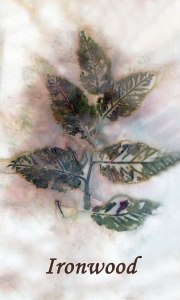
Ironwood tree ecoprint from my upcoming Tree Alchemy Oracle!

There are actually two tree species that are known as both “hornbeam” and “Ironwood” along the US East Coast and into the midwest: The American Hop Hornbeam (Ostrya virginiana) and the American Hornbeam (Carpinus caroliniana).  After doing a lot of research and interaction with both of these trees, I see them as interchangeable.  First, they are both in the Beech family (Order: Fagales, Family: Betulaceae). They actually have a very similar growth habit and look to their bark (like muscles), their wood is quite similar, and the hop-looking fruits are similar on both trees.  Thus, if you can find either of these trees, you can apply the information I’m sharing.  I have primarily focused on Ostrya Virginiana (Ironwood/Hop Hornbeam) in my comments here as it is the more dominant tree in my specific ecosystem.

This post is part of my Sacred…

View original post 1,348 more words

Herbal Hacks, Part 3: Garden Care and Herb Drying Tips

The Herb Society of America's avatarThe Herb Society of America Blog

The good ideas just keep coming! Read on for the third installment of reader-submitted herbal hacks: garden care and herb drying tips.

flowers-5792157_1920_Image by Prawny via Pixabay In summer, I dry herbs in paper bags in the rear window of my car. It only takes 2-4 days, depending on the amount of sun. – Gail Seeley

Fill a lidded, plastic trash can with water, then measure out and and add your favorite water soluble plant food. Store your watering can inside. This tip will make caring for plants in containers much easier. –Holly Cusumano

Folded and rolled towel cropped_Carol KaganExcerpt from Herbal Sampler, 2nd ed. You can dry herbs in your frost-free refrigerator. This method results in good quality and keeps the bright color of the herbs. Make sure the herbs are clean and dry. Remove the leaves from stems and place on a section of paper towel. Roll or fold the towel to cover the herbs…

View original post 420 more words

The Butzemann (Magical Scarecrow) Tradition at Imbolc and through the Light Half of the Year

Dana's avatarThe Druid's Garden

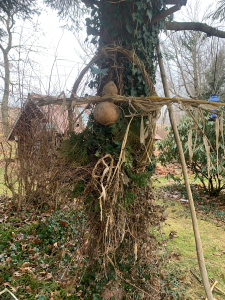
Last year’s butzemann, dressed in her finery (Technically, she was a Butzefrau!)

For the last three years, I’ve spent part of my Imbolc celebration making a Butzemann for our land.  The Butzemann is a really interesting tradition from PA Dutch (German) culture called the Butzemann (literally, Boogieman).  In a nutshell, the Butzemann is a magical scarecrow that protects the land for a season.  He is created at Imbolc from natural materials and given clothes and a heart. At the Spring Equinox, the Butzemann is shown the property and the breath of life is breathed into the Butzemann, naming him/her for the season.  Then the Butzemann is displayed prominently throughout the season to protect the and.  Before or on Samhain, the Butzemann is burned and the protective spirit is released and then at Imbolc, a new tradition begins. Today I thought I’d share this tradition with my readers, in case they…

View original post 1,420 more words

American Botanical Council

Crooked Bear Creek Organic Herbs's avatarCrooked Bear Creek Organic Herbs

We are happy to announce the next webinar in the Sustainable Herbs Program (SHP) Toolkit Webinar Series: COVID and the Botanical Industry: Perspectives from the Field.

How is the unprecedented growth in the botanical industry impacting producer groups around the world? What can ingredient suppliers, finished product companies, and consumers do to support the work these companies do to source high quality botanicals from their regions?

In this webinar, SHP Director, Ann Armbrecht will speak with Puspa Ghimire, from ANSAB, Nepal; Tarun Prajapati from Cultivator Natural Products, India; and Paulo Barriga from Pebani, Peru about the challenges of the past year in producing and supplying high quality, sustainable, and fairly traded botanicals to the global market.

COVID and the Botanical Industry: Perspectives from the Field
A conversation with Puspa Ghimire, from ANSAB, Nepal; Tarun Prajapati from Cultivator Natural Products, India; and Paulo Barriga from Pebani, Peru
Thursday, January 21…

View original post 17 more words

Gardening Under Lights with Kids Webinar – KidsGardening

Crooked Bear Creek Organic Herbs's avatarCrooked Bear Creek Organic Herbs

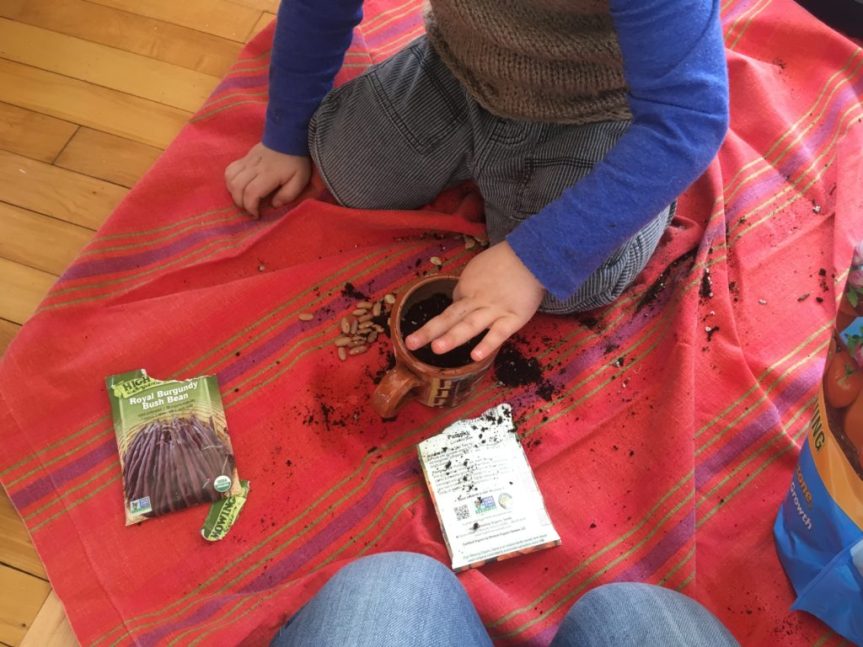
Do you love gardening with kids, but perhaps feel challenged by space or weather? Gardening indoors under lights might be the perfect solution! Don’t know where to start? We’ll help you.

Join KidsGardening’s senior education specialist, Sarah Pounders, and Leslie Halleck, horticultural expert, and author of “Gardening Under Lights” as they simplify successful indoor gardening with lights and explain how you can engage kids in this fun and educational activity.

Date: Thursday, February 4th, 2021 at 7-8pm Eastern

Registration Cost: $8

Learn to garden under lights with kids! This fun webinar with Leslie Halleck will teach you to successfully garden with grow lights.

Source: Gardening Under Lights with Kids Webinar – KidsGardening

View original post

Parsley – Herb of the Month and Herb of the Year

The Herb Society of America's avatarThe Herb Society of America Blog

By Maryann Readal

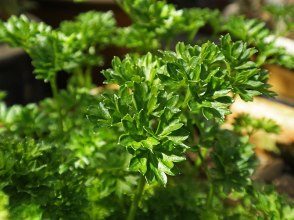
The spotlight is shining on parsley this month. Parsley (Petroselinum crispum) is The Herb Society of America’s Herb of the Month for January and the International Herb Association’s Herb of the Year for 2021. The three most common varieties of parsley are P. crispum or curly-leaf parsley,  P. crispum var. neapolitanum or flat-leaf Italian parsley, and P. crispum var. tuberosum or turnip-root parsley which is grown for its root and is used in soups and stews.
Parsley has an interesting history dating back to Greek and Roman times. To the Greeks, parsley symbolized death and was not used in cooking. However, according to Homer, the Greeks fed parsley to their chariot horses as they thought it gave them strength. The Greeks believed that parsley sprang from the blood of one of their mythical heroes, Archemorus, whose name means “the beginning of bad…

View original post 1,001 more words

Readers Choice: Ringing in the Best of Blog Castanea

As we spin forward into 2021 (are we there yet, mom?!?), it’s exciting to reflect on what you—our friends, fans, and phenomenal plant family—went herb-wild for through the seasons.Did you know we serve up a splendid spread of free herbal content on our blog?In 2020, we decked the halls of Blog Castanea with garlands of new articles, and re-polished our most popular blogs from seasons past. We brought in new contributors and the blog officially became a team sport. Are you curious which topics were herbally admired and adored this year? And which plants people felt positively passionate about? Get caught up with our Best of 2020 Roll Call:
Continue reading “Readers Choice: Ringing in the Best of Blog Castanea”

My Adventures in Making Corn Husk Paper

The Herb Society of America's avatarThe Herb Society of America Blog

By Angela Magnan

Corn husks for papermakingAfter watching a video online about making paper from corn husks, I thought it would be fun to try. I had never made paper before, but the video made it look easy. Don’t they always?! I first made some using the husks from six ears. After it didn’t really go well, I bought a book with more detail and tried again. 

But like many DIY projects that I try for the first time, or even the second, making paper out of corn husks reminded me that watching a video is no substitute for a detailed book, which in turn is no substitute for experience. It also reminded me that when trying something new, I should perhaps follow the directions. 

Corn husks and stalks are some of the many plant materials commonly found in home gardens that can be made into paper. Grass and leaf fibers are some…

View original post 1,129 more words

HSA Webinar: Molé, Pan and Chapulin–Oaxacan Style

The Herb Society of America's avatarThe Herb Society of America Blog

by Jen Munson, HSA Education Chair

Face it, 2020, for the most part, has been a bust! The pandemic has cancelled events, reduced travel, and all but eliminated herbal adventures. As we dream of a future where we can begin to move about the globe more easily and safely, now is the perfect time to research new destinations. mapInterestingly, just south of the US border in Mexico there is a unique community that is home to sixteen distinct indigenous peoples living in a mild climate, enjoying unique botanic diversity. 

Oaxaca, Mexico, is a community known for its culture, crafts, textiles, ceramics, cuisine, and complex use of plants. While Mexico is known for its Day of the Dead celebrations, Oaxaca offers the most spiritual and unique Dia de los Muertos Celebrationcelebrations of them all. The Day of the Dead festival (or Dia de los Muertos) is celebrated from October 31st thru November 2nd. During this…

View original post 259 more words

Herbal Hacks, Part 1: Food and Drink

The Herb Society of America's avatarThe Herb Society of America Blog

We asked and you delivered! Over the summer we asked folks to share how they used herbs to make their lives easier or more fun. We received many great responses, and want to thank everyone who contributed a little snippet of herbal how-to. We received so many responses, in fact, that we’ve decided to offer them in installments, categorized by topic for easy reference. Please enjoy this week’s selection – herbs in food and drink.

Violet banner_Creative Commons via Pxfuel

I love to use fresh herbs as drink garnishes and in ice cubes. Edible flowers and leaves enhance my beverages, from my morning smoothie to my afternoon glass of wine! – Janice Cox

Dried blue cornflower petals sprinkled over salads – or as a garnish on other foods – for a beautiful blue punch of color! Flowers are harvested each year from my garden at the end of a hot day, dried on white cotton…

View original post 687 more words