Is This Edible Mushroom Toxic On Certain Trees?

Greetings,

Before I share a brand new video, I’d like to remind you that Trees In All Seasons is currently open for enrollment until Monday, May 22. 

This online course teaches you how to confidently identify over 100 trees in every season — spring, summer, fall, and winter.  When you enroll, you gain immediate and unlimited access to over 75 exclusive videos that lay the groundwork for successful tree identification.

You can register and learn more about the course here.

Tree identification is an excellent skill to learn if you are interested in foraging mushrooms.  Many edible mushrooms grow in association with trees.  When you learn the basics of tree identification, your understanding of fungal ecology improves.

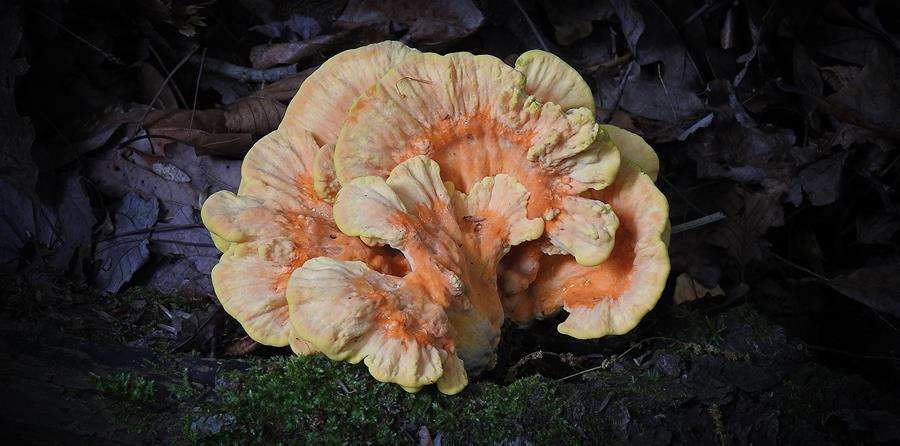
One popular mushroom that grows in association with trees is chicken of the woods.  Despite its popularity, chicken of the woods sometimes has a questionable reputation.  When this mushroom grows on certain trees (e.g., angiosperms), foragers praise it and consider it undeniably edible.  When this mushroom grows on other trees (e.g., conifers), some foragers vilify it and consider it suspect.

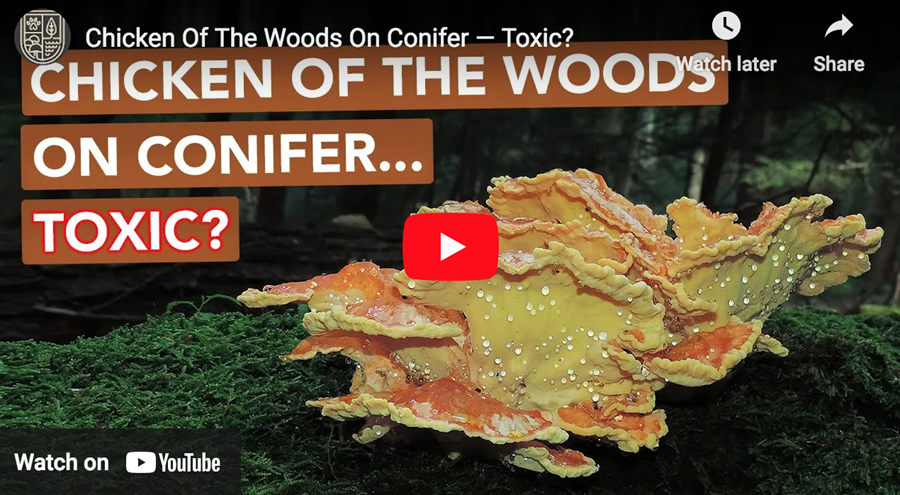
I recently spent some time in a conifer-rich woodland and decided to film a video in which I share my thoughts on this controversy.

Is there any truth to the claim that conifer-derived chicken mushrooms are potentially toxic?

You can watch the new video here.
Thanks for reading and watching.  If you’d like to improve your foraging skills by learning how to identify trees, consider enrolling in Trees In All Seasons by Monday, May 22.

—Adam Haritan
Not Every Conifer Is A Pine

Greetings,

Before I share a new video with you, I’d like to mention that I’ll be opening up registration for my online tree identification course on Monday, May 15. 

Trees In All Seasons is an online video course designed to teach you how to successfully identify over 100 trees in every season.  Registration will be open for one week only — from Monday, May 15 to Monday, May 22.  Once you register, you will have immediate and unlimited access to the course.

If you’re interested in improving your tree identification skills, check your email on Monday for more information on how to register.

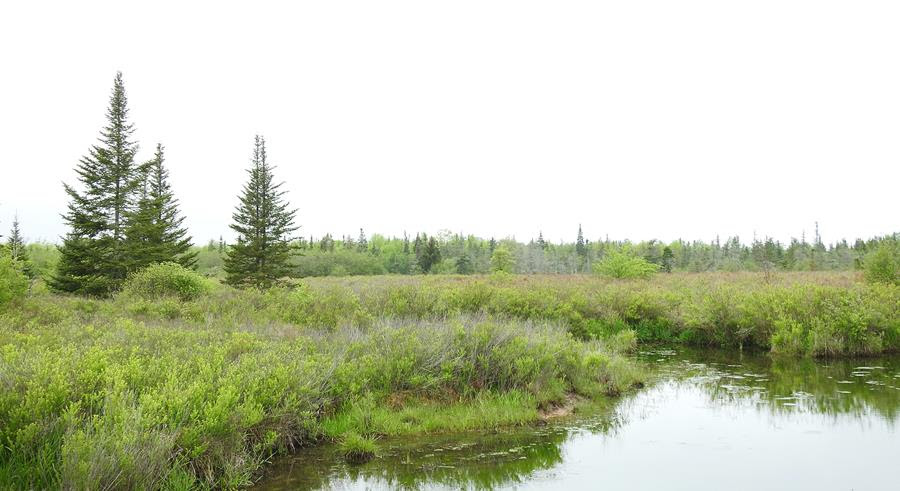
Two years ago, I explored a remote bog in northern Pennsylvania.  It was the peak of the autumn mushroom season, but I wasn’t there to look for mushrooms.  Archery season had just begun, but I wasn’t there to harvest deer either.

After a few hours of wandering through the bog, I eventually encountered the only person I’d see the entire day.  His name was Bill and he was heading home for the day. 

Taking one good look at Bill, I immediately knew why he was in this isolated part of Pennsylvania.  He was hunting deer.

Bill, on the other hand, wasn’t too sure why I was there.  He noticed that I had no hunting gear, no camouflage, no truck, and no apparent desire to look for deer. 

Instead, I had a tripod, a camera, and a paper map printed off the internet.

After exchanging formalities, I explained to Bill why I was in the bog:  to film and photograph balsam fir.

Bill was a lifelong woodsman.  He hunted.  He fished.  He knew his way around the woods better than most people did.  Bill spent his entire life in Pennsylvania, but he had never heard of balsam fir.

“We call them all pines,” he said as he watched me point out a few balsam fir trees.

Pines.  I wasn’t too surprised to hear that response.  Heck, I could even relate.  Years ago, I called every conifer a “pine.”  It didn’t matter if I was looking at a spruce or a fir.  As long as the tree had evergreen leaves and woody cones, it was a pine.

Today, things are different.  Disciplined tree study has allowed me to appreciate the beautiful differences between conifers.  I now love observing the distinctive Christmas tree shapes of balsam firs.  I love watching fir cones fall apart in the autumn season.  I love smelling fir leaves (they smell better than any conifer I’ve ever smelled).  And I love knowing that firs, despite being in the pine family, aren’t true pines.  They’re firs, and thank God they are.

Noticing the distinctions between conifers is an important skill if you want to learn how to identify trees.  Tree identification skills are important if you want to improve your ecological literacy. 

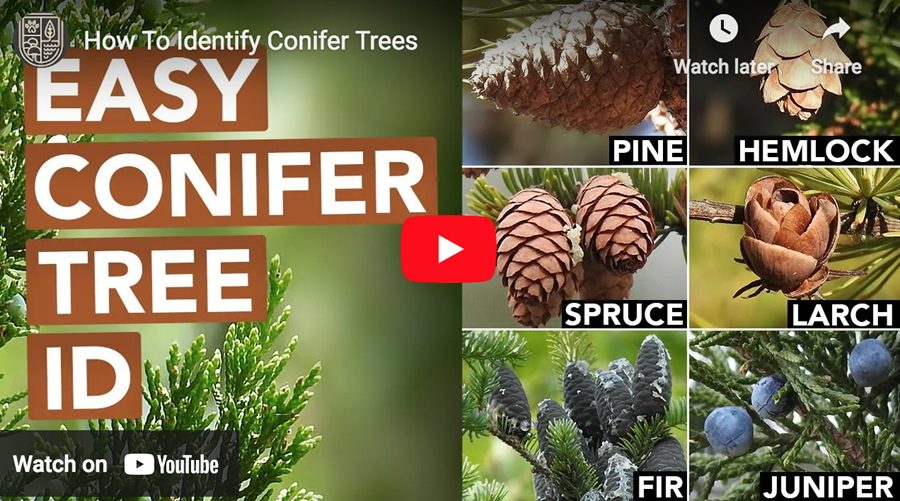
To get you started, I created a video in which I teach you the major differences between conifers.

You can watch the brand new video here.

Thanks for reading and watching.  If you are interested in learning how to identify over 100 trees, check your email on Monday for information on how to register for Trees In All Seasons.

-Adam Haritan

Exploring the Sacred Animals of the Quarters in the Druid Tradition — The Druids Garden

In the druid tradition, in multiple modern druid orders, we associate animals or fish with the four directions.  The classic ones are: The Great Bear in the North The Hawk in the East The Stag in the South The Salmon in the West Depending on the tradition, it might get a little fancier.  For example,…

Exploring the Sacred Animals of the Quarters in the Druid Tradition — The Druids Garden