
New Moon in Scorpio | Entering the Crone Moon Cycle

We are already deep in Scorpio season and this new moon in Scorpio continues that theme of depth, mystery, and intensity. This moon cycle ramps up to some pretty intense astrological events and opportunities for transformation.

This month we experience the 11/11 portal which can help you manifest your dreams and desires. We also enter the Eclipse season with a partial eclipse on the full moon. Eclipses are powerful portals and tend to shake things up in a big way.

So buckle up and get ready for some big transformational opportunities to present themselves to you.

The moon turns new in the mysterious and deep sign of Scorpio on the 4th, which will help you embrace your own dark side. Scorpio is the sign of death and rebirth and this new moon cycle can hold potent transformational energy for you.

The Sun is opposite Uranus on the same day, which will add to that transformational energy and can bring to light any thing suppressed or blocked that is keeping you from stepping into your full power. This aspect is sometimes seen as rebellious, but can be used to break free from any self imposed obstacles that might be holding you back.

Read original article at: Spirit de la Lune ~ New Moon In Scorpio|Entering the Crone Moon Cycle
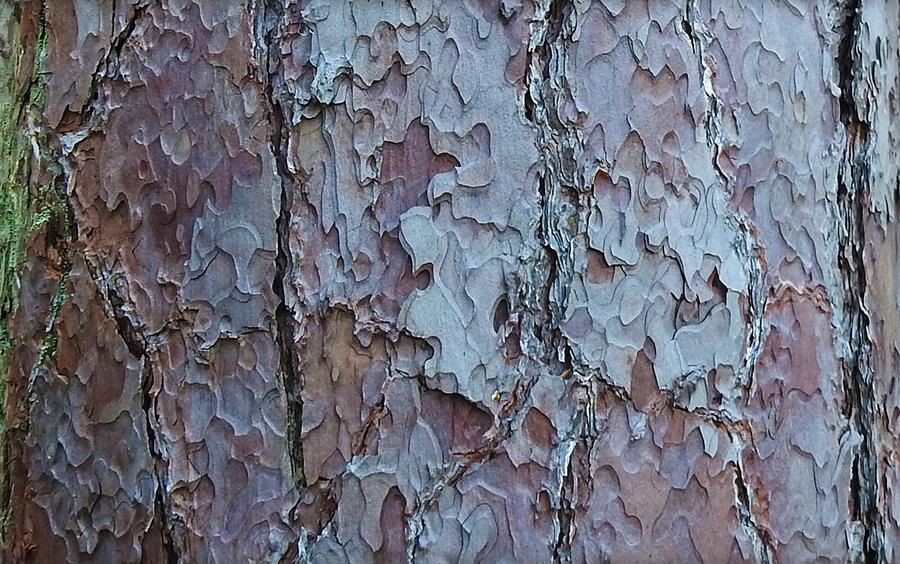
Old Growth Red Pine — An Uncommon Sight

Among the common, the uncommon exists.  Learning the uncommon among the common helps us see in new ways what has been in front of us all along.

Take red pine, for instance. 

Where I live in western Pennsylvania, red pine (Pinus resinosa) is a common sight.  Many county and state parks contain large tracts of land that host nothing but red pine plantations.  These plantations, believe it or not, are considered by fundamentalists to be “ecological deserts” — a category that also includes parking lots and golf courses.

Red pine, it seems, can’t catch a break.  Because of the bias against its ubiquity and against its purported ecological disservice, it’s no wonder that people rarely take any time to marvel underneath a red pine tree.

But there is something that we should know about red pine.  Among the common, the uncommon exists.

Red pine is not common in every context.  To provide two examples — “natural” stands of red pine are quite uncommon in my home state of Pennsylvania, and across the entire range of red pine, old growth red pine forests occupy less than 1% of their original range. 

What’s more, old growth red pine forests are far from ecological deserts.  Researchers consider these forests to be critical for maintaining biodiversity at stand and landscape levels.

To gain some insight on the matter, I decided to visit a “natural” stand of red pine.  Not too surprisingly, I did not discover an ecological desert.  Instead, I encountered a diverse ecosystem containing red pines that were approximately 250 years old and approaching old growth status.

If you are interested in learning the uncommon among the commoncheck out the brand new video!

Speaking of uncommon (or very common, depending on where you live), I recently encountered this melanistic eastern gray squirrel foraging for acorns.  The presence of melanism across the range of gray squirrels is really low (less than 1%).  In some areas, though, it can be higher than 50%.  To learn more about black squirrels, check out the latest Instagram post!Click to view post

Thanks for reading and watching, and thanks for your continued support!

-Adam Haritan

Carob – Herb of the Month

The Herb Society of America's avatarThe Herb Society of America Blog

by Maryann Readal

Minolta DSCHave you heard of St. John’s bread or locust bean? These are all names for the carob tree, Ceratonia siliqua. This herbal tree is a native of the Mediterranean region and is also grown in East Africa, India, Australia, and California. It can grow in USDA Plant Hardiness Zones 9-11 – places with dry, Mediterranean-type climates. Carob is disease and pest resistant, tolerates dry, poor, rocky soils, and is drought tolerant due to a very deep taproot (125 feet) that enables the tree to survive in arid climates. It is in the pea family (Fabaceae), and like other members of this family it fixes nitrogen, improving the fertility of the soil in which it is planted.

Carob is a multi-stemmed, evergreen tree that can reach 50 feet high and 50 feet wide, and its broad, dark green leaves make it a good shade tree. It is…

View original post 1,091 more words