A Prescription For Swans (new video!)

The arrival of spring can easily be seen on a lake.

Melting ice, blossoming poplars, and migrating waterfowl are among its most faithful signs.  Like an unerring calendar, the lake reminds us that the darkest days have expired and a season of growth awaits.

While walking the shores of a local lake one chilly morning, I observed and heard several signs of spring.  One sound in particular, emanating from the center of the water, caught my attention.

As I approached the sound, its intensity changed from a periodic “coo” to a chorus of whistles.  Too early for spring peepers and wood frogs, I thought to myself, but not too early for something else I had hoped to find.

Tundra swans.

I peered through the cattails and alder shrubs to confirm my hunches.  The icy lake hosted hundreds of tundra swans that had stopped for a visit on their journey to the Arctic.  With a camera in hand, I decided to document the experience while musing on the subtle power of swans to heal.

If you’re interested in seeing tundra swans up close, check out the new video!

Less vocal and numerous but still a sign of spring’s impending arrival are these diminutive diving ducks.  Have you seen any buffleheads this year?  To read about my recent encounter with a small flock, check out the latest Instagram post!Click to view post

In case you missed it, here’s a recent interview I did with The Mushroom Hour podcast.  In this interview, we discuss many topics including nature connection, reciprocal living, and supporting land conservation trusts.  You can listen to the interview through one of the following links:

Thanks for reading and watching, and thanks for your continued support!

-Adam Haritan

US Lavender Growers Association –

Crooked Bear Creek Organic Herbs's avatarGood Witches Homestead


Network with other lavender growers from around the world, learn from expert growers and business leaders in the industry, and access a wealth of resources for your business. New growers will appreciate our intensive, two-part “Start a Farm” series, while more experienced growers will benefit from a wide range of topics on production and business. Through the virtual platform, we will be able to provide networking in small groups, topical discussion opportunities, and a unique Exhibitor Hall experience that will allow you to truly assess the resources available to your farm and your business.

Lavender farms, shops, and festivals are popping up all over the country, and so are legions of lavender lovers. The United States Lavender Growers Association (USLGA) is offering enthusiasts the opportunity to indulge in an inspiring and fun day to discover all about lavender. You’ll be able to “tour” scenic lavender fields, gardens, and shops…

View original post 854 more words

The Other Side of Yew

The Herb Society of America's avatarThe Herb Society of America Blog

By Erin Holden

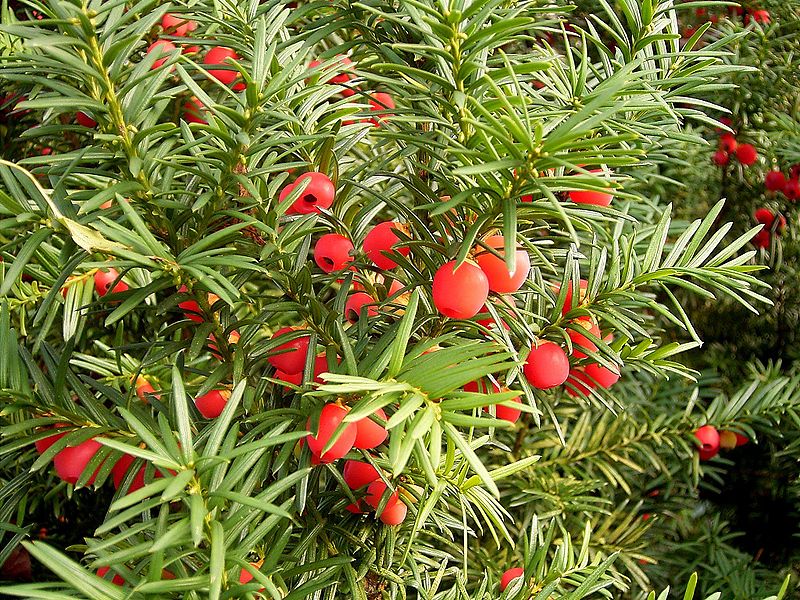
As an herbalist I’m interested in many aspects of plants – from their use in herbal and conventional medicine, to lore that informs us how those in the past viewed the plant. I knew that Taxol was a cancer drug made from the yew tree, but when a friend mentioned its poisonous aspects, I decided to dig a bit deeper.

Taxol, the well-known cancer treatment, was first isolated and studied in the early 1960s into the late 1970s, and approved as a cancer drug in the early 1990s. Paclitaxel, the common chemical name of Taxol, was initially extracted from the bark of the Pacific yew (Taxus brevifolia). It was quickly realized that extracting enough paclitaxel to meet demand would wipe out this species in short order, so scientists turned to its faster-growing cousin, the European yew (Taxus baccata), as an alternative. A precursor…

View original post 659 more words

Sacred Trees in the Americas: Spicebush (Lindera Benzoin) Magic, Ecology, and Sacred Uses

Dana's avatarThe Druid's Garden

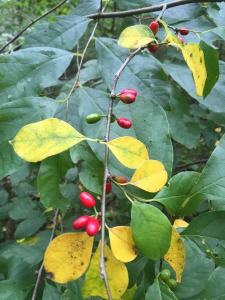
Spicebush leaf and berry in August in Western Pennsylvania

As I continue to explore some of the most important understory trees in the US East Coast and Midwest region, we turn our attention today to the amazing Spicebush (Lindera Benzoin).  Historically, Spicebush was an incredibly important plant, medicine, and spice both to Native Americans and early white settlers in the US and yet today has largely been forgotten in history. Spicebush is a native understory tree with a large range in North America, spanning from Maine to Florida and all the way across the south and Midwest to Texas and up to Ontario. While I’ve taught this plant routinely on my plant walks, and what amazes me is that nobody can even identify it, much less recognize how it might be used. Spicebush has an incredible flavor, medicinal value, and offers much in the way of magic and mystery. It…

View original post 1,877 more words

Maturity

New Moon in Pisces | Entering the Planting Moon

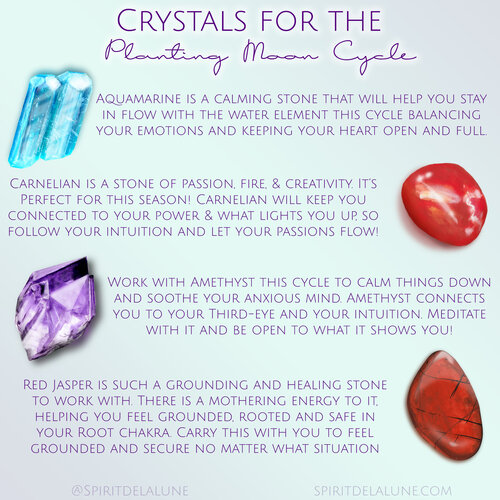
A new moon marks the end of one cycle and the beginning of another 28-day cycle.The Pisces new moon on Saturday, March 13th marks the beginning of the Planting Moon cycle.The Planting Moon cycle holds the energy of spring, rebirth and preparation. During this cycle we will experience the Spring Equinox here in the Northern Hemisphere.

New Moon in Pisces | Entering the Planting Moon | Spirit de la Lune

As the earth wakes up from it’s winter slumber, you might feel the rekindling of your own own inner flame stir back to life during this cycle.

This new moon is a very intuitive and psychic one, and to be honest, this entire cycle you might notice your intuition is sharpened and your dreams are more vivid. Get your dream journal ready. It might also be a good idea to keep a journal with you for spiritual insights or symbols you might get during waking hours too!

Spirit de la lune Crystals for the New Moon Planting Moon Cycle

The planting moon cycle is an intuitive but productive one! Be prepared to plant a lot of seeds and get a lot done, but remember pace yourself and prioritize your focus so you can finish everything.

Read the original article at: Spirit de la Lune ~ New Moon In Pisces | Entering The Planting Moon

Spring Flowers, Magical Bluebells.

Crooked Bear Creek Organic Herbs's avatarGood Witches Homestead

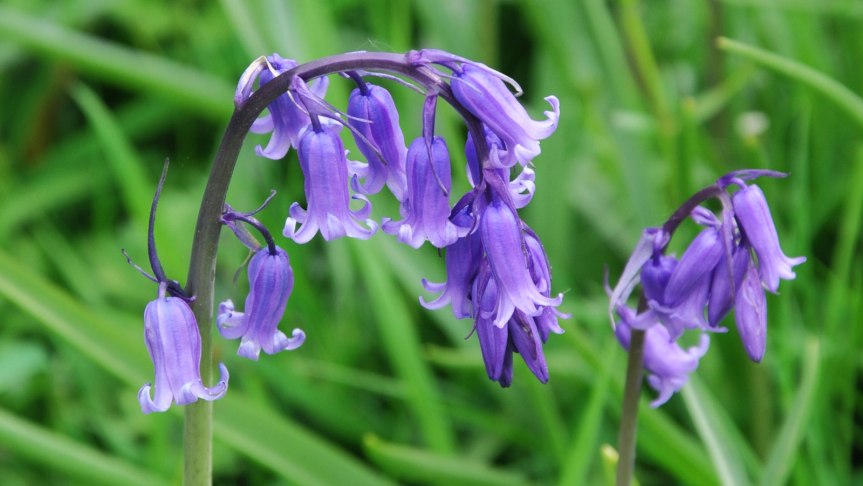
To Elizabethans, bluebells were enchanted, and heaven forbid you hear their bell-shaped heads ring, for death would likely follow. Links with folklore were still prevalent more than three centuries later, as borne out by Cicely Mary Barker’s depictions ofFlower Fairies(the first book in the series was published in 1923) and her assertion that the bluebell be ‘the peerless Woodland King’.

Deep blue H.non-scripta, a perennial bulb, flourishes in humus-rich soils, and on limestone ridges. Young shoots push their way up through leaf litter to allow their flowers to open in the dappled shade of trees such as beech and oak.

The bluebell is a natural indicator that helps us to identify ancient woodlands, where it has grown for hundreds of years. Rich in pollen and nectar, it is also a vital food source for many native insects, including its main pollinator, the bumblebee.

Believed to call…

View original post 409 more words

Exploring Vanilla in the Rainforest and in the Kitchen: Part II

The Herb Society of America's avatarThe Herb Society of America Blog

By Susan Belsinger

(Adapted from her article, “Exploring Rainforest Spices at Villa Vanilla,” featured in the 2019 issue of The Herbarist, the annual journal of The Herb Society of America.)

“Plain vanilla is very much like that little black cocktail dress—always welcome, simply chic, so quietly dramatic.”

                —Lisa Yockelson, from Baking by Flavor

Vanilla in the Kitchen

P1110888Although I am a chocolate lover, I have always adored the fragrance of vanilla. More than once as a child, I tasted vanilla extract straight from the bottle—knowing full well that I wouldn’t like it—I just could not resist, because it always smelled so good.   
Back in my early adult years—and the beginning of my lifetime association with natural foods, herbs, and spices—I used vanilla beyond the kitchen. I found the aroma alluring, so why not use it like perfume? I…

View original post 2,723 more words

Sacred Trees in the Americas: American Hazel (Corylus americana) Magic, Ecology, and Sacred Uses

Dana's avatarThe Druid's Garden

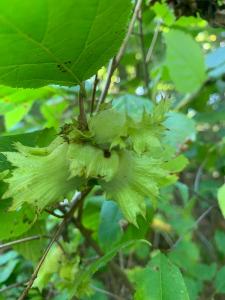
American Hazelnuts in a cluster getting ready to ripen

For three years, I have had my eye on our American hazel bushes here at the homestead. When we first moved to the property, much of the understory was damaged with the logging the previous owners did and it took time for the hazels to recover.  Thus, for the last few years, I’ve watched the hazels grow taller and larger each year and kept looking excitedly for any signs of nuts setting. This past fall, I was delighted to find handfuls of delicious wild American hazelnuts and connect with the incredible wisdom that they offer.

While Hazel is a critically important tree in the mythology and magical tradition of Druidry and in Europe more broadly, The Hazel is one of the sacred trees identified by the druids as a tree tied to wisdom and the flow of Awen, and it is…

View original post 2,415 more words

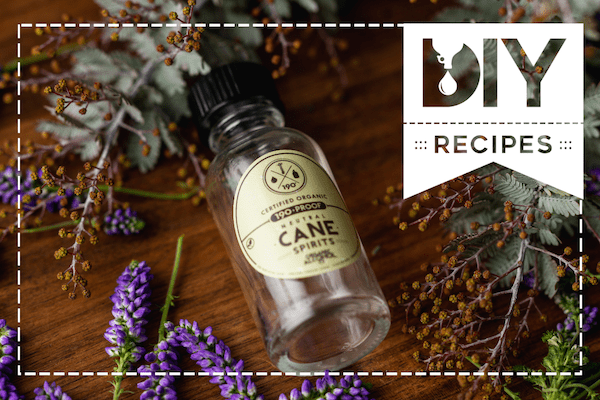
DIY Recipe of the Month: Herbal Spring Tincture • The Organic Alcohol Company

Crooked Bear Creek Organic Herbs's avatarCrooked Bear Creek Organic Herbs

Organic Alcohol Company (OAC) was founded in 2001 to provide high-proof Organic Alcohol with herbalists in mind. Our founder, an herbalist himself, saw the need to provide an alternative to other conventional ethanols on the market. Focusing on high quality and healthful medicines is still something our whole team values. We regularly purchase products from our local herbalist customers, not only support their work, but to support the use of herbal medicines and remedies.

Many of us at OAC have taken to experimenting with OAC alcohol to make various herbal concoctions ourselves. As a novice, I am learning new information all the time. I only recently found out that traditional tinctures may be only called a tincture when alcohol is used as the solvent, or menstruum (another word for solvent).

Each time I learn something new I am more excited to dive deeper into herbal education, and glean knowledge from…

View original post 444 more words