Home – Southwestern Medicine Women Gathering- Southwestern Medicine Women Gathering ~ Good Witches Homestead

Source: Home – Southwestern Medicine Women Gathering- Southwestern Medicine Women Gathering

Celebrating Plants and Women

Welcome to the Southwestern Medicine Women Gathering

Celebrating Plants and Women

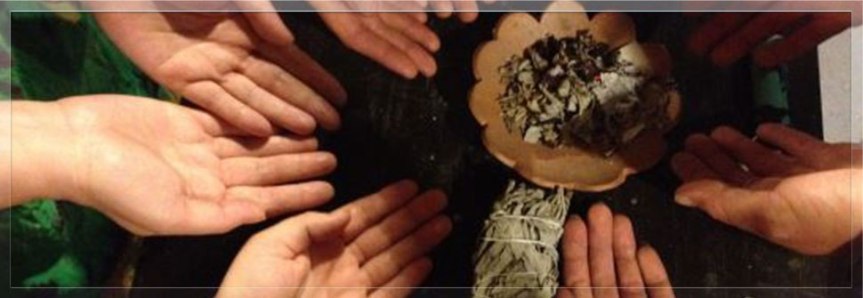
You are cordially invited May 4 – 7, 2017 to join the Medicine Women of the Southwest


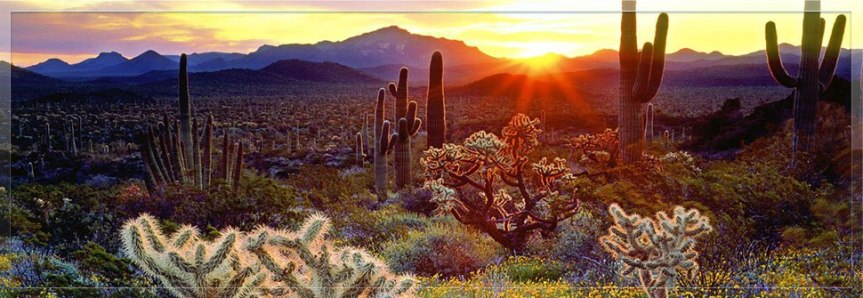
The Southwest Region of the United States, carries many medicinal secrets in it’s desert. We are gathering local herbalists, desert enthusiasts, plant lovers and healers to share their Medicine Women wisdom for natural healing and wellness.

This Southwestern Gathering will bring together Medicine Women to share their teachings knowledge of the medicinal plants available to us. We will focus on women’s health and well-being, how to use what is in our backyards. Experiencing the celebration of life, Mother Earth and honoring her beauty and abundance that she shares with us.

Herbal workshops, goddess awakening, desert walk, plant identification, bee therapy, tea blends, salves more.

Is Donkey Skin the New Ivory? | Straight from the Horse’s Heart

by Alixandra Caole Vila as published at Nature World News

African Donkeys are Being Slaughtered to Extinction

While China’s taste for elephant ivories have died down, it seems like their fondness has shifted to Donkey skin this time.

According to the National Council of Societies for the Prevention of Cruelty Against Animals (NSPCA), South African donkeys are being slaughtered to extinction for the gelatin found in their skin and their meat.

While the donkey-hide gelatin has no commercial value in Africa, it is a popular ingredient used to create Chinese medicine to treat anemia and menopause-linked ailments. The gelatin, called Ejiao in Chinese, reportedly stops bleeding and strengthens the blood.

“[Ejiao] is quite a popular ingredient in China that people may self-prescribe,” Chinese medicine expert Mazin Al-Khafaji told The Independent. “It’s a hard gel, made from donkey hide, which is then dissolved in hot water or alcohol. It’s also used topically in a cream, for leg ulcers for instance.”

CNN noted that because donkey skin is highly sought-after in China, the donkey population went down from 11 million to six million in the past 20 years. Approximately 80,000 animals had been sold in the first nine months of 2016. While the demand had delivered a valuable stream of foreign currency, it has placed small-scale farmers in a difficult situation.

China File said that because the price of donkeys increased, rural communities who depend on the animals for livelihood are suffering.

Speaking with Science Times, a donkey owner in Mogosani village named Ikgopeleng Tsietsoane shared that currently, the price of a donkey is 2,000 rand. It used to be only 400 rands ($30 or 29 euros).

At present, a number of African countries, including Niger and Burkina Faso, have banned China from buying their donkeys to save the docile beast’s population and the livelihood of locals. However, smuggling still persists in areas where it is considered illegal to do so…(CONTINUED)

http://www.natureworldnews.com/articles/37104/20170406/is-donkey-skin-the-new-ivory-african-donkeys-are-being-slaughtered-to-extinction.htm

Source: Is Donkey Skin the New Ivory? | Straight from the Horse’s Heart

Quetzalcoatl – secretsoftheserpent

By gserpent

Source: Quetzalcoatl – secretsoftheserpent

asni_quetzalcoatl_16


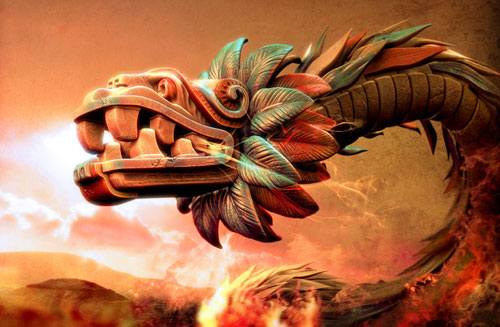
If you look up Quetzalcoatl, even Wikipedia will tell you he is an Aztec god. The Aztecs were late in the game. They were like the Greeks and Romans to the Egyptians. The Romans and Greeks took the Egyptian gods and goddesses and renamed them along with making a few of their own. The Aztecs just adopted the Mayan gods like Quetzalcoatl, but didn’t rename them. To really understand Quetzalcoatl you have to be an initiate of Atlantean Mystery School. That is where I come in.

It is now generally admitted that Quetzalcoatl, Votan, Gucumatz and Kulkulkan are the same person. Each of these names means feathered, plumed or winged serpent. Everything that we think we know about the Mayans is pure nonsense. Everything we know about the Mayans comes from the Catholic church. On July 12,1562 Spanish bishop Diego De Lunda did what Christians and all religions do best, he burned all the books of the Yucatan Maya. He didn’t get his hands on the Popul Vuh, but in 1701 father Ximenez translated the Popul Vuh from K’iche’ to Spanish. After it was abscond from a university in Guatemala and taken to France, it was translated into French and then to English. The church tries to keep people from reading it by calling it the Mayan Bible. Popul Vuh literally means “Book of the Mat”. This had to do with the woven mats the people would sit on to hear the work of a Mystery School or council house. To the Mayan people it is not regarded as the ‘word of god’ or a ‘sacred scripture’, but as an account of the ancient world and the workings of the cosmos.

Just to show you how bad the deceit is of Quetzalcoatl this is what mainstream world knows of him, if they know him at all. Quetzalcoatl was born to a virgin and the universal creator god. He was a white man who performed miracles and healed the sick. He was known as the prince of peace and was crucified. He did penance and was known as the bright and morning star(lucifer). Sound familiar. It is all bullocks!!!!! Why would the church go so far as to make Quetzalcoatl sound like Jesus? Well the Masons were in the process of making a new Masonic religion called Mormonism. This religion was going to be the bridge to get the Natives to become Christians. It even says in the Book of Mormon that Jesus visited the American continent after his resurrection. I couldn’t make this garbage up if I wanted to. Joseph Smith was a Mason. They succeeded in making him a martyr. Masonry controls all religions. I can’t put all the blame on the European Masons. The Native Americans, Mayans, Aztec, Incas and all of the Americas native people had secret societies that were very Masonic. When the European Masons came over and met the Native’s secret societies, their rituals were almost identical to the Masonic rituals. All this secret society stuff goes back to Atlantis and Lemuria. After the war of the gods each civilization took on their own version(See Lemurian Magic). They even go so far as to make Quetzalcoatl into another King Solomon. They say he owned all the wealth of the world in gold, silver and gems, then built a temple or palace. He later burned it down and no one knows where it was located.

So what is the truth about Quetzalcoatl? He was the son of the primordial androgynous god Ometeotl. If you have read my Lemurian Magic post you know who the androgynous gods were. One of Quetzalcoatl names was Amaru and that is where the name America comes from. Amaruca is literally translated to “Land of the Plumed Serpent”. He is credited with bringing wisdom, culture and the invention of the hieroglyphic writing of the Mayans. He also created a 13 symbol lunar calendar. This puts him on par with Thoth of the Egyptians. There are images of him with a shepherd’s crook or bishops crosier. This tells me that the Mayans were around as far back as the time of Aries, which was from about 1800 BCE to 1 CE. Many of his images he looks to be wearing spotted Jaguar skin. The Goddess Seshat in Egypt was always depicted wearing spotted leopard skin. She was the Goddess of writing and wisdom. The spots had to do with the stars. Quetzalcoatl was a master astronomer. He was also a master magician or Magi. But the most important title  Quetzalcoatl had  was “Mater Builder”, as in Master Mason. The Mayan people knew he was real and he was a King.

Why are there so many different stories and conflicting dates about Quetzalcoatl? Just like the Pharaohs of Egypt took the names of the gods Osiris, Ra, Thoth or Horus, the Kings in the Mayan civilization took the name of Quetzalcoatl. The latter Quetzalcoatls have been confused into one person. Recent excavations show that the cult of Quetzalcoatl was established way before the Christian era began. The royals of the Central American nations, like those of Egypt, were initiates of the Mystery Schools. These rulers and the people of Central America were very wise. No matter how ignorant or primitive mainstream archeologists want to make them sound, it is not true. I found this description of Montezuma, who was elected to rule over the Nahuatlan nations. King Nazahualpilli stood before the congregated nation and congratulated them for having selected such a ruler: “Whose deep knowledge of heavenly things insured to his subjects his comprehension of those of an earthly nature”. Collections of Mendoza described Montezuma as: “By nature wise, and astrologer and philosopher, and skilled and generally versed in all the arts, both in those of military, as well as civil nature”. Montezuma was an Aztec King and the Aztec’s were no where nears as advanced as the Mayans. Even todays western civilizations are not as advanced as the Mayans.

Everything you have been taught about the Mayans and Native Americans is wrong. The Spanish and English made them out to be savages to make themselves feel better about stealing their land and possessions. The Christians called the Natives savages because they were not Christians, but the Christians were the ones acting like savages.  The symbol of the serpent tells me Quetzalcoatl was wise. All over the world and in every Mystery School the serpent is a symbol of wisdom. When plumed it meant the wisdom had been given wings and had become spirit wisdom, or illumination. Lets take it a step further. The snake lived underground and was thought to be the messenger of the underworld. For this reason rattlesnakes were released during snake dances, in order that they might carry messages to the goddess. See my Maat post as to why the goddess was needed to make it through the underworld. Birds were also carriers of tidings, they were released to carry messages to the Great Father who lived in the Sky-lodge. Put them together and you have a feathered serpent or winged serpent and it symbolized an initiate of the mysteries into the upper and lower regions. The secrets of which were revealed by an internal mystical experience. Mayan and Native philosophy had profound and significant values. They did not initiate those of feeble mind and only selected spiritually advance persons of high attainment and mature judgement. It was all about getting personal empowerment to the people who could handle it, which excludes 99% of todays population.

Quetzalcoatl was a real person. He wasn’t Jesus and he didn’t promise to come back as a white male god. He was the son of an original Lemurian. In the Toltec’s Song of the Feathered Serpent, it says that Quetzalcoatl arrived after the death of his homeland. The homeland being Lemuria. The ancient texts say all art, knowledge and science came from him. All the texts and legends I read say he didn’t have any kids or they don’t mention him having any. That does not mean anything to me because they tried to say Jesus didn’t have any kids either. We all know that is lie(See His Royal Jesus). Not only could the writers of the Popul Vuh been trying to protect him, but just like the Egyptian gods and goddesses, the Mayan gods and goddesses were aspects of the cosmos and yourself. The Mayans taught this to anyone who was ready, but as you can see our world hides it from us. The Lower Egyptians eradicated this kind of thought from Upper Egypt and then eradicated it from the world. There are to many similarities with Thoth to ignore. Could he have been the rebel son or grandson of Thoth? Thoth is the architect of most of the pyramids known today, but could Quetzalcoatl’s family have kept the architectural knowledge and built the Mayan Pyramids? It would explain why the Masons, Jews, and Christians chose,out of all the Mayan gods, Quetzalcoatl. Thoth is the god that all the Patriarch religions are worshipping(See God(s)). Something to think about.  This last part about Thoth is speculation, but when you know the true history of this world, things like that become possible.

Continue reading “Quetzalcoatl – secretsoftheserpent”

Activation Oil | Witchery Wednesday

Activation Oil

activation-oil-edit

For use anointing spelling tools, candles, or even added to a pre-working ritual bath.  Designed to help when you are feeling sluggish, having difficulty raising energy, or trouble focusing.

1 c. oil
¼ c. dried lavender
2 tbs. dried mint
2 tbs. dandelion seeds and fluff

In today’s batch we are using organic soybean oil and peppermint, but you may choose both the oil and mint to your own preference.  Some combinations are more mellow, while some carry more oomph, so use your instincts and go with what feels right to you.

Place all herbs in the bottom of a 16 oz. (or larger) bottle or jar.  Pour in oil and swish or gently shake to allow the herbs to bloom.  Set in a cool dry place for one month, swishing occasionally to help redistribute the plant materials.  Strain well before use.

Source: Activation Oil | Witchery Wednesday

Shadow Work Mega-Masterpost – Into The Deep

#LAVENDER healing — WHAT IS GROUNDING? Grounding is a set of simple…

Wild Ground Phlox {April’s Full Moon} – Good Witches Homestead

Source: Wild Ground Phlox {April’s Full Moon} – Good Witches Homestead

The April full moon is also known as the Full Pink Moon, which was named for the herb moss pink, or wild ground phlox, one of the earliest flowers of the spring.

pink full moonSpring has arrived, and the energy is moving into the action phase. The Moon is full with fertility, growth, planting, and it is now the time to sow new seeds (both literally, and figuratively). This is a time for earth magick, and that dealing with growth and fertility.  This is a time to empower and encourage growth. Also, now is a great time to do spell work dealing with fertility, self-confidence, self-improvement, and for seeking knowledge and wisdom. It is now time to put to actions the plans made throughout winter.  For gardeners, it is the time to empower seeds.

APRIL; Growing Moon (April) Also known as Hare Moon, Seed or Planting Moon, Planter’s Moon, Budding Trees Moon, Eastermonath (Eostre Month), Ostarmanoth, Pink Moon, Green Grass Moon
Nature Spirits: plant faeries
Herbs: basil, chives, dragon’s blood, geranium, thistle
Colors: crimson red, gold
Flowers: daisy, sweet pea
Scents: pine, bay, bergamot, patchouli
Stones: ruby, garnet, sard
Trees: pine, bay, hazel
Animals: bear, wolf
Birds: hawk, magpie
Deities: Kali, Hathor, Anahita, Ceres, Ishtar, Venus, Bast
Power Flow: energy into creating and producing; return balance to the nerves. Change, self-confidence, self-reliance, take advantage of opportunities. Work on temper and emotional flare-ups and selfishness.

APRIL MOON FACTS AND FOLKLORE

A full Moon in April brings frost. If the full Moon rises pale, expect rain.

  • On April 20, 1972, the lunar module of Apollo XVI landed on the moon with astronauts John Young and Charles Duke aboard. Thomas Mattingly remained in orbit around the moon aboard the command module.
  • One day later, on April 21, 1972, Apollo XVI astronauts John Young and Charles Duke drove an electric car on the surface of the moon. It’s still up there along with some expensive tools and some film that they forgot.
  • The period from the Full Moon through the last quarter of the Moon is the best time for killing weeds, thinning, pruning, mowing, cutting timber, and planting below-ground crops.

One of the most dramatic sights in the night sky—and inspiration for poets, artists, and lovers for millennia—full moons captivate us like nothing else.

Every month Earth’s moon goes through its phases, waning and waxing in its constant transformation from new moon to full moon and back again. Full moons occur every 29.5 days or so as the moon moves to the side of Earth directly opposite the sun, reflecting the sun’s rays off its full face and appearing as a brilliant, perfectly circular disk.

For millennia, humans have used the movement of the moon to keep track of the passing year and set schedules for hunting, planting, and harvesting. Ancient cultures the world over have given these full moons names based on the behavior of the plants, animals, or weather during that month.

January: Wolf Moon
Native Americans and medieval Europeans named January’s full moon after the howling of hungry wolves lamenting the midwinter paucity of food. Other names for this month’s full moon include old moon and ice moon.

February: Snow Moon
The typically cold, snowy weather of February in North America earned its full moon the name snow moon. Other common names include storm moon and hunger moon.

March: Worm Moon
Native Americans called this last full moon of winter the worm moon after the worm trails that would appear in the newly thawed ground. Other names include the chaste moon, death moon, crust moon (a reference to snow that would become crusty as it thawed during the day and froze at night), and sap moon, after the tapping of the maple trees.

April: Pink Moon
Northern Native Americans call April’s full moon the pink moon after a species of early blooming wildflower. In other cultures, this moon is called the sprouting grass moon, the egg moon, and the fish moon.

May: Flower Moon
May’s abundant blooms give its full moon the name flower moon in many cultures. Other names include the hare moon, the corn planting moon, and the milk moon.

June: Strawberry Moon
In North America, the harvesting of strawberries in June gives that month’s full moon its name. Europeans have dubbed it the rose moon, while other cultures named it the hot moon for the beginning of the summer heat.

July: Buck Moon
Male deer, which shed their antlers every year, begin to regrow them in July, hence the Native American name for July’s full moon. Other names include thunder moon, for the month’s many summer storms, and hay moon, after the July hay harvest.

August: Sturgeon Moon
North American fishing tribes called August’s full moon the sturgeon moon since the species was abundant during this month. It’s also been called the green corn moon, the grain moon, and the red moon for the reddish hue it often takes on in the summer haze.

September: Harvest Moon
The most familiar named moon, September’s harvest moon refers to the time of year after the autumn equinox when crops are gathered. It also refers to the moon’s particularly bright appearance and early rise, which lets farmers continue harvesting into the night. Other names include the corn moon and the barley moon.

October: Hunter’s Moon
The first moon after the harvest moon is the hunter’s moon, so named as the preferred month to hunt summer-fattened deer and fox unable to hide in now bare fields. Like the harvest moon, the hunter’s moon is also particularly bright and long in the sky, giving hunters the opportunity to stalk prey at night. Other names include the traveling moon and the dying grass moon.

November: Beaver Moon
There is disagreement over the origin of November’s beaver moon name. Some say it comes from Native Americans setting beaver traps during this month, while others say the name comes from the heavy activity of beavers building their winter dams. Another name is the frost moon.

December: Cold Moon
The coming of winter earned December’s full moon the name cold moon. Other names include the long night moon and the oak moon.

The Blue Moon
Each year, the moon completes its final cycle about 11 days before the Earth finishes its orbit around the sun. These days add up, and every two and a half years or so, there is an extra full moon, called a blue moon. The origin of the term is uncertain, and its precise definition has changed over the years. The term is commonly used today to describe the second full moon of a calendar month, but it was originally the name given to the third full moon in a season containing four full moons.

Venus Я in Pisces squaring Saturn Я Apr.-Aug. 2017

Written by Iya Olusoga – Bisi Ade

For The Astrorisa Moon Forecaster

XAPANA

Obaluaiye’s planet, Saturn will officially go retrograde April 6, 2017 at 27° in the sign of Sagittarius in house 1. Saturn will later station direct on August 25, 2017 at 21° Sagittarius.

Saturn is the “Lord of Karma” and Obaluaiye, offers the experience of ‘’ we reap what we sow.” The Ancestors/ Egungun identified the overall theme of 2017 as “The Year of the Reckoning.” This is telling, because it means that the dirty, dastardly, deeds which we’ve gotten away with for many years, catches up with us during the ‘Year of the Reckoning.’

The last decade Saturn went retrograde in Sagittarius was Thursday, March 7 1985, 08:04 AM ET; 1 month (+) 1 day (-), and 32 years ago.

Saturn retrograde governs our experiences surrounding maturity, health, self-discipline, responsibility, our fears, loneliness, and anxieties. Saturn retrograde creates a type ‘forced’ isolation. We are ‘forced’ to re-address aspects and elements about our core being which has been a hindrance to our development and growth. This is when we’re thrown into the ‘lion’s den’ so it may feel or seem. We are exposed to the elements of chaos, we face redemption, or ridicule. We come face to face with our own fears and realizations of internal truths, and then we work hard to climb out of the pit. Through the act of ‘climbing out’ of our pits, we develop the psychological and emotional muscle to endure, then to sprint, moving forward in a new direction

Currently Venus Я in Pisces squares Saturn Я. What we’ve previously enjoyed, felt comfortable doing, or admired either becomes exposed, becomes lost, or experiences a sour note. Whatever Venus ruled in our lives; if we were undisciplined in its specific area Saturn, will assist us to gain sight of it, and then judge it.

During this Venus Я in Pisces squaring Saturn Я transit

Be mindful if you feel depressed, or unworthy. These are suppressed emotions which require your attention, and or release.

Think back to 1985 through 1988 when Saturn was in Sagittarius.

What did you lose then gain?

What did you experience which offered a clear lesson?

Did you master the knowledge of that lesson or is it up for a repeat?

Public comment needed on Nevada mine that will use over 2 billion gallons of water in 10 years | Straight from the Horse’s Heart

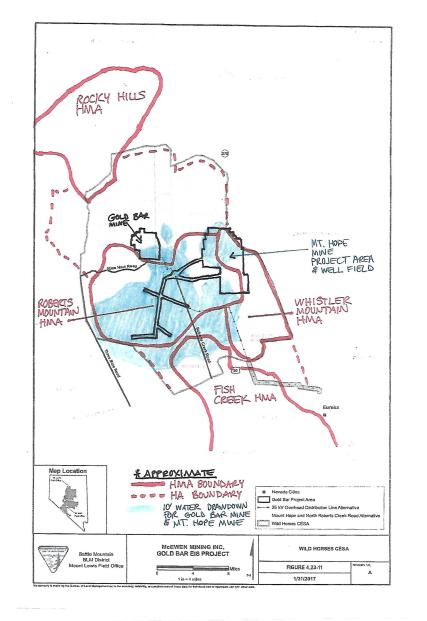
This map shows the Gold Bar Mine area, the approximate HMA (in solid red) and HA boundaries(in broken red lines), the approximate Mt. Hope Mine Project area and well field, and the approximate combined Gold Bar Mine and Mt. Hope Mine 10′ water drawdown area (in blue).  The 10′ water drawdown (in blue) effects almost the entire Roberts Mountain HMA.  The 1″ water drawdown will effect a much larger area.  (Streams can dry up with as little as a 1′ water drawdown.)

BE SURE TO LOOK AT ALL 8 MAPS AT THE BOTTOM OF THIS ARTICLE.

It’s best to write comments in your own words so that the BLM counts each comment as one, instead of counting a thousand similar comments/form letter as only one.  You can read the joint comments submitted by Wild Horse Freedom Federation and The Cloud Foundation below, and a quick summary on pages 5-41 of the DEIS HERE.  Comments are due by April 17, 2017.

Some suggested talking points are:

  1. Be sure to ask for the NO ACTION ALTERNATIVE.
  2. The Gold Bar mine project will use over 2 billion gallons of water in 10 years.  The BLM needs to take into consideration past (historic), current and likely future droughts and climate change when deciding if they will approve this DEIS.
  3. The Project will negatively impact the water, forage, safety, and “free-roaming” abilities of the Roberts Mountain wild horse herd on the Roberts Mountain HMA, as well as the nearby wild horse herds on Whistler Mountain and Fish Creek Herd Management Areas.
  4. The BLM is minimizing the area of impact by only indicating the 10′ water drawdown, and not the 5′ or 1′ water drawdown.  The 5′ and 1′ water drawdown will cover a much larger area of land.  A stream can dry up with as little as 1′ of water drawdown.
  5. When the nearby Mt. Hope mine becomes operational, it is proposed that it will use an additional 7,000 gallons per minute for the life of the mine (40-50 years).  Mt. Hope mine will use over 3 1/2 billion gallons of water per year and over 36 billion gallons of water in 10 years.
  6. The BLM refers to the Cyanide Management Plan (1992), (noted in Vol. 1A, 1.4.3) and the Solid Minerals Reclamation Handbook (1992), (noted in Vol. 1A, 1.4.4).  These are 25 years old and outdated.  Ask for updates of this Plan and Handbook for this DEIS.
  7. The area of Gold Bar Mine will be expanded by 40,000 acres or 62.5 square miles, creating more environmental degradation.

The DEIS is available online at HERE.   Interested individuals should address all written comments to Christine Gabriel, Project Manager, using any of the following ways:

Fax: (775) 635-4034

Email:  blm_nv_bmdo_mlfo_gold_bar_project_eis@blm.gov

Mail:  Bureau of Land Management

Mount Lewis Field Office

50 Bastian Road

Battle Mountain, NV 89820

Wild Horse Freedom Federation and The Cloud Foundation submitted these joint comments regarding the BLM’s Gold Bar Mine Project:
           

Bureau of Land Management

Mount Lewis Field Office

50 Bastian Road

Battle Mountain, NV 89820

Email: blm_NV_bmdo_mlfo_gold_bar_project_eis@ blm.gov

DATE:  April 5, 2017

Subject: DEIS MMI Gold Bar Mine Project

Dear Ms. Gabriel:

On behalf of The Cloud Foundation (TCF) and Wild Horse Freedom Federation (WHFF), 501(c)3 non-profit corporations, and our hundreds of thousands of supporters throughout the United States, we would like to thank you for the opportunity to submit scoping comments on the Draft Environmental Impact Statement (DEIS) for McEwen Mining Inc.’s (MMI) Gold Bar Mine Project (Project).

TCF, a wild horse and burro advocacy group and an advocacy group for all wildlife on our public lands in the West, and Wild Horse Freedom Federation, a voice for the protection of wild horses and burros and public lands, strongly oppose the expansion of the Gold Bar mining project and we urge the NO ACTION ALTERNATIVE in this DEIS for the following reasons:

Wild Horse Herds To Be Affected:

The Project will negatively impact the Roberts Mountain Wild Horse Herd as well as the nearby herds of Whistler Mountain and Fish Creek Herd Management Areas.

Sage Grouse Habitat Affected:

Not only wild horses will be affected in this area. All wildlife will suffer.

Open pit mining is the most environmentally destructive type of mining anywhere. Extreme weather events can overwhelm all mandated precautions, threatening migratory birds and small mammals. In the case of a flood, even large mammals like wild horses risk exposure to potentially lethal mining waste.

Direct habitat damage due to mining plus further fragmentation by roads and large equipment traveling on these roads will eliminate hopes for the recovery of the Greater Sage Grouse in this area. The transport process in itself is dangerous—accidents, dust, spread of contaminants, noise, etc.

Greater Sage Grouse were once so numerous that the “sky was black” with these large birds, according to Ginger Kathrens’ late Uncle, Allan Ralston, who spoke of this area after his return from WWII. Now the birds are threatened and a species of critical environmental concern. BLM should prioritize these risks.

Impacts on Water Sources:

Per the Gold Bar DEIS, page 4-147, under 2 different scenarios, the mine will either pump 380 gpm (gallons per minute) or 500 gpm (gallons per minute).

If the mine pumps 380 gpm, this equals 22,800 gallons per hour, 547,200 gallons per day, and 199,728,000 gallons per year.  Over 10 years, it will pump over 2 billion gallons of water.

If the mine pumps 500 gpm, this equals 30,000 gallons per hour, 720,000 gallons per day, and 262,800,000 gallons per year.  Over 10 years, it will pump over 2 1/2 billion gallons of water.

This does not include the water which the Mt. Hope mine will use once mining begins.  Mt. Hope is projected to use 7,000 gallons per minute for the life of the mine (40-50 years).

The project will deplete surface and ground water resulting in the drying up of ephemeral streams. Reducing water tables to dangerously low levels will negatively impact perennial streams. This DEIS minimizes the impact on water resources by not providing 5’ or 1’ water drawdown maps and thus minimizing the additional area of land that will be effected.  A stream can dry up with as little as 1’ of water drawdown.

Maps created by Wild Horse Freedom Federation are included in the Appendix.

Map 1 – (Figure 4.23-11 of DEIS) Gold Bar Mine Wild Horse CESA (Cumulative Effects Study Area).  On page 4-265 of the DEIS, it states “The CESA for the wild horses and burros includes Roberts Mountain, Whistler Mountain, and portions of the Fish Creek HMAs, as well as Kobeh Valley and Roberts Mountain HAs where wild horses existed based on past inventories, and where they could be potentially affected by the Project…”

Map 2 – shows the addition of the approximate 10′ water drawdown area – (Figure 4.19-3 of Gold Bar Mine Project), 500 gpm (gallons per minute) for 10 years.

Map 3 – shows the addition of the approximate HMA and HA boundaries.

Map 4 – shows the addition of the approximate Mt. Hope Mine Project area and well field – (Figure 3.13.1 Mt. Hope Project EIS).

Map 5 – shows the addition of the approximate Mt. Hope Mine 10″ water drawdown area – (Figure 3.2.18 Mt Hope Project EIS).

Map 6 – shows approximate sketch of Gold Bar Mine and Mt Hope Mine with HMA and HA boundaries

Map 7 – shows approximate HMA boundaries over grazing allotments map – (Figure 3.7 – 1, Gold Bar Mine EIS)

Map 8 – shows approximate mining, water drawdown, and grazing with the HMA and HA boundaries.

BLM writes in their description of the Roberts Mountain HMA: Water availability is a key influence to wild horse use during summer months. Wild horses will generally travel much farther to water than will livestock. In many HMAs water sources are plentiful and supplied by perennial streams, springs, and human constructed water developments such as livestock water tanks and ponds. In other cases, water sources are limiting, and in drought years, wild horses may have difficulty accessing sufficient water, (emphasis added) especially if the population exceeds the Appropriate Management Level (AML). In these cases, wild horse distribution is closely tied to the location of the available waters, which becomes very important to the health of the herd.

Drought Ridden Region

Drought is common in this driest state in the Union. Emergency removals of wild horses because of the lack of water are common. Removals of 14 wild horse herds occurred in 2009 south of Ely by BLM. The Agency cited the lack of reliable water sources as the reason for the removal of wild horses on 1.4 million acres of public land.

The proposed expansion and creation of more water dependent, extractive uses of the land is irresponsible.

Outdated Plan and Manual

This DEIS is based, in part, on a plan and a manual that are each about 25 years old and outdated.  We are referring to the BLM Cyanide Management Plan (1992), (noted in Vol. 1A, 1.4.3) and the Solid Minerals Reclamation Handbook (1992), (noted in Vol. 1A, 1.4.4).  We ask that you review these outdated materials and update them if you are going to base any part of this DEIS on these outdated plans.

Economic Uncertainty

The potential for failure of this project is so high that the Securities and Exchange Commission (SEC) states: . . .in addition to greater uncertainty as to the economic feasibility of Mineralized Material compared to proven and probable reserves, there is also greater uncertainty as to the existence of Mineralized Material. U.S. investors are cautioned not to assume that measured or indicated resources will be converted into economically mineable reserves. The estimation of inferred resources involves far greater uncertainty as to their existence and economic viability than the estimation of other categories of resources.

Couple the above with the failure of the previous mine developers, Atlas Corporation, who filed for bankruptcy and abandoned the land in an unreclaimed condition in 1999.

Wide Scale Damage

McEwen Mining, a Canadian Mining company, is poised to take over and create even more environmental degradation. The area would be expanded by 40,000 acres or 62.5 square miles, or about 1/3 the size of the Colorado Springs metropolitan area where TCF is headquartered. In other words, this is destruction on a grand scale.

Damage from gold mining is permanent. No amount of mitigation can return the landscape to anything approaching a natural state. Over flights of the area reveal large-scale destruction. Increasing this permanent destruction for the hope of short-term gain is not a reasonable, and certainly not an environmentally friendly decision.

For the above reasons, we urge you to select the NO ACTION ALTERNATIVE for the Gold Bar Mine Project.

Thanks very much for your consideration of our position on this important issue.

Sincerely,
          

Ginger Kathrens                             Debbie Coffey

Executive Director,                         Vice-President,

The Cloud Foundation, Inc.          Wild Horse Freedom Federation

107 S. 7th Street                                P.O. Box 390

Colorado Springs, CO 80905        Pinehurst, TX  77362

MAPS:

Map 1

http://wildhorsefreedomfederation.org/wp-content/uploads/2017/03/Gold-Bar-Mine-Map-1.pdf

Map 2

http://wildhorsefreedomfederation.org/wp-content/uploads/2017/03/Gold-Bar-Mine-Map-2.pdf

Map 3

http://wildhorsefreedomfederation.org/wp-content/uploads/2017/03/Gold-Bar-Mine-Map-3.pdf

Map 4

http://wildhorsefreedomfederation.org/wp-content/uploads/2017/03/Gold-Bar-Mine-Map-4.pdf

Map 5

http://wildhorsefreedomfederation.org/wp-content/uploads/2017/03/Gold-Bar-Mine-Map-5.pdf

Map 6

http://wildhorsefreedomfederation.org/wp-content/uploads/2017/03/Gold-Bar-Mine-Map-6.pdf

Map 7

http://wildhorsefreedomfederation.org/wp-content/uploads/2017/03/Gold-Bar-Mine-Map-7.pdf

Map 8

http://wildhorsefreedomfederation.org/wp-content/uploads/2017/03/Gold-Bar-Mine-Map-8-with-mining-water-drawdown-and-grazing.pdf

Source: Public comment needed on Nevada mine that will use over 2 billion gallons of water in 10 years | Straight from the Horse’s Heart
Herbal Immersion | Southeast Wise Women – Good Witches Homestead

Join Corinna Wood for the Wise Woman Herbal Immersion ~ May 22-27, 2016, near Asheville, NC. An inspirational journey into herbal medicine, nourishment, and self-love.


Source: Herbal Immersion | Southeast Wise Women – Good Witches Homestead