Bureau of Land Management glosses over coverup of 213 wild horse deaths on the Scott City, Kansas, feedlot

12lth1_26_of_161_-300x102

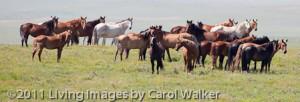
Photos of wild mares at Teterville (photo: Carol Walker)

By Debbie Coffey, V.P. and Dir. of Wild Horse Affairs, Wild Horse Freedom Federation

Copyright 2017   All Rights Reserved.

After no news for 2 years by BLM on their promised investigation and report to the public on the deaths of wild horses at Scott City, KS, after our 2/2/17 report titled “196 wild horses died at BLM’s Scott City feedlot (a BLM Auschwitz for wild horses),” the BLM was suddenly able to muster up a little something for the public on the Wild Horse & Burro Program website in only about a week.

It popped up under “news” and it seems the BLM was careful to not mention deaths or draw too much attention to the issue at hand in the headline, by titling their “news” “Status of Off Range Corral in Scott City, KS.”

In fact, buried at the end of the 3rd paragraph, the BLM (with more current information) finally stated that 213 mares died (out of the 1,493 wild mares) between June 2014 and October, 2016.

So, about 14% of the wild horses that the BLM shipped to that feedlot, died on that feedlot.

It seems that in the very little offered as a “news” report to the public, the BLM tried to cover up their actions (and more importantly, their lack of action), resulting in the deaths of so many wild horses.

In BLM’s “news” version (HERE) of what happened to wild horses on the Scott City feedlot, they cited “crowding at the feed bunks most likely resulting in some horses not receiving the protein and energy required to support their needs. The BLM made adjustments and the animals began to acclimate and show improvements in their overall health, which resulted in a dramatic decrease in the monthly mortality rate. “

SO WHY DID SO MANY WILD HORSES DIE BEFORE THE “ADJUSTMENTS” WERE MADE?  In an August 2014 article on EquiMed, USDA veterinarian Dr. Al Kane stated “in addition to increasing the amount of feed being offered during feedings, we’ve worked with the onsite veterinarian and the operator to increase the energy density of the horses’ feed by increasing the ratio of alfalfa to grass in the hay mix.  This helps support the horses’ nutritional needs during the transition from open-pasture to the corral environment”..

WHY WASN’T THE CORRECT FEED PLANNED BEFORE THE WILD HORSES ARRIVED AT THIS FEEDLOT?  The BLM has been “managing” wild horses for about 45 years and still can’t get it right.

The BLM still didn’t inform the public that 87 of the 196 wild horses were euthanized, or that 41 wild horses died of colic or that 14 wild horses died of fractures of the spinal cord (neck and back) and 6 horses died of leg or pelvis fractures.  The BLM’s version of the “news” didn’t mention the wind storms that were noted by the local veterinarian in his reports to them, or the many cases of sand colic suffered by the wild horses, or the fact that a squeeze chute wasn’t brought to the feedlot until almost 2 months after the horses arrived. 

Note that the BLM’s “news” did not provide you with the name of the contractor for the Teterville Off Range Pasture (ORP) in Kansas.  (And, also note that the BLM doesn’t disclose the names of ALL of the ORP contractors for the public anywhere on the Wild Horse & Burro Program website.)

While omitting so many important facts for the public in their “news,” the BLM managed to hone in on a couple of mistakes in our article.  We corrected these immediately.  However, we didn’t kill 213 wild horses and the BLM can’t “undo” what they did.

The real issue is that 213 wild horses (that we know of), died on this feedlot, no matter what the time frame, and the BLM didn’t issue a promised report to the public until now.

If the BLM would give more information to the public, there would be no mistakes.  We request that the BLM, in the spirit of transparency, post the spreadsheet containing the freezemark numbers of the horses that died, the dates of deaths and causes of death, and all of the veterinary, necropsy and blood pathology reports of the Scott City wild mares on the Wild Horse & Burro Program website.

We can only hope the BLM will apply some focus to noticing and correcting their mistakes in their own statistics and data, and in their management of the Wild Horse & Burro Program.
Source: BLM glosses over coverup of 213 wild horse deaths on the Scott City, KS, feedlot | Straight from the Horse’s Heart

Slowing Down the Druid Way, Part II: Relationships of Work and Time

In the US, it seems that the first question people ask is, “what do you do?”  When they say that, of course, they are not talking about how you spend your leisure time, but rather, the work that you do for pay. This is the most defining characteristic of modern lives–because this is tied to the thing our culture holds as most sacred: money.  Money is the only metric that has any real value and the pursuit of money drives all else. If you aren’t working in the workforce earning pay, either the work are doing is devalued (as any stay-at-home parent can attest) or there is something very wrong with you (as in, why aren’t you out there earning money?). This current economic system, driven by industrial mindsets surrounding profit and efficiency, gives us a rather poor metric through which to measure ourselves and our value. …

Source: Slowing Down the Druid Way, Part II: Relationships of Work and Time | The Druid’s Garden

The Besom – Good Witches Homestead

The besom, or broom, is one of the main ritual tools of the witch and is sacred to both the Goddess and God.  The God – through its symbolic phallic shape, the Goddess – through its three-piece makeup, the shaft, the bristles and the binding cord, three being the triform aspect of the Goddess.  While besom and broom are two names used interchangeably, there is a small difference in their definition.  The brush of a besom is usually made of twigs and is, therefore, more rounded in shape, whereas the brush of a broom is primarily made of straw, which is flatter in shape. 

Traditionally a besom was made from three different kinds of wood, Ash for the shaft, Birch twigs for the bristles and Willow strands for the binding cord.  Ash is protective and has command over the four elements, Birch is purifying and draws spirits to one’s service, while Willow is sacred to the Goddess and binds them all together.  In modern witchcraft today, while the traditional besom still takes pride of place, other woods are used for special purposes:  Oak for added power and protection, Pine for luck and health, Redwood for longevity, Maple for love and money, Walnut for health and wisdom, and Cinnamon for spirituality.

Magically, a besom is used for a variety of purposes, but more generally they are used to purify and protect.  In ritual, they are used to cleanse sacred space before magick is performed by visually sweeping away negative energies and astral build up.  Before casting the circle, the Priest or Priestess will walk clockwise (deosil) around the circle space, and hold the besom a few inches off the ground sweep outward from the center while chanting the Besom Chant: 

Besom Chant 

“Besom, besom, sacred broom

Sweep out darkness, sweep out gloom

Rid this sacred hallowed ground

Of demons, imps and hell bent hounds;

Then set ye down on Her green earth

By running stream or Mistress’ hearth,

Till called once more on Sabbath night

To cleanse once more this sacred site.”


(Author unknown) 

Sweeping the area with a besom can be done in addition to or in place of incense, to purify ritual space, and is often used for such when rituals are conducted in smoke-free areas.  When not being used in ritual, place your magical besom by the door to protect the home from evil spirits and negative energies.  When standing a besom, always place the bristles up, with the shaft on the floor.  This not only makes the bristles last longer, it will also bring you good luck.  Another old custom was to place a besom outside the door, this as an indication to other witches that the occupants are out, or working, and didn’t wish to be disturbed.

To make your own traditional besom you will need the following: 

A length of Ash approximately 4ft long and about 1in

thick for the shaft.

Birch twigs (about 1-2 ft. in length) to act as the bristles.

Several strands of Willow for binding the bristles to the

end of the shaft.

A pair of Scissors.

Water and salt. 

Soak the Birch twigs and Willow strands overnight in warm lightly salted water (to make them pliable) and allow them to dry slightly before using.  They need to be damp and pliable before binding them to the Ash shaft.  Arrange the twigs alongside the shaft about 3-6 inches from the bottom, larger twigs form the center of the brush with shorter ones around the outside, then bind them with the Willow strands.  Be sure to tie them very securely.  Use as many layers of twigs as you like depending on how full you want the brush to be.  Leave overnight to dry. 

Whether you make your own besom in the traditional way “as above,” or purchase a ready made one, you may then wish to decorate is it with a magickal name or other meaningful symbols or sigils.  Once decorated, the besom should then be consecrated ready for use in your magickal workings.  To do this anoint the besom with oil while reciting the following chant: 

Consecration Chant 

“Besom of birch and willow tied,

Be my companion and my guide.

On ashen shaft by moonlight pale

My spirit rides the windy gale

To magickal realms beyond both space and time.

To magickal lands, my soul will sail.

In the company of the crone, I’ll ride

This besom of birch with willow tied

So do I consecrate this magickal tree.

As I will it, so mote it be.”


(Author unknown) 

Once consecrated for use in the magick circle, it should not be used for any other purpose.  When making a besom for normal household usage, it can still be magically charged for that use.  On one side of the shaft (from the bristles traveling upwards) carve the following words while visualizing your intent:  “I sweep out evil and poverty.”  On the opposite side of the shaft (from the top traveling down to the bristles, carve “I sweep in money and luck.”  When sweeping, visualize the same intent, but sweep towards the fireplace if you have one.  If not sweep in any direction except towards the front door, so as not sweep out and lose your good luck.

Myths and Folklore

Most people identify the besom with the old wedding ceremonies performed by Gypsies and early American slaves when couples “Jumped the Broom” to cross the threshold of their new homes ensuring fertility, domestic harmony, and longevity.  This custom continues today in modern handfasting rituals when as part of the ceremony, the bridal couple will jump across a decorated besom as confirmation of their commitment to each other.  Should the marriage not work, or end in divorce, jumping the broom backward will break that commitment. 

The age-old image of witches flying around on broomsticks casting baneful spells is believed to have come from old fertility rites associated with nature and agricultural.  As part of the seasonal Spring rites to aid the growth of newly planted crops, women from local villages would gather around fields with their besoms.  Placed between their legs as they circled the field, much like riding on a hobby horse, the idea was the higher they leaped, the higher the crop would grow. 

In renaissance times, according to the demonologists, the Devil himself presented brooms and flying ointment to newly initiated witches so they could fly to the Sabbats.  Often they carried with them familiars in the shape of demons or animals.  They were also said to fly across fields blasting their neighbor’s crops or ride out to sea in order to rise up storms.  However, such concocted myths were generally forced from the poor tortured victims of the persecutions, and should not be taken seriously. 

Other Magickal Uses

Placing a broom across a doorway allows your departed friends and family to speak to you if they so choose.  As long as the broom remains, they can communicate freely.  To bring rain, stand outside and swing a broom in the air over your head.  If lightning blows your way put a broom on your porch to act as a lightening rod.  Electricity and lightning are thought to be attracted to brooms.  Another way to safeguard a house against lightning strikes is to cross a spade and a broom outside the main entrance. 

A besom placed under the bed or beneath the pillows at night, will protect the sleeper from nightmares and ensure a peacefully sleep.  Similarly, it is not wise to leave a bed empty for too long.  If you are going away for any length of time, place a besom in your bed, laying the bristles on the pillow.  This will guard the bed against evil spirits until you return. 

Two crossed besoms hung on a wall or the back of a door will protect the house from unwanted influences.  With the exception of those used exclusively for magickal purposes, moving an old besom into a new house will result in bad luck. 

Source: The Besom – Good Witches Homestead

How To Make A Besom {Plan 1}

I thought that this would be a good time to share with you all how to craft your own Witch’s Broom, known as a Besom.

Technically speaking, a broom is the flat ended sort of object that we generally use for physical cleaning; while a Besom is a round shaped bunch of straw (or other plant material) bundled around the center handle, and is used to cleanse an area of negative energy, usually in the preparation of ritual or magickal work.

While you can buy a besom, and there are many lovely ones to choose from -it’s also pretty easy to make one of your own. The bonus of making it yourself is the addition of your own energy tied to its creation. Although the items that follow are for the more traditional style of besom, you can use nearly any types of branches and plant materials available to you. Even a wooden dowel from the Hardware Store can be used.

t is a good idea to match the materials to the type of magick to be worked with it. The traditional magical formula includes a bundle of birch twigs, a staff of ash or oak, and a binding made from willow wands. This makes for a besom that incorporates both the male energy of the God- in the oak or ash; and the female energy of the Goddess- in the willow. A besom to be used primarily in Healing Rituals might be made of birch & lavender, and one for kitchen might be made of cinnamon.
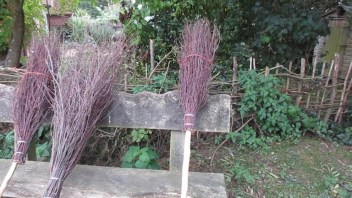
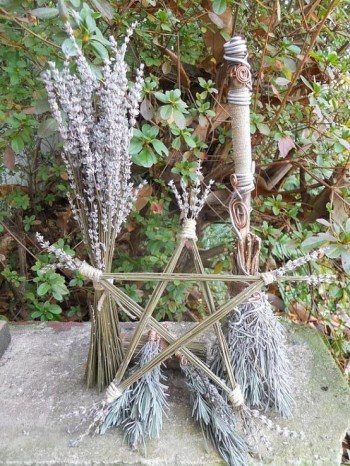
lavender-besoms
After the basic construction of the Besom, there is innumerable way to decorate it. Handles can be carved, wrapped or painted; and all sorts of embellishments can be attached to it. Things such as feathers, crystals, coins, beads, bone and other totems can adorn it and enhance the work you plan to do with the Besom itself.
You’ll need:
A four-foot length of ash or oak for the handle
Thin branches of birch for the bristle part (you can substitute a woody herb like mugwort or thyme for the bristles if you like. I have also seen wonderful besoms made from aromatic herbs, such as lavender or cinnamon. )
Lengths of willow or heavy cord to bind everything together
You’ll also need scissors and a bucket of warm water. Whatever you’ll be using for the bristles — whether it’s birch, a herb, or some other wood — should be soaked in the warm water overnight to make them pliable, as should the willow binding, if you’re using it.FIGURE 1

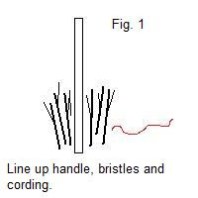
~Line up your broom handle and bristles, with the bottoms of the bristles pointing towards the top of the handle.

~Lay the handle on a table or the floor and place the bristles alongside it, lined up about four inches from the bottom. Point the bottom of the bristles towards the top of the broom, because you’re going to flip the bristles in a minute (see Fig. 1).

FIGURE 2
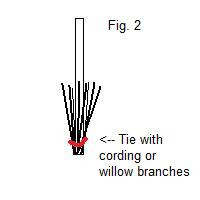
Wrapping the Bristles~Tie the bristles in place around the handle.
~Use the willow branches or cording to wrap the bristles around the broom (Fig. 2). Add as many as you want to make the broom full. Make sure you tie the cording off securely so your bristles don’t come popping out later.
FIGURE 3
Tying the Magic in Place

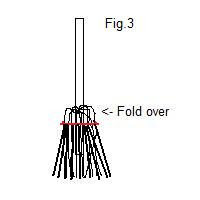
~Finally, fold the bristles down over the inner tie and then tie on the outside.
~Now, take the bristles and fold them down over the willow binding or cording so that they’re pointing towards the bottom of the broom. Tie them down again at the base of the broomstick to secure them(Fig. 3).
~As you’re wrapping the cord in place, visualize your intent for this besom. Will it be strictly decorative? Are you going to hang it in place over a door? Perhaps you’ll use it ceremonially, or maybe even for physical cleaning. Focus on what you’re going to be doing it, and charge it with energy.


The Final Step
~Let your broom dry for a day or two, and when it’s all done, consecrate it as one of your magical tools.
~If you will be doing any decorative work on it, such as carving, painting or wrapping it with fiber this can be done either before or after the initial consecration and should be done with magickal intention.
~Then, when all decorative work is finished, you can reconsecrate it and begin working with your very own handcrafted Witch’s Besom.

Source: How To Make A Besom {Plan 1}

Scientists Agree: It’s Time To End The War On Wildlife | Straight from the Horse’s Heart

By Collette Adkins, Contributor as published on The Huffington Post

“Wild horses and burros survived centuries in perfect balance and harmony without the intervention of humans.  The removal of natural predators upsets the natural balance and the crisis rolls downhill initiating even more violent intervention by humans.  If we, as humans, would step back and cease attempting to manage something that does not require to be controlled the world would be a much better place to live for humans and animals alike.  Keep the faith.” ~ R.T.


“Today’s predator control is widespread in the American West…”

coyote-crueltyKilling large predators to reduce livestock conflicts or benefit game populations has long been thought to be ineffective — and devastating for ecosystems — and a growing body of scientific literature criticizing the widespread practice is confirming those fears.

Most recently, this month, the Journal of Mammalogy — a highly respected international scientific journal and flagship publication for the American Society of Mammalogists — published a special collection of articles criticizing lethal control of predators such as wolves and grizzlies.

Today’s predator control is widespread in the American West and has its origins in barbaric 20th century, government-sponsored predator eradication programs. Those utilized poisons and bounties to drive grizzly bears and wolves to the brink of extinction.

Thanks to the protection of the Endangered Species Act — which has saved more than 99 percent of the plants and animals under its protection and put hundreds on the road to recovery — the grizzly bear and wolf have begun to recover. But as these large carnivores expand their population size and range, people have once again called for lethal control to address livestock depredations and inflate game populations.

In states where gray wolves have lost their federal protections, such as Idaho, state managers dead set on killing the predators established aggressive hunting seasons and lethal depredation controls. After the U.S. Fish and Wildlife Service proposed removing Yellowstone grizzly bears from the list of federally protected species, states like Montana moved quickly to establish hunting seasons.

Then there’s the coyote, a predator lacking protection at state or federal levels and a primary target of predator control programs across the U.S. Tens of thousands of these resilient predators are killed each year by a highly secretive arm of the U.S. Department of Agriculture known as Wildlife Services.

The numbers of predators killed by Wildlife Services is staggering. The latest kill report shows Wildlife Services in fiscal year 2015 killed more than 3.2 million animals, including 68,905 coyotes (plus an unknown number of pups in 492 destroyed dens), 385 gray wolves, 284 mountain lions, 731 bobcats and 3,437 foxes.

This level of human-caused mammalian predator mortality is damaging native ecosystems and biodiversity. The lead article in the Journal of Mammalogy’s special feature on lethal control — “Carnivore conservation: shifting the paradigm from control to coexistence” — summarizes studies on the essential role of apex predators like wolves and grizzlies and mesopredators like coyotes and foxes in maintaining ecosystem function. A well-known example is how wolf reintroduction to Yellowstone created a trophic cascade that enriched riparian songbird communities.

Given the ecological importance of wolves and other predators, scientists are calling for implementation of nonlethal methods to prevent livestock depredations.

The authors of “Adaptive use of nonlethal strategies for minimizing wolf-sheep conflict in Idaho” in the special feature document a seven-year pilot project in prime Idaho wolf habitat, highlighting the adaptive use of a suite of nonlethal deterrents to protect sheep. Those nonlethal methods reduced sheep depredation by more than three times the reductions seen on sheep allotments in Idaho that used lethal control.

Another study featured, “Cattle mortality on a predator friendly station in central Australia,” found that ending lethal control may in itself — even without implementing nonlethal methods — reduce livestock losses by simply enabling the predator’s social structure to stabilize.

Not only are aggressive lethal controls ineffective, they have actually been found to increase livestock losses, as was found among gray wolves in the northern Rocky Mountains. Scientists demonstrated similar results from aggressive lethal control of cougars, which replaces adult males with immigrating adolescent males that are more likely to depredate. Other studies show that lethal control of wolves may be merely shifting depredation from cattle to sheep because coyotes replace the wolves and target smaller livestock.

As for predator control to benefit game populations, a meta-analysis of 113 predator removal experiments found that the intended beneficiary prey population actually declined in 54 of them.

In addition to the ecological and wildlife policy concerns with lethal control of predators, public acceptance of lethal predator control methods appears to be declining. While the public supports the need for livestock producers to protect their animals, foot or leghold traps, snares and poisons are viewed by the majority of the public to be so inhumane their use should not be allowed.

With all the issues surrounding lethal predator control, one would hope livestock producers would have help in implementing nonlethal alternatives. Yet very few states have any permanent programs to protect livestock from depredations using nonlethal methods comparable to the federal Wildlife Services lethal control program.

With scientific evidence against carnivore controls mounting, it is time to finally stop the cruel, senseless killing and start utilizing smart, nonlethal methods that actually work, benefiting both livestock and these majestic wild animals.

http://www.huffingtonpost.com/entry/scientists-agree-its-time-to-end-the-war-on-wildlife_us_58a77e73e4b026a89a7a2b08

Source: Scientists Agree: It’s Time To End The War On Wildlife | Straight from the Horse’s Heart

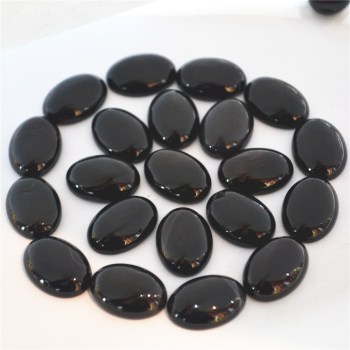
Crystal of the Week: Onyx – Holistic Experiment

In ancient times, Onyx was thought as a demon that was imprisoned in the stone that would awaken at night, creating issues, especially between lovers.

Nowadays, it’s a stone that is used for protection and from dark nights and lonely places, providing strength to its user. As a stone of separation, it banishes old habits and it’s extremely useful when a relationship needs stabilizing or when it has past its time and needs releasing.

Onyx assists in keeping your own counsel and holds memories of what happened to the user and can often be used for psychometry.

Physical, Emotional, and Spiritual Purposes

On a physical level, it’s often used to promote stamina, vigor, and steadfastness. It helps quell sexual desires and works on issues that involves the bones, bone marrow, blood disorders, and feet. When placed in the stomach of a pregnant woman, it can reduce labor pains and bring an earlier delivery.

It is also believed to aid in ailments such as epilepsy or glaucoma and is known to have powers to rectify damage done to cells. Onyx is often recommended to athletes because it can increase strength, endurance, perseverance, and explosivity, especially if it’s placed on the Solar Plexus.

Emotionally, Onyx is used for promoting wise decisions and self-confidence. It’s centering and helps those who are suffering grief and any overwhelming fear. It alleviates worry, tension, and nervousness and eliminates confusion and nightmares

On a Spiritual level, it balances the ying and yang energy and is effecting in past-life work for healing old injuries and physical trauma that is affecting the present light. It’s connected to to the Base chakra and the Crown chakra and balances total energy along the chakras.

Disclaimer: Crystal of the Week are a spiritual support to healing and are not prescription or healthcare information.

Source:  Crystal of the Week: Onyx

God(s) ~ secretoftheserpent

By: gserpent

God(s)

What is a god? Gods are all over the myths world-wide. If you ask me we are all gods and goddesses, but this world is all about you not knowing you are divine. Even for those of you that are “awake” this may come as a surprise. If you have read my previous work you know who I am about to reveal, but at least know you will know where I get my conclusions. This post will mainly be about the monotheistic god, but I will touch on the religions with multiple gods too. Everything in our modern world comes out of Egypt(which goes back to Atlantis) and god(s) is no exception.

Let’s look at the monotheistic religions and their gods. The religions of Judaism, Christianity, Islam and Masonry. Yes I said monotheism and their gods. They have Jehovah, Allah, Adonai, Elohim, El Shaddai, Eli, Eloi, El Elyon, Ehyeh, and let’s not forget Yahweh. Jesus is also considered a god himself. Seems like there is an awful amount of gods in monotheism. Theologians will tell you these are just different names for the same god. Well then your god is not only vengeful and moody, but he has an identity crisis. All of these names go back to versions of the sun and dualism, but the one I found interesting is the one that is unspeakable or unknowing, Yahweh.

Ralph Ellis is the one that uncovered the true identity of this god. If you want to become truly enlightened, read his books. This man is a genius that only comes around once in a few centuries. He is bringing back the true knowledge that has been lost in this world. I am going to mix in some things in that I know to help you better understand why the ancients, mainly Egyptians, thought certain things.

Yahweh comes from the tetragram YHWH, the sacred and unspeakable name of god. In tetragrams and hieroglyphs there were no vowels only consonants, so the translators inserted whatever they thought the vowel should be. That is exactly how scientific translating ancient languages is. Jehovah came from translating YHWH into english and inserting vowels. Then it was decided to go back to YHWH. This is the level of expertise that is controlling the world. That is exactly what religion is for, control. You are about to find out who ” god” is for these patriarchs.  The real funny part is that they don’t realize who they are worshipping.

The first clue to who this god is has to do with bread. Bread symbolizes knowledge, but christian insist they are cannibals and it represents flesh. The last supper was more of sharing secrets than anything else. Breaking of the bread symbolized occult knowledge. Part of that knowledge was that the “all” or “force”, whatever you want to call it, breaks up into individual souls and falls into the body. The bread is the body.  Jesus is giving them the knowledge about how the divine breaks up and falls into the individual bodies, making you. This is why bread represents flesh, but christians have no idea. This ritual was performed in Egypt and it was called Ta-en-aah. I will give you the meaning to this shortly. Catholics perform this ritual with the wafer. This wafer is showing exactly who the true god the patriarchs venerate. The wine is just showing the bloodline of this god and Jesus was of the bloodline through his mother(See His Royal Jesus).

The wafer is representing the moon. This god is also why christians have a Trinity. The Egyptian moon-god was Thoth. I can hear the reader asking “How the hell do we get from Yahweh to Thoth”?. In Egyptian Yah literally means the moon. A very ancient name for Thoth is wait for it………..Yahew! Pronounced Yahoo. Ta-en-aah was the sacrificial bread of the moon-god. In the Koran Mohammed is told the name of your lord is “he who instructed man by pen, he who taught him what he did not know”. All of the patriarch religions go back to Lower Egypt. Thoth was the god with the crane head and pen in hand. Thoth was Hermes in Greece and Mercury in Rome. It is why they say Hermes was thrice great or thrice named. Thoth, Hermes and Mercury is the patriarch Trinity. They have tried to cover this up with father, son and holy ghost. The hebrew word for Jew is Yahewdaiy and it means children of Thoth.

The Egyptians had many gods and goddesses, but the Akhenaton tried to make them venerate one god, the sun. To see Akhenaton’s true identity along with all the other Old Testament characters see Patriarch Pharaohs. All the gods and goddesses of Egypt were aspects of yourself and the cosmos. I always say “Nothing is outside of you”, so they were aspects of yourself. The Egyptians not only venerated the sun, but the power behind it. The power of the cosmos. Science is just now figuring out the power sun controls everything. When you are tuned into this divine power of the sun you reflect it like the moon. This power waxes and wanes in you just like the moon. But if you are giving your power away to a false god outside of you, then you will never realize your true power.

All the Greek gods, Norse gods, Hindu gods and Roman gods are just Egyptian gods repackaged. They took these gods and put them outside of the individual for the laity. While the people with eyes to see and ears to hear knew exactly what was going on. Buddha was the name of the priest that watched over the sacred Benben stone. Alexander the Great created Buddhism on his conquests after learning the secrets in Egypt and being crowned Pharaoh. Most statues of Buddha are Alexander the Great. Jesus’ real name was Manu. To see the truth of the biblical family see His Royal Jesus. Muhammad’s real name was Lothar Schmalfuss. He was a cardinal that had failed to be elected pope. The vatican used him to create Islam. All religion and it’s texts have been amended and adapted to suit the era of the people they want to control. When I hear or see someone saying that all religions are pointing to the truth, I think to myself “Yes they are pointing to control over the masses”.

As I have said before, “We are who we have been waiting for”! Quit the game and the game goes away. Quit being a pawn in this world and start being your own creator. If you don’t rule your world someone else will. Start realizing how much power you actually have and start using it. I know it is a long and lonely road, I have taken it. It has been ingrained in our DNA to want to worship something. To see how this happened read Lemurian Magic. The history that we have been fed is his story, make your own history. Break the walls down.  You are a Goddess or God, start acting like one.

Agents Seize Horse Meat, Genitals at Airport Outside Capital

S0urce: Multiple “The women had a combined 42 pounds of horse meat concealed inside juice boxes…” STERLING, Va. – Customs agents have seen all sorts of things come through t…

Source: Agents Seize Horse Meat, Genitals at Airport Outside Capital

Don’t Slaughter Montana’s Bison

“As most of our seasoned readers are aware, the main thrust of SFTHH is to bring to the forefront the plight of our American equines be they domestic or wild. But while being tuned into the …

Source: Don’t Slaughter Montana’s Bison

The BLM Continues Lack of Transparency in Adobe Town Wild Mare Radio Collar Study | Wild Hoofbeats

Only 3 mares in the trailer?

On Sunday morning I waited at the parking lot next to the corrals at the Rock Springs BLM facility. It was 1 degree above zero, and I was bundled up accordingly. I am the only member of the public there, unaffiliated with the BLM or University of Wyoming. One trailer and two trucks drive in front of me, and I am waiting for the other trailer. There are only 3 mares in this trailer, I am assuming three of the four mares that had radio collars put on on Friday. But there were 5 other mares that I had been told by Kate Schoenecker of USGS had not been collared because they were too young. In the Environmental Assessment, it states clearly that they were only going to collar mares 5 years old and older. Young mares who are still growing can be strangled by the collars. But where were the 5 other mares? They flagged me to follow, and I pulled out of the facility. When we took a break I asked where the other mares were. I was told they were still at the Rock Springs facility and they were being “re-evaluated.” What does that mean? They are either too young for the study, under 5, or they are not. Are they being kept for some other purpose? Both the EA and the BLM’s own press release state that none of the horses from Adobe Town are to be removed – they are all supposed to go back to the Herd Management Area. So what is the BLM not telling us?

These mares need to be released back to the area where they were trapped IMMEDIATELY.

Robin comes out of the trailer

We drove to Bitter Creek Road, which is about 30 minutes from Rock Springs, and we started down the road. After we got off of the paved portion of the road, conditions got worse, from occasional mud to water and ice flooded areas. It was a challenging drive. After we passed Eversole Ranch, about 10 miles later the trailer stopped and the first mare was released, a little bay I named Robin. She ran as fast as she could once she hit the ground, only turning back to look at us when she had gone what she thought was a safe distance. There were no other wild horses in sight, and I learned that all three of the mares had been trapped about 30 miles south of this area.


Robin looks back at us

We got back in our cars and continued driving for about 8 miles before stopping again to let another mare out of the trailer, this time a little sorrel I named Felicity. She turned around immediately after jumping out, looking for her friend, the grey mare in the back of the trailer. I noticed a cut over her eye that looked swollen. Any time you transport wild horses there can be injuries. It did not look deep and it did not prevent her from running off when one of the contractors shooed her away. There were no other horses around her either.

Felicity comes out of the trailer

Felicity looks back at her friend in the trailer

Felicity finally runs away

We continued driving as the road got worse for another 10 miles, almost to the state border with Colorado before letting the last mare go, a grey mare who was pure white who I named Ghost. She ran down the road past the cars and disappeared. We turned around carefully and went back out the way we came.

Ghost jumps out

Ghost looks out, getting her bearings

Gone!

On the way back, right in the area Felicity had been released I caught sight of a wild family at a run. They ran across the road in front of us, and the grey stallion in front was magnificent with his flowing mane. I hope that Felicity can meet up with them and join their family.

The wild family

Crossing the road

We were going to meet up with the other contractors, who had been bait trapping in the northeast portion of Adobe Town who had loaded the grey mare with a collar at Rock Springs, then loaded up her family with her. They had held onto the family and were going to release them all together. After driving on the highway, we got onto muddy roads, and drove until we met up with a horse trailer full of horses. This was the grey mare and her family. they were moving quite a bit in the trailer, clearly eager to get out. We followed the trailer until they stopped and we positioned ourselves to watch them emerge, which they did at first tentatively and then faster. As they leaped out I saw a filly at the side of the grey collared mare who I named Dove, and was told she was her yearling filly. No doubt this is why they kept the family back so they could be released together.

The grey family in the trailer

Tentatively they get out

Running from the trailer

The collared mare Ghost and her young filly

Going....gone!


They ran off over the hill, and I breathed a sigh of relief that all four were back home.

One thing that really puzzled me was that I saw piles of panels used for traps, all stacked on a semi. Neither team of contractors had a new trap set up. When I asked they told me some decision was being made at 7pm this evening, they did not tell me what. According to the BLM’s own web page on the bait trapping, they had trapped for only 5 days, starting Sunday February 5. They gathered by their own report 27 horses over the four days, and shipped 9 mares to the Rock Springs corrals. The information on the study in the EA said they would be trapping in 3-5 locations. Why then were they only trapping in two locations, and had not set up any traps after Thursday? In the EA, the BLM had written that if bait trapping “fails” they would go to a helicopter roundup. I hardly think that 5 days only is enough time to “fail.” it takes time to accustom wild horses to a trap and to let them get used to it and come in. That is what they are currently doing in Sand Wash Basin, where they have given far longer than 5 days to trap the horses.  This seems to me to be a setup to fail. If they are not continuing to bait trap then they are getting ready to bring the helicopters in. Wild horses are injured and killed when driven with helicopters. There is no justification for subjecting the wild horses of Adobe Town to a helicopter roundup when they are not even over the Appropriate Management Level for their area.

The BLM should continue to use bait trapping if they have to finish getting 16 more mares for this ill-conceived research study, or better yet, they need to go back to the drawing board and redesign the study so that the researchers use non-invasive, safe direct observation, not dangerous radio collars.

Link to Daily Gather Reports:

https://www.blm.gov/programs/wild-horse-and-burro/herd-management/gathers-and-removals/2017-Adobe-Town-Wild-Horse-Gather