The Ultimate Guide to Chestnut Harvesting, Roasting, and Chestnut Flour

Here on Turtle Island, from the dawn of time until about a hundred years ago, Chestnuts were a staple food crop for all life, including human life.  A nutritious and carbohydrate-rich nut, Chestnut trees produce a bumper crop of nuts every 1-3 years (mast years), are very easy to harvest, can be eaten fresh off the tree, and are easy to process into a wide range of versatile dishes.  You can eat them fresh, roast or boil them, add them to soups or stews, dry them and grind them up to make flour which can be turned into bread, crepes, cookies, and more.  In fact, as far as foods go, I would argue they are one of the very best for long-term sustainability, ecological support, and filling hungry bellies.  As a perennial treecrop, Chestnuts can be a staple part of a regenerative and ecologically-focused food forest (for an example of them being used as part of a larger regenerative agriculture system, you can read Mark Sheppard’s Restoration Agriculture). They have such great promise for transitioning away from fossil-fuel-based agriculture and embracing regenerative approaches to life.

Dana O’Driscoll

The Ultimate Guide to Chestnut Harvesting, Roasting, and Chestnut Flour

Humans Don’t Consciously Need Nature

There’s a question that runs through my mind almost every single day:

Why do things look the way that they do?

Of course, I’m mostly referring to why things in nature objectively look a certain way — why a particular forest is coniferous, or why calcium-loving plants grow in certain wetlands.

I think a lot of people ask related questions, but what I’ve noticed over the years is that some of us frame these questions through a negative lens.

We might wonder, for example, why bad things are happening to certain ecosystems, why some landscapes look rough, and ultimately why humans are so disconnected from nature.

I don’t claim to know with absolute certainty why these things are happening, but I think the answer has something to do with this:

Humans don’t consciously need nature.

In a brand-new video, I explain what I mean.

Thanks for reading and watching, and thanks for your continued support!

— Adam Haritan

Elderberry – November’s Herb of the Month

By Maryann Readal

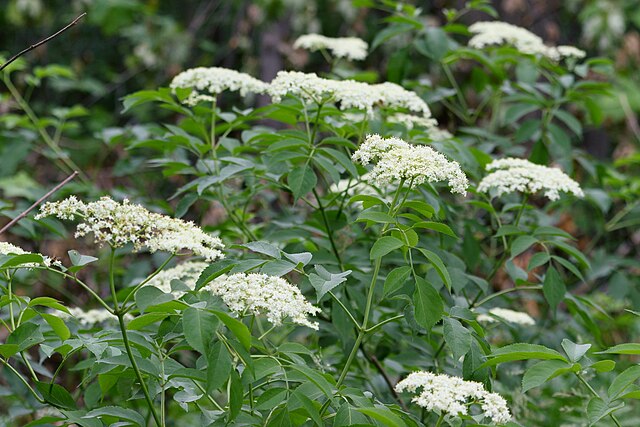
Elderberry (Sambucus canadensis) is an herb of many faces. In spring, its white, lacy blossoms brighten woodlands and hedgerows, attracting bees and butterflies with their sweet fragrance. By autumn, those delicate blooms transform into heavy clusters of deep purple berries — a feast for birds, wildlife, and humans alike. Every part of the elder — flowers, berries, leaves, and even wood — has long been treasured for food, craft, and healing.

A Storied Past

The story of elderberry stretches back to the Ice Age, between 12,000 and 9,000 BCE, when glaciers carried its seeds across North America, Europe, and Asia. By 2000 BCE, early peoples were already cultivating the plant for its medicinal and culinary gifts.

Continue Reading …

Setting Up and Using Your Home Herbal Apothecary

By Dana Driscoll

A growing number of people are taking an interest in herbal medicine. Why learn herbalism now? For many, it is a way to deeply learn and lean into the nature right outside their door. Further, learning how to identify, prepare, preserve, and use medicinal plants helps you take health into your own hands. A lot of people who live in the US (especially in rural areas) recognize that healthcare is more costly and more difficult to access: it is harder than ever to keep a family doctor or get specialist care, and it is so costly that a lot of people can’t afford visits, tests, or medicines.

Continue Reading …

Are Pawpaws Neurotoxic?

First, I’d like to thank everyone who has registered for an upcoming ecology outing.  The Old-Growth Forest Ecology Outings are nearly full, and fewer than half the spots remain for the Summer Forest Ecology Outings.

If you’d like to join us on August 30 or August 31 for an exciting day of ecology and geology, you can register here.  These outings are great opportunities to explore beautiful ecosystems while learning tree identification, mushroom identification, forest history, geologic influences on plant communities, and much more.

I’d love to see you there!

And now on to the new video…

Are pawpaws neurotoxic?

It sounds like an absurd question to ask.  After all, many people eat these wild fruits every year without experiencing any apparent negative effects.

But let’s consider the following pieces of information:  

Studies have linked the consumption of fruits in the Annonaceae family to neurodegeneration in humans.  Pawpaw, it turns out, is in the Annonaceae family.

A compound isolated from pawpaws is neurotoxic in laboratory studies.

And a case report from 2020 describes a man who developed a possible variant of a neurodegenerative disorder called progressive supranuclear palsy.  The man was known to eat lots of pawpaws.

Of course, none of this information is conclusive, but it does make some people wonder.  Are pawpaws neurotoxic?  Should we avoid eating them?  Or is this issue overhyped?

In a brand-new video, I share my thoughts.

Thanks for reading and watching, and thanks for your continued support!

— Adam Haritan

Upcoming Forest Ecology Outings (New Events!)

I’m excited to announce that I’ll be leading a series of forest ecology outings, and I’d love for you to join me!

On August 30 and 31, 2025, I will be leading two Summer Forest Ecology Outings at McConnells Mill State Park in Pennsylvania.

Designated a National Natural Landmark for its outstanding features, McConnells Mill is a treasure trove for learning.  Central to the park’s landscape is the Slippery Rock Gorge — a deep ravine carved by powerful forces, exposing millions of years of ancient bedrock and currently supporting mature forest ecosystems.

On October 11 and 12, 2025, I will be leading two Old-Growth Forest Ecology Outings at Cook Forest State Park. 

Located in northwestern Pennsylvania, Cook Forest is home to one of the last remaining old-growth forests in the entire region, with 11 old-growth areas spanning over 2,300 acres.  One of the areas within the park, the Forest Cathedral, contains arguably the finest concentration of old-growth trees in the northeastern United States.

During these outings, we will walk through deciduous and coniferous woodlands while discussing forest ecology.  We’ll investigate big trees and big rocks.  We’ll see historic landmarks, and we’ll discuss important geological influences that have drastically shaped the landscape.

In addition to learning key characteristics of mature and old-growth forests, participants will learn tree identification, mushroom ecology and identification, the role of fire as an ecological agent, ways to interpret forest history, and much more.

These outings are great opportunities to learn, explore, and connect with nature in spectacular settings.  They’re also great opportunities to meet wonderful people.

Please note:  Each outing is a single-day event.  To maximize your learning experience, space is limited and registration with payment in advance is required to secure your spot. 

To learn more and to register, click here and choose the appropriate session.

I’d love to see you there!

—Adam Haritan

Is Black Walnut Killing Your Plants

“Black walnut kills plants.”

I first heard this statement many years ago.  Occasionally, I still hear some version of this claim:  Black walnut engages in warfare by releasing a chemical into the soil.  This chemical kills or inhibits the growth of plants.

But is this entirely true?  Does black walnut actually kill plants?

Some people say yes.  Other people say no.

In a brand-new video, I share several key findings from scientific studies and personal observations that shed some light on this controversial topic.

You can watch the video here.

Thanks for reading and watching, and thanks for your continued support!

— Adam Haritan

American Chestnut: Just How Massive Was It?

Every now and then, I’ll come across a decent-sized American chestnut and wonder:  “Just how big did these trees get?”

I’ve always read that American chestnut was a dominant tree throughout eastern North American forests.  I’ve heard people describe American chestnut as a tree that towered above all others.  I’ve even seen references to American chestnut as “the redwood of the east.”

But how much of this is true?  Was American chestnut an exceptionally massive tree?

Unfortunately, it’s difficult for us to know for sure.  A fungal disease known as chestnut blight killed nearly every large American chestnut throughout the first half of the 1900s.  Today, American chestnut still exists on the landscape, but almost always as a smaller tree.

Ecologists in recent years have been wondering about the size of American chestnut in pre-blight forests.  I’ve been wondering about it too, which is why I decided to film a video on the topic.  It turns out that we may have some answers after all.

Has the size of American chestnut been exaggerated in recent decades?  What do sources from the 1800s tell us?

You can watch the brand-new video here.

Thanks for reading and watching, and thanks for your continued support!

— Adam Haritan

I Don’t Think This Poet Is Wrong

“Our relation to the natural world takes place in a place.”

The American poet Gary Snyder wrote those words.  I don’t think he’s wrong.

Every time we harvest a wild mushroom, we do so in a place.  Every time we add a new bird to our life list, we do so in a place.  Every time we gather spring water and admire a wooded valley, we do so in a place.

Alvars, bogs, fens, forests, marshes, prairies, savannas, and swamps are all places where life abounds.  When we refer to these places specifically as “ecosystems,” a few interesting things happen:  We see important connections, we see intricate relationships, and we see where humans fit into the story.

If you want to strengthen your connection to nature by learning these fascinating ecosystems, consider enrolling in Exploring Wild Ecosystems.  This is my newest online course designed to improve your ecological literacy.

Today is the last day of the sale.

You can learn more and register here.

Thanks for your continued support!
—Adam Haritan

Wait, Deer Don’t Get Lyme Disease?

First, I want to say thank you to everyone who registered for the upcoming Old-Growth Forest Ecology Outing on May 31 and June 1.  Both programs are sold out.  Stay tuned for more Learn Your Land events this year!

I also want to mention that Exploring Wild Ecosystems will be open for enrollment on Monday, May 12.  This is my newest online course intentionally designed to improve your practical knowledge of ecology.  If you’re looking to develop ecological literacy and become a better naturalist, consider enrolling on Monday, May 12.

And now on to the newest video…

If you’ve spent enough time in tick-prone areas, you’ve probably seen ticks sucking the blood of deer.  Logically, it makes sense that deer would at least be carriers of the Lyme disease spirochete.  After all, white-footed mice and other mammalian tick hosts can be reservoirs for the bacteria.  

But white-tailed deer are different.  Their blood isn’t like the blood of other animals.

Scientists have been studying the relationship between deer and Lyme disease for decades.  The newest research is quite fascinating, and in a brand-new video, I address some of the misconceptions surrounding the role of deer in transmitting Lyme bacteria.

Do deer ever get Lyme disease?  If they don’t, what is it about deer that makes them immune?  If deer are immune, why do ecologists still advocate for a reduction in the deer herd as a way to reduce Lyme disease rates in humans?

You can watch the brand-new video here.

Thanks for reading and watching, and thanks for your continued support!

— Adam Haritan