Federal Bill to Ban Lethal Wildlife Poisons Introduced after Three Dogs Killed by M-44 “Cyanide Bombs,” Kids Exposed ~ Predator Defense


March 30, 2017 – This month three dogs were killed by M-44 “cyanide bombs” in Wyoming and Idaho. In both cases children were present and put at grave risk of poisoning. This is beyond unacceptable.

M-44s are indiscriminate sodium cyanide ejectors set by USDA Wildlife Services agents and local wildlife agencies for “predator control.” Details | Diagram There is no justifiable excuse for the use of M-44s. It is insane to set poison traps in the great outdoors.

We’ve been pressuring for an M-44 ban since 1990, collaborating with Rep. Peter DeFazio (D-Oreg.). We are thrilled to announce that on March 30 Rep. DeFazio introduced the legislation we’ve been working on in Congress. The bill is called H.R. 1817, “The Chemical Poisons Reduction Act of 2017.” It would ban both lethal M-44 sodium cyanide devices and Compound 1080, which are used unnecessarily by government wildlife agents for predator control.

What we need now is your help to get this legislation passed into law. This is a nonpartisan, public safety issue, and there honestly are no valid arguments against banning wildlife poisons. Learn how to help

Background on March M-44 events

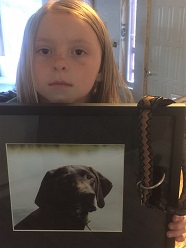
Early in March 2017 we began working with a family in Wyoming who went out for a beautiful pre-spring walk on the prairie–one they’d taken many times before–and lost two dogs in horrifying circumstances.

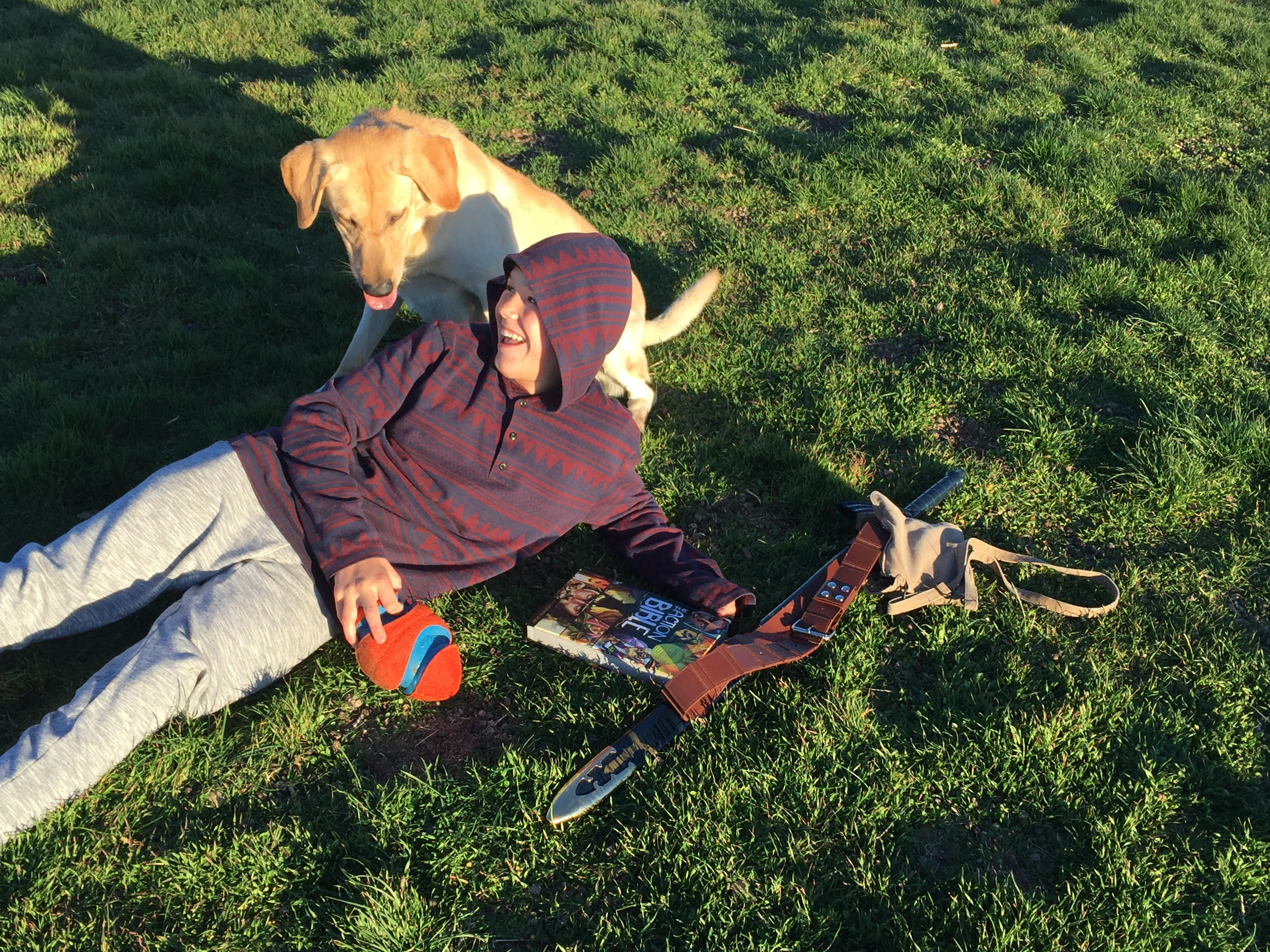
We’re also spreading the word about the other devastating event in Idaho, where a 14-year-old boy in Pocatello, Idaho accidentally set off an M-44 behind his back yard and watched helplessly as his dog died an excruciating death. The boy had to be hospitalized and is being closely monitored. He and his family are devastated and outraged. Here’s what our executive director, Brooks Fahy, had to say about this case in The Oregonian:

“[The] Idaho poisoning of a dog and the near poisoning of a child is yet another example of what we’ve been saying for decades: M-44s are really nothing more than land mines waiting to go off, no matter if it’s a child, a dog, or a wolf. It’s time to ban these notoriously dangerous devices on all lands across the United States.”

On March 28, 2017, we joined a coalition of environmental and wildlife groups asking for an immediate ban on M-44s in Idaho and removal of all existing devices in the state.

How You Can Help

Media Coverage

Learn More

Oregon Wolf Killed by M-44, a Poison-Filled Device that Also Endangers People, Pets


March 2017 – Just how many animals need to die a horrible death before people realize it is insane to set poison traps in the great outdoors?

A wolf died a cruel death in Oregon on Feb. 26, 2017 because of a device set on private land by federal agents from the egregiously misnamed program within the USDA called “Wildlife Services.”

We’ve been working with U.S. Rep. Peter DeFazio (D-Oreg.) for decades to ban wildlife poisons like the M-44 sodium cyanide ejector. These indiscriminate devices also endanger pets and people.

M-44s are an outrage, and taxpayers fund their use. This travesty must be put to an end. And it will be if enough of us speak out and demand it. We are currently working on new legislation to ban M-44s and will keep you posted. Learn how you can help

Media Coverage

How You Can Help

Learn More

Source: Predator Defense – a national nonprofit helping people & wildlife coexist since 1990
Please Comment to Protect Wyoming’s Wild Horses from the Devastating 2017 Checkerboard Roundup | Wild Hoofbeats

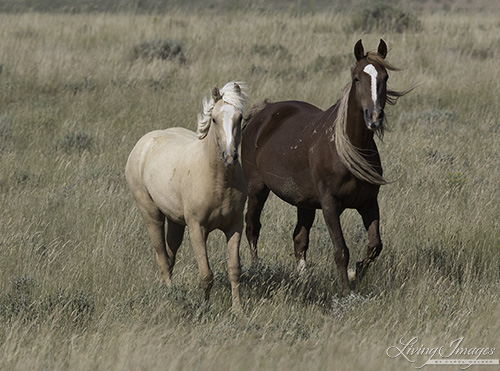
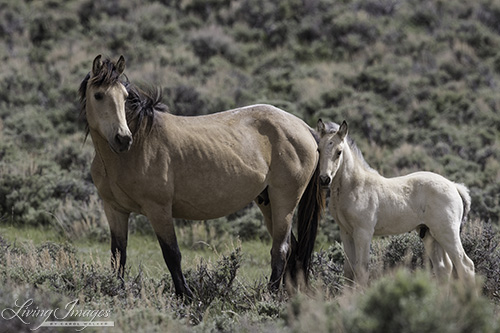
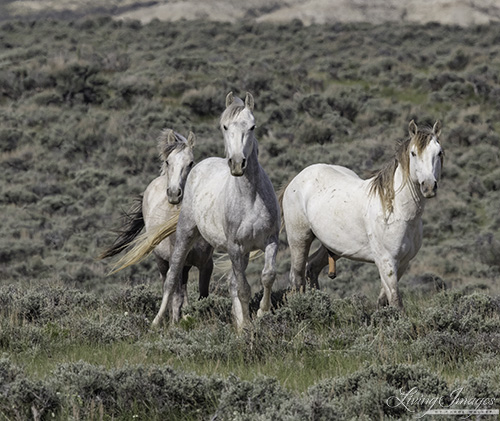
Adobe Town Family

Please Comment by April 4, 2017 on the Checkerboard 2017 Roundup

The BLM was unable to roundup wild horses from Salt Wells Creek, Adobe Town and Great Divide Basin in 2016 because we won a lawsuit that prohibits the BLM from managing the wild horses in the Checkerboard using only Section 4 of the Wild Free Roaming Horse and Burro Act, which allows them to remove wild horses from private lands. Because the Checkerboard includes public lands, it is illegal to manage them as if they were privately owned by the ranchers demanding these roundups. In order to legally roundup wild horses from the Checkerboard, the BLM must prove that the numbers are above Appropriate Management Level, or AML. Now, they are not even conducting a census to prove this, instead they are “projecting” that the horses are over the high end of AML.

Roundups cause the destruction of hundreds of wild horse families, as well as injuries and death to the horses as they are chased by helicopters and flee in terror into traps. These captured wild horses are chased into trailers and taken away from the only home they have ever had to end up spending the rest of their days languishing in holding corrals with no shelter. Only a lucky few are adopted by members of the public and these do not always mean good homes – the return rate back to the BLM for adopted or purchased wild horses is over 50%. Many many of these horses will end up at slaughter in Mexico. There is no good reason to roundup and remove these horses from Adobe Town, Salt Wells Creek and Great Divide Basin.

I have been following and observing and photographing the wild horses in these three herd management areas for the last 13 years. These horses are uniquely suited to this sometime harsh high desert environment. They are the last three largest herds in Wyoming, and they deserve to be preserved on our public lands. Although the Checkerboard presents challenges to BLM management because of its pattern of public alternating with private lands, that is no reason to cave into petty demands from the Rock Springs Grazing Association, which is made up from less than 25 members. These wild horses are valuable to us, the American public, and so every effort must be made to preserve them here where they were found at the time the 1971 Wild Free-Roaming Horse and Burro Act was passed. These horses were here long before the Grazing Association, and now what needs to happen is land swaps to consolidate blocks of public land that the horses can continue to roam upon. Managing the wild horses on the range, on our public lands where they can continue to roam free and making these necessary land swaps happen is what the BLM needs to be working on, not perpetuating this every 3 year pattern of roundup, removal, then warehouse our wild horses. The Field Manager of the Rock Springs BLM Field Office has been quoted as saying: “For all intents and purposes, we consider the Checkerboard private.” But it is NOT private. In fact, over half of the Adobe Town, Salt Wells Creek and Great Divide Basin Herd Management Areas are public land, that belongs to us, the citizens of the United States of America, not the Rock Springs Grazing Association.

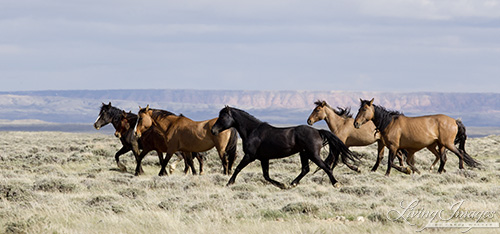
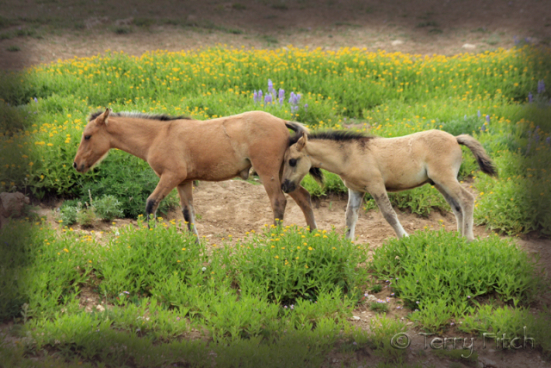
Great Divide Basin Family

This time, the BLM wants to remove 1029 wild horses: 584 removed from Salt Wells Creek, 210 removed from Adobe Town, and 235 removed from Great Divide Basin.

They are not even calculating their numbers from an actual aerial census – they are making these numbers up. Every year, the BLM conducts and aerial census in late April, but now they are just “projecting” the numbers.

2017 “Projections”

Great Divide Basin  650

Salt Wells Creek       835

Adobe Town              820

Here are past census numbers provided by the BLM for these three areas:

2016 Statistically Corrected Census Counts
HMA Total within HMA Total within Checkerboard
Great Divide Basin 542 272
Salt Wells Creek 696 187
Adobe Town 684 25
Total 1,922 484

2015 April Census Numbers:

Adobe Town: 858
Salt Wells Creek: 616
Great Divide Basin: 579

2014 Post Roundup Census 2014

Adobe Town: 519
Salt Wells Creek: 29
Great Divide Basin: 91

As you can see with these numbers, they randomly go wildly up and down but somehow are considered “statistically corrected.”  The BLM has to prove that Adobe Town has more than 800 wild horses, Great Divide Basin has more than 600 wild horses and Salt Wells Creek has more than 365 wild horses in order to legally proceed with a roundup. There is no attempt to account for mortality rates due to deaths of older horses and foals, which can be very high when there is a harsh winter, which this last winter certainly has been, with storm after storm, much more snow and much more freezing temperatures than normal.

A real, professionally done, independent census needs to be conducted to get a real, accurate count of the wild horses in each of these three HMAs before any plans are made to roundup and remove wild horses from their rightful homes.

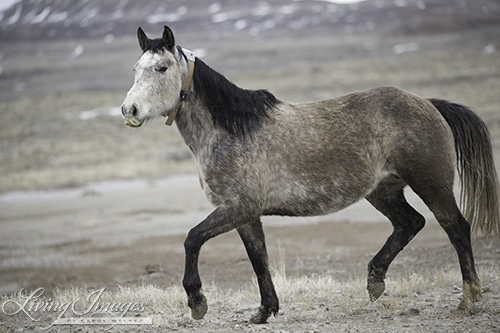
Radio Collared Adobe Town mare

I have been following the Adobe Town Radio Collar Study which is currently going on in conjunction with the University of Wyoming. Their plan to study the movements of wild horses through tracking 20 mares wearing radio collars will be completely disrupted if they round up wild horses in Adobe Town, so this is yet another reason that this proposal is senseless. I contend that there are NOT more than 800 wild horses in Adobe Town and therefore there is no legal reason to proceed with a roundup, and they will be subverting their own study by removing wild horses from this HMA, so this is yet another reason not to roundup and remove horses from Adobe Town. But none of the horses from any of these three HMAs should be removed without an accurate count of how many wild horses are in each area.

The biggest reason for not going forward with the Checkerboard 2017 Roundup is the well being of the wild horses themselves. This seems to be very low on the BLM’s priority list. What will happen to these 1029 formerly wild horses? We, the taxpaying public, will be paying to warehouse and feed them, at huge cost. The horses themselves will live out miserable lives in the holding facility, without their families, without shelter, and under the possibility that at any moment the BLM could elect to “euthanize” the more than 45,000 wild horses in captivity. This must stop.

Adobe Town mare and foal

Please comment by April 4. These wild horses need your help.

You are welcome to use any points from this blog but please use your own words. The BLM counts any form letter or form email as 1.

blm_wy_adobetown_saltwells_hma@blm.gov (Please include “2017 AML Gather” in the subject line), mailed or hand-delivered during regular business hours (7:45 a.m. to 4:30 p.m.) to:   BLM Rock Springs Field Office, 2017 AML Gather, 280 Highway 191 North, Rock Springs, WY 82901.

For more information, please contact the BLM at 307-352-0256.

Here is a link to the Scoping Document:

https://eplanning.blm.gov/epl-front-office/projects/nepa/74247/98803/119700/2017_Scoping_Statement_-_Adobe_Town,_Salt_Wells_Creek,_Great_Divide_Basin_AML_Gather.pdf

Source: Please Comment to Protect Wyoming’s Wild Horses from the Devastating 2017 Checkerboard Roundup | Wild Hoofbeats

Myths and Facts about Wild Horses and Burros | Straight from the Horse’s Heart

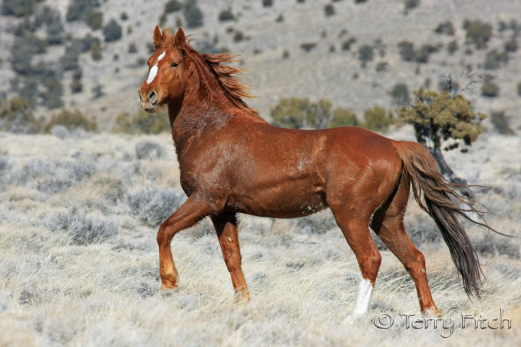
Stallion of Antelope Valley HMA ~ photo by Terry Fitch of Wild Horse Freedom Federation

by Bonnie Kohleriter

MYTH 1   26,500 wild horses and burros are to be on our public lands in 10 states, as that number was on our public lands in 1971 when the Wild Horse and Burro Law was passed.  Wild horses and burros are in AZ, CA, CO, ID, MT, NV, NM, OR, UT, and WY.

FACT 1  No census of numbers of wild horses and burros was done in 1971 when the Law was passed in December of that year.  The 1971 Law did not say the number of wild horses and burros that could be on our public lands.  26,500 is an arbitrary, non-evidenced based number.

MYTH 2  Wild horses and burros are on our public lands everywhere and they are destroying our public lands.

FACT 2  The BLM manages 245 M acres of our public lands.  About 3 M livestock are on 160 M acres, wildlife is everywhere, and wild horses and burros are limited to 29 M acres in areas called Herd Management Areas (HMAs).  Within the HMAs about 400,000 livestock that reside here as well are allocated 82% of the forage while the wild horses and burros are assigned 17%.  In 1971 the wild horses and burros were in Herd Areas (HAs), but the BLM said those areas were too difficult to manage so they drew circles within the HAs and called them HMAs.  Unbeknown to the animals where the boundaries are when they go into HA land, they are fodder to be removed without question.

MYTH 3  The BLM has 177 herd management areas (HMAs) for wild horses and burros giving the illusion horses and burros are in those areas.

FACT 3  The BLM has only 160 HMAs where wild horses and burros are now found.  The other areas don’t have any horses or burros in them, or are part of the military or forest service or are double counted.  The BLM had 339 HMAs initially, but little by little has zeroed them out.

MYTH 4  The BLM sets “Appropriate Management Levels” (AMLs) for the wild horses and burros in each area.  It sets a low number at which the animals should be and allows them to breed to a higher number after which it gathers, removes and reduces the animals to the low number again.  The overall low number is 17, 810 and the high number is 27,500.

FACT 4  “Appropriate” is inappropriate.  Allowing only 17,810 horses and burros in 160 areas in 10 western states is a species that is threatened or endangered.

MYTH 5  The BLM says it strives to have healthy horses on healthy rangelands.

FACT 5  Dr. Gus Cothran, the retained geneticist for the Wild Horse and Burro Program, says the following: Conservation geneticists maintain a minimum of 150-200 animals is needed in a herd with 50 effective breeding animals to have sufficient genetic variability for continued long term viability.  Of these herds, only 28 herds have 150-200+ horses allowed in them, and of these herds, only 3 herds have 150-200+ burros allowed in them.  In other words, 82% of the herds don’t have appropriate allowable numbers in them for continued health and viability.

MYTH 6  The herd members intermingle with the herd members in other herds so the individual numbers within a herd don’t matter.

FACT 6  Intermingling of the herds has not been scientifically researched and validated, and established by the BLM.

MYTH 7  Horses and burros can be imported from other herds to sustain genetic viability.

FACT 7  The 1971 Law says the horses are supposed to be “where found.”

MYTH 8  The BLM strives to have a “thriving, natural, ecological balance” on our public lands with a multiple use mandate.

FACT 8  The wild horses and burros are not a thriving species, the arbitrary numbers are not natural, and the numbers are not in balance, (27,000 vs. 400,000) in the ecological environment in which they are to be distributed.  The National Academy of Sciences addressed this Myth in 2013, in Chapter 7 of its report, Using Science to Improve the BLM Wild Horse and Burro Program.

MYTH 9  The BLM asserted 67,000 wild horses and burros were on our public lands in 2016 and 47,000 were in off the range holding facilities.  The number of livestock within the 27 M acres needs to stay there as they feed the world.  The number of livestock have been reduced by 35% from 1971-2014.

FACT 9  Livestock within the HMAs provide less than ½ of 1% of the United States meat.  The number of livestock have been reduced due to overgrazing and drought.  Cow/calf size has increased by 1 ½, offsetting the reduction in number of allowable livestock.  Though ways of counting wild horses and burros have improved, counting continues to be a challenge.  Reducing the number of livestock only within the HMAs and increasing the number of allowable wild horses and burros has not been explored.  The Cattlemen’s Association and now the Gas, Oil, and Mining Industries are powerful competitors and lobbyists for our public lands on which the wild horses and burros depend.

MYTH 10  The BLM is mandated by the 1971 Law to manage, protect, and control the wild horses and burros on our public lands.

FACT 10  Look at the BLM’s budget.  The BLM, unlike wildlife and livestock groups, does ever so little to manage and protect the wild horses and burros on our public lands.  The BLM doesn’t tend to water, forage, or space (fence) issues.  The BLM’s focus is on control, hiring contractors to gather and remove animals, hiring contractors to house animals off the range in short-term corrals or in long-term pastures, hiring contractors to move animals around the country for adoptions, and hiring administrators to complete the paperwork.

The BLM does not engage in using fertility control treatment (PZP) as a way to keep the wild horses and burros on the range though volunteers stand ready to help.  Up to now only four small herds have used this control method but now five more larger herds  are involved in its use.  In 2013, 509 horses received PZP, in 2014, 384, and in 2015, 469, paltry numbers.  The BLM does not engage in promoting recreational tourism on the range which could and would bring in money and in which volunteers stand ready to help.  The BLM has considered sterilizing mares but the procedures are dangerous for the mares and foals and the BLM is researching geldings to be used in on the range horse and burro herds.

MYTH 11  The National Advisory Board of the Wild Horse and Burro Program and the horse advocates on the 9 Regional Advisory Councils are available to advise on what is best for the future of the wild horses and burros.

FACT 11  The advisory board members are people with livestock, wildlife and land interests, not with wild horse and burro interests.  They are cattlemen and livestock vets.  They are not horse and burro geneticists, equine vets, biologists and ecologists, recreational entrepreneurs, volunteer coordinators.

This is a broken program in need of change and a different direction.  This is a program that needs to focus on ways to retain wild horses and burros on our public lands in controlled but healthy numbers, and to focus on providing them with adequate water, forage, and space.

Wild horses evolved in the Americas.  They left during the Ice Age 10,000 years ago and were domesticated in Europe.  They were brought back to the Americas and were left to be wild again when automation was introduced.  They were used to settle our country and to fight our wars in WW1 and WW2.  Today, they are symbols of our past of the Wild Wild West.  They are symbols of our freedom. We as Americans are charged to be stewards of them.  They need to be managed and protected on our public lands,  controlled in genetically healthy numbers, and when those goals are met, in my opinion, then given fertility control treatment.

Source: Myths and Facts about Wild Horses and Burros | Straight from the Horse’s Heart

Fleet of Angels Update: WE’RE PACKIN’ UP AND MOVIN’! | Straight from the Horse’s Heart

by Elaine Nash

“…we have transported most of the 313 remaining horses to Colorado to our beautiful new adoption hub in Fort Collins.”

After a two-month long stay in Faith, SD- 30 miles from the ISPMB location, Barbara Joe Rasmussen and I are heading to Fort Collins, Colorado today to join the Hallelujah Horses and our new crew there for the final phase of this massive mission.
.
Fleet of Angels launched this mission on October 14, 2016 at the request of the SD State’s Attorney. We all dove in and worked like mad to set up a workable process, and as a result, we were able to adopt out over 270 of the 900+ at-risk ISPMB horses by December 22, 2016- the number that was allowed by the court order that was in place at that time.
.
We continued working to recruit adopters through the holidays, assuming that more horses would need us as soon as the state’s legal maneuverings allowed it. We returned to the project on January 26, 2017 when a new court order was put in place that removed all but 20 of the 600+ horses from ISPMB ownership and turned them over to Fleet of Angels to care for, manage, and find good homes for. (We were not involved in the legal aspect, but had offered to be a safety net for the horses if the courts removed them from ISPMB, to prevent their being sold at auction and the likely slaughter of most of them. In order to save them, we- thanks to a group of incredible donors, reimbursed the counties over $150,000.00 to prevent their being auctioned on December 20, 2016.)
.
Now, five and a half months later- with the help of a LOT of people and organizations, we have adopted out and transported a total of almost 600 horses to approved homes, and we have transported most of the 313 remaining horses to Colorado to our beautiful new adoption hub in Fort Collins. (Our two shippers will make one more trip this week, and then all of the remaining horses will be in Colorado.) Of the 313 still under our care, about 175 horses still need homes (IF all pending adopters who have committed to take from two to a herd of 75 horses come through).
.
For the month of April, we will be working to get the remaining horses adopted and transported, with the goal being to finish this mission by the end of the month of April. PLEASE HELP US IF YOU CAN. We need adoptive homes for 175+ horses, and we need funds to cover the costs of feed, facility use, ground team workers, lodging for some of the workers, and transportation. Literally every dollar helps, and every penny is pinched. 🙂 Our donation page is: www.ispmbhorserescuemission.org.
.
Special thanks for helping us get this far, so far, to Neda DeMayo and Return to Freedom and the Wild Horse Sanctuary Alliance, Patricia Griffin-Soffel and the Patricia Griffin-Soffel Equine Rescue Foundation, ASPCA, Victoria McCullough and the Triumph Project, Lauri Elizabeth Armstrong and Chilly Pepper Miracle Mustang, Shirley Puga and the National Equine Resource Network, HSUS, and MANY OTHERS for helping us help these horses. Please help us finish this job, so every horse in this mission has a good, loving, lifetime home.

Teamwork works!

https://www.facebook.com/groups/ISPMB.Adoptable.Horses/permalink/1283727228384737/

Source: Fleet of Angels Update: WE’RE PACKIN’ UP AND MOVIN’! | Straight from the Horse’s Heart

Public Lands Issues effect on wildlife and wild horses and burros | Straight from the Horse’s Heart

photo by Terry Fitch of Wild Horse Freedom Federation

by Bonnie Kohleriter

Our public lands are now under attack which has enormous consequences for our wild horses and burros and for our wildlife.  The attacks are coming from Trump’s cabinet members, particularly the Dept. of Agriculture and the Dept. of the Interior, and from Congressional Republicans.

First, Rep. Jason Chaffetz R UT, introduced a bill early in January, 2017, to sell off 3.3 M acres of Federal land to states.  With an outcry from conservatives and sports groups, he withdrew that bill.

Then Rep. Jason Chaffetz R UT, introduced a bill later in January, 2017, called the Local Lands Act, wherein Federal law enforcement on our Federal Forest Service (FS) and Bureau of Land Management (BLM) land, will be supplanted with State law enforcement with the States being given block grants.  The bill is currently in the Natural Resources Committee: Subcommittee on Conservation and Forestry.

Then Rep. Don Young (R) AK, moved a bill, House Joint Resolution 69, through the Congress in February, 2017, wherein the Federal Fish and Wildlife Service (FWS) on Federal Alaskan lands will no longer manage its Federal wildlife, and its Federal wildlife will be managed by the State of Alaska.  Resolution 69 went to the Senate, where Sen. Lisa Murkowski (R) AK and Sen. Dan Sullivan (R) AK, moved the resolution through the Senate in March, 2017.

It is concerning as attempts are in process to take away Federal land and give it to the States, to take away Federal law enforcement on Federal lands and give it to the States, and to take away Federal management of Federal wildlife on Federal land and give the management to the States.  What’s next?  In addition to give aways, the Senate voted 51-48 to kill the 2.0 plan which was developed by the Dept. of the Interior.  That plan authorized public lands stakeholders to give input into the use of the land.  The killing of the 2.0 plan is designed to give the local and state governments more control over the Federal public lands for development such as use for businesses.

Now Ken Ivory, a Rep. in the Utah State Legislature, under House Concurrent Resolution 22, is asking the President and Congress to repeal the Wild Free-Roaming Horses and Burros Act of 1971 and grant authority and resources to the States to manage feral horse and burro populations within their jurisdictions.  The Legislature and Governor maintain the horses and burros are damaging the rangelands for wildlife and livestock that share the same areas.  This bill would authorize the States to geld the stallions.  Some outspoken ranchers and hunters want our public land for their gains.  The ranchers in Utah have expressed they want to “harvest” (slaughter) the horses and burros like they harvest cattle.

What else is coming?  Environmental groups have identified “Public Lands Enemies.  Interestingly they are all Republicans. They are:

Sen. Mike Lee           Utah    Sen. Lisa Murkowski Al    Rep Mark Amodei        NV

Sen. Orin Hatch        Utah    Sen. Dan Sullivan      AL    Rep Dean Heller           NV

Rep. Rob Bishop       Utah    Rep. Don Young        AL    Rep Tom McClintock   CA

Rep. Jason Chaffetz Utah    Sen. Jeff Flake           AZ     Rep Doug La Malfa      CA

Rep. Chris Stewart    Utah   Rep. Paul Gosar        AZ     Rep Steve Pearce        NM

Rep. Mia Love            Utah   Sen. Barrasso            WY   Rep Raul Labrador       ID

In California, McClintock is from the Central Valley and La Malfa is from NE California.  La Malfa is a 4th generation rice farmer and has received $ 5M in federal commodity subsidies starting in 1995, or on average a quarter of a million dollars every year from the federal government.  Now that’s the real “welfare” food stamps subsidy.

While Republican Congressional Representatives primarily supported by ranchers and hunters in their respective states, wrangle in Congress to take from the Federal government and give to the States, the Wildlife Services within the U.S. Department of Agriculture yearly brutally kills millions of carnivores and omnivores on our public lands to appease the hunters and ranchers.  The hunters claim the carnivores and omnivores kill the herbivores they want to hunt and the ranchers on our public lands claim the carnivores and omnivores kill their livestock.  The killings are brutal: aerial gunning, cyanide poisoning, steel jaw and leg trapping… In 2016 the Ag Dept. Wildlife Services killed 2.7 M animals on our public lands.  415 gray wolves, 77,000 coyotes, 407 black bears, 334 mountain lions, 997 bobcats, 21,000 beavers, 4000 foxes, …

Our public lands are to have a multiple use mandate, but it seems the powerful, monied hunting and ranching lobbies, as well as now, the gas, oil and mining lobbies in Washington are dictating what will go on with our public lands through their elected congressional representatives.  Get involved.  Contact your elected congressional representatives, especially those on the natural resources, agricultural, and appropriations committees in the House and the agricultural, nutrition, forestry, and environmental and public works and appropriations committees in the Senate.  Tell your representatives what it is you want on our public lands.

Source: Public Lands Issues effect on wildlife and wild horses and burros | Straight from the Horse’s Heart

BLM Seeks Public Comment on Plan to Rip More than 1,000 Wild Horses Out Of Wyoming | Straight from the Horse’s Heart

“This is Your Chance to be a Voice for the Horses…”

Destruction of Wyoming’s Adobe Town herd by the BLM ~ photo by Carol Walker of Wild Horse Freedom Federation

The Bureau of Land Management offices in Rock Springs and Rawlins are launching a 30-day public scoping period prior to preparing an environmental assessment on proposed deadly wild horse stampedes in the Salt Wells Creek, Adobe Town, and Great Divide Basin Herd Management Areas.

The war on Wyoming’s last remaining wild horses is allegedly scheduled to begin in the fall of 2017.

Written comments should be received by April 4, and should be e-mailed to blm_wy_adobetown_saltwells_hma@blm.gov. (Please include “2017 AML Gather” in the subject line).

Mailed or hand-delivered comments can be made during regular business hours (7:45 a.m. to 4:30 p.m. local time) at: BLM Rock Springs Field Office, 2017 AML Gather, 280 Highway 191 North, Rock Springs, WY 82901.

To verbally express your disdain, please contact the BLM at 307-352-0256.

For more details on how the BLM plans to destroy wild horse families and strip them of their freedom visit (HERE)

Source: BLM Seeks Public Comment on Plan to Rip More than 1,000 Wild Horses Out Of Wyoming | Straight from the Horse’s Heart

Feel Good Sunday: Icy Roads Leave Semi Driver Stranded Overnight. But When He Looks out Window, He Spots Horse…

…warming hearts across the world.

Canadian winters can be harsh. Motorists can easily find themselves stranded on roadways, because of heavy snow and icy conditions. That’s exactly what happened to semi-truck driver Peter Douglas.

The Winnipeg driver was captured by highway cameras after getting stuck on highway 10 south of Brandon. Looking at the footage, it’s easy to see why; conditions were fierce.

He was forced to sleep in his cab overnight, hoping the weather would clear up by next morning. Instead, he woke up to find someone quite surprising knocking on his door.

Eighteen-year-old Eileen Eagle Bears was watching the traffic cams with her mother, when they spotted the stranded truck driver just over 3 miles from their home. She told herself if he was still there when she looked again in the morning, she wanted to help.

The next morning, Douglas was still stuck, so the teen got her horse, Mr. Smudge, and headed Douglas’ direction. The trip would be roughly one hour in the cold.

“There was a lot of ice on the road from the rain that we had got and drifts were bad in a few places,” Eagle Bears told CBC News.

Imagine Douglas’ surprise when he awoke to see a young woman, her horse, and a thermos filled with hot coffee outside his window. A gesture those same highway cameras caught on video.

“She had to walk that horse half a mile up that hill and half a mile down because it was so icy. Blew me away,” said Douglas to CTV News. “She said she saw me on the camera. Her and her family were watching.”

Douglas was so grateful for her kind gesture, and she promised him that if he were still stuck there later in the day, she would return with a hot meal. “He was just really glad that someone knew that he was there and that someone cared,” said Eagle Bears.

She did, in fact, return later that evening with another thermos. This time it was filled with stew and potatoes. She also brought him water.

“I thought he would be getting pretty hungry, and that’s not a good feeling, I just put on extra clothes and did what I promised I would,” Eagle Bears stated. What an amazing young woman!

Douglas was stuck there for a total of 28 hours before finally being towed and able to get safely back on the road to finish his work. He still has Eagle Bears thermoses and plans to return them on his next run through the area.

Since hearing about her heroic story, Eagle Bears has been inundated with support and appreciation from strangers. “It is overwhelming. I had gotten back and my mom had posted just a post on Facebook,” she said.

“And there was a few likes at the beginning, but we went back and there was just more and more, and it just totally blew up,” said the teen. That’s not hard to understand, because hers was an act of kindness in the cold that is warming hearts across the world.

Source: Icy Roads Leave Semi Driver Stranded Overnight. But When He Looks out Window, He Spots Horse…

BLM Set to Wage War on Wyoming’s Wild Horses, AGAIN! | Straight from the Horse’s Heart

Sources: Multiple

“Using poor science and bad numbers the BLM continues to ensure that the wild horses of Wyoming will have no families, freedom or future.  Unedited, propaganda article posted below. (Herds do not double in size every four years – Fake News)” ~ R.T.

Adobe Town ~ photo by Carol Walker

ROCK SPRINGS, Wyo.  — The Bureau of Land Management is proposing to remove about 1,000 wild horses from three herd management areas, including Adobe Town, in southwest Wyoming in order to meet population level objectives.

Kimberlee Foster, field manager for the Rock Springs BLM field office, said there are too many horses on the land, and rules require them to remove horses when they are above management levels.

Foster said the gathered horses will go to the Rock Springs Holding Facility where they will be put up for adoption.

The BLM plans to remove 210 horses from Adobe Town, 584 from Salt Wells Creek and 235 from Great Divide Basin.

There are many reasons the BLM must carefully maintain certain population ranges for wild horses in Wyoming. For one, there are no natural predators for horses in the state and equines can be prodigious breeders.

“Typically a herd management area can double in size every four or five years,” Foster told the Rawlins Daily Times (http://bit.ly/2mayVKA ).

If wild horse populations become too large, the natural forage on the land won’t be able to support them.

Herd management is based around the usage of the land, Foster said, as well as the amount of available forage for the animals. Additionally, the BLM has agreed to act to reduce herd sizes should population levels reach a certain point.

The BLM is accepting public comment until April 4 on its horse roundup plan.

Source: BLM Set to Wage War on Wyoming’s Wild Horses, AGAIN! | Straight from the Horse’s Heart

Animal Protection Groups Commend Bill to Ban Dog and Cat Meat in the United States | Straight from the Horse’s Heart

Source: International Humane Society PR

“This story walks hand-in-hand with our discussion on Wild Horse and Burro Radio last night” ~ R.T.

Bill also shines a light on brutal trade in China and South Korea

Little Ricky, a dog rescued from the Yulin dog meat festival in 2015, plays in U.S. Rep. Alcee Hastings’ office in Washington, DC. Kevin Wolf/AP Images for HSI

U.S. Representatives Alcee L. Hastings, D-Fla., Vern Buchanan, R-Fla., Dave Trott, R-Mich. and Brendan Boyle, D-Pa., have introduced legislation to ban the dog and cat meat trade in the United States, earning applause from Humane Society International, The Humane Society of the United States and the Humane Society Legislative Fund. The bill, the Dog and Cat Meat Prohibition Act of 2017, would amend the U.S Animal Welfare Act to prohibit the slaughter and trade of dogs and cats for human consumption, and would provide penalties for individuals involved in the dog or cat meat trade.

HSI is one of the leading organizations campaigning across Asia to end the dog meat trade that sees around 30 million dogs a year killed for human consumption. It’s a trade that subjects dogs to horrifying treatment and raises serious human health concerns for traders and consumers alike, all for a type of meat that relatively few people eat on a regular basis. Similar problems face an untold number of cats. In the United States, the dog and cat meat industry is limited. The new bill will prevent domestic trade and imports, and serve as an important symbol of unity with countries and regions such as Thailand, Hong Kong, the Philippines and Taiwan that have dog meat bans in place.  […]

The entire article at its Source: Animal Protection Groups Commend Bill to Ban Dog and Cat Meat in the United States | Straight from the Horse’s Heart

SB139 passes the Kentucky State House Ag Committee 15-0-0

FRANKFORT, KY — Despite the news about the existence of SB139 going viral with people all across Kentucky contacting the State Legislature opposing the measure, this morning the bill passed out of the State Agricultural Committee unanimously with a vote count of 15-0-0.

SB139 endangers what protections horses currently have in Kentucky against cruelty and abuse by lowering their status from a domestic animal to livestock. It also opens the door to horse slaughter in Kentucky should that return to US soil.

This move is strongly supported by the agricultural and horse racing communities in Kentucky who already treat horses with shocking disrespect.

The next step is to send it to the full Kentucky State House for a vote. If SB139 passes there the bill will be sent to the Governor to sign into law.

Kentuckians, please continue to speak out against this bill. […]

Entire article posted at the Source: SB139 passes the Kentucky State House Ag Committee 15-0-0