Slowing Down the Druid Way, Part IV: Slow Movements and Slow Spirituality | The Druid’s Garden

When I lived in Michigan, each Christmas, a local church just down the road from me put on a drive-by nativity scene. Cars full of people would line up for over half a mile and drive around this circular loop surrounding the church, where church members dressed up and enacted various kinds of nativity scenes.  I’m sure from the perspective of the church (who, clearly, invested a lot of time and resources, taking weeks to build the sets in the bitter cold in the time leading up to the event), it was a way to reach people who might otherwise not come through the church doors.  This same church also offered “speedy sermons” and other “quick” ways of getting busy people in the door. The idea behind these different initiatives was reaching out to people who were otherwise too busy to come to church–a reasonable and rather creative thing to do, given the time crunch everyone seems to be in these days. But for all that was gained (new members, new donations, etc) what was lost in the process of converting religion into a drive-through experience? Of course, just like the burger at McDonald’s vs. the burger you grill at home with time and care, there are likely some big differences not only in taste but also in presentation, nutrition, and energy.


In my last three posts in “Slowing Down the Druid Way”, we explored the history of time and our relationship to our working hours, and how we might begin to honor our time more fully.  This directly leads me to the topic of my final post on time and work: looking at the slow movements as a way of slowing down, making slowing down a conscious choice, and embracing leisure time.


The “Slow” Movements

The term “slow” has been increasingly used to describe many of the movements connected to sustainable living: you might have heard of slow food (as opposed to fast food or industrialized food) or slow money (in terms of investing, saving, and spending and in opposition to current derivatives/investment market).  We now also have slow schools, slow books, and even (in my own field) discussion of slow writing! The slow movement has, in fact, been around since the 1980’s; it was started by Carlo Petrini, who protested the opening of the “fast” food joint, McDonalds, in Rome, Italy. Since then, the movement has spread and deepened, connecting now to all aspects of life: travel, food, parenting, education, working, gardening, and more. Of course, you won’t see any discussion of this movement in mainstream culture–mainstream culture, here in the US, is focused on the idea that more and faster is better, and that kind of thinking takes some time to overcome.


A good slowing down spot!

The slow movements suggest that we are all the victims of “time poverty” and the slow movements are deliberate attempts by people to live at a reasonable pace (rather than a frantic one).  But these movements are more than just about slowing down–they recognize inherently that the faster we move, the fewer connections we make: with ourselves, with each other, with our creative gifts, and with the world as a whole.  So let’s now explore some of these slow movements and what they provide.


Nature Spirituality and Slow Spirituality

I’m going to start by introducing my own kind of “slow” movement: slow spirituality.  Cultivating a deeper relationship with time is certainly a principle that seems inherent in the druid traditions and in related nature-spiritual traditions. Anyone following the wheel of the year is certainly concerned a tremendous amount with time: the eight holidays on the wheel of the year are all about timing and the sun and it’s slow movement across the sky.  The phases of the moon reflect this on a monthly cycle. We focus on the interplay of light and dark, the slow changing of the seasons, the minute changes from day to day of weather patterns.  All of this takes observation and interaction with nature and a lot of time dedicated to understanding this larger cycle of the seasons.  Sure, there are ways of going about these practices that are “fast”, but moving fast means you miss most of the important pieces. In the AODA, for example, we ask that all members spend weekly time in nature, daily time in meditation, and time just observing and interacting with the world. This time is critical–and it is through these activities that deepest understandings are often cultivated.


In fact, I think part of the reason that so many people are drawn to meditation, ritual and other druid practices is that it offers a way to slow down and change pace. The more time you spend with these practices, the deeper they will go and the richer the rewards will be.  There is much room for exploration in linking the slow movements to the druid tradition and key practices within it. […]

Rest of the story at its Source: Slowing Down the Druid Way, Part IV: Slow Movements and Slow Spirituality | The Druid’s Garden

Ouroboros ~ secretsoftheserpent

serpent-eats-own-tail

The Ouroboros is an ancient symbol of a serpent or dragon eating it’s own tail. It is usually in a circle or lemniscate. I love this symbol. It is my favorite symbol. The Ouroboros can be found in just about every ancient civilization. The word ouroboros is greek and it means ‘tail eater’ or ‘tail devourer’. This symbol shows just how much knowledge has been lost about the ancients. This symbol is basically showing you the secret to your world.

There are several guesses as to the meaning of the Ouroboros, but there is only one meaning to this symbol. I’ve seen that it symbolizes death and rebirth, creation from destruction, life out of death, infinity, circle of life, the milky way, the sun and the alchemical symbol of mercury. I can understand why all these have been given for the meaning of the Ouroboros, but just like so many other things these are only a small piece of the truth.

To really understand the Ouroboros you have to know the true meaning of the serpent or dragon. Most people believe the serpent or snake is a symbol of evil. This may come as a surprise to some of you, but the serpent means wisdom or a wise person. If the serpent was wise, who was Eve talking to in the garden? For the answer to that see Lemurian Magic. In many cultures the snake was feminine. This was not the actual female. This was the feminine side of the mind or the subconscious. The subconscious is where the true wisdom comes from. The dragon symbolizes someone who has mastered all four elements of consciousness(see Dragon). So the first keys to solving this puzzle is that the Ouroboros has to do with wisdom and consciousness. […]

Read the entirety of “Ouroboros at the Source: secretsoftheserpent, Myths and Magic, Ouroboros

House Leadership Renews Push to Reinstate Horse Slaughter in US | Straight from the Horse’s Heart

Source: Equine Welfare Alliance PR

Chicago (EWA)– EWA has learned that Mr. Douglas A. Glenn, Director, Office of Financial Management, Department of the Interior, has notified his department in a letter dated 22 February, that the GAO (Government Accountability Office) has been tasked to study any changes in the state of equine welfare in the US from 2010 to the present.

The request to the GAO was made by the Chair of the House Agriculture Committee and the Chair of House Appropriations Committee, Subcommittee on Agriculture, Rural Development, Food and Drug Administration.

Attached to the letter was a statement of the scope of the work to be performed, including addressing four questions:

  1. What is known about changes and trends in the U.S. horse market since 2010?
  2. What impact, if any, has the prohibition on USDA funding for horse slaughter inspection had on horse welfare and on states, local governments and Indian tribes?
  3. What is known about the number of abandoned and unwanted horses in the U.S. and associated environmental impacts?
  4. What is the current capacity of animal welfare organizations and shelters to accept and care for unwanted and abandoned horses?

Source: House Leadership Renews Push to Reinstate Horse Slaughter in US | Straight from the Horse’s Heart

Animal Protection Groups Commend Bill to Ban Dog and Cat Meat in the United States | Straight from the Horse’s Heart

Source: International Humane Society PR

“This story walks hand-in-hand with our discussion on Wild Horse and Burro Radio last night” ~ R.T.

Bill also shines a light on brutal trade in China and South Korea

Little Ricky, a dog rescued from the Yulin dog meat festival in 2015, plays in U.S. Rep. Alcee Hastings’ office in Washington, DC. Kevin Wolf/AP Images for HSI

U.S. Representatives Alcee L. Hastings, D-Fla., Vern Buchanan, R-Fla., Dave Trott, R-Mich. and Brendan Boyle, D-Pa., have introduced legislation to ban the dog and cat meat trade in the United States, earning applause from Humane Society International, The Humane Society of the United States and the Humane Society Legislative Fund. The bill, the Dog and Cat Meat Prohibition Act of 2017, would amend the U.S Animal Welfare Act to prohibit the slaughter and trade of dogs and cats for human consumption, and would provide penalties for individuals involved in the dog or cat meat trade.

HSI is one of the leading organizations campaigning across Asia to end the dog meat trade that sees around 30 million dogs a year killed for human consumption. It’s a trade that subjects dogs to horrifying treatment and raises serious human health concerns for traders and consumers alike, all for a type of meat that relatively few people eat on a regular basis. Similar problems face an untold number of cats. In the United States, the dog and cat meat industry is limited. The new bill will prevent domestic trade and imports, and serve as an important symbol of unity with countries and regions such as Thailand, Hong Kong, the Philippines and Taiwan that have dog meat bans in place.  […]

The entire article at its Source: Animal Protection Groups Commend Bill to Ban Dog and Cat Meat in the United States | Straight from the Horse’s Heart

SB139 passes the Kentucky State House Ag Committee 15-0-0

FRANKFORT, KY — Despite the news about the existence of SB139 going viral with people all across Kentucky contacting the State Legislature opposing the measure, this morning the bill passed out of the State Agricultural Committee unanimously with a vote count of 15-0-0.

SB139 endangers what protections horses currently have in Kentucky against cruelty and abuse by lowering their status from a domestic animal to livestock. It also opens the door to horse slaughter in Kentucky should that return to US soil.

This move is strongly supported by the agricultural and horse racing communities in Kentucky who already treat horses with shocking disrespect.

The next step is to send it to the full Kentucky State House for a vote. If SB139 passes there the bill will be sent to the Governor to sign into law.

Kentuckians, please continue to speak out against this bill. […]

Entire article posted at the Source: SB139 passes the Kentucky State House Ag Committee 15-0-0

Individuality | Divergent – TheBreakAway

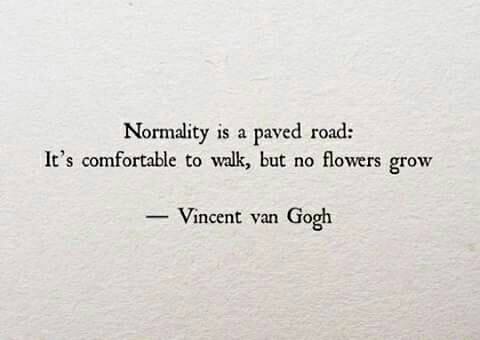
“Normality is a paved road: It’s comfortable to walk, but no flowers grow.” – Vincent Van Gogh

Source: Individuality | Divergent – TheBreakAway

Monica Crowley Explains The Opposition To President Trump… | The Last Refuge

If Monica Crowley did not know the severity of the opposition previously, she most certainly understands it now – as she explains in this interview:

https://www.youtube.com/watch?v=n0FnZsVZHxc

Source: Monica Crowley Explains The Opposition To President Trump… | The Last Refuge

The Divergent Series – secretsoftheserpent

https://www.youtube.com/watch?v=suZcGoRLXkU


The Divergent Series are three films based on the Divergent novels by Veronica Roth. I love this series because is shows just how divided this world is. These division don’t just happen, they are created. In the story it is factions, but in our world they give people what ever you want to make them feel like they are different from all the rest. When in actuality they are just falling into a created mold that was invented to control them or make money. This story is symbolic on so many levels. Like all great stories, it is the story of you and enlightenment. But this story is revealing truths of today’s world.

I find it interesting how movies like this always take place after a previous global war. It could just be symbolizing that we are a warring race, but I think they are pointing to the war of the gods. This is the war that no one is supposed to know about. They just tell you an ice age happened, so there is no need to look back any further(See Lemurian Magic). They can keep their ice age, true history is way more interesting. […]

Entire article can be found at the Source: The Divergent Series – secretsoftheserpent

https://www.youtube.com/watch?v=0G0C-vMHcQY

Feel Good Sunday: Short & Sweet, in more ways than one | Straight from the Horse’s Heart

“We have a brief but funny one for you on this day of rest, folks.  Nothing will give you the chuckles over your morning coffee or Bloody Mary like a herd of wild minis’ stampeding through a barn with a dog in the lead, ya just gotta luv it!

Have a great  day with family and friends, be they two legged or four, and we will jump back into the fray in the morning.  Keep the faith.” ~ R.T.

Source: Feel Good Sunday: Short & Sweet, in more ways than one | Straight from the Horse’s Heart

Power of the states vs. power of the federal government: who cares? « Jon Rappoport’s Blog

By Jon Rappoport

There are 50 countries in the US. They’re called states.

All right, that’s an exaggeration. They are states. But they could be countries.

If you don’t think so, consider the 2015 state budget of tiny Rhode Island: $8.9 billion. The 2016 budget for the nation of Somalia was $216 million.

The 10th Amendment to the US Constitution reads: “The powers not delegated to the United States [government] by the Constitution, nor prohibited by it to the States, are reserved to the States respectively, or to the people.”

The 11th Amendment reads: “The Judicial power of the United States shall not be construed to extend to any suit in law or equity, commenced or prosecuted against one of the United States by Citizens of another State, or by Citizens or Subjects of any Foreign State.”

If you combine these two Amendments, you begin to see the considerable powers granted to the states.

Of course, now, relatively few people care about these powers. They should, but they don’t. […]

Read the entire article at its Source: Power of the states vs. power of the federal government: who cares? « Jon Rappoport’s Blog