‘Horrific incident’: Family speaks out after pet dog killed by ‘cyanide bomb’ | Xtreme Idaho | idahostatejournal.com

By Shelbie Harris sharris@journalnet.com

POCATELLO — As he walked his dog along the ridgeline of the hillside just south of his family’s home on West Buckskin Road, 14-year-old Canyon Mansfield noticed what he thought was a sprinkler head protruding 6 inches from the ground.

Like many curious teenagers would, he bent down and touched the pipe, which erupted with a loud popping noise that knocked Canyon off his feet. A hissing sound ensued and Canyon noticed his clothing and face were covered with an orange, powdery substance. After quickly washing his face and clothes in a nearby patch of snow, he called for his dog, a 3-year-old Lab named Casey.

But Canyon’s best friend didn’t respond.

“He just stayed on the ground mumbling,” Canyon said. “I thought he was playing with his toy, but I saw the toy a couple yards away from him. … So, I called him again and got really scared. I sprinted toward him and landed on my knees and saw this red froth coming from his mouth and his eyes turning glassy and he was having a seizure.”

Within minutes, Casey was dead.

“My little brother is lying in bed crying next to me,” said Canyon’s sister, Madison Mansfield. “He spent yesterday in the emergency room after stumbling upon an unmarked cyanide bomb in the woods directly behind my home. He watched his best friend suffocate as sodium cyanide was deposited in his mouth.”

Canyon was taken to Portneuf Medical Center, where he was treated and released. But he must continue daily follow-up appointments to check toxicity levels.

On Thursday afternoon, Casey joined thousands of other non-targeted animals — both wild and domestic — that have been mistakenly killed by one of the most lethal tools at the disposal of the U.S. Department of Agriculture — spring-loaded metal cylinders that are baited with scent that shoot sodium cyanide powder into the mouth or face of whatever or whoever touches them.

Known as M-44 devices, the Animal and Plant Health Inspection Service (APHIS) division of the USDA deploys these sodium cyanide capsules throughout the West to protect livestock from coyotes, wild dogs, and red and gray foxes.

M-44s are hollow metal tubes 5 to 7 inches long that are driven into the ground, loaded with 0.9 grams of sodium cyanide and coated with the smelliest bait possible.

Though the devices are legal methods of controlling local predators, the legality regarding the manner in which the device that killed Casey was planted remains under investigation.

On Friday, APHIS released the following statement regarding the incident:

“APHIS’ Wildlife Services confirms the unintentional lethal take of a dog in Idaho. As a program made up of individual employees many of whom are pet owners, Wildlife Services understands the close bonds between people and their pets and sincerely regrets such losses. Wildlife Services has removed M-44s in that immediate area. Wildlife Services is completing a thorough review of the circumstances of this incident, and will work to review our operating procedures to determine whether improvements can be made to reduce the likelihood of similar occurrences happening in the future.”

The spokesman for APHIS, R. Andre Bell, said in a Friday statement that “the unintentional lethal take of a dog is a rare occurrence (and Wildlife Services) posts signs and issues other warnings to alert pet owners when wildlife traps or other devices are being used in an area for wildlife damage management.”

The statement also said that M-44 devices are only set at the request of and with permission from property owners or managers, and that this is the first unintentional take of an animal with an M-44 device in Idaho since 2014.

“The USDA’s statement regarding the horrific incident that happened to my family yesterday is both disrespectful and inaccurate,” Madison said. “The USDA intentionally refers to the brutal killing of our dog as a ‘take’ to render his death trivial and insignificant.”

She continued, “They also claim that the killing of an unintended victim is a rare occurrence, but this is entirely untrue. In fact, this issue is nationally recognized due to the lack of selectivity of cyanide bombs, and there have been many reported incidents in which unintended animals and people have been targeted.”

On March 11 near Casper, Wyoming, a national nonprofit advocacy organization called Predator Defense reported that two families out on a hiking trip, including an 8-year-old girl, watched two of their four canine companions die after uncovering unmarked cyanide devices.

When deploying these “cyanide bombs,” applicators must adhere to several guidelines that include requesting permission from the landowners and posting warning signs in both Spanish and English.

However, Canyon said he did not see any posted signs.

“The guy that planted them there said he got consent,” Canyon said. “And he said he put signs up but I would have noticed it because I go up there all the time.”

There were no obvious warning signs, according to Bannock County Sheriff Lorin Nielsen, but as of Friday afternoon, his deputies were still investigating.

“The trapper that set those for the federal government did show up, we were able to interview him and he has disarmed those that are in that area, and hopefully the rest of the county,” Nielsen said.

The identity of the individual who set the cyanide traps could not be confirmed as of Friday afternoon, but Nielsen did confirm the individual is an employee of APHIS.

The Bannock County Sheriff’s Office believes the incident happened on Bureau of Land Management land south of the Mansfield’s property. However, the BLM said Friday the incident did not happen on its land.

“I’ve been sheriff for 20-plus years and I have never heard of these before,” Nielsen said about the cyanide bombs. “It just doesn’t make a whole lot of sense to have a landmine-type device that disperses cyanide gas.”

Cyanide is notoriously known as one of the fastest-acting poisons to ever exist. Yet it’s so uncommon that the Bannock County Sheriff’s deputies, Canyon’s father, Mark, who is a local doctor, and the doctor at the emergency room didn’t immediately know how to handle the situation.

The poison works by binding to hemoglobin, the molecule in red blood cells responsible for transporting oxygen throughout the body. It then prevents the cells from using oxygen to make energy molecules. Essentially, cyanide suffocates the victim exposed to it from the inside out.

“Not only is cyanide unethical, the antidote is highly ineffective and can rarely be administered in time to treat it,” Madison said. “My dog suffered as he struggled for breath while my brother stood helplessly nearby. This is not humane, and no animal, dog or coyote should ever be killed in such a gruesome manner.”

APHIS agency records show that more than 3,400 animals have been mistakenly killed by M-44s between 2006 and 2012. These include black bears, bobcats, raccoons, opossums, ravens, ringtails, red fox, gray fox, kit fox, swift fox, turkey vultures and dogs, according to the Sacramento Bee.

At least 18 employees and several members of the public have also been exposed to cyanide over the past 25 years. None died, but many were treated for nausea, blurred vision and other symptoms, the Sacramento Bee reported.

“The placement of these unmarked devices in a residential area without notifying the families and the authorities is grossly negligent,” Madison said. “The individual who placed the bombs is most certainly not ‘highly-trained’ as the USDA claims. If he was, he would have noticed the homes clearly beneath him and this tragedy could have been easily avoided.”

Some of the cyanide devices used to control predator populations are manufactured at Pocatello Supply Depot in Pocatello.

In July 2014, Pocatello Supply Depot transitioned from being a private company and became a fully federalized facility operated exclusively by Wildlife Services, according to documents posted to APHIS’s website.

Canyon’s mother, Theresa Mansfield, said she wants to make the public aware of this situation and doesn’t want to see another pet or child put in danger.

“This is horrific,” Theresa said. “This is like terrorism in my backyard.”

Source: ‘Horrific incident’: Family speaks out after pet dog killed by ‘cyanide bomb’ | Xtreme Idaho | idahostatejournal.com

Happy Eostre – secretsoftheserpent

Source: Happy Eostre – secretsoftheserpent

4811-egypt-sun-crest2


Eostre(Ostara) is a time to celebrate the vernal equinox. A time when both day and night are equal. A time to celebrate the goddess giving birth. The Holly King is reborn; when Eostre, the Goddess of spring appears in the vines as the ultimate representative of fertility, to present the Eostre egg. It is said that her symbol is a rabbit, an image perceived from the moon and it is the Eostre bunny. It is thought that our Easter celebration comes from Eostre, but she like all goddess come from one special lady in Egypt.

Pagans are right when they say that everything in Christianity was stolen from them, but it was pagan Egypt. What most pagans don’t realize is most of their customs come from Egypt too. If you have followed my work, you know that Egypt was the beginning of it all after the war of the gods. When people left Egypt, whether they were forced out or just left freely, they took all the customs with them. Everything came out of Egypt.

Eostre is a version of Isis. Isis is where we get Easter. In Egyptian Isis is Ast or Est, from which we get Ester or Easter and it refers to the stars or heaven. The hieroglyph for Isis has an egg in it. This is where we get the Easter egg. Isis was a fertility goddess and she was the Queen of Heaven. Where does the easter bunny fit in to all this? Besides being an obvious symbol of fertility the hare was a big symbol in Egypt too. Our ol buddy Osiris, husband of Isis, was sometimes called Un-nefer, and portrayed with the head of a hare. Un-nefer is translated as “the good being” or “beautiful renewl”. The hare in Egypt had to do with Lunar worship, so we are taken back to Thoth once more(See God(s) post). One thing I found very interesting is that Thoth is the god of writing in Egypt. In the Mayan belief it was a hare deity that was the god of writing. The hare in Egypt also had to do with creative energy. If you have read my Magic post, you know sexual and creative energy or the same. That is what the hare is pointing to in certain texts.

Now that you know where this pagan holiday comes from,  celebrate Eostre with an abundant array of spring flowers. In the pagan tradition colored eggs, charged as talismans, are given as presents; curative fires are lit at dawn; seeds are planted for new crops, and homes are spring cleaned. Hot cross buns are baked which tells me this pagan celebration is about 2000 years old or is a Pisces custom. Hot crossed buns is purely a Virgo celebration and Virgo is the opposite sign of Pisces. The opposite sign was just as important to the ancients.  Baskets are woven to celebrate birds making their nests. On a side note, Eostre(Ostara) is where we get the name for the female hormone oestrogen or estrogen.

Happy Eostre/Isis day!

Antarctica: NASA Images Reveal Traces Of Ancient Human Settlement Underneath 2.3K Of Ice – TheBreakAway

AntarcticaCivilization
WorldNewsDailyReport.com

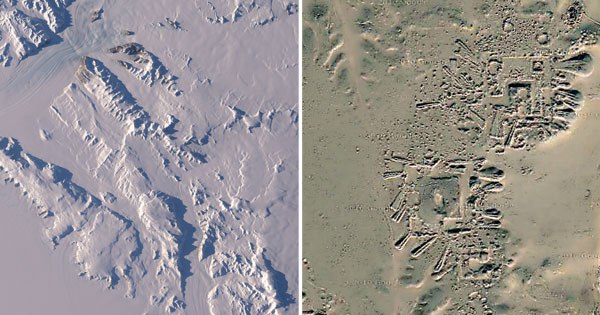
WASHINGTON | Recently released remote sensing photography of NASA’s Operation IceBridge mission in Antarctica led to a fascinating discovery when images revealed what some experts believe could be the existence of a possible ancient human settlement lying beneath an impressive 2.3 kilometers of ice.

The intriguing discovery was made during aircraft tests trials of NASA’s Advanced Topographic Laser Altimeter System (ATLAS) lidar technology set to be launched on the Ice, Cloud and land Elevation Satellite-2 (ICESat-2) in 2017, that aims to monitor changes in polar ice.

“There’s very little margin for error when it comes to individual photons hitting on individual fiber optics, that is why we were so surprised when we noticed these abnormal features on the lidar imagery,” explains Nathan Borrowitz, IceBridge’s project scientist and sea ice researcher with NASA’s Goddard Space Flight Center in Greenbelt, Maryland.

“As of now we can only speculate as to what these features are but the launching of ICESat-2 in 2017 could lead to other major discoveries and a better understanding of Antarctica’s geomorphological features” he adds.
A human settlement buried under 2.3 km of ice

Leading archeologist, Ashoka Tripathi, of the Department of Archaeology at the University of Calcutta believes the images show clear evidence of an ancient human settlement beneath the ice sheet.

“These are clearly features of some sort of human-made structure, resembling some sort of pyramidal structure. The patterns clearly show nothing we should expect from natural geomorphological formations found in nature. We clearly have here evidence of human engineering. The only problem is that these photographs were taken in Antarctica under 2 kilometers of ice. That is clearly the puzzling part, we do not have any explanation for this at the moment,” he admits.

“These pictures just reflect a small portion of Antarctica’s total land mass. There are possibly many other additional sites that are covered over with ice. It just shows us how easy it is to underestimate both the size and scale of past human settlements,” says Dr Tripathi.

Remnants of a lost civilization

Historian and cartographer at the University of Cambridge, Christopher Adam, believes there might be a rationnal explanation.

The map of Turkish admiral Piri Reis in 1513 AD shows the “ice less” coastline of Antarctica

“One of histories most puzzling maps is that of the Turkish admiral Piri Reis in 1513 AD which successfully mapped the coastline of Antarctica over 500 years ago. What is most fascinating about this map is that it shows the coastline of Antarctica without any ice. How is this possible when images of the subglacial coastline of Antarctica were only seen for the first time after the development of ground-penetrating radar in 1958? Is it possible Antarctica has not always been covered under such an ice sheet? This could be evidence that it is a possibility” he acknowledges.

« A slight pole shift or displacement of the axis of rotation of the Earth in historical times is possibly the only rational explanation that comes to mind but we definitely need more research done before we jump to any conclusion.”

ICESat-2 (Ice, Cloud, and land Elevation Satellite 2), part of NASA’s Earth Observing System, is a planned satellite mission for measuring ice sheet mass elevation, sea ice freeboard as well as land topography and vegetation characteristics, and is set to launch in may 2017.

Read more at: WorldNewsDailyReport.com

Source: Antarctica: NASA Images Reveal Traces Of Ancient Human Settlement Underneath 2.3K Of Ice – TheBreakAway

Feel Good Sunday: Video-Mini Horses Say Goodbye to Winter | Straight from the Horse’s Heart

“Recently we ran a Mini Video on Feel Good Sunday and received many notes calling for another, so here you go folks.  Old Man Winter is only hours away from succumbing to Spring so it is only fit that the little equines who capture everyone’s heart have a final romp in the snow before the arrival of fresh green grass, flowers and foals.  Have a great and wonderful day where ever you are and never give up on the good fight.  Keep the faith my friends.” ~ R.T. Fitch

Source: Feel Good Sunday: Video-Mini Horses Say Goodbye to Winter | Straight from the Horse’s Heart

HYACINTH – Good Witches Homestead

Source: HYACINTH – Good Witches Homestead

COMMON NAME:  hyacinth
GENUS:  Hyacinthus
SPECIES, HYBRIDS, CULTIVARS,
H. Orientalis ‘Amsterdam’-bright red to pink.
H. o. ‘Anne Marie’-light pink.
H. o. ‘Carnegie’-creamy white.
H. o. ‘Delft Blue’-blue
FAMILY:  Liliaceae
BLOOMS:  early spring
TYPE:  perennial
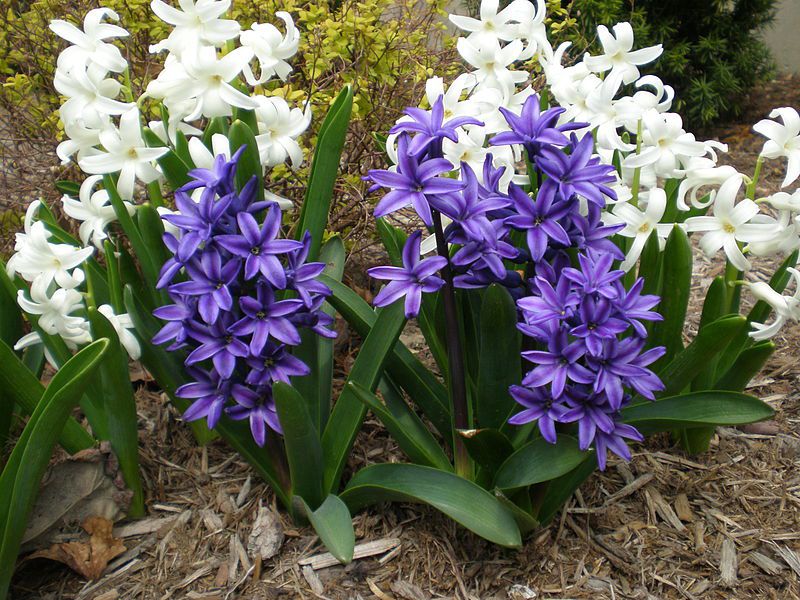
DESCRIPTION:  Hyacinths are widely used as a spring bulb. The top flower size is 7 to 7 1/2 inches in circumference. The flower spike is composed of neatly rounded mounds of small blossoms. Flowers are available in pink, white, cream, reddish pink, blue, yellow, and violet blue.
CULTIVATION:  Good drainage is a must for this plant because the bulbs rot easily if water stands on them. Bulbs should be planted in the fall, 6 inches deep, 6 to 8 inches apart. Mulch them in the fall to protect the tender spring growth from frost damage. Bulbs should be planted in an area that bets full sun or partial shade.

According to mythology, hyacinths originated because of the wrath of Zephyr, a god of the wind. Apollo, king of all the gods, fell in love with Hyacinthus, son of the king of Sparta. One day as Apollo and Hyacinthus were playing quoits {a game similar to today’s horseshoes}, Apollo threw the metal ring and Zephyr, jealous and enraged, caused the wind to make the metal ring hit Hyacinthus and kill him. Broken hearted, Apollo created the hyacinth flower out of the blood of his friend. Some even say that the petals look like the Greek syllables ai ai, meaning “woe.”
The Victorian language of flowers hyacinth means sport or play, and the blue hyacinth is a symbol of sincerity.
The Greeks dedicated this plant to Ceres, the goddess of agriculture. In ancient Sparta, annual Hyacinthian feasts were held. A Greek girl wore a crown made from hyacinth blossoms when she assisted at her brother’s wedding.
Greeks used concoctions made from the plants to treat dysentery and the bite of poisonous spiders. Such a concoction was also reputed to have the power to prevent a young boy’s voice from changing during puberty, making it very popular with singing masters of the time.
Hyacinths were first found growing in Asia Minor, as is suggested by the species name orientalis. Cultivated in Turkey and Persia, hyacinths were brought to England from Persia in 1561.

hycinths

The following story is told of how hyacinths got to Holland: Trading ships carrying crates of these exotic and expensive bulbs wrecked off the coast of Holland. The crates broke open, and the waves washed the bulbs ashore, where they rooted and produces beautiful flowers. However hyacinths got to them, the Dutch lent their magical hands to the plant, and by 1724 more than 2,000 varieties of hyacinth were found in Europe. Though interest in the bulbs never quite reached the level that tulips created, the price of hyacinth bulbs was quite high and competition for new varieties fierce.


Scilla – Good Witches Homestead

Source: Scilla – Good Witches Homestead

COMMON NAME:  scilla
GENUS:  Scilla
SPECIES:  S. sibirica
FAMILY:  Liliaceae
BLOOMS:  early spring
TYPE:  perennial
DESCRIPTION: Scilla has short {4 to 6 inches} spikes of bright blue or white flowers. The foliage is attractive and the growing habit neat, making it an excellent plant to use as a border or edging plant. It also lends itself well to an informal setting and looks very good naturalized under trees or shrubs.
CULTIVATION:  The small bulbs should be planted 4 inches deep in the early fall. Give them an open, sunny spot, and they will multiply rapidly.

Ten species of Scilla are native to Europe, and several of these have been cultivated for many centuries. Some records indicate that at least five species of Scilla were being cultivated as early as 1597.
The genus name means “I injure” and refers to the poisonous properties of the plant. Red scilla was even used as rat poison.
Scilla is often called squill. The bulbs of both the red and white squills were made into a concoction called a “syrup of squills.” This supposedly had medicinal properties, and a drug found in the bulbs was used as a component in heart tonics. The physiological effects of eating this bulb were thought to be similar to those of inhaling tobacco, for both acts on the nervous system. Roman statesmen suggested Scilla was a diuretic. It was also used to treat asthma and dropsy.
The Welsh name for this plant is cuckoo’s boot. S. bifolia was described by John Gerard, author of a sixteenth-century herbal, as “small blew flowers consisting of sixe little leaves spread abrode like a star. The seed is contained in small round bullets.”

During Elizabethian times, the starch used for stiffening collars was made from the bulbs of this plant.


Goddess Maat – secretsoftheserpent

By gserpent

Source: Goddess Maat – secretoftheserpent

c30c794c5961426e73f84e295903a5f4

Mainstream references will tell you that Maat was the ancient Egyptian concept of truth, balance, order, harmony, law, morality, and justice. Maat is a perfect example of how much knowledge we have lost about the ancients. Just like Osiris, Maat had nothing to do with death. She had to do with the underworld. Everything we know about Maat has come from the patriarch minds of Lower Egypt. Her true symbolism is way more interesting.

First off you need to know that all the Princesses and Queens in Egypt  held the title of Maakare. Even Hatshepsut held this title. When you break this down it becomes Maat, Ka, Ra. These women were very important priestess. The role of the priestess is said to be the Divine Adoratrice. Patriarchs will tell you that her role was to worship or adore the deity. They are simply being selective with the truth. The word they are using is ‘djuat’ and it can mean worship, adore or star. The truth is that she was the Star of the Gods. Out goes the image of a groveling woman on her knees and incomes the image of a woman who is so important to the gods that she is the star! Maakare literally means “Maat is the soul of Ra”. They try to cover this up by saying “Truth and Justice is the soul of Ra”. The truth and justice they are referring to are man-made laws. As you will see, they don’t know the true meaning of Maat.

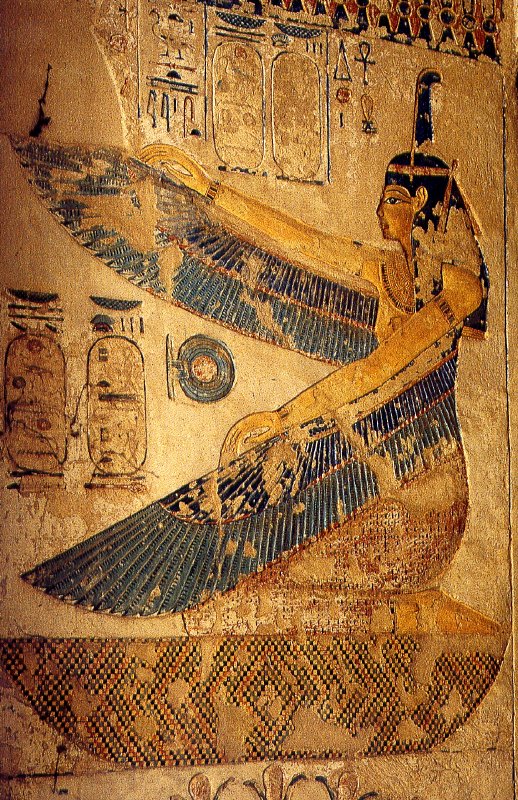
Maat is sometimes portrayed with wings. In Egypt winged gods and goddess always represent non physical, abstract dynamics – Intellect, spiritual, imagination, psychic. You can’t mention Maat without the feather. The feather was actually the symbol for Maat. She was supposed to measure the feather of knowledge against the heart. What is going on here? What is actually being weighed? Maat is the goddess of truth, justice, balance and harmony, but not in the way you think. Maat is a goddess and goddesses could care less about man-made laws and order. Maat is about nature or the Laws of Nature. So the feather represents the laws of nature. Imagination is the knowledge of the heart. Weighing the feather against the heart is measuring purity, innocents, and harmony of Universe. Thoth weighing the soul is the knowledge of nature. The scales are weighing mind, body and spirit, matter.

This weighing did not happen after someone died. It happens when you enter the underworld or subconscious. In other words, she is there during the wake up process. Most people, if not all, fear the sacred feminine. They don’t understand it. All humans are in the masculine, but females are closer to the sacred feminine. They are the sacred feminine expressed in physical form, so of course they are closer to the sacred feminine. Our minds are 10% conscious and 90% unconscious. We are in the conscious mind all the time. This is what is meant by we only use 10% of our brains.

The patriarch Hyksos hijacked Maat and either out of ignorance or greed they said she measured your soul to get into paradise. It is written in the Papyrus of Ani that when people died they had to recite 42 negative confessions. The Papyrus of Ani was written by the scribe Ani, a Hyksos sympathizer. He wrote these about the time they were kicked out of Egypt for the first time. They got the 10 commandments from these negative confessions, but instead of saying “I have not” they combined them and put “Thou shalt not”. In another text by Ani, called the Maxims of Ani, they got Jesus’ Sermon on the Mount and the Lord’s Prayer. To all you mainstream historians, theologians and researchers, your silence is deafening on this!

In truth Maat herself is the scales. She is bringing the ego to atonement. She is not crushing the ego. Once you find the goddess, the ego becomes an agent for her. Other cultures used the tip toeing goddess to symbolize walking the line of balance. This was not to make sure chaos never happened. The Upper Egyptians saw chaos as necessary because it started the wake up process. Chaos keeps you from becoming static. They did not see chaos as evil. Pain and struggle creates life. All you have to do is look at the birth of a child. Nature gives us the answers. The Lower Egyptians are the ones that made chaos evil. They are also the ones that created all the patriarch religions of today. Religions were created to keep you from meeting your higher self. Maat shows up at the beginning of the wake up process to see if a person is balanced enough to truly “wake up”. The goddess(sacred feminine) and self-love is the key to making it through the underworld. Maat is showing there is a need for order and balance, but everyone is different and needs to find their own individual balance. There is a need for moral law, but moral law should help people see the universal will and prevent people from dominating others. The moral laws we have today ensure that people are dominated and controlled.

602px-ammit_bd

I know there will be questions about Ammit. Ammit is supposed to be a female demon. She had a body that was part lion, hippopotamus and crocodile. Ammit lived near Maat’s scales. Supposedly if someone’s heart wasn’t pure, Ammit would devour it and the person could not go forward on their voyage. Once she swallowed the heart the person became restless forever. They were said to die a second death. I have shown before that the ancient Egyptians said the soul died when it entered a body or fleshy existence. Your soul died when you were born. This was considered the first death. When a person enters the wake up process, Maat weighs their heart with the feather of knowledge. If they have the sacred feminine or nature in their heart they could proceed. If the sacred feminine did not balance with the masculine, they don’t wake up and are restless. Because the person does not wake up they were considered to have died a second death. It is said that sometimes Ammit would stand by the lake of fire and she would cast the unworthy hearts in and destroy them. This has to be a later interpolation by christians because it is being compared to hell. In truth, fire is one of the four elements of consciousness. Fire is intellect. If Ammit is casting hearts in to the lake of fire, it is to get intellect or knowledge. The ancients thought ignorance was the greatest evil and there was nothing more precious than knowledge.

I’m not saying that people who don’t wake up are restless, but just look at the world. We live in a restless world by design. A racing mind is because our world is traumatic. If your mind is restless you can’t hear your higher self. I know my mind was pretty damn restless before I woke up. If you have truly ‘woken up’, for the most part your mind is at ease. It is what happens when you find your power. We all fall off the horse sometimes, but knowing your true power makes it easier to get back on. You have to conquer the masculine for the feminine to rise. Once you do, find your own balance. Get out in nature. She will help you find that balance. Nature is the living subconscious and nature is balanced. Maat is showing you to find the feminine principal in yourself. The sacred feminine is the forbidden fruit. Balance the scales by eating the forbidden fruit.  Balance is the key to everything.

The Victorian Language of Flowers – Good Witches Homestead

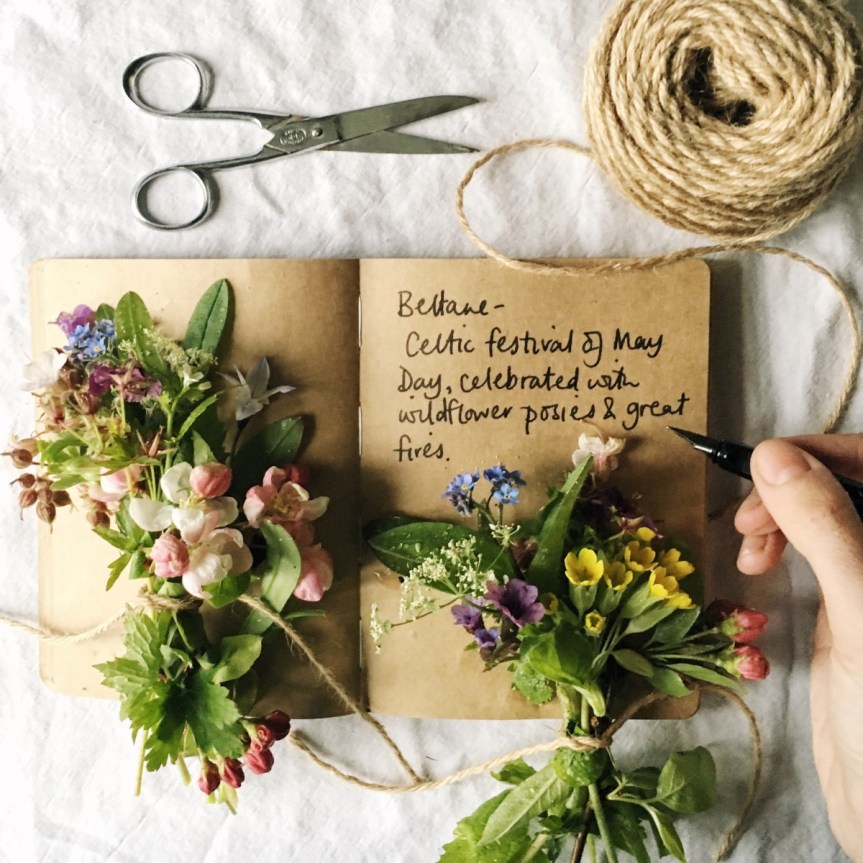
The language of flowers was quite suited to Victorian England, for it allowed for communication between lovers without the knowledge of ever-present chaperones and parents. Messages that would be a social impossibility if spoken could be conveyed by sending certain types of flowers. How these flowers were sent was of great importance as well, for this was also part of the message. If the blossom was presented upright, it carried a positive thought. If the flower came upside down, it might mean quite the opposite. If the giver intended the message to refer to himself, he would incline the flower to the left. If the message referred to the recipient, it would be inclined toward the right. If flowers were used to answer a question and were handed over with the right hand it meant “yes’;  with the left hand, the answer was “no.” Other conditions of the plant were important as well. For example, if a boy sent a girl a rosebud with the leaves and thorns still on it, it meant ” I fear, but I hope.” If the rosebud was returned upside down, it meant, “you must neither fear nor hope.” If the rosebud was returned with the thorns removed, the message was “you have everything to hope for.” If the thorns were left but the leaves removed, the message was “you have everything to fear.” If the young lady kept the rosebud and placed it in her hair, it meant “caution.” If she placed it over her heart, the message was clearly “love.” The Victorians took the language of flowers a bit further and actually began attributing personalities to various flowers, as Thomas Hood exemplified:
The cowslip is a country wench,
The violet is a nun;-
But I will woo the dainty rose
The queen of everyone.

During the last part of the nineteenth century, several floral dictionaries were published. Among these was The Poetical Language of Flowers {1847}, The Language and Sentiments of Flowers {1857}, The Floral Telegraph {1874}, and Kate Greenway’s The Language of Flowers, first published in 1884 and republished in 1978. Because more than one dictionary existed, the possibility of error was great. One of these floral misinterpretations was famous by Louisa Anne Twamley in her poem “Carnations and Cavaliers.” The poem describes how a knight gave his lady a pink rose, meaning our love is perfect happiness. His lady either did not know about the language of flowers or did not care, for she sent back to him a carnation, which means refusal. The result was the tragedy: the lovers died for each other’s love.

It was during the Victorian period that tussie-mussies became popular. A  tussie-mussie is a small bouquet of fresh or dried flowers, usually surrounded by lacy doilies and satin ribbons. Tussie-mussies were popular, in part, for the very practical purpose of warding off bad smells and disease. Some of the most useful flowers for this purpose included lavender, rosemary, and thyme. Tussie-mussies made marvelous gifts then, and they still do. They are easy to make, and, accompanied by a card explaining the meanings of the flowers used, make a uniquely personal present. Tussie-mussies can be made from either fresh or dried flower. Choose a relatively large, perfect blossom for the center flower. A perfectly formed rose blossom is wonderful for this. Surround this with smaller blossoms and ferns and put the stems through a doily or starched lace. If using fresh flowers, wrap the stems with damp paper towels and then cover them with plastic wrap or foil held in place with florist tape. If using dried flowers, simply wrap the stems with florist tape. Fresh flowers that are good to use in tussie-mussies include rose, baby’s breath, cornflower, phlox, aster, and carnation. Suitable dried flowers include strawflower, statice, honesty, ageratum, and sedum.

Flowers and Their Meaning … […]


Read the entire article at its Source: The Victorian Language of Flowers – Good Witches Homestead

What Was The Floral Calendar? – Good Witches Homestead

Calendars have existed for thousands of years in various forms. The Chinese, Japanese, Romans, Egyptians, and Hopi and Navajo Indians, among countless others, developed calendars.
Each of these calendars was different, but each was an accurate means of keeping track of the seasons and the passage of time. Because calendars were so closely tied with nature, it followed logically that different months should be associated with particular plants and flowers.
The Chinese, especially, used plants to keep track of time. According to Chinese folklore, two trees grew at the Court of Yao. One tree put forth one leaf every day for fifteen days as the moon waxed, and then it shed one leaf every day for fifteen days, as the moon waned. In this way, they measured the months. On the other side of the garden was a tree that put forth leaves every month for six months, then shed leaves every month for six months. In this way, they kept up with the passage of the years. A Chinese legend dating back to the seventh century A.D. says that Ho Hsien-Ku, daughter of a humble shopkeeper, ate the peach of immortality given to her by Canopus, god of longevity. She then became one of the eight Taoist immortals and decreed that honor should be paid to a particular flower each month of the year. This formed the basis of the Chinese floral calendar. Through the centuries, other civilizations adopted the custom of using a floral calendar.
floral clockPrimary among these were the Japanese and English. The English took the art of keeping time with plants to an extreme with their experiments with a floral clock. A pet project of Carl Linnaeus, the floral clock, or watch of Flora, never worked quite as well as he has wished. […]


Rest of the post at its Source: What Was The Floral Calendar? – Good Witches Homestead

Equine charities unite | The Donkey Sanctuary

Helping communities in EthiopiaA donkey working on a construction site
UK equine welfare charities Brooke, The Donkey Sanctuary, SPANA and
World Horse Welfare today announce their first formal coalition.

Formed specifically to put policy into practice, the coalition aims to advise, motivate and support the implementation of the first ever global welfare standards for working horses, donkeys and mules. These landmark standards were approved by the World Organisation for Animal Health (OIE) in May 2016 following advocacy and technical support from Brooke and World Horse Welfare.

This is the first time all four major charities have formally joined forces. Although not law, these landmark changes finally give legitimacy to calls for equine welfare to be improved around the world.

Petra Ingram, CEO at Brooke, who spearheaded the formation of the coalition and will be its Chair for the first year, believes that it’s the right vehicle to bring the standards to life: “A respected champion of change can be the difference between success and failure when it comes to implementation. Our message to countries is: let us help; equine welfare is an ally of humanitarian issues.”

With 180 OIE member states now acknowledging the importance of working horses, donkeys and mules, the time is right for coordinated action to implement the standards around the world.

Chief Executive of World Horse Welfare, Roly Owers, said “We know that horses, donkeys and mules are essential to hundreds of millions of human livelihoods, and it is heartening that the world is now recognising their versatility and importance.

“World Horse Welfare looks forward to working in partnership, bringing our influencing skills and 90 years of practical expertise gained helping equines around the world. The scale of the challenge to help 100 million working animals is so large that we must work together to get them the recognition and support they desperately need.”

As world-leading experts in equine welfare with a combined geographic reach covering the major populations of the world’s working equines, the four UK-based charities will provide a unique resource.

The coalition’s goal is to share a wealth of professional expertise and technical know-how by jointly developing training resources and working with governments, academics, communities and professionals to help put the standards into practice within the contexts of different countries, cultures and economies.

Geoffrey Dennis, Chief Executive of SPANA, said: “It is very encouraging that there is now international recognition for the working equines that play a fundamental role in supporting the livelihoods of millions of families worldwide.

“Through veterinary treatment, education and training for animal owners, SPANA works to improve the welfare of these vitally important horses, donkeys and mules across many countries. We are looking forward to working in partnership to ensure that the new standards are translated into practical support and action that makes a tangible difference to working animals and the communities that depend on them.”

The coalition’s work will use the skills the four organisations have in welfare assessment training; building capacity in equine owning communities; equipping service providers (including farriers, saddlers and vets) with the skills and tools required to provide affordable quality services. It supports universities in curriculum development, and postgraduate vets with continuing professional development; as well as raising awareness of the importance of working equids to human livelihoods with policy makers.

Mike Baker, CEO of The Donkey Sanctuary, said: “This is a fantastic milestone in global equine welfare standards. Our new coalition will really maximise welfare improvements as we share our skills, resources and experience. Millions of donkeys, horses and mules work extremely hard every day and it will be wonderful to highlight how vital they are for their human owners and communities.”

Source: Equine charities unite | The Donkey Sanctuary

Storytime with Rachel F Hundred

Creating stories for pleasure

Sibyl Moon

Shh I'm Writing

Sylum Clan

Nothing is True. Everything is Connected.

Laura Bruno's Blog

Medical Intuition, Astrology, Soul Readings, Intuitive Coaching, Tarot, Reiki: Inspiring and Empowering Visionaries, Artists and Healers

Fire Family Conflagration

Weekly Challenge from the 118, 126, & 113

Kiayea's Corner

all things fanfic...

Crystal Dawn Books & Gifts

Crystals, and all things Magical

Starkindler's Realm

welcome to the inner workings of my mind...

The Herb Society of America Blog

Learn • Explore • Grow

Dr. Gary Samuelson

A Journey of Discovery

Kylia's World

Where Canon has No Meaning and Universes Collide

originaltempus

Just another WordPress.com site

Profilers For Christmas

The Crime Drama Advent Calendar

Entangled Wood

Just another WordPress.com site

brokenamethystwrites

Here there be Dragons

Toasterpop's Fiction

Fanfiction and original stories from Toasterpop

Breakaway Consciousness

Seeking Ideas Beyond Conventional Thought

gypsysue

Writting, Drafts, Ideas

Ellywinkle

All Things Wicked and Wonderful

Natalie J. Case

Author, Editor, Photographer, Artist

Your Stories. Your Wall.

Honoring their service and building their legacy. The official blog of the Vietnam Veterans Memorial Fund.

00Q Reverse Big Bang!

Art and Stories for all things 00Q, since 2014

The Wild Hare Project

Where the Writer Comes First.

Anthea Davis

FanFiction Author

Every Fandom Bangs

The home of the Every Fandom Bang and Reverse Bang!

Penumbria

n. pl. pe·num·brae (-br) or pe·num·bras 1. A partial shadow, as in an eclipse, between regions of complete shadow and complete illumination.

This Crooked Crown

Witchcraft for the Everyday and the Extraordinary

This is who I am...

... and this is what I like

Fanfiction Recommendations by Isabelle Disraeli

Fanfiction Recommendations ~ Slash, Femslash, & Het Fanfic Recs

Ellywinkle

EVIL AUTHOR DAY

Convivial Supper

Recipes from the Past

Kaethe Vaako's Fiction

what my demented mind comes up with

Sylum Archive

Nothing is True. Everything is Connected

Quantum Bang

The Multi-Fandom Fix-it Big Bang

by Geep 10

a place for me to share what I've written

Good Witches Homestead

Enchanted World of Magical Gardening ~ Crystals & Gemstones ~ Locally Grown Organic Herbs

tkbenjamin

m/m original fiction and fanfic for adults only

Chestnut NOLA

It's All About The Romance

Loam Ananda

Spiritual Journeys in Druidry