Tag: culture

Trinity of Polish Divinity: Summer Solstice, Water Rites & Magical Crowns
Ozark Encyclopedia – C – Copper
Topaz ~ Divine Light ~ Good Witches Homestead

Source: Topaz Define Light
“LIGHTING THE DIVINE LIGHT OF IMAGINATION”
Topaz promotes individuality and creativity while providing self-confidence in your own decisions. It helps to remove doubts about your decisions and promotes the expression of ideas. Topaz acts as a catalytic trigger, and activates the laws of attraction and manifestation of your desires – it helps you to have faith in the universe’s desire to help you, prompting receptivity and willingness to act.
- It helps one to creatively change one’s personal world.
- Helpful in correcting unwanted, unloving behavior patterns.
- Acts to replace negativity with love and joyfulness
- Helps to initiate faith and further the quest for the enlightened state.
- Enhances relaxation, creates lightness of spirit, and stimulates feelings of peace
- Restores loss of taste, healing of wounds and skin eruptions, liver disorders, gall bladder, endocrine glands
- Topaz balances emotions and calms passions. It releases tension and gives feelings of joy. Topaz is known as spiritual rejuvenation gemstone
- Silver enhances the effects of topaz, acting as an additional conductor for topaz’s energy.
- Topaz is particularly powerful when combined with Amethyst. As the topaz activates the laws of attraction and manifestation, the amethyst transforms the energies into spiritual vibrations to produce a soothing, clearing and stabilizing effect.
- Topaz stimulates the endocrine system. It assists in general tissue regeneration. Topaz is valuable in the treatment of hemorrhages. It also increases poor appetite and helps fighting blood disorders.
Colors: Pink, green, red, gold, yellow, blue, white, reddish yellow, brown, gray and colorless.
Wedding anniversary: Topaz is the anniversary gemstone for the 4th and 19th year of marriage.
Imperial topaz is the anniversary gemstone for the 23rd year of marriage.

Description: Topaz is an aluminum fluorite silicate containing fluorine and has a chemical formula of Al2F2SiO4. It is one of the few gem minerals which, under suitable conditions, grow into enormous crystals. Topaz typically occurs in cavities in rhyolites and granite, in pegmatite dikes, and in high-temperature veins with cassiterite and tourmaline.
The stone is transparent with a vitreous luster. A light yellow, brown and pink variety of topaz are valued as a gemstone. The pure crystals of topaz used a great deal in jewelry.
History: It is believed that the topaz of modern mineralogists was unknown to the ancients and that the stone called topazos was the mineral chrysolite or peridot.
In ancient times, a figure of a falcon carved on a Topaz was thought to help earn the goodwill of kings, princes, and magnates. Topaz is Stone of Strength noted by Greeks. During medieval days it was thought to heal physical and mental disorders as well as prevent death.
In 1750 a Parisian jeweler discovered that the yellow Brazilian topaz becomes pink on exposure to a moderate heat, and this treatment has since been extensively applied so that nearly all the pink topaz occurring in jewelry has been heat-treated. Such “burnt topaz” is often known as Brazilian ruby, as is the very rare, natural red topaz.

Name’s Origin: The origin of the name Topaz generates confusion, as some references point to the Sanskrit word “tapaz”, meaning fire, while others believe it is named after Zeberget, an island in the Red Sea that the Greeks called Topazius, the ancient source of Peridot.
While some sources think this was due to ancient confusion between Topaz and Peridot, it now appears more likely that this name might have come from confusion with the Greek word “topasin”, which means to guess or conjecture, possibly in reference to the way fisherman sometimes lost the island in fog. Regardless, in history, the name was not consistently or specifically applied (it was once used to describe most yellow gems) and sometimes Topaz and Peridot are mentioned as being the same and sometimes different. Interestingly, in the famous book “The Curious Lore of Precious Stones”, the esteemed gemologist George Frederick Kunz (1856-1932) states that these two gems are the same species.
Topaz is an inherently romantic gem and features regularly in the titles of romance novels and honeymoon destinations. Its name indicates beauty, rarity, and wealth, and imparts a sense of timelessness.
While the golden yellow and blues of Topaz are the most widely known, topaz actually comes in a diverse array of striking colors. This combined with its beauty and durability makes topaz jewelry ideal for all occasions.
LEGENDS AND LORE

Many ancient traditions and beliefs have created a brilliant history for Topaz. Like Peridot, the Egyptians called Topaz the “gem of the sun”, believing it was colored by the golden glow of their sun god Ra and thus a powerful protector from harm.
Greeks and Romans also associated the golden crystals with their sun god, Jupiter. They believed the gem increased their strength and could neutralize enchantments.
Topaz is mentioned in the Bible as being one of the “stones of fire” (Ezekiel 28:13-16) that were given to Moses and set in the breastplate of Aaron (Exodus 28:15-30). Topaz is also one of the twelve gemstones set in the foundations of the city walls of Jerusalem (Revelations 21:19) and associated with the Apostle Matthew.
Bushmen in Africa used Topaz in healing ceremonies and rituals to connect with ancestral spirits.
In medieval courts, kings, judges and other noble persons were often presented with an engraved Topaz to win favor and cultivate positive relationships.
If you are on a journey of spiritual change, Topaz is believed by crystal healers to make an excellent companion. It apparently teaches you to trust in the universe, aiding you to fully recognize the magical laws of attraction, increasing your ability to manipulate them.
Once believed to make you invincible during danger, Topaz is also believed by some crystal healers to strengthen confidence and to help you make correct decisions by giving you the courage to follow through on choices, thereby changing dreams into reality.
Meditations with Topaz are believed by some to help awaken sleeping talents and illuminate co-creative energies.
CARE AND TREATMENT
As Topaz has a hardness of 8, keep your gems in separate boxes to protect other jewelry from scratches. Also, avoid large temperature changes. Topaz often becomes paler if kept out in the sun. Do not clean topaz in a home ultrasonic cleaner. The best way to clean topaz is warm soapy water.
VARIETIES OF TOPAZ

Mined from both host rock and alluvial deposits, its unique crystal structure makes Topaz a hard and dense gemstone. Because of this, pure colorless Topaz has often been mistaken for Diamond. Weighing 1,680 karats, the huge Braganza gemstone mounted into the Portuguese crown jewels was originally thought to be a Diamond – in fact, it is a beautiful clear Topaz.
A hydrous aluminum fluorosilicate, Topaz is usually formed in granitic pegmatites and in Quartz veins.
 BLUE TOPAZ
Blue topaz can generally be found in three different shades: pale sky blue, cool Swiss blue, and deep London blue.
The sparkling stones evoke images of the wind, sky, and water. Blue is the color of calm and quiet.
It can help us channel relaxing energies and fight off chaos and negative emotions.
Traditionally, the icy blue shades of topaz gemstones are associated with learning, understanding, creative inspiration and peaceful communication.

GLACIER TOPAZ™
A unification of fire and ice, Glacier Topaz™ mixes the pure clear whites of glacier ice with a fiery brilliance and luster reminiscent of diamonds.
Mined from the same region as Russian Alexandrite and Siberian Emerald, Glacier Topaz™ is yet another testament to the quality of Russian gemstones. Glacier Topaz™, arguably Topaz at its most pure, requires only cutting and faceting to reveal its hidden beauty.
Glacier Topaz™ is mined at one location on the planet, the famous Murzinka mines (named after the Ostyak’s Prince Murzin) in the Ural Mountains, Russia. Active for well over a century, the Murzinka mines produce some of the world’s finest Topaz, a gemstone for which Russia was once famous.
While Brazil is today the recognized powerhouse for Topaz, Russian Topaz is relatively difficult to source, particularly with respect to the pure natural perfection embodied by Glacier Topaz™.
The miners work the deposits of the Murzinka granite pegmatite fields by tunneling up to 30 meters below the earth’s surface in an effort to carefully extract Topaz crystals directly from the host rocks of the lucrative Mokrusha vein. Painstaking work, only a very small percentage of all the Murzinka Topaz mined has the necessary purity to warrant the distinction of being called Glacier Topaz™.

IMPERIAL TOPAZ
At the height of Imperial Russia’s power, orange pink Topaz was brought from Brazil to decorate the jewelry of the Tzarina. Since then, these colors have been known as Imperial Topaz and remain one of the most coveted varieties. Interestingly, some sources dispute this legend and state that Imperial Topaz was named in honor of Emperor Don Pedro of Brazil.
imperial topaz is used to:
- Encourage self-realization and confidence
- Impart strength to quiet wild emotions
- Banish bad dreams
- Bestow charisma on its user
- Topaz draws love to its wearer
- Protection against envy, disease, negative magic and sudden or untimely death
- Combined with tiger eye, topaz will bring wealth and money
Healing properties of Imperial Topaz
- Stimulate the appetite
- Aid in nervous exhaustion
- Activate life force and metabolism

MYSTIC TOPAZ
Displaying a flaming kaleidoscope of colors, Mystic Topaz (also known as Mystic Fire Topaz, Rainbow Topaz, Titanium Topaz, Alaskan Topaz and Caribbean Topaz) is one of the 20th century’s most beautiful new gemstones. First appearing in September 1998 at the Hong Kong Jewelry Fair, the popularity of Mystic Topaz increased dramatically when it was exhibited at the Tucson Gem Show in 2003.
Mystic Topaz is produced using the physical vapor deposition (PVD) coating process. Applied to top quality natural White Topaz, the treatment is permanent with normal wear. This process can induce an iridescent appearance, whose colors range depending on the light source and the viewing angle relative to both the gem’s surfaces and the light source.
DEPOSITS
Important sources of topaz are in Russia, Siberia, Brazil, Sri Lanka, Africa and China, Japan, Pakistan, Myanmar, Nigeria, Australia, Mexico, and in the United States (in Maine, New Hampshire, California, Colorado, and Utah). In the United States the best topaz has been worked near Pikes Peak, Colorado, and in San Diego County, California. The largest known deposits are located in Minas Gerais in Brazil.
The finest British topaz is found in the Cairngorm Mountains in the Central Highlands, especially at Ben a Buird, Scotland. The famous topaz rock of the Schneckenstein, in Germany, yields pale yellow crystals.
Fine Topaz occurs at several localities in the Urals and in Siberia, Russia, and beautiful crystals come from Takayama and Tanokamiyama in Japan.
| TOPAZ | November’s birthstone |
| Origins | Brazil, Mozambique, Nigeria & Russia |
| Colors Found | Various |
| Family | Topaz |
| Hardness | 8.00 |
| Refractive Index | 1.60 – 1.64 |
| Relative Density | 3.49 – 3.57 |

Topaz is a powerful stone in the way that quartz is. It is a balancing and calming stone that balances emotions, releases tension, balances emotions, and can bring joy.
Topaz is also believed to bring success and good fortune, and synchronicity. It is also used for protection, particular protection from the evil eye and greed.
Spiritually it brings in spiritual love and peace.It also is said to bring creativity, individuality, true love, and hope.
Physically, topaz is said in crystal healing to aid with gout, blood disorders, hemorrhages, poor appetite, tissue regeneration, tuberculosis, aging (reverses), endocrine system. Note that healing crystal meanings are spiritual supports to healing and are not prescriptions or healthcare information.
Continue reading “Topaz ~ Divine Light ~ Good Witches Homestead”
Avatar ~ secretsoftheserpent
If you dig far enough into any group’s history, you will find wars and conquest of one people over another. Of course, the victors write the history, but there are always those that have been Guardians to the whole truth.
In my humble opinion, the conflicts today are the same as when the first human bashed another in the head with a rock and took his stuff. Only the weapons, and the ways we communicate those actions have changed. A few have awakened and are trying to make true changes, but mostly it’s just talking heads.
A Shared Spiritual Origin in Celtic Europe and Indo-Aryan India?
If you work from the teaching that all things originated in Egypt …
Itty Bitty Witch — 🌸 Edible Flowers & Witchery 🌸
Kentucky lawyer leases land to protect horses, plans sanctuary in coal country – Tuesday’s Horse
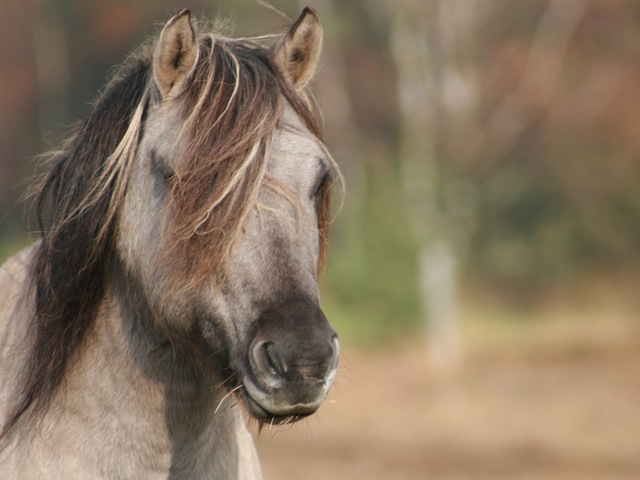
JACKSON, Ky. (Source Article) — Curtis Bostic is an attorney, a politician and — for a few weeks in 2016 — an accused horse thief.
On a cold December day in the rugged hilltops of Breathitt County, Bostic was trying to rescue some horses he said had been abandoned and were malnourished. But he was arrested by a sheriff’s deputy, who said the horses belonged to two men who follow the local custom of setting them free in the winter to wander the wilderness of the county’s abandoned coal fields.
The charges were later dismissed after the sheriff’s department said it didn’t have probable cause to make the arrest. But during the night Bostic spent in jail, he came up with an idea: A few weeks later, he leased the land where he had been arrested. He sent a letter to the two men who had pressed charges against him. Now, they were the trespassers, and Bostic ordered them to come get their horses before he put them up for adoption.
“I can’t change the full county. But I can say you are not going to come to my property and drop your horse off in the cold winter,” Bostic said.
Bostic wants to turn 4,000 acres of former coal mines into a horse sanctuary. It’s the latest idea on how to tackle the growing horse population in the mountains of Kentucky, a state known more for pampered thoroughbreds on pristine farms than bony horses roaming free.
Bostic’s descriptions of thousands of horses suffering at the hands of cruel owners have offended the locals who say he doesn’t understand their culture.
Clifton Hudson, 30, owns five horses that he sets free to wander land he doesn’t own near his home in Breathitt County. He said he provides 600 pounds of salt each month for the horses. He stopped hauling hay bales to the land because the horses were not eating them, a sign he says means they have plenty of grass to graze. The locals often bring their children to the mountains on the weekends to pet and feed the horses.
“It’s just really it’s more of a pastime than anything else with the people of the county,” Hudson said. “So far the only person really had an issue with it has been Mr. Bostic.”
Wild horses have been a familiar sight in the Kentucky mountains for decades. But following the Great Recession and the thousands of jobs lost because of the disappearing coal industry, more horses have been set loose. Read the full story »
Source: WCPO Cincinnati. Report originally filed by the Associated Press. Written by Adam Beam . Featured image by Jervis Pics.
Source: Kentucky lawyer leases land to protect horses, plans sanctuary in coal country – Tuesday’s Horse
Gnomes – secretsoftheserpent
By gserpent
The Gnome character in myths is a diminutive being that are usually old men who dwell underground and guard treasure. Most people think that the Gnome was introduced by Paracelsus in the 16th century. He may have invented the character, but like all scribes of the Renaissance he was being creative. Most researcher think Paracelsus used gnome from the latin ‘genomos’ meaning earth dweller. It has even been said that he invented the word. Paracelsus was well-connected, he used the word because it was so close to several words that describe the Gnome.
Paracelsus chose this name because of gnosis(knowledge) genomos(underground), nomas(law), gnomic(of your nature), and gnome(an opinion). Paracelsus was just doing what so many other scribes were doing, taking a word with several meanings and using it to his advantage. The more meanings the better, especially from language to language. But the main reason he chose this is because of Nomes, providences in Ancient Egypt, and Noble, a person of the bloodline but not the ruling bloodline.
In Ancient Egypt the sons not of the “First Wife or God’s Wife” could not become Pharaoh. They may have been part of the bloodline, but not the pure bloodline. They were given little providences that they could rule or control called Nomes. Within these Nomes they ran their economy and governments. The ones that were favorites or very good at what they did were promoted to help the Pharaoh run his government. They were put in charge of the treasury, helped the priests, keeping the tombs safe and all things that needed to be done that the Pharaoh shouldn’t be bothered with. When someone of the bloodline was kicked out or left Egypt they took people who were running the Nomes with them. They became known as Nobles.
All western civilization royalty is from the bloodline of Egypt. They all had nobles in their royal court. The nobles were the one really doing all the dirty work behind the scenes running the kingdom, with the King and Queen having the final say. This may be why Paracelsus chose to portray the Gnomes underground, but I think the main reason is the nobles were in charge of the sacred mounds. They had to find make the sacred burial places for royalty in hopes of getting a good spot for themselves. Gnomes are usually depicted as wise. They were Nobles so they were educated in certain mysteries. The King and Queen usually confided in certain Nobles. The Gnomes don’t like to react with humans because they were snobby royal blood that hate the masses. If you know my work, you know the royals see themselves as part of the Alien bloodline(see Lemurian Magic). Some myths portray the Gnome as evil or mischievous and some portray them as good. This is because of all the games played with in the royal court. Not only did the Nobles do what they were told for grace of the King, but some tried to overthrow the King and Queen because they thought they should rule. I recommend seeing the Tudors to see just how bizarre and back stabbing things were in the royal court. It follows history pretty close for a movie, but there is a lot of adult content.
Why would they make the Gnomes so small? With faeries it was a pure Pharaonic bloodline that religion was trying to erase from history and they almost succeeded. That bloodline being Lilith’s bloodline of the Tuatha De Danann. The scribes were not trying to erase anything here, they were actually trying to preserve history. We go back to Egypt, mainly Lower Egypt, to get the reason for this too. The Pharaoh and Queen were always depicted as the same size as the Gods and Goddesses. In some hieroglyphs they have smaller people in glyphs with them. In the hieroglyphs with their children, the children have smaller full-grown people standing next to them too. These are the favorite Nobles taking care of the Pharaoh’s family. Most researchers think the smaller people are slaves. We need to get slaves in Egypt out of our head. They were no more a slave then we are corporate slaves today. The people who did the work in Egypt were paid very well for what they did. The lies about Egypt stem from the bible. The Nobles in Egypt were portrayed small because they were not pure blood. Like they say in Harry Potter they were ‘mud bloods’. Mud bloods have to do with the blood that came from earth or the hominids. The author of Harry Potter has been let in on the secrets. Wouldn’t it be nice if people would just explains the secrets instead of trying to get rich off of them?
When you see a Gnome in a story it is really portraying Nobles. Nobles are the ones that did specific duties as stewards or wardens and were venerated as wise. They were the Gentry and attendants of the Rath(royal seats and sacred mound dwellings).
Something Old, something New | Straight from the Horse’s Heart
From Rewilding Europe
“At the rate that the BLM is decimating our last remaining free roaming herds of wild horses and burros we may find ourselves taking notes on how the Europeans are bring wild equines back to their rightful ranges.” ~ R.T.
Looking to boost the benefical impact of free-roaming wild horses in the Coa Valley, Associação Transumância e Natureza (ATN) starts the Zebro Project.
Raising the grazing

Free living Sorraia horses in Faia Brava nature reserve, Western Iberia rewilding area, Portugal. Juan Carlos Múñoz / Rewilding Europe
Rewilding Europe wants Europe’s native herbivores to return in significant, naturally balanced numbers to the lands where they once belonged. With domesticated livestock numbers on the decline in many European countries due to land abandonment, such herbivores can play a vital grazing role, opening up landscapes and enhancing biodiversity.
To this effect, Rewilding Europe now supports natural grazing in 16 different pilot areas across nine countries. In Faia Brava, one of our largest natural grazing pilots located in northern Portugal’s Middle Côa Valley, wild Garrano horses are the herbivores now reshaping the landscape in a way that benefits a wide range of local flora and fauna.
Thanks to the efforts of Associação Transumância e Natureza (ATN), our partner in the Western Iberia rewilding area, another site in the Middle Côa Valley will soon benefit from wild equine grazing too. The Portuguese NGO has this year started the so-called Zebro Project, carefully selecting and cross-breeding Sorraia horses to maximise their wild characteristics. These animals will eventually be released as a herd at a site close to (but separate from) Faia Brava.
“Our eventual aim is to recreate wild, free-roaming horses that will replace those that have been lost from the Iberian ecosystem,” explains Pedro Prata, the Western Iberia rewilding area team leader and ATN’s executive coordinator.
“We want rustic equine and cattle breeds to take back their ancestral grazing role in the Middle Côa Valley in a natural and sustained way,” continues the Portuguese. “These herbivores can reduce weed density, create clearings, promote seed dispersal and favour populations of wild scavengers and predators.”
An equine experiment
The rewilding of horses began back in 2005, when ATN introduced five Garrano horses into Faia Brava. Further introductions since then have seen the number of free-roaming horses in the reserve rise to an estimated 60 to 70 animals. These are now part of Rewilding Europe’s European Wildlife Bank.
Like the Garrano, the Sorraia is an ancient horse breed that was once found wild across the Iberian Peninsula, but whose populations decreased dramatically under pressure from hunting and the rise of domestic livestock and mechanised agriculture. The Sorraia has a particularly interesting history, having once been called the “zebro” or “zebra” in Portuguese, due to its striped markings.
Hardy native animals that lived off uncultivated lands and salt marshes in Iberian river valleys, zebros were occasionally captured by farmers for agricultural work. A small population of Sorraia horses, thought to be direct descendants of the zebro, was discovered in the 1920s. It is from this stock that the lineage has been preserved, although the breed remains rare.
In its attempt to recreate the zebro, or a genetic approximation of this ancient wild equine, the challenge is to identify the right horses for breeding.
“It is difficult to find modern-day horses with the genotype, phenotype and behaviour of ancient breeds,” explains Pedro Prata. “We are looking for animals with more rusticity, which are strong enough to survive in adverse conditions, resist pathogens and diseases, and generally adapt to wild conditions. These are now quite scarce.”
Since the beginning of 2017, ATN has acquired several stallions and mares displaying the Sorraia phenotype. The plan is to acquire further animals this year, using part of the ATN membership fee for acquisition, transport and habitat management, and to launch a new line of merchandising to celebrate the project.
While the European wild horse is officially extinct, its genome is not lost and still exists across several types of old horse – from Exmoor ponies in the United Kingdom to the Hucul ponies of Eastern Europe’s Carpathian Mountains. These primitive animals still boast many of the characteristics and genetics of their ancestors, making them particularly suitable for rewilding and the grazing of wild habitats.
Rewilding Europe’s brochure on rewilding horses can be viewed here.
https://www.rewildingeurope.com/news/something-old-something-new/
Source: Something Old, something New | Straight from the Horse’s Heart
 Paths I Walk
You must be logged in to post a comment.