Public tour of Bruneau off-range corrals offered in June | KBOI

The horses receive an abundance of feed tailored to their needs each day, along with a constant supply of fresh water through automatic watering troughs.

BOISE, Idaho (KBOI) – The BLM in Idaho will offer a public tour of the Bruneau off-range corrals on Thursday, June 8.

Two public tours will be offered — the first will begin at 10 am and the second will begin at 1 pm.

Each tour will last about two hours and can accommodate up to 20 people.

Spaces will be filled on a first-come, first-served basis.

The public can sign up to attend and receive driving directions to the facility by calling BLM at (208) 329-4534.

Please RSVP for one of the two tours by June 5.

Details about the tour:

• Tours start promptly at the scheduled time, so be at the facility a few minutes early or the wagon may leave and we cannot come back to pick you up

• Bring comfortable shoes and clothes. Hats and sunscreen recommended

• Bring your own water

• Cameras and video cameras welcome

• Visitors will not be able to walk around the facility unaccompanied. They must travel with the group in the wagon at all times

The Bruneau off-range corrals are located at 28536 Jacks Creek Road, and are privately owned and operated.

About a 75-minute drive southeast of Boise, the facility provides care for over 1600 wild horses.

The facility encompasses 80 acres containing 39 large holding pens, each pen measuring 70,000 square feet that will safely hold approximately 100 horses.

The horses receive an abundance of feed tailored to their needs each day, along with a constant supply of fresh water through automatic watering troughs.

Free choice mineral block supplements are also provided to the animals in each pen.

A veterinarian routinely inspects the horses and provides necessary medical care as needed.

The BLM strives to place horses removed from the range into good, private homes.

Source: Public tour of Bruneau off-range corrals offered in June | KBOI

The Devil is in the Details as BLM again removes thirsty wild horses due to “emergency” in the Antelope Valley HMA in Nevada | Straight from the Horse’s Heart

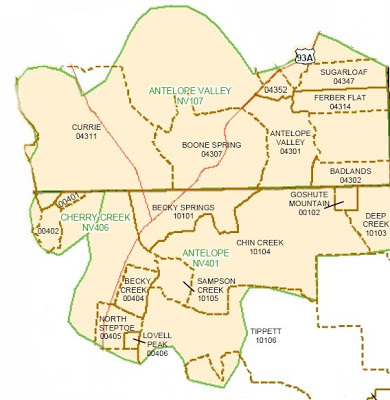
Antelope Valley grazing allotments (2008)

Before you read BLM’s version of this “emergency” below, be sure to read Cindy MacDonald’s 2008 article “The Devil’s in the Details” on American Herds Blogspot.  We have to wonder how many acres of public lands that the “private land owner” (mentioned by the BLM below) uses to graze their own private livestock, since it seems the entire HMA is used for livestock grazing.  The BLM seems to be giving the public the same ongoing bullshit (literally). –  Debbie

“traditionally the wild horses spend the summers in Antelope then migrate to Antelope Valley for the winter ~ except the Nevada Department of Transportation (NDOT) strung up a new fence up on Hwy 93 effectively trapping the horses and in one area, completely cut them off from any water at all.

Speaking to BLMs Kyle Hansen in the Ely Field Office, Mr. Hansen explained range conditions were so bad due to drought that it “looked like an atom bomb went off” and provided photos as evidence of the dust bowl conditions the wild horses would be forced to try and survive in over the winter in if they were not immediately removed.

He also stated compounding the problem was a local rancher who had allowed wild horses to drink water from his property for years but finally “had enough”,  fenced the area and now the horses that remained would probably die of thirst.” – Cindy MacDonald

Source:  BLM

2017 Antelope Valley Emergency Wild Horse Gather

Progress as of Monday, May 22, 2017

Purpose of Gather:

The Bureau of Land Management (BLM) Elko District, Wells Field Office, in coordination with the BLM Ely District will begin a wild horse water bait trap gather to remove wild horses on private lands near the Boone Spring Area. The gather is taking place due to a request from a private land owner to remove the excess wild horses.

Details of Gather:

BLM plans to humanely gather approximately 60 wild horses through the use of a water bait trap.

Public Observation: 

Because of the nature of the water gather method, wild horses are reluctant to approach the trap site when there is too much activity. In addition, the gather operations are being conducted on private land. Therefore, only essential gather operation personnel will be allowed at the gather site during operations.

Adoption Information: 

The wild horses removed from the range will be transported to the Indian Lakes Off-Range Corral in Fallon, NV to be prepared for the BLM’s Adoption Program. Learn more about how to adopt a wild horse or burro from the BLM.

Background:

This gather will attempt to remove excess wild horses from private land near the Boone Spring area of the Antelope Valley Herd Management Area. The private land owner has requested removal of the horses. The Antelope Valley HMA has an Appropriate Management Level (AML) of 155-259 adult wild horses. As of March 1, 2016, the BLM estimated the population at 1,013 wild horses (not including foals born this year). The BLM Wells Field Office has determined that even though there has been above average amounts of precipitation this winter and spring, there are still no known water sources in the area for wild horses to obtain water later this spring and summer. Learn more about the Antelope Valley HMA.

er later this spring and summer. Learn more about the Antelope Valley HMA.

Source: The Devil is in the Details as BLM again removes thirsty wild horses due to “emergency” in the Antelope Valley HMA in Nevada | Straight from the Horse’s Heart

A Mustang murder mystery in northern Nevada – Tuesday’s Horse

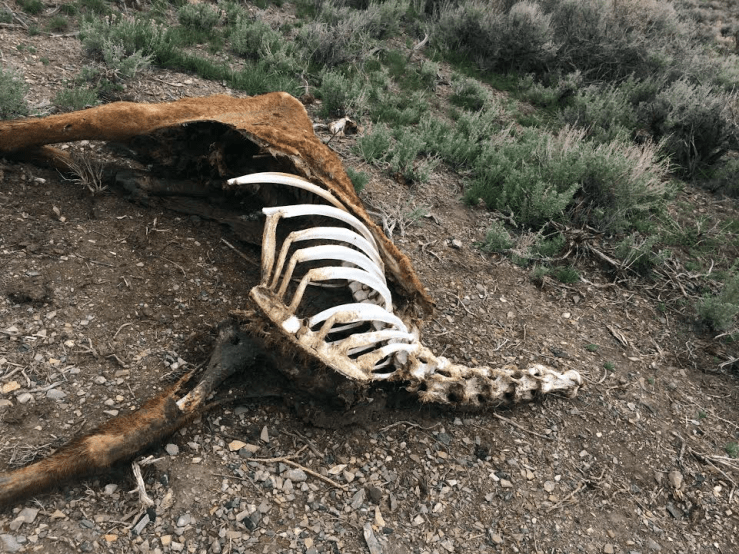
WILD HORSES NEVADA (Warning: Graphic Image) — On May 10, 2017, Tuesday’s Horse received an email from the Professor and Chair of the Geological and Environmental Sciences Department of a California University stating he was leading a student field trip in Northumberland Canyon south of Austin, Nevada the previous weekend and they discovered the following:

We came across six horse carcasses, all missing their heads. This was very disturbing to the students and I am trying to figure out what happened. Was there planned culling of wild horses? Why would the heads be removed?

The headless remains of a Mustang found in northern Nevada taken by a student while on a geological field trip in the Austin area. May 2017.

The Professor had not been able to reach the Bureau of Land Management (BLM) so reached out to us for assistance.

At long last I tracked down the right BLM office thanks to the coordinates the Professor provided.

After several email exchanges and a few phone calls with a BLM agent in that office, we made little progress figuring out what had happened to these Mustangs or why.

Here is a summary of those exchanges:

• It is highly likely these Mustangs were shot and killed. Although rare in the area, other wild horses have been shot and killed and left on the side of the road in much the same manner.

• The heads were either removed by trophy hunters or for use in local rituals. It is also possible someone discovered the carcasses and removed the skulls much later and cleaned them to use as relics. The heads are not missing because of scavengers.

• Due to the vastness and remoteness of the area it is close to impossible to find any witnesses. Investigators often have to rely on hearsay such as “someone bragging” about the kill.

My BLM contact agreed to talk with other field agents plus get in touch with the U.S. Forestry Service for their input.

A few days later my BLM contact reconnected to tell me that wild horses killed in suspicious circumstances do fall under the jurisdiction of the U.S. Forestry Service and they would determine whether or not to investigate.

An agent of the U.S. Forestry Service contacted me with the following:

• They had discovered carcasses like these the previous year, perhaps even as early as Spring 2016, and they were “probably the same ones”.

• Due to the condition of the carcasses and the amount of time elapsed they have little to nothing to go on and did not feel it warranted the time and expense of an investigation. No one offered an explanation why they took no action at the time they first found the dead horses other than “it’s too hard”.

• They have come across dead Mustangs before where they suspected foul play and occasionally seen heads removed like this.

• The missing heads were not the result of scavenging.

It was never quite clear to me when coming across something like this, how they determine when it is worth investigating and when it is not.

The BLM and USFS were not the only ones. I also contacted a noted investigative reporter who also declined.

So Now What?

The agents I dealt with were responsive. Perhaps it ended the way it did with me at the direction of higher ups.

Yet wait a minute. Any way you look at it, murdering a Mustang is a federal crime. Murdering six. Leaving the six dead horses at the side of the same road. Removing their heads. Surely that warrants at least some looking into.

Something must be done or these murders, even if only committed sporadically, will continue.

I offered a reward for the arrest and conviction of these Mustang Murderers. The response?

I appreciate knowing about the reward and I will see how that might be promoted.

End of story? I thought so until a few minutes ago. We’ll let you know. Stay tuned.

Source: A Mustang murder mystery in northern Nevada – Tuesday’s Horse

Special Report: KPVI Investigates Cyanide traps and the USDA | Straight from the Horse’s Heart

story by as broadcast/published on KPVI.com

“This is not the first time the USDA had a run in with the Gate City…”

It’s almost been two months since a Pocatello family lost their dog and almost their son to a cyanide trap set 300 yards behind their house. Since then the USDA says they’ve taken all the traps out of the Gem state. But that hasn’t changed anything to investigators who say they were never notified of the deadly chemical, meant to kill predators, planted around Bannock County.

The incident began in the Buckskin area back in March. Canyon Mansfield says, “I panicked and sprinted down to get my mom.” The 14-year-old and his dog Kasey were 300 yards away from their house. He describes, “Suddenly there’s like a pop and then orange gas spews out.” The Mansfield family dog died and they almost lost their son as well. Theresa Mansfield, Canyon’s mother says, “We didn’t want to believe it was from Cyanide poisoning, but deep down it scared the crap out of us.”

The Cyanide trap was placed on BLM land with no warnings in sight. Investigators found a second trap not far from the first. Bannock County Sheriff Lorin Nielsen says, “We’re not Alaska. There are wilderness places where people go. I don’t care what the purpose is. If it’s endangering public it shouldn’t be there.”

Since the death of Kasey there’s been a worldwide outcry. The Bannock County’s Sheriff’s office has launched their investigation. The city has also stepped in. In March Pocatello’s Mayor Brian Blad wrote a letter to the USDA asking them to stop manufacturing Cyanide Traps, or M-44’s, in the city. Since then the agency reached out to the mayor. He says he toured the facility, learned about their safety precautions and products “They’re going to continue to do their practice until congress acts,” said Blad.

This is not the first time the USDA had a run in with the Gate City. Seven years ago the agency was responsible for illegally setting “Quick Kill” traps, meant for Rock chucks within city limits. Obtained by KPVI in an incident report by Pocatello’s animal control, an elderly woman called them after finding a cat trapped alive in a “quick kill” trap or Conibear trap in her backyard. She admitted to the city she requested the traps from the USDA. She says at least three cats had been killed before and they were removed by the local USDA representative Todd Sullivan. Sullivan is the same man involved in the Mansfield investigation. In 2010 the charges against Sullivan were dismissed by a federal judge.

The city and USDA came to an agreement that they would not place Conibear traps in Pocatello without notifying the city first. The USDA declined to speak to KPVI on camera, but gave us a written statement answering our questions. They told us, the incident involving the Mansfield Dog is still under investigation and can’t comment. But claimed they had “107 M-44’s set on 16 properties in the state and all have been removed.” Our request to tour the Pocatello manufacturing facility was denied, they say because of security concerns.

The agency tells us the Pocatello location has been manufacturing M-44 deceives since 1969. And also handles, “Gas cartridges for fumigating rodent burrows, rodent grain baits…, predator lures, and repackages other products such as order control products and animal immobilization drugs.”

The sheriff’s investigation is now left in the hands of county prosecutors to find if any state laws were violated. In the meantime, the sheriff says this to residents, “We now have to be aware of our surroundings. If there is something that is out there that is not part of… leave it alone, leave it alone,” Nielsen said.

Source: Special Report: KPVI Investigates Cyanide traps and the USDA | Straight from the Horse’s Heart

Update: Status on Massive Former Wild Horse and Burro SD Rescue | Straight from the Horse’s Heart

Source: Wild Horse and Burro Sanctuary Alliance

It has been a long and difficult journey for the 907 horses that the State Attorneys in South Dakota found to be suffering from serious neglect last  October. From freezing temperatures and soupy mud, all of the unadopted horses healthy enough to make the journey have been relocated to a safe staging area in Colorado. (or to a new adoptive home.) We’ve come so far and we couldn’t have done it without you!

But we aren’t done yet! There are still 170 horses waiting to be adopted  and transported to their new adoptive homes, the Wild Horse and Burro Sanctuary Alliance members and partners continue to work hard to raise the $8,000.00 a week still needed to complete one of the largest horse rescues in U.S. history (bolded) as soon as possible.
Alliance members have been providing support to Fleet of Angels and its ground team by doing our part to raise funds for feed and care. With your help, and the support of the citizens and ranchers from Faith, S.D., 312 horses were relocated at the end of March to a well-equipped adoption hub in Ft. Collins Colorado.
Since last October, 712 of the 907 horses have been adopted minus some 24 horses that had to be euthanized due to medical reasons (like broken bones, cancer and other irreversible conditions). The numbers are staggering. It has been a challenge to get this far and it could not have been done without everyone’s help- every contribution and ‘share’ with friends has made a lifesaving impact.
The Wild Horse and Burro Sanctuary Alliance will continue to do what we can to raise funds to help cover feed and labor until all the horses reach new homes. Weekly costs for board, feed and laborare over $8,000.00. Thanks to contributions from the ASPCA, all Coggins costs have been covered and thanks to Shirly Puga/National Equine Resource Network and The Unwanted Horse Coalition, all gelding fees have now been covered! 
This is a team effort and without the support of The Griffin-Soffel Equine Rescue Foundation, The Humane Society of The United States, the ASPCA, the Wild Horse and Burro Sanctuary Alliance, Victoria McCullough, Best Friends, and every individual or group that has contributed, more than 600 horses would have been sold at auction last December, with most winding up hauled to Mexico or Canada for slaughter.
Since October, when a ruling of neglect was made against the International Society
for the Protection of Mustangs and Burros (ISPMB), an outpouring of generosity (has) made it possible to feed the horses and reimburse costs incurred by two South Dakota counties.
That allowed the counties to call off a planned public auction of the ISPMB horses at which many would have fallen into the hands of kill buyers, and feed the horses and ground crew. At the same time, adoptive homes were found for over 270 of the estimated 907 horses originally found on the ISPMB property, and the health of most of the others began improving. Since then, all but 170 horses have been placed with safe homes- but we need help. Every dollar helps make this possible.
Now, we need your financial contribution to cover the remaining cost of housing and care for the 170 horses who are still in need of adoptive homes. We need to cover costs for hay, facilities and labor this week.
We are grateful to EVERYONE who has chosen to be part of this effort and remain committed—with your help—to leave no horse behind.
On behalf of the Wild Horse and Burro Sanctuary Alliance, please help us in this final stretch of reaching that goal.
Thank you and please help today,

Source: Update: Status on Massive Former Wild Horse and Burro SD Rescue | Straight from the Horse’s Heart

Wild Horses Misinformation and Bad Science: Corrupt Government Agency and Non-Profits ~ Photojournalist ~ Journalist

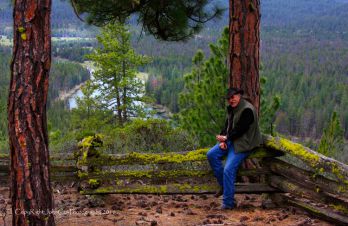
By John Cox

john-cliffs-blog-post

“The fact that we live at the bottom of a deep gravity well, on the surface of a gas covered planet going around a nuclear fireball 90 million miles away and think this to be normal is obviously some indication of how skewed our perspective tends to be.” ― Douglas Adams, The Salmon of Doubt: Hitchhiking the Galaxy One Last Time

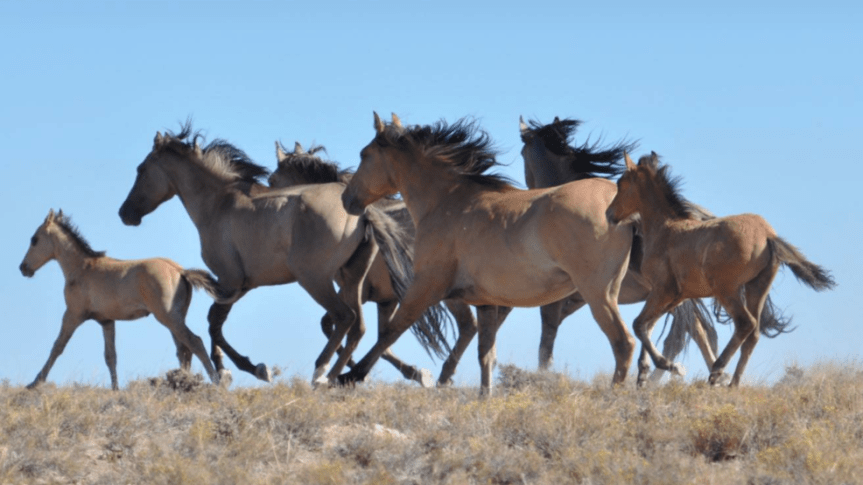
Why do we take issue at the lack of good science data with what is called today, Pesticide PZP? Because subjectivity and science remain two separate situations. The dynamics of each very different. Many of us find Pesticide PZP nothing more than subjective rhetoric – the results on our Public Lands of this endeavor remains quite negative, with no good potential results foreseen in the future. Wild Horses are going extinct! False science, misinformation, ignoring of Ecological demands, and corruption the reasons why . . .

The wild horses on America’s Public Lands is falling victim to what many of us simply refer to as bad, and incompetent white-paper gibberish. As history shows us time and again, government agencies seem to attract this type of research, calls it science, and as history shows us, time after time, until we see the outstanding negative results, in this case a species going extinct, do we finally realize the mistake.

But only over time is the burden of responsibility taken to task, the fingers point to those who cannot defend themselves, and these elements of destruction, these non-profits and BLM who promote this Pesticide PZP scam, simply move-on to other schemes and scams to obtain taxpayer money differently, is all . . .

Well, as taxpayers and American’s it is time for all of us to Stand Up and say no to any further Pesticide PZP use —

Spotted Owls in the Cascades

For explanation reasons, I am using the Spotted Owl within the Nooksack River watershed, as well as the Skagit River Valley, both in the Cascade Mountains. It shows us, overtime, the dynamic also involved within the wild horses, even though separate ecological zones, separate species for sure, yet similar in population encounter and census.

The biology, when all the variables considered, show situations that remain overlooked, or even ignored, by Pesticide PZP research. Many define, categorically, Pesticide PZP as questionable subjective reasoning of combined-information only, merely passed-off as science –

“If we knew what it was we were doing, it would not be called research, would it?” ― Albert Einstein

Many of us accept this fact of facts, as there simply exists too many variables left unexplored from the Pesticide PZP data gathering, to be any type of acceptable science what so ever. Way too many significant data situations ignored or even not thought about what so ever, which would show beyond a doubt Pesticide PZP, a questionable situation at best, and non-useful. The reasoning why significant variables left unexplored? Well, let’s take a look at some of the more obvious, and viability of our wildlife in general.

A census of the Spotted Owl may show twenty-five owls exist, but perhaps only seven are of a reproductive age, and only five sexually active. The outcome of this, within a good biology context, would likely be five-owls, not twenty-five. To assimilate across the board a 20% to 38% increase, as they do with wild horses, is simply bad management, untruthful, and no good-science or biology would back up such claims what so ever – as variables do exist on this planet, always.

When we refuse to consider significant variables, that do exist and apparent should not be ignored, then we have to question the supposed science involved. On the same scale of research, if we ignore the habitats, or Ecological Zones that exist, deduction through subjectivity only, and as if Pesticide PZP unharmful within any circumstance – but never explored, through due diligence and good data gathering, we never find out if harmful or not in Ecological Zones of any type. . . Used on something like Wild Horses, we become very concerned at this monumental error in judgement, that certainly lacks scientific responsibility, and one can also attest, irresponsible within an ethical or humane context as well . . . – John Cox, The Cascades

Source: Wild Horses Misinformation and Bad Science: Corrupt Government Agency and Non-Profits

BLM Transfer Provision in Omnibus Outrages Advocates | Straight from the Horse’s Heart

by Scott Streater, as published on E&E News

“The provision in the latest omnibus bill was requested last year as part of President Obama’s fiscal 2017 budget proposal (Greenwire, Feb. 10, 2016).”

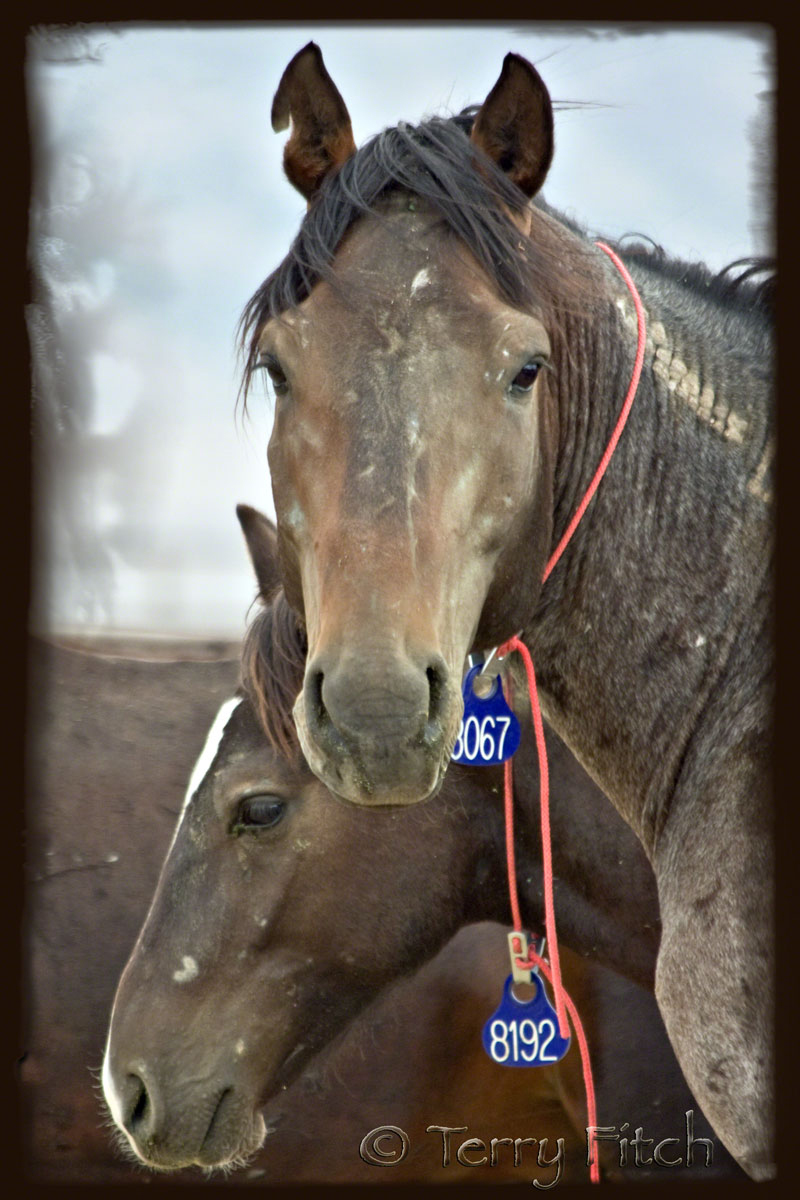
photo by Terry Fitch of Wild Horse Freedom Federation

The omnibus spending package the Senate approved today contains a provision that would make it easier for the Bureau of Land Management to adopt out or transfer wild horses and burros, reducing the growing number of animals under the agency’s care.

But the provision has angered animal rights advocates, who say it contains too many loopholes to protect thousands of wild horses and burros from being slaughtered.

At issue is a section in the omnibus package to fund the federal government through September — originally requested by the Obama administration last year — that would allow the Interior secretary to “transfer excess wild horses or burros” BLM has removed from federal rangelands “to other Federal, State, and local government agencies for use as work animals.”

The provision would authorize the secretary to “make any such transfer immediately upon request” of a government agency, such as the U.S. Border Patrol. The provision includes language stating that the animals cannot be killed or sold or transferred to any entity that would slaughter them “for processing into commercial products.”

But it allows transferred horses and burros to be euthanized “upon the recommendation of a licensed veterinarian, in cases of severe injury, illness, or advanced age.”

It’s that language that has wild horse advocates outraged.

Ginger Kathrens, executive director of the Colorado-based Cloud Foundation, said BLM “has a history of misinforming the public” about issues related to wild horses.

“Couple this with the vague ‘illness’ and ‘advanced age’ language” in the omnibus provision, “and the potential exists for the killing of thousands of horses,” said Kathrens, a member of the BLM National Wild Horse and Burro Advisory Board…(CONTINUED)

https://www.eenews.net/eenewspm/2017/05/04/stories/1060054082

Source: BLM Transfer Provision in Omnibus Outrages Advocates | Straight from the Horse’s Heart

BLM offers whistle stop tour of wild horses imprisoned at Indian Lakes Rd. facility in Fallon, NV | Straight from the Horse’s Heart

Once wild horses at Indian Lakes Rd. facility in Fallon, NV (photo:  Debbie Coffey)

Get ready to jump on the wagon for a BLM PR blitz…

Edited Press Release       Source:  BLM

RENO, Nev. —The Bureau of Land Management (BLM) will host two free public tours of the Indian Lakes Off-Range Wild Horse and Burro Corral in Fallon, Nevada, on Friday, May 12. Tour attendees will be taken as a group by wagon around the facility to learn about it, the animals, and BLM’s Wild Horse and Burro Program.

About a 90-minute drive east of Reno, the corral is located at 5676 Indian Lakes Road, Fallon, and is privately owned and operated. The public tours will begin at 10 a.m. and 1 p.m. and each will last about one hour and accommodate up to 20 people. Attendees should wear comfortable shoes and clothes; hats and sunscreen are recommended, and photography is welcome. On-site portable toilets will be available.

Horses at the Indian Lakes facility are made available to the public for adoption or purchase throughout the year at off-site adoption events and through BLM’s Internet Adoption program. For more information on adoption opportunities, visit https://on.doi.gov/2iByqXD.

To register for the tour or to get driving directions to the facility, please contact the BLM at (775) 475-2222.

Source: BLM offers whistle stop tour of wild horses imprisoned at Indian Lakes Rd. facility in Fallon, NV | Straight from the Horse’s Heart

BLM’s Wild Horse & Burro Program in a Death Spiral | Straight from the Horse’s Heart

Open Letter by Author Terry Farley

“BLM’s wild horse and burro math is statistically bizarre…”

As a journalist, I first interviewed BLM Wild Horse and Burro Program staffers in 1976, shortly after I moved to Nevada. Since then, I’ve followed the program’s death spiral.

Those who say wild horses and burros ruin the range claim there are too many of them, and yet there’s little agreement about how many wild equines remain on America’s public lands.

BLM’s wild horse and burro math is statistically bizarre. Even the National Academy of Sciences, charged by BLM to analyze the program (2013) concluded: “The Wild Horse and Burro Program has not used scientifically rigorous methods to estimate the population sizes of horses and burros …”

NAS warned “continuation of business-as-usual practices will be expensive and unproductive for BLM and the public it serves.” Worse, NAS pointed out that BLM’s lack of science has actually backfired on its stated goal of protecting the range.

BLM’s reaction? Keep paying independent contractors to chase, trap and corral the West’s remaining wild horses and offer $10 million to anyone who found a new means of mustang birth control.

BLM asked for a new method because PZP “didn’t work,” ignoring recent science and BLM personnel who admitted that — counter to instructions – contraceptives are not always kept frozen or even cold in the field.

Band dynamics: During round-ups, family bands are shattered, routinely divided into stallions, mares and contractor-determined weanlings. Horses are prey animals. They know safety is with the band and the resulting cacophony and blood of these separations is haunting. Fewer than 2 percent are ever reunited.

Injury: Compare injection site abscess to BLM documentation of a single round-up in which 113 mustangs died. Death from shattered pelvises, broken necks, skulls and spine were sometime attributed to natural causes or pre-existing conditions. Those diagnoses would strain my credulity even if I hadn’t been there.

If you still oppose contraception, please consider this: Proponents of selling wild horses without limitation have made in-roads at BLM and those who’d destroy mustang captives as they stand in government pens have visited the White House.

The extermination of a Western icon is near, and your choice can hasten or slow its approach.

PZP is reversible. Death is final.

Source: BLM’s Wild Horse & Burro Program in a Death Spiral | Straight from the Horse’s Heart

Wolves can be shot on sight in most of Wyoming after state takes over management | Straight from the Horse’s Heart

by as published at the Casper Star Tribune

Wyoming assumed management once again of wolves within its borders on Tuesday, and those apex predators wandering outside the northwest corner of the state can be shot on sight.

The Circuit Court of Appeals in Washington, D.C., entered its final order in favor of Wyoming in a lawsuit that landed wolves back on the endangered species list in 2014. The court announced in early March that it had upheld the state’s plan but had not issued its final order.

Tuesday’s decision is what Wyoming wolf managers hope is the last legal battle in a roller-coaster legal process.

 “All indications are that this decision shows once again that Wyoming’s plan is a sound management plan,” said Brian Nesvik, chief of the Wyoming Game and Fish Department’s wildlife division. “They will remain in the hands of state management. For Wyoming this is, again, this is a time for us to celebrate. This is a good thing for Wyoming to be able to take on another wildlife resource.”

No changes were made to Wyoming’s wolf management plan from when the state oversaw the carnivores between 2012 and 2014, Nesvik said.

That means Wyoming will manage the 100 wolves and 10 breeding pairs outside of Yellowstone National Park and the Wind River Reservation.

Wolves in 85 percent of the state are considered a predator and can be shot on sight, similar to coyotes. They are classified as a trophy animal in the northwest corner of the state and subject to fall hunting seasons. Those seasons have not yet been set, Nesvik said, adding that wolves in those areas cannot be hunted right now. The Wyoming Game and Fish Commission will set those seasons after a public comment period…(CONTINUED)

http://trib.com/lifestyles/recreation/wolves-can-be-shot-on-sight-in-most-of-wyoming/article_b22f00b2-cc8e-50d0-99eb-fd2b24f8608d.html

Source: Wolves can be shot on sight in most of Wyoming after state takes over management | Straight from the Horse’s Heart