Spicebush – Good Witches Homestead

Source: Spicebush – Good Witches Homestead

Spicy, lemony shrub with its rich history needs a reintroduction into the kitchens and medicine cabinets of North America.

It can be found from Maine to Florida, as far west as Kansas, and in parts of Texas. It is happiest just inside the edge of the forest but can successfully be grown out in the open with strong attention to its watering. The bush has a long American history that is enjoying a bit of a renaissance.

When European settlers first arrived in the Americas, they would have had to struggle with many elements of homesickness — particularly the loss of familiarity with the plants around them. Seeds were surely transported, and some even thrived in the New World, but many of the plants that colonists depended on for food, medicine, dye, and textiles had to be left behind. This meant that settlers needed to quickly understand which plants could serve as substitutes for lost staples.

If you’re in a strange place and need to know the landscape, the logical thing to do is to ask the natives. One of the important plants the Cherokee people taught early settlers about was spicebush. Spices have moved humans from place to place, started civilizations, and founded empires. Here on the temperate shores of the U.S., the bright spices cinnamon and ginger don’t grow, but we’ve always had milder and cooler substitutes. Spicebush berries can be used as a replacement for allspice, and the powdered bark makes a serviceable cinnamon.

Spicebush is known as fever bush, Benjamin bush, snap-wood, wild allspice, Appalachian spice, spicewood, and “forsythia of the forest” to name a few. Beyond its culinary use, Native Americans taught the settlers about the ways they used spicebush as a medicine. This native population used the leaves, bark, berries, and sap in various ways. Internally, they prized the plant for its diaphoretic properties, or its ability to induce sweating. Native people used spicebush to ease colds, cough, fever, and measles. Externally, they used oil from the pressed berries to ease the pain of arthritis. They used all parts of the plant interchangeably as compresses (external applications of cloth soaked in tea) for rashes, itching, or bruises, and they also used it to remove internal parasites.

Soon, the colonies began to expand, and many itching to explore the West. As they walked, they deepened their relationship with spicebush. Paul Strauss, in his book The Big Herbs, tells us that chewing on the twigs will quench thirst and moisten the mouth. In this way, spicebush walked with the settlers, many of whom were traveling with their families as they moved toward a farm they’d bought, sight unseen. Spicebush was associated with rich soil and easy access to the water table. If the surveyor said that the shrub was on the land in question, it was a safe bet for a successful farm.

Over time, the Americas’ access to the hot and intense spices of the East became easier. Medical advancements yielded awareness of plants with healing properties, and then modern drugs left the need for many plants behind. Spicebush was left alone in the woods to quietly feed the insects and animals that depend on it for survival. Only now are we coming back to an awareness of its presence?

Cultivating Spicebush

Spicebush is now a featured member of Slow Food USA’s Ark of Taste. Many are stepping back into the dappled shade of the forest’s edge to become reacquainted with this shrub. Spicebush is fond of moist soils along streams or in rich woods. It grows between 6 and 12 feet high. At its base, one often finds some of the most endangered of our medicinal plants, such as black cohosh, ginseng, false unicorn, goldenseal, and wild yam. In March and April, just before the leaves emerge, it sports pale yellow blooms that are a great early source of nectar for bees. The male and female blooms arise on separate shrubs. When the leaves appear, they are opposite, simple, smooth, and oval to oblong with a spicy, aromatic smell when crushed. In fall, the leaves turn a beautiful yellow that contrasts sharply with the red spicebush fruit. This fruit is an oval-shaped drupe containing one large seed. It’s bright, glossy red, and spicy when ripe in August through September.

In winter, after all the fruit has been eaten, you can identify the spicebush based on the gray to an olive-green color of the stems, which have a spicy smell when broken. The leaf scars are crescent-shaped, and both young stems and old bark are dotted with pale lenticels (raised pores where oxygen and carbon dioxide are exchanged). Spicebush spreads as a colony, by its roots. If you have a friend with an expanding group of spicebush, late fall is a great time to dig up some of the colony and move it to your house.

Growing spicebush is relatively easy, provided you have a good spot. Plants can be grown in full sun if you water them often and provide a rich soil with plenty of leaf compost. After they get established, they require little in the way of pruning or animal-proofing (deer don’t like them). You can just sit and enjoy the constant visual interest and all the other wildlife your spicebush will attract. The real problem will be deciding exactly which recipe you’d like to use with the leaves, twigs, and fruit your shrub will provide.

Uses for Spicebush

As a supplement, almost all parts of spicebush can be used in food and medicinal preparations. Spicebush bark’s antifungal capacities were demonstrated in a 2008 study that showed its activities against both Candida albicans and the fungus that causes athlete’s foot. To use the bark in this way, either make a tincture or simmer (decoct) the root in water for 15 to 20 minutes.

The entire shrub is high in volatile oils, making all parts of the plant likely effective at settling the stomach when made into a tea. The leaves are especially good as a tea and should be picked while glossy and green. The twigs can be picked to add to a tasty medicinal brew at any time of the year. If you’re hoping to have a cleansing sweat or break a fever, brew your tea for 30 minutes (4 ounces twigs to 1-quart water) and serve hot.

If you wish to use the berries, the possibilities for food as medicine are endless. Berries are ripe around the same time as apples, so think of the potential combinations! Dry berries in a dehydrator, and store them on a shelf or immediately freeze them. Some people cut the seed out of the middle before freezing, but I think that’s unnecessary and potentially removes some of the flavors. You’ll need to run unblanched, frozen berries through the food processor before adding them to a dish. Dried spicebush berries can be ground with a spice-dedicated coffee grinder. Try adding the resulting powder or pulp to coffee, cookies, chai tea, cobblers, curries, and more.

Spicebush is a strong part of our country’s past — but why keep it there? With so much to offer our landscape and even more to bring to our pantry and apothecary shelves, it deserves another look by all who enjoy a little history in the garden.

Spicebush Seed and Plant Sources

Strictly Medicinal Seeds (listed as “spice bush”)
Gurney’s Seed & Nursery Co.
Fedco Seeds

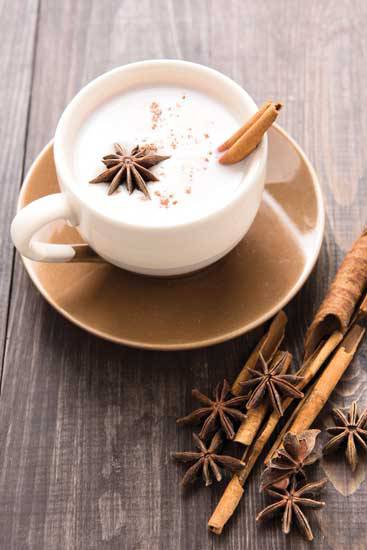
Fever Chai with Spicebush

spicebush teaRelieve typical fever symptoms, or make without milk to soothe fever caused by respiratory illnesses.

Total Hands-On Time: 1 hr

Cook Time: 1 hr

Yield: 5-7 cups

Fever Chai can bring some relief to fever symptoms, but you may make it without the milk for someone who’s experiencing a fever related to a respiratory illness, as milk can exacerbate symptoms of congestion.

Ingredients:

• 8 whole cloves
• 8 spicebush berries
• 7 twigs spicebush (broken to equal about 2 ounces)
• 2 sticks cinnamon (smashed)
• 1 cardamom pod
• 1 tablespoon fresh sliced ginger
• 1/2 star anise
• 2 cups water
• 4 to 6 cups milk (or almond milk)
• 2 tablespoons black tea
• Sugar or honey to taste

Instructions:

1. Crush all the spices lightly with a mortar and pestle and place them into a saucepan.

2. Cover the spices with water and bring to a boil.

3. Reduce heat and simmer for 30 minutes or until the water has reduced by half.

4. Add the milk to the saucepan and bring back almost to a boil.

5. Remove from heat. Add the black tea, cover, and steep for 5 minutes before straining.

6. While still warm, add sugar or honey to taste, and then use a milk frother to whip your chai.

7. Serve immediately.

Wild Allspice Java Rub with Spicebush

spicebush rubThis sweet and spicy rub is the perfect addition to steak, brisket, or pork.

Total Hands-On Time: 5 min

Preparation Time: 5 min

Yield: 1 cup

This rub is best on a grilled steak or brisket but also works well with pork.

Ingredients:

• 5 tablespoons ground coffee
• 2 tablespoons coarse salt
• 2 tablespoons brown sugar
• 2 tablespoons paprika
• 2 teaspoons freshly ground pink peppercorns
• 2 teaspoons garlic powder
• 2 teaspoons ground spicebush berries
• 1 teaspoon ground cumin
• 1 teaspoon unsweetened cocoa powder

Instructions:

1. Combine all ingredients and place in an airtight container.

2. This mix is shelf-stable but should be used within 6 months.
Continue reading “Spicebush – Good Witches Homestead”

Ozark Encyclopedia – C – Chestnut – Mountain Man Traditional Healing

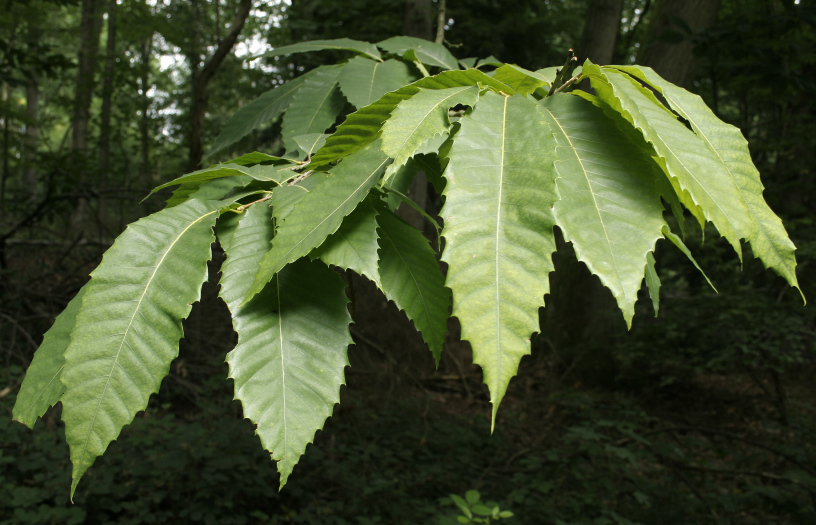
Chestnut – Castanea dentata, C. pumila

Parts used: bark, leaf, nut

Traditional uses: Compound decoction of leaves used as cough syrup. Leaves from young sprouts dipped in hot water and put on sores. Cold, compound infusion of bark used to stop bleeding after childbirth. Infusion of year old leaves taken for heart trouble.

“In some places Chestnut leaves are used as a popular remedy in fever and ague, for their tonic and astringent properties. Their reputation rests, however, upon their efficacy in paroxysmal and convulsive coughs, such as whooping-cough, and in other irritable and excitable conditions of the respiratory organs. The infusion of 1 OZ. of the dried leaves in a pint of boiling water is administered in tablespoonful to wine glassful doses, three or four times daily.” ~Grieve MH 

Leaves used for coughs – “Chestnut leaves syrup is good for cough when seeped as tea.” ~Parler FBA II 1951

Bark tea for hives – “Chinquepin bark tea sweetened with honey will cure hives.” ~Parler FBA II 2466

Bad luck to burn – “If you burn chinquapin wood, it will cause bad luck or a death in the family.” ~Parler FBA XIV 11262


Grieve, Margaret A Modern Herbal (MH)

Moerman, Daniel E. Native American Ethnobotany (NAE)

Parler, Mary Celestia Folk Beliefs from Arkansas (FBA)

Source: Ozark Encyclopedia – C – Chestnut – Mountain Man Traditional Healing

Homemade Medicine – Crooked Bear Creek Organic Herbs

Source: Homemade Medicine – Crooked Bear Creek Organic Herbs

Guide to make your own simple, effective herbal remedies

Making our own herbal medicines and body care products can save money and improve our health, and it’s much easier than you may think. If you already make herbal teas, then making infusions, decoctions, tinctures, salves and poultices can quickly become part of your repertoire, too. Don’t worry if they sound confusing; you’ll soon discover how to prepare a variety of plants to make a range of simple but effective herbal medicines.

One very important note before you begin making herbal medicines: Always make sure you are using the correct plant (check the Latin name) and the correct part of the plant (flower, leaf, roots), as some parts may be toxic if used internally.

Internal Medicines

Tea Time

Making herbal tea may seem fairly straightforward, but to reap the greatest medicinal value from herbs, we need to do more than dunk a tea bag in hot water. There are two main forms of herbal tea: infusions and decoctions.

Infusions: Infusions are the commonly known form of herbal tea, in which herbs are literally infused in hot water, usually one heaping teaspoon of dried herb (or one teabag) per cup of hot water for 10 to 20 minutes. This is the ideal method for extracting the medicinal compounds in most berries, flowers, and leaves. You can also use fresh herbs, but because of their higher water content, you usually need to double the amount of herbal matter per cup of water (two teaspoons per cup of water instead of one).

Decoctions: To extract the medicinal compounds from seeds, roots or stems, you’ll want to make a decoction, which involves boiling the herbs and allowing them to simmer for about an hour, usually allowing one heaping teaspoon of dried herb per cup of water. Note that this method is less suitable for berries, flowers, and leaves because it tends to destroy many of the delicate medicinal compounds they contain. As with infusions, you can use fresh herbs, but you typically need to double the amount of herb matter per cup of water.

What if you want to make a tea from some combination of roots, berries, seeds, stems, flowers and leaves? Start by making a decoction with the roots, seeds or stems. Bring it to a boil, then reduce to a simmer to continue brewing for an hour. Turn off the heat and add any berries, flowers, and leaves. Allow the mixture to steep for an additional 10 to 20 minutes. Now you’ve extracted the best medicinal compounds from all of the herbal components you’re using.

Tinctures

Tinctures are alcohol extracts of fresh or dried herbs. They’re highly effective at preserving a plant’s active constituents. You can make a tincture from roots, leaves, seeds, stems or flowers.

To make an herbal tincture, finely chop the fresh, clean herb you are using. You can also use dried herbs. Either way, the idea is to chop the herb as much as possible, to give the alcohol as much surface area to act upon as you can. Some herbalists recommend grinding dried herbs in a coffee/spice grinder before making a tincture.

Place the chopped or ground herb in a half-quart or quart-sized glass jar. Fill the jar with as much plant matter as possible to ensure the medicinal value of your tincture, keeping in mind that you’ll need enough alcohol to completely submerge the herbal matter. Top with vodka or pure grain alcohol, making sure all of the plant matter is submerged in the alcohol to prevent mold growth. Note that different kinds of alcohol will produce different kinds of tinctures. Visit Mountain Rose Herbs for more information. Date and label the jar, and allow the mixture to sit for two weeks, shaking daily to encourage extraction. After two weeks, strain the contents through a cheesecloth-lined sieve. After most of the liquid has gone through the sieve, pull up the corners of the cheesecloth and, using clean hands, carefully wring out any remaining liquid. Store the herbal tincture in a dark glass jar or dropper bottle away from heat or sunlight to preserve its healing properties. Tinctures will usually keep for a few years. You can make an herbal tincture out of any medicinal or culinary herb that can be used internally. A typical tincture dose is 30 drops (about one dropper full) three times daily, but we recommend looking up specific dosage recommendations for the herbs you use. Avoid tinctures if you are pregnant or nursing, or if you have liver disease, diabetes or alcoholism.

Skin-Healing Medicines

Infused Oils

Infused oils are made by infusing herbs in oil, rather than alcohol as in tinctures. The infusion technique works to transfer the healing properties of herbs to oils. Infused oils are excellent for massage; as skin or bath oils; or as a basis for balms and salves, which I’ll explain in the next section. Never ingest these oils.

Infused oils are easy to make. Choose any type of vegetable or carrier oil, other than petrochemical-based oils such as baby oil or mineral oil. It is also best to avoid oils that break down quickly when exposed to heat, such as flaxseed oil. I prefer olive oil or sweet almond oil, which can be warmed to encourage the transfer of healing compounds from the herb matter to the oil.

You can make many types of infused oils, but two of the most common are St. John’s wort and calendula oils. St. John’s wort oil, made from the flowers of the plant, can be used for treating bruises, swellings, hemorrhoids, scars and sprains. It is also recommended as a topical treatment for eczema. Avoid sun exposure for a few hours after using this oil on your skin as it can cause photosensitivity. Calendula oil, also made from the flowers of the plant, aids wound healing and alleviate various skin conditions.

Making herbal infused oils is particularly suited for the delicate flowers and leaves of plants. Simply add fresh flowers or leaves to a jar and fill it with oil, such as sweet almond oil, apricot kernel oil, almond oil or olive oil. You’ll want enough plant matter to ensure the medicinal value of the infused oil, but not packed so tightly that the oil cannot penetrate the plant material. The plant material must be completely submerged in the oil to prevent mold from forming. Label and date the jar, including the herb and the oil used. Allow the infusion to rest for two weeks, shaking the bottle periodically to encourage the infusion process. After two weeks, strain the herbs from the oil, squeezing out any remaining oil with clean hands. Cap and label the jar, and store away from light and heat.

Salves

Salves are basically herbal balms or ointments made by thickening herbal oil infusions with melted beeswax. Most health-food stores sell plain beeswax, which can be shaved with a potato peeler or grated with a cheese grater and then melted over low heat. You can also buy beeswax pastilles, which are ready to melt. Be sure to avoid other types of wax, as they are made of petroleum byproducts.

Allow two tablespoons of shaved, melted beeswax to one cup of infused oil after the herbal material has been strained off. Melt the oil and beeswax over low heat, preferably in a double-boiler, to prevent overheating. Stir regularly. Remove from the heat as soon as the beeswax is melted and well-incorporated into the oil. Immediately pour into small, shallow jars, tins or lip balm containers. Let cool undisturbed to allow the ointment to set. Use for skin irritations and other skin conditions, and for dry or chapped lips. Similar to herbal infusions, calendula, and St. John’s wort is excellent choices to use in salves.

Poultices

A poultice is a paste made with herbs that are applied to the skin. It is typically applied while hot or warm, except when made with herbs that are naturally chemically hot, such as chilies or ginger. To make a poultice, fill a natural-fiber cloth bag with powdered or chopped fresh herb matter. Tie it closed, and then place it in a bowl of hot water just long enough to soak and heat the herb. Remove it from the water, and apply to the affected area until the poultice has cooled and until you experience some relief. Reheat and reapply the poultice. It is best to use a fresh poultice each day.

Poultices are particularly effective in soothing aching or painful joints or muscles, as is the case with ginger. Calendula helps bruises and damaged skin, while echinacea boosts the immune system to help heal long-lasting wounds.

Some of My Favorite Healing Herbs

All of the herbs listed here are safe and effective. However, before making specific remedies of your own, make sure to research the herb you plan to use to ensure you’re using the right parts and amounts, as well as contraindications that may apply specifically to you and your circumstances.

• Calendula (Flowers): Skin healer extraordinaire
• Chamomile (Flowers): Relaxant and dental antimicrobial (use tea as a mouthwash)
• Dandelion (Roots or Leaves): Osteoporosis preventer and anticancer powerhouse
• Echinacea (Roots): Immune booster
• Feverfew (Flowers and Leaves): A headache and migraine alleviator
• Garlic (Cloves) Amazing germ buster
• Ginger: (Root): Muscle and joint pain healer
• Horsetail (Leaves): Nail, teeth and bone builder
• Juniper (Berries): Urinary tract antimicrobial
• Lavender (Flowers): Anxiety and depression alleviator
• Licorice (Root): Chronic fatigue syndrome solution
• Nettles (Leaves): Allergy remedy
• Oregano (Leaves): Antimicrobial antidote
• Peppermint (Leaves): Headache remedy and sinusitis aid
• Red Clover (Flowers): Relieves menopausal symptoms such as hot flashes
• Rosemary (Leaves): Memory booster
• St. John’s Wort (Flowers): Anxiety antidote and anticancer therapy; skin healer
• Thyme (Leaves): Cough and antibacterial medicine

Lemongrass Benefits to Support Your Health – Crooked Bear Creek Organic Herbs

Source: Lemongrass Benefits to Support Your Health – Crooked Bear Creek Organic Herbs

Lemongrass (Cymbopogon citratus) is a perennial herb with a distinct, lemony aroma and flavor. It’s a staple of both Vietnamese and Thai cuisine. Though the plant is native to India, it’s grown all over the world today. Lemongrass is a rich source of nutrients that offer many therapeutic benefits.

Lemongrass Quick Facts
Scientific Names There are over fifty different species of lemongrass including Cymbopogon citratus (ornamental lemongrass), Cymbopogon nardus (Citronella), Cymbopogon flexuosus (Cochin or Malabar grass), and others.
Family Poaceae
Origin India and other Asian countries.
Health Benefits Provides antioxidants, supports the immune system, deters insects and other harmful organisms.
Common Uses Cooking, tea, perfume, cosmetics, medicine, and aromatherapy.
Benefits of Lemongrass

Lemongrass is a source of beneficial phytochemicals and specialized nutrients that support the body’s response to harmful organisms, boost the immune system and promote overall wellness. Although the balance of nutrients may vary slightly from one variety to the next, in general, lemongrass provides antioxidants like isoorientin, orientin, caffeic acid, and chlorogenic acid; all of which help halt the damaging action of free radicals. Caffeic acid, in particular, may neutralize free radical action up to 85%.
1. Supports the Body’s Response to Harmful Organisms

Some of the phytochemicals found in lemongrass are resistant to harmful organisms. Two of which, geraniol and nerol, are effective against a broad spectrum of harmful organisms. Another citral targets candida, specifically.

Lemongrass may also be effective against entire colonies of organisms known as biofilms. A biofilm is a thin, slimy, continuous collection of organisms that adheres to a surface with the help of proteins and sugar. Dental plaque on teeth is a common example of a biofilm.
2. Promotes Normal Immune System Response

Lemongrass encourages a normal, balanced immune system response—not one that’s over reactive and ends up doing more harm than good. In that way, lemongrass may protect healthy cells and help soothe irritated tissue. Lemongrass contains two antioxidants, geraniol, and nerol, that belong to a class of phytochemicals called monoterpenes. These phytochemicals influence the immune response. Citral also affects immune response by discouraging the body from producing cytokines—proteins that cause inflammation. Geraniol and citral also work in tandem to discourage the proliferation of malfunctioning cells and encourage the body to detoxify itself of them.
3. Stomach Protection

Your stomach features a protective lining called the mucosal layer that prevents acidic, gastric juices from damaging the interior of the stomach. It’s not uncommon, however, for alcohol or over-the-counter pain relievers like aspirin to upset this protective layer. According to Brazilian folk medicine, lemongrass essential oil may help protect the mucosal layer of the stomach.
4. Encourages Normal Cardiovascular Health

Lemongrass offers a multi-tier approach for supporting cardiovascular health. First, as a source of antioxidants, lemongrass may disrupt the oxidation of fat in the arteries. Second, the citral in lemongrass helps to relax overstressed blood vessels. And, lastly, although more research is necessary to quantify the effects in humans, the results of some animal studies suggest that lemongrass promotes normal cholesterol levels.
5. Deters Insects

Topical or environmental application of lemongrass essential oil has long been used as a mosquito deterrent. You’re probably familiar with the outdoor citronella candles designed to keep mosquitoes at bay. The citronella in those candles is usually sourced from the Cymbopogon winterianus or Cymbopogon nardus varieties of lemongrass. In fact, the mosquito-deterring effects of lemongrass oil are comparable to many chemical repellants such as DEET.
6. Encourages Restful Sleep

Night owls rejoice! If you struggle falling or staying asleep, lemongrass can help. Studies have found that lemongrass may increase sleep duration, encourage dream remembrance, and promote restful sleep.
Tips for Growing Lemongrass

Lemongrass does best in regions 8-11, but you can still grow it indoors if you live in a colder region. Take a stalk of lemongrass and peel off the dry outer layers and discard. Place the skinned stalks upright in a tall glass or jar. Add about 1-2 inches of water to the jar to cover the base of the stalks. Place in a window or another sunny area to encourage root growth. Change the water frequently—about once a day—over the next month. Delicate roots should sprout from the end of the stalks. Once they reach 2 inches, they’re ready to plant.

To plant, dig a hole either in a container or the ground. Gently fill the space around the lemongrass stalk with soil, being careful not to break the roots. Make sure to keep the soil around the plant well hydrated, but not soaked. In 3-4 months, when the plant is well established, you can start harvesting. Cut fresh stalks as needed for tea or recipes. Keep your lemongrass well pruned to encourage consistent harvests. To store, peel off the tough, dry sheath around the harvested stalks, cut to size, and store in a plastic bag in the freezer until needed.
Using Lemongrass

Lemongrass is available fresh, dried, powdered, or as an essential oil. Your intentions will dictate the best form to select. Fresh lemongrass is best for cooking, extracts are commonly found in supplements, and the essential oil has many aromatherapy applications.
Lemongrass Tea Recipe

Lemongrass tea is an easy and excellent way to add lemongrass to your diet. To make a tea with fresh lemongrass stalk, roughly chop three whole stalks, pour 6 cups of almost-boiling water over the fresh lemongrass, and steep for at least 5 minutes. Add raw honey to taste if you prefer a sweet flavor. You can also use dry stalks if you smash them with a tenderizer first and steep for longer—about 10 minutes.


Ozark Encyclopedia – B – Butternut Tree – Mountain Man Traditional Healing

Butternut tree – Juglans cinerea

Parts used: bark

Traditional uses: Infusion of bark taken to check bowels. Pills from inner bark used as a cathartic and compound infusion used for toothache. Pills prepared from inner bark and used as a cathartic.

“Butternut is a mild cathartic like rhubarb; it does not constipate and is often used as a habitual laxative, also for dysentery and hypatic congestions. It has been employed as a vermifuge and is recommended for syphilis and old ulcers. The expressed oil of the fruit removes tapeworm. The fruit when halfgrown is made into pickles and when matured is a valuable article of diet. The bark is used for dyeing wool a dark brown colour but is inferior to that of the black walnut for this purpose. It is said to be rubefacient when applied to the skin.” ~Grieve MH

Leaves used to repel insects – “Some Ozark women scatter fresh walnut or butternut leaves about their houses to repel insects…” ~Randolph OMF 68

As a laxative – “The inner bark of the white walnut or butternut is also a popular laxative; most people boil this down to a thick syrupy mess, then thicken it with flour and roll it into pills, which are allowed to dry with a little sugar on the outside.” ~Randolph OMF 97

“…take the juice from the inner bark of a butternut tree and make a laxative.” ~Carter and Krause HRIO

“Take the inner bark of a butternut tree root and boil it in water until about three-fourths of the water has boiled away. Give a teaspoonful for a purgative.” ~Parler FBA II 1906


Carter, Kay & Bonnie Krause Home Remedies of the Illinois Ozarks (HRIO)

Grieve, Margaret A Modern Herbal (MH)

Moerman, Daniel E. Native American Ethnobotany (NAE)

Parler, Mary Celestia Folk Beliefs from Arkansas (FBA)

Randolph, Vance Ozark Magic and Folklore (OMF)

Source: Ozark Encyclopedia – B – Butternut Tree – Mountain Man Traditional Healing

Ozark Encyclopedia – B – Butterfly Weed – Mountain Man Traditional Healing

Butterfly Weed, Pleurisy Root – Asclepias tuberosa

Parts used: root

Traditional uses: As an antispasmodic and expectorant the root is great for helping to clear chest congestion, hence the name “pleurisy root”. Also good for stomach issues and in remedying diarrhea. It’s sometimes combined with other diaphoretics like sassafras or dittany to reduce fevers. Caution should be taken with this plant as high doses can act as an emetic and purgative. Also, the plant should be harvested responsibly. Since you’re taking the root, only what is needed should be gathered and the rest left to go to seed.

“Antispasmodic, diaphoretic, expectorant, tonic, carminative and mildly cathartic… It possesses a specific action on the lungs, assisting expectoration, subduing inflammation and exerting a general mild tonic effect on the system, making it valuable in all chest complaints. It is of great use in pleurisy, mitigating the pain and relieving the difficulty of breathing, and is also recommended in pulmonary catarrh. It is extensively used in the Southern States in these cases, also in consumption, in doses of from 20 grains to a drachm in a powder, or in the form of a decoction. It has also been used with great advantage in diarrhoea, dysentery and acute and chronic rheumatism, in low typhoid states and in eczema. It is claimed that the drug may be employed with benefit in flatulent colic and indigestion, but in these conditions it is rarely used. In large doses it acts as an emetic and purgative.” ~Grieve MH

*** Cautions: All plant parts toxic in large quantities ***

Used for lung trouble – “A tea made from the roots of butterfly weed (Asclepias), also known as pleurisy root, is used for ‘lung trouble,’ which usually means the late stages of tuberculosis.” ~Randolph OMF 94

“Butterfly roots…is good for pneumonia. Butterfly roots are also known as pleurisy root.” ~Parler FBA III 2868

For nervousness – “A tea made from the roots of the butterfly weed (Asclepias) is supposed to be good for nervousness and restlessness.” ~Randolph OMF 113-114

Butterfly root, Virigina snakeroot, and senega snakeroot for colds – “The juice from butterfly root (Asclepius tuberosa), black snake root (Serpentaria), and Senca root (Polygala senega), mixed together and made into a tea.” ~Parler FBA II 1831

Root used for coughs – “Dig Butterfly root…Boil it in a little water. Drain water off and sweeten a little. This made a good cough syrup for children.” ~Parler FBA II 1965

Used for fevers – “To cure the fever Mrs. Landy’s cure differed from her son’s. She said the best way to cure it was to boil down pleurisy roots…and make a tea out of it and give and adult a dose of 2 tablespoons.” ~Parler FBA II 2206

Root used for measles – “Butterfly root…was used for measles.” ~Parler FBA III 2693

Tea for typhoid – “Butterfly weed…tea will break typhoid fever.” ~Parler FBA III 3483


Grieve, Margaret A Modern Herbal (MH)

Moerman, Daniel E. Native American Ethnobotany (NAE)

Parler, Mary Celestia Folk Beliefs from Arkansas (FBA)

Randolph, Vance Ozark Magic and Folklore (OMF)

Source: Ozark Encyclopedia – B – Butterfly Weed – Mountain Man Traditional Healing

Flowers That Heal – Good Witches Homestead

Source: Flowers That Heal – Good Witches Homestead

Garden flowers offer us more than their beautiful colors and smell; many contain healing properties that have been used for thousands of years. As we begin planning our gardens, we reflect on the relationship between the plants to which we tend and our own bodies.

— Tieraona Low Dog, M.D.

We often conceive of flowers as a dazzling aesthetic addition to our home or garden. We take the time to smell the roses, reveling in their centering scented offerings. Practiced gardeners and hobbyists alike can reap impressive health benefits by way of incorporating medicinal flowers into their gardens. In this way, your garden is both a wondrous green altar, as well as your own personal medicine cabinet.

Trembling with potential energy and encapsulated in a small seed are all the nutrients and structures necessary for the growth of the flower it contains. When provided with the right conditions, a seedling soon flourishes and attracts insects that are beneficial to other plants in a garden. This spring is the perfect time to create a healing ritual around the plants you tend. While you commit to caring for your bountiful blossoms, you can simultaneously tend to the soil that lies within you.


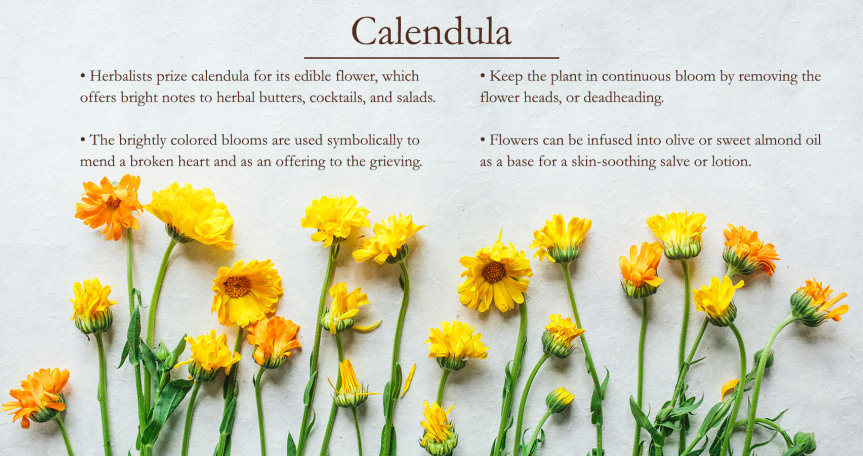
calendula TMCalendula (Calendula officinalis)

Growth and care: Start with real Calendula officinalis seeds (not one of the many hybrids) in flats or sow directly into the outdoor soil. Enjoying cool temperatures, calendula does well with a layer of mulch which traps moisture for use by this showy flowering annual. It is deer-resistant, non-invasive and the butterflies love it!  And by the way, the flowers are edible and will remind you of saffron in both taste and color. They can be used in salads or in cooked dishes.

Medicinal uses: Boasting lasting benefits for oral health, calendula is known to reduce gum inflammation and gingivitis. Teas are soothing to the stomach and can help soothe a sore throat. Calendula flowers are anti-inflammatory and antimicrobial, which is why they have been treasured for centuries for soothing rashes and helping mend wounds.  I keep small containers of calendula ointment around the house and up at the barn. It works as well for irritations and scrapes on the chickens and horses, as it does on us!

Harvesting: Harvest calendula as soon as flowers are fully blooming. Pick them in the morning hours on bright sunny day and harvest regularly to encourage flowering. You can use the flowers fresh, as mentioned above, or you can dry the flower heads in a warm, shaded place for use in salves, ointments or teas throughout the year.


California Poppy (Eschscholzia californica)

Growth and care: Native to California, the Golden or California Poppy can be sown directly into the rich soil. Golden poppies prefer full sun and sparse watering. They are annuals in some parts of the country, though our California poppies are perennial here at our ranch. These beautiful flowers are such a beautiful addition to the garden. The flowers are edible and look wonderful in salads.

Medicinal uses: California poppy is one of my favorite herbs for relaxation and relief of minor aches and pains. It is useful anti-inflammatory and antispasmodic, and is a life saver for those nights when I have overdone it in the garden. California poppy helps me fall asleep and stay asleep. It can be used to ease muscle cramps and spasms and soothe anxiety in someone who is feeling overwrought and irritable. It combines nicely with passionflower, valerian, and other relaxants.

Harvesting: The entire plant is used as a medicine, so it is best to harvest it when there are both flowers and the long seedpods present. Take a small spade or shovel and dig straight down in a circle about 8-10 inches from the plant and lift up the root and entire plant. Rinse off any dirt from the roots, chop the root, leaves, stem and flowers into small pieces, put in a mason jar and completely cover with vodka. Steep a few weeks covered, strain, and you have your tincture. I generally use 50-80 drops at night before bed or a few times per day for minor pain.


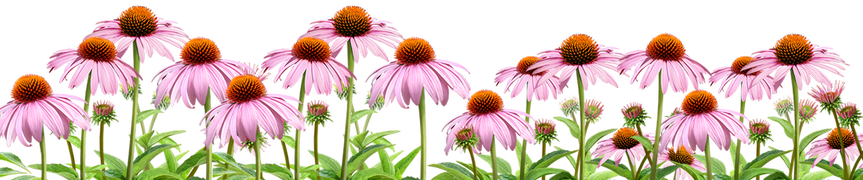
echinacea-finalEchinacea AKA Coneflower (Echinacea Angustifolia, E. purpurea)
Growth and care: Echinacea, also known as coneflower, appreciates well-drained soil in full sun or light shade. These perennials are plants of the open woodlands and prairie and send out deep tap roots that allow them to tolerate periods of low rainfall. They flower throughout the summer. You can scatter seed in the fall or propagate from root cuttings. Echinacea is fabulous in the garden; the butterflies and birds love them!

Medicinal uses: Echinacea is celebrated for its ability to ease colds, sore throats, and respiratory tract infections. I have used the tincture for both my family and patients for more than 35 years. As a matter of fact, many patients told me it was the first herbal medicine that they had ever used that made them really believe that “this stuff works.” Topically, Echinacea is used for cuts and minor abrasions.

Harvesting: You can prune the leaves and flower heads throughout the summer to enhance the health of your plant, as well as encourage blooming. Cut the flowering stem above the node or the place where the leaves/stem emerges from the stalk. The leaves and flower heads can be dried or made into a tincture. Wait for at least two years before harvesting the roots. Harvest in late summer. Sink your spade down about 24 inches from the stalk. Go deep and lean back on the spade to lift the root ball. Take the entire plant. You can dry or tincture the leaves and flowers. Trim some of the roots that you are going to use for medicine, leaving some roots with the crown, so that you can replant it in the garden. Washing the roots that you are going to dry with a good scrub brush. Use a sharp knife to cut the roots into small pieces. These can be set aside in a warm but shaded place for a week to dry and then stored, or you can make a tincture from the fresh roots. (Healthy at Home contains all the information you need for making fresh and dried herb tinctures).


Hyssop (Hyssopus officinalis)

Growth and care: Hyssop is a popular aromatic perennial member of the mint family that displays beautiful purplish blue flowers (or sometimes pink) and boasts a large root system beneath the earth. This is a great flower to plant in your garden to attract pollinators and prefers well-drained soil and partial or full sunlight.

Medicinal uses: Hyssop possesses antiviral properties and promotes the expulsion of mucus from the respiratory system. The use of hyssop flower tea has long been used to ease colds, coughs, and congestion. The tea is quite pleasant and I have found to be a very good expectorant when taken in small doses throughout the day.  When diffused, hyssop essential oil is often used to purify the air indoors. Hyssop leaves can be added to soups and salads.

Harvesting: Cut the flowering tops of hyssop. Harvest and dry the herb at the peak of maturity to assure the highest possible potency of active ingredients.


Lavender (Lavandula angustifolia)

Growth and care: Lavender enjoys full sun and well-drained, slightly alkaline soil. This gorgeous and fragrant perennial does not like to be overwatered and will not tolerate excessive moisture. While there are many different types of lavender, I admit that I am very partial to English lavender or L. Angustifolia. You can grow from seeds but cuttings are quicker. Lavender makes a beautiful border in the garden but also does great in pots.

Medicinal uses: Lavender flowers are often put in small cotton bags and put in linen and clothing drawers for their wondrous aroma. You can make an infusion and add it to a bath to soothe itchy skin or help relax before bed. Lavender essential oil touts many impressive benefits and can be used as aromatherapy to ease insomnia, headaches, and anxiety. Topically, diluted lavender essential oil can help ease sunburn, bug bites and mend wounds. I put ¼ cup of dried lavender flowers in 1 cup of honey and let it steep for 2-3 weeks. This lavender honey can be used on minor wounds to help them heal. And it serves double duty when drizzled over Manchego cheese and served with some grapes on a warm summer evening. Delicious!

Harvesting: To harvest, cut the stems just above the first set of leaves, as soon as some of the flowers just begin to open. Bundle your stems together (no thicker than the opening on a soda pop bottle), tie with a string and hang upside down in a cool, dry place for 3-4 weeks.

Ozark Encyclopedia – B – Burdock – Mountain Man Traditional Healing

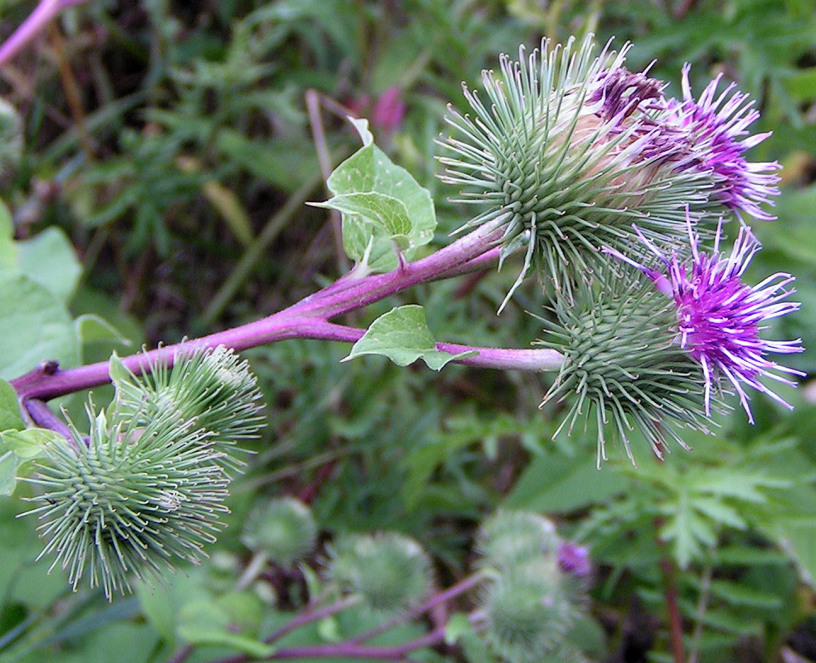
Burdock – Arctium lappa, A. minus, A. tomentosum

Parts used: root, leaf

Traditional uses: Root used in washes for boils and skin complaints. Leaf infusion used to tone stomach. Leaf poultice used for tumors and swellings and to reduce inflammation. Blood purifier, alterative, diuretic, and diaphoretic.

“Alterative, diuretic and diaphoretic. One of the best blood purifiers. In all skin diseases, it is a certain remedy and has effected a cure in many cases of eczema, either taken alone or combined with other remedies, such as Yellow Dock and Sarsaparilla.” ~Grieve MH

Used in formula for chills – “A gentleman in Cyclone, Missouri, tells me that his family made a ‘chill remedy’ that was in great demand; the exact formula was kept secret, he says, but the main ingredient was crushed burdock seeds.” ~Randolph OMF 107

“Burdock roots…boiled were given for chills.” ~Parler FBA II 1747

Beads worn as protection from witchcraft – “A basket maker at Eureka Springs, Arkansas, told me that children are best protected against witches by wearing a neck-lace of dried burdock roots, cut into small pieces and strung like beads.” ~Randolph OMF 291

 Boiled in compound drank for colds – “There used to be a plant called burdock. They’d dig that up and get the root and soak it in whiskey. Then they’d take that and put other ingredients such as nutmeg and butter and ginger in it. You’d drink that hot and go to bed of a night it’d suck that cold out.” ~Carter and Krause HRIO

Medicine for the blood of young folks – “From the weed Burdock (Arctium minus) you make a medicine for the blood of young folks. You boil the weed down and give the youngin’ a dose of 1 tablespoon before meals.” ~Parler FBA II 1357

Burdock, Witch Hazel, and Dogwood as a spring tonic – “Mix burdock roots, witch hazel bark, dogwood bark and take 1 teaspoonful before breakfast in the spring. This is called a spring tonic.” ~Parler FBA II 1369

Root chewed to purify blood – “To purify the blood chew the roots of the burdock plant.” ~Parler FBA II 1516

Root water used for boils – “To cure boils and sores that children have use Burdock roots…that have been soaked in water and drink the water.” ~Parler FBA II 1564

Roots worn against nosebleed – “A necklace of burdock roots…used to be worn to prevent nosebleeding.” ~Parler FBA III 2786

Wild cherry and burdock used for rheumatism – “Wild Cherry bark and Burdock root…boiled and mixed with whiskey is good for rheumatism.” ~Parler FBA III 2974


Carter, Kay & Bonnie Krause Home Remedies of the Illinois Ozarks (HRIO)

Grieve, Margaret A Modern Herbal (MH)

Moerman, Daniel E. Native American Ethnobotany (NAE)

Parler, Mary Celestia Folk Beliefs from Arkansas (FBA)

Randolph, Vance Ozark Magic and Folklore (OMF)

Source: Ozark Encyclopedia – B – Burdock – Mountain Man Traditional Healing

Vinca – Good Witches Homestead

Source: Vinca – Good Witches Homestead

COMMON NAME:  vinca
GENUS:  Vinca
SPECIES:  V. major, V. minor; both perennial
FAMILY:  Apocynaceae
BLOOMS:  spring
TYPE:  perennial
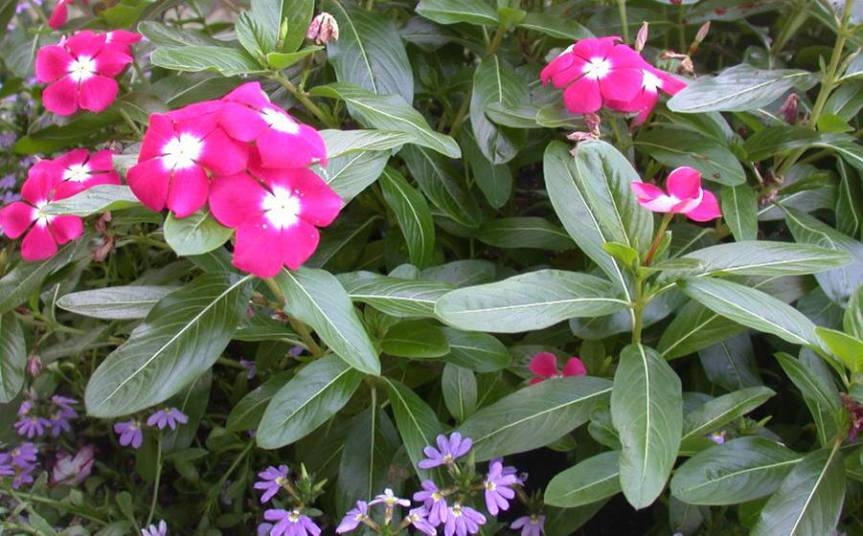
DESCRIPTION:  Perennial vinca is a fast-spreading vine with blue flowers. V. major is a more vigorous grower and has larger leaves and flowers. The annual bedding plant vinca {actually Catharanthus roseus} has attractive five-petaled white and pink-to-red flowers and dark green, glossy leaves. The plants reach a height of 10 to 15 inches and spread almost 2 feet across.
CULTIVATION:  Annual vinca {C. roseus} is extremely heat and drought tolerant and thrives in full, hot sun. It blooms prolifically from early summer until frost. Perennial vinca is particularly useful as a ground cover because it grows equally as well in sun or shade. Blooming, which occurs in late spring, is much better in the sun, however.

Twelve species of this genus are native to Europe. V. major, also known as greater periwinkle, blue buttons, and band plant, and V. minor, known as common periwinkle, lesser periwinkle, and running myrtle, are the two species most widely grown.
Rosy periwinkle, a tropical species, contains an alkaloid necessary to make the drug vincristine, which is used to treat many forms of cancer.
The popular pink and white vinca used as a bedding plant is officially C. roseus, though it was known for many years as V. rosea. It is native from Madagascar to India and is known as rose periwinkle and old maid.
Vinca has been cultivated for centuries. The number of common names alludes to the variety of purposes for which this plant has been used and particularly to the magical powers it was thought to possess. Known as devil’s eye or sorcerer’s violet, vinca blossoms were sometimes worn in the buttonhole as protection against witches. If placed over the doorway, vinca was thought to keep away witches.
During the Middle Ages criminals on the way to the gallows traditionally wore garlands made from vinca blossoms. The Italian name for the plant is the flower of death, and it was often planted on the graves of children.
Belgians believed that the flower was a symbol of virginity and would spread vinca petals in front of bridal couples as they left the church.
It is from the pink and red vinca that the phrase “pink of perfection” originated. An old English book, The Vertues of Herbs, Stones, and Certain Beasts, suggests that “Perwynke when it {the leaf} is beate unto powder with worms of ye earth wrapped about it and with an hearbe called houselyck it induceth love between man and wife it it be used in their meales.”
Red vinca, also called joy of the ground, planted outside the garden gate symbolized an invitation to the passer-by to come in and look at the garden.
The medicinal uses of vinca are varied. Vinca tea made from the blossoms was used, according to an ancient herbal, if the “mother’s milk was running too full.” A tonic made from dried, full-grown leaves was used for intestinal problems. The leaves, mixed with other herbs, were thought to help diabetes. An ointment made from the leaves was used to treat skin disorders, particularly on the scalp, and the raw leaves were chewed to stop a nosebleed. The young shoots were boiled and eaten to prevent nightmares and to soothe nervous disorders and hysteria. Long strands of the creeping vine were wrapped tightly around the legs to ease muscular cramps. Perhaps the favorite reason for indulging in a daily dose of vinca was the superstition that it would help one be happy and comfortable and have grace.
Because it is evergreen, vinca has been chosen as the symbol of fidelity and friendship. The blue blossoms represent the pleasures of memory, red blossoms mean early friendship and white blossoms are symbolic of pleasant recollections.

Vinca has been chosen by the city of Geneva as its floral emblem.


Ozark Encyclopedia – B – Boneset – Mountain Man Traditional Healing

Author: MMH

Boneset – Eupatorium perfoliatum

Parts used: leaf, flower

Traditional uses: Used as a purgative. Infusion taken for colds. Used as a tonic, sudorific, stimulant, emetic and antiseptic. Infusion taken for “ague,” colds and flu. Used as a stimulant. Infusion taken for sore throat. Decoction of plant used as a gentle emetic. Plant used as a fever medicine.

“Stimulant, febrifuge and laxative. It acts slowly and persistently, and its greatest power is manifested upon the stomach, liver, bowels and uterus. It is regarded as a mild tonic in moderate doses, and is also diaphoretic, more especially when taken as a warm infusion, in which form it is used in attacks of muscular rheumatism and general cold. In large doses it is emetic and purgative. Many of the earlier works allude to this species as a diuretic, and therefore of use in dropsy, but this is an error, this property being possessed by Eupatorium purpureum, the purple-flowered Boneset, or Gravel Root. It has been much esteemed as a popular febrifuge, especially in intermittent fever, and has been employed, though less successfully, in typhoid and yellow fevers. It is largely used by the negroes of the Southern United States as a remedy in all cases of fever, as well as for its tonic effects. As a mild tonic it is useful in dyspepsia and general debility, and particularly serviceable in the indigestion of old people. The infusion of 1 OZ of the dried herb to 1 pint of boiling water may be taken in wineglassful doses, hot or cold: for colds and to produce perspiration, it is given hot; as a tonic, cold. As a remedy in catarrh, more especially in influenza, it has been extensively used and with the best effects, given in doses of a wineglassful, warm every half hour, the patient remaining in bed the whole time; after four or five doses, profuse perspiration is caused and relief is obtained. It is stated that the popular name Boneset is derived from the great value of this remedy in the treatment of a species of influenza which had much prevailed in the United States, and which from the pain attending it was commonly called Break-Bone Fever. This species of Eupatorium has also been employed in cutaneous diseases, and in the expulsion of tapeworm.” ~Grieve MH

*** Cautions: Contains trace amounts of the toxin pyrrolizidine. Caution should be taken when using internally. Large doses emetic. *** 

Tea for fevers and chills – “Boneset tea is a favorite remedy for chills, fever, and ague.” ~Randolph OMF 107

Root tea for colds – “My mother says as a child she had malaria with chills every other day and fever. An old aunt of her mothers came to visit and told her brothers to go into the woods and get the root of a certain plant called ‘bone set’. She took the roots, washed them, and boiled them, and made a tea. This my mother had to drink, and it cured her, and she has never had a chill to this day.” ~Parler FBA II 1767

Applied to body for malaria – “A cure for malaria is to take the oil from a plant called a bone set (Eupatorium) and apply to the person with malaria.” ~Parler FBA III 2676


Grieve, Margaret A Modern Herbal (MH)

Moerman, Daniel E. Native American Ethnobotany (NAE)

Parler, Mary Celestia Folk Beliefs from Arkansas (FBA)

Randolph, Vance Ozark Magic and Folklore (OMF)

Source: Ozark Encyclopedia – B – Boneset – Mountain Man Traditional Healing

Keira Marcos

I believe in happy endings...

Storytime with Rachel F Hundred

Creating stories for pleasure

Sibyl Moon

Shh I'm Writing

Sylum Clan

Nothing is True. Everything is Connected.

Laura Bruno's Blog

Medical Intuition, Astrology, Soul Readings, Intuitive Coaching, Tarot, Reiki: Inspiring and Empowering Visionaries, Artists and Healers

Fire Family Conflagration

Weekly Challenge from the 118, 126, & 113

Kiayea's Corner

all things fanfic...

Crystal Dawn Books & Gifts

Crystals, and all things Magical

Starkindler's Realm

welcome to the inner workings of my mind...

The Herb Society of America Blog

Learn • Explore • Grow

Dr. Gary Samuelson

A Journey of Discovery

Kylia's World

Where Canon has No Meaning and Universes Collide

originaltempus

Just another WordPress.com site

Profilers For Christmas

The Crime Drama Advent Calendar

Entangled Wood

Just another WordPress.com site

brokenamethystwrites

Here there be Dragons

Toasterpop's Fiction

Fanfiction and original stories from Toasterpop

Breakaway Consciousness

Seeking Ideas Beyond Conventional Thought

gypsysue

Writting, Drafts, Ideas

Ellywinkle

All Things Wicked and Wonderful

Natalie J. Case

Author, Editor, Photographer, Artist

Your Stories. Your Wall.

Honoring their service and building their legacy. The official blog of the Vietnam Veterans Memorial Fund.

00Q Reverse Big Bang!

Art and Stories for all things 00Q, since 2014

The Wild Hare Project

Where the Writer Comes First.

Anthea Davis

FanFiction Author

Every Fandom Bangs

The home of the Every Fandom Bang and Reverse Bang!

Penumbria

n. pl. pe·num·brae (-br) or pe·num·bras 1. A partial shadow, as in an eclipse, between regions of complete shadow and complete illumination.

This Crooked Crown

Witchcraft for the Everyday and the Extraordinary

This is who I am...

... and this is what I like

Fanfiction Recommendations by Isabelle Disraeli

Fanfiction Recommendations ~ Slash, Femslash, & Het Fanfic Recs

Ellywinkle

EVIL AUTHOR DAY

Convivial Supper

Recipes from the Past

Kaethe Vaako's Fiction

what my demented mind comes up with

Sylum Archive

Nothing is True. Everything is Connected

Quantum Bang

The Multi-Fandom Fix-it Big Bang

by Geep 10

a place for me to share what I've written

Good Witches Homestead

Enchanted World of Magical Gardening ~ Crystals & Gemstones ~ Locally Grown Organic Herbs

tkbenjamin

m/m original fiction and fanfic for adults only

Chestnut NOLA

It's All About The Romance