In recent years, a new disease has been threatening its health. Leaves are falling off prematurely. Trees are dying. Researchers are scratching their heads.
Since its initial detection, this mysterious disease has been spreading throughout 12 states and one Canadian province. Some people are already predicting what a world without American beech might look like.
What is this new disease? How bad is it really? Who is the culprit? And will chemical treatments work this time?
In 1959, a botanist named Ronald McGregor began a two-year search for a wildflower known as Tennessee purple coneflower.
He knew that Tennessee purple coneflower was rare, but he didn’t know how rare the plant actually was.
Despite his best efforts, Ronald McGregor didn’t find a single specimen. In 1968, he stated that Tennessee purple coneflower was possibly extinct.
Today, things are very different. Tennessee purple coneflower is far from extinct. Anyone who knows where to look can find hundreds of plants. The species is so abundant in some locations that it’s nearly impossible to miss.
What happened in the years between 1968 and 2023? How did Tennessee purple coneflower come back from the dead?
In a brand new video (filmed on location in Tennessee!), I share the remarkable story of this fascinating plant.
Any forager will tell you that mushrooms are abundant when rainfall is plentiful.
The reason for this correlation is simple: fungi love water.
Nearly every stage in the life cycle of a fungus requires water — from spore germination, to nutrient uptake, to reproduction, to spore dispersal.
But water isn’t always plentiful. Sometimes it’s scarce. During prolonged absences of rain, many foragers have difficulty finding mushrooms.
I count myself as someone who finds fewer fungi during dry spells, but I’ve also learned how to improve my chances of finding at least a few prized mushrooms when rain is scarce.
In a brand new video, I share 5 tips that will help you find mushrooms in dry weather.
Even when rainfall is plentiful, you probably won’t find many mushrooms in alvars. Instead, you’ll see rare plants that grow nowhere else. To learn about a federally endangered plant that thrives in alvars, check out this recent Instagram post.
Before I share a brand new video, I’d like to remind you that Trees In All Seasons is currently open for enrollment until Monday, May 22.
This online course teaches youhow to confidently identify over 100 trees in every season — spring, summer, fall, and winter. When you enroll, you gain immediate and unlimited access to over 75 exclusive videos that lay the groundwork for successful tree identification.
Tree identification is an excellent skill to learn if you are interested in foraging mushrooms. Many edible mushrooms grow in association with trees. When you learn the basics of tree identification, your understanding of fungal ecology improves.
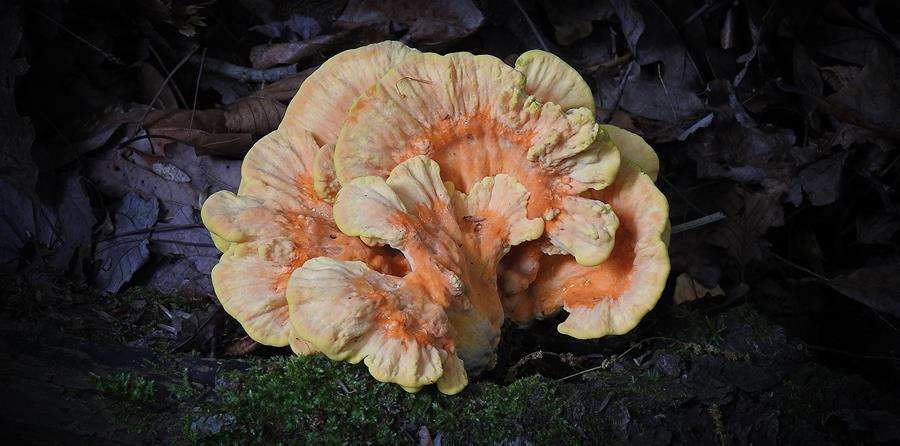
One popular mushroom that grows in association with trees is chicken of the woods. Despite its popularity, chicken of the woods sometimes has a questionable reputation. When this mushroom grows on certain trees (e.g., angiosperms), foragers praise it and consider it undeniably edible. When this mushroom grows on other trees (e.g., conifers), some foragers vilify it and consider it suspect.
I recently spent some time in a conifer-rich woodland and decided to film a video in which I share my thoughts on this controversy.
Is there any truth to the claim that conifer-derived chicken mushrooms are potentially toxic?
Thanks for reading and watching. If you’d like to improve your foraging skills by learning how to identify trees, consider enrolling in Trees In All Seasons by Monday, May 22.
Before I share a new video with you, I’d like to mention that I’ll be opening up registration for my online tree identification course on Monday, May 15.
Trees In All Seasons is an online video course designed to teach you how to successfully identify over 100 trees in every season. Registration will be open for one week only — from Monday, May 15 to Monday, May 22. Once you register, you will have immediate and unlimited access to the course.
If you’re interested in improving your tree identification skills, check your email on Monday for more information on how to register.
Two years ago, I explored a remote bog in northern Pennsylvania. It was the peak of the autumn mushroom season, but I wasn’t there to look for mushrooms. Archery season had just begun, but I wasn’t there to harvest deer either.
After a few hours of wandering through the bog, I eventually encountered the only person I’d see the entire day. His name was Bill and he was heading home for the day.
Taking one good look at Bill, I immediately knew why he was in this isolated part of Pennsylvania. He was hunting deer.
Bill, on the other hand, wasn’t too sure why I was there. He noticed that I had no hunting gear, no camouflage, no truck, and no apparent desire to look for deer.
Instead, I had a tripod, a camera, and a paper map printed off the internet.
After exchanging formalities, I explained to Bill why I was in the bog: to film and photograph balsam fir.
Bill was a lifelong woodsman. He hunted. He fished. He knew his way around the woods better than most people did. Bill spent his entire life in Pennsylvania, but he had never heard of balsam fir.
“We call them all pines,” he said as he watched me point out a few balsam fir trees.
Pines. I wasn’t too surprised to hear that response. Heck, I could even relate. Years ago, I called every conifer a “pine.” It didn’t matter if I was looking at a spruce or a fir. As long as the tree had evergreen leaves and woody cones, it was a pine.
Today, things are different. Disciplined tree study has allowed me to appreciate the beautiful differences between conifers. I now love observing the distinctive Christmas tree shapes of balsam firs. I love watching fir cones fall apart in the autumn season. I love smelling fir leaves (they smell better than any conifer I’ve ever smelled). And I love knowing that firs, despite being in the pine family, aren’t true pines. They’re firs, and thank God they are.
Noticing the distinctions between conifers is an important skill if you want to learn how to identify trees. Tree identification skills are important if you want to improve your ecological literacy.
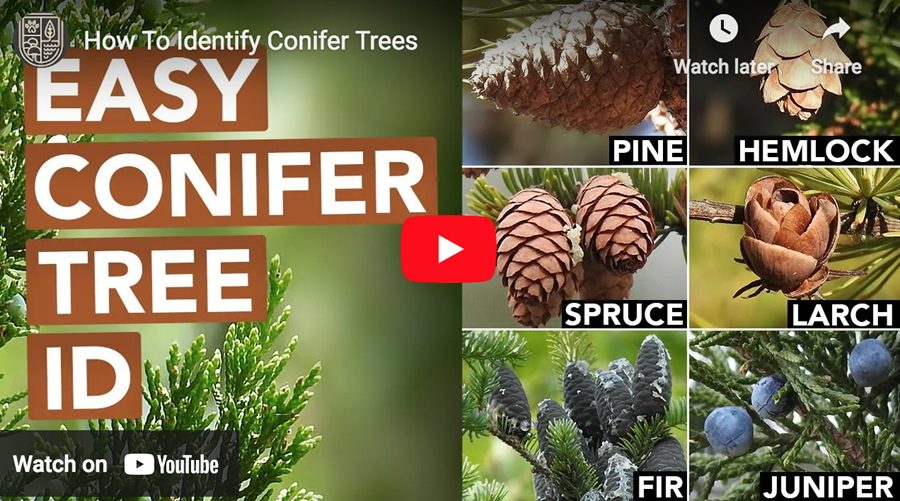
To get you started, I created a video in which I teach you the major differences between conifers.
Thanks for reading and watching. If you are interested in learning how to identify over 100 trees, check your email on Monday for information on how to register for Trees In All Seasons.
A typical walk in nature can be slow. From an outsider’s perspective, it can be painfully slow. A 1-mile walk might take a naturalist 4 hours to complete — a pace 12 times slower than the average walking speed.
While it’s true that a turtle could probably outpace a botanist walking through a flowering floodplain, the point of any nature excursion isn’t momentum.
It’s observation, education, and integration.
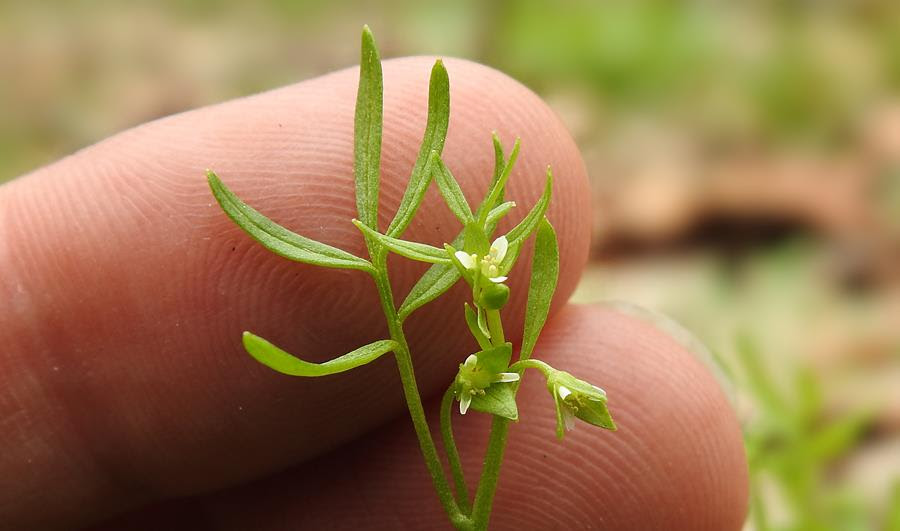
On several walks this year, I’ve halted my pace in order to observe a particular wildflower. Known as false mermaidweed, this plant grows in floodplain forests along rivers and streams.
False mermaidweed is unlike other plants for a few reasons, one of which is the size of its flower. Only a few millimeters wide, this flower is among the smallest of any wildflower in nature. It’s rarely seen by people walking through the woods, which is why even a slow pace isn’t recommended for proper observation.
Rather, complete stillness is.
Despite its small size, false mermaidweed offers immense value. Its stems, leaves, and flowers are edible and can be harvested during the spring season.
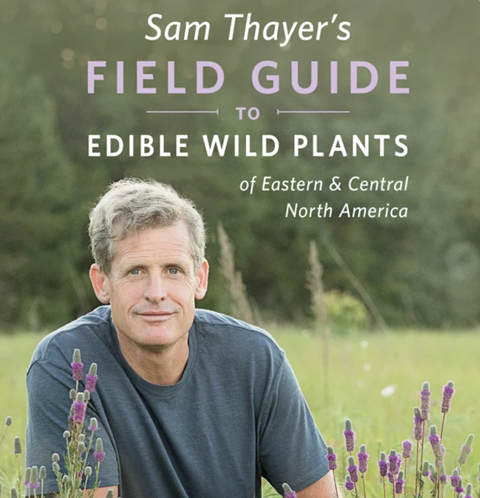
Speaking of edible plants, Sam Thayer is releasing his 4th book on edible plants of North America. Sam is a renowned author, forager, and teacher who travels the continent in search of wild food. His brand new field guide features over 650 edible species and 1,700 color photos, as well as an innovative system for identifying plants during their edible stages. Anything that Sam publishes is brilliant, and this book will be no different. You can pre-order your copy here.
Thanks for reading and watching, and thanks for your continued support!
Over the years, I’ve met all kinds of strange creatures in the forest. Insects, mammals, mushrooms, and the occasional strange human are just a few examples.
But up until recently, I had never encountered shrimp-like creatures.
Truthfully, it never crossed my mind that the forest could accommodate such organisms. Besides pill bugs, which are often referred to as land shrimp, could anything shrimp-like actually live among the pin oaks and red maples? I didn’t think it was possible.
Until I learned about fairy shrimp.
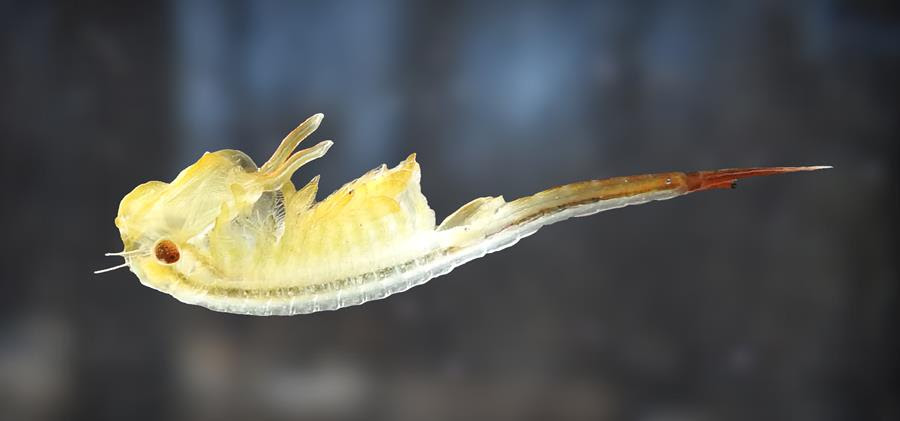
Fairy shrimp are aquatic crustaceans that live and die in the woods. More specifically, fairy shrimp complete their entire life cycle within vernal pools. Eggs hatch in late winter. Larvae transform into breeding adults within a few weeks. By the end of summer, all fairy shrimp perish.
I recently spent a lot of time in the presence of fairy shrimp and decided to capture their short lives on film. To learn more about these amazing creatures, check out the brand new video!
Tracks, pellets, and clouds reveal information to the astute observer who pays attention. Nothing is meaningless when awareness is practiced. Every track, tree, and titmouse means something.
So it goes with mushrooms. Every mushroom relays information to the person who pays attention.
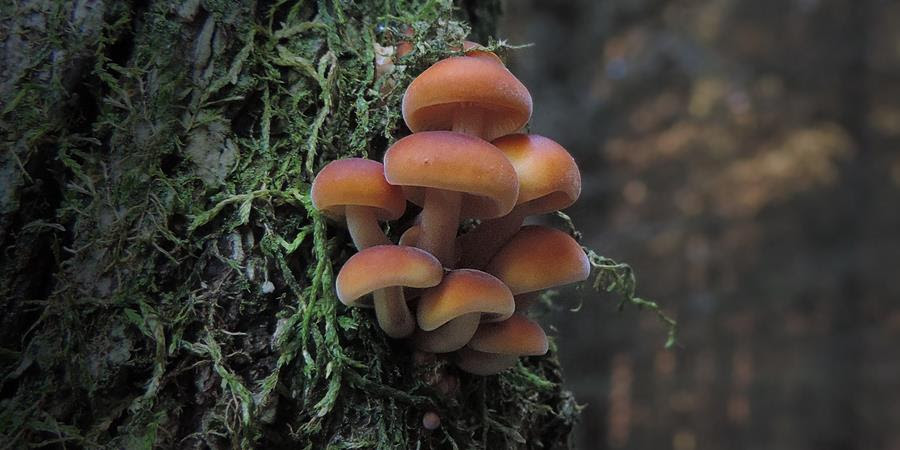
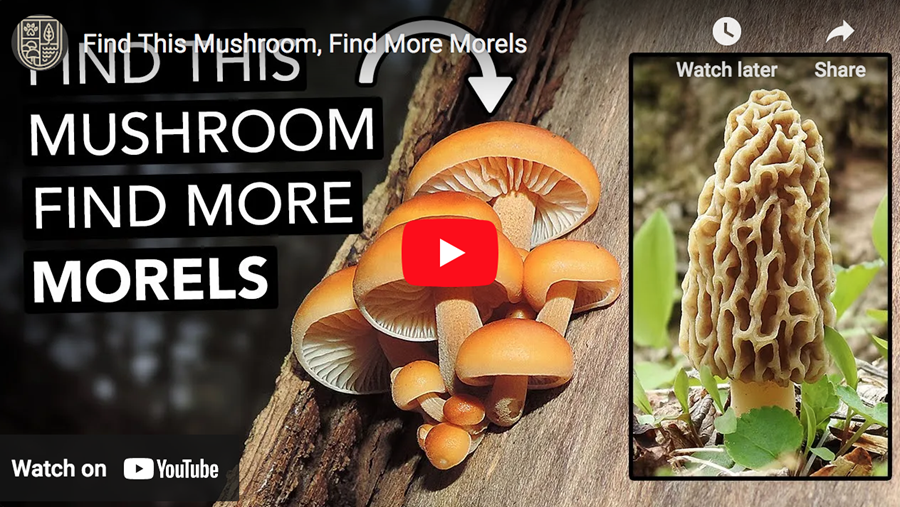
As an example, consider velvet foot (Flammulina velutipes) — a cold-loving mushroom that provides food and medicine. This mushroom reveals something that field guides and educators rarely mention:
Velvet footcan easily help us find morel mushrooms.
I’d also like to mention that today is the last day to receive $100 off your purchase of Foraging Wild Mushrooms. This online course is designed to help you safely and successfully harvest wild mushrooms from the forest, from the field, and from your own backyard — even during the winter season!
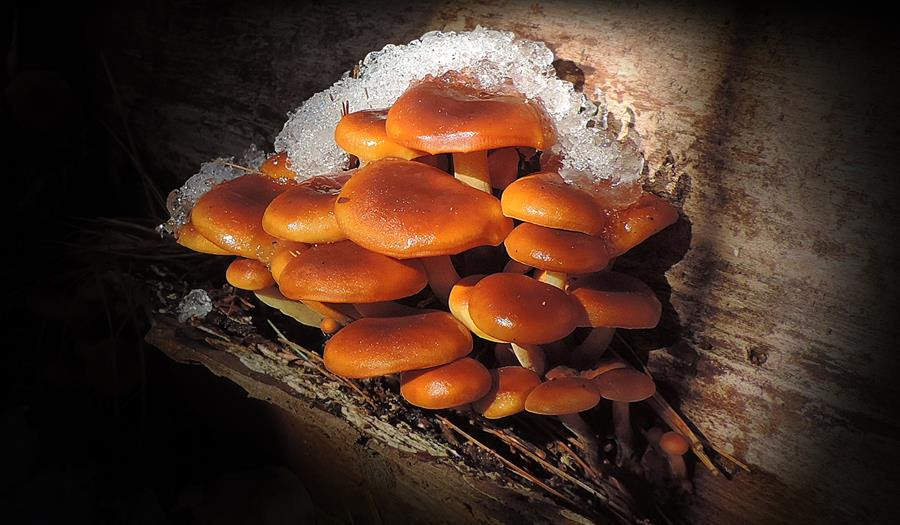
Winter might not seem like an ideal time to find wild edible mushrooms, but let me assure you: edible mushrooms can be found during the coldest months of the year.
Many fungi are psychrophilic (“cold” + “loving”). They require cold temperatures to grow. Examples of habitats that support psychrophilic fungi include permafrost, glacial ice, and off-shore polar waters.
Fortunately, local forests also support cold-loving mushrooms, so while it might be fun to look for fungi on icebergs this winter season, we can simply hunt our local woods instead.
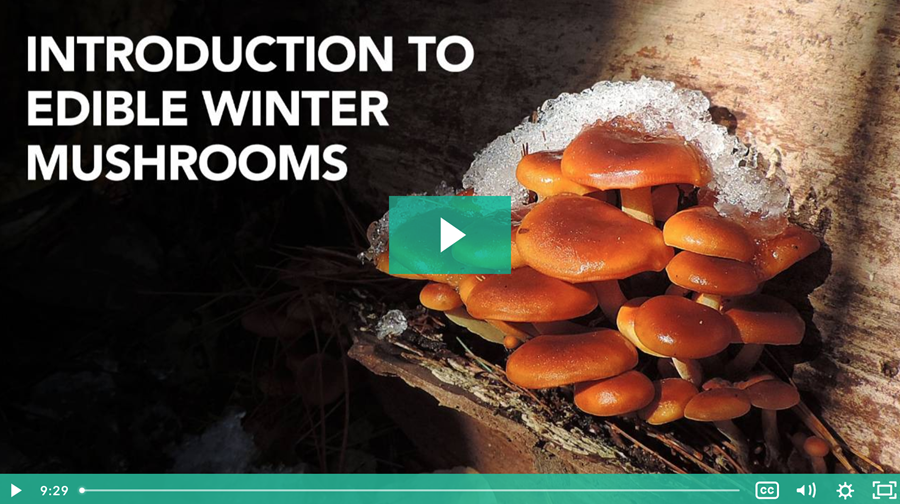
To help you find more edible mushrooms this winter season, I created a video in which I share 6 tips that will greatly improve your harvest. (The 6th tip in particular sounds counterintuitive but is quite effective when you implement it.)
I’d also like to mention that the video is one of over 80 exclusive videos featured in Foraging Wild Mushrooms — a four-season online course designed to help you successfully forage wild mushrooms.
The online course is currently open for enrollment and on sale ($100 off)until Monday, December 19. To get a sneak peek into the kinds of content found within the course, check out the video.
*Please note that this video is publicly available until Monday, December 19. It will only be available to registered students afterwards.
Thanks for reading and watching, and thanks for your continued support.
Years ago, I didn’t have much of an appreciation for the months of October and November.
Becoming a devout student of trees changed that.
In my early days of tree identification, I placed too much emphasis on the spring and summer seasons. Everything was lively and green, I reasoned. What more did I need?
As time went on, I inevitably ran into problems whose solutions would only be found in the autumn season.
I remember seeing an oak in the summer season whose leaves contained deep sinuses. Scarlet oak and pin oak were two candidates, but my beginner’s mind required more information. Once autumn arrived, I easily identified the tree based on its acorns. (Scarlet oak acorns contain concentric rings.)
I also remember seeing an ash tree but being unable to determine its exact identity. Once autumn arrived, I easily identified the tree based on its color. (White ash foliage turns yellow to purplish; green ash foliage turns yellowish-brown.)
I could share more examples of how the autumn season provided answers to my most pressing questions. Suffice to say, I now rank the months of October and November as among the most important for honing tree identification skills.
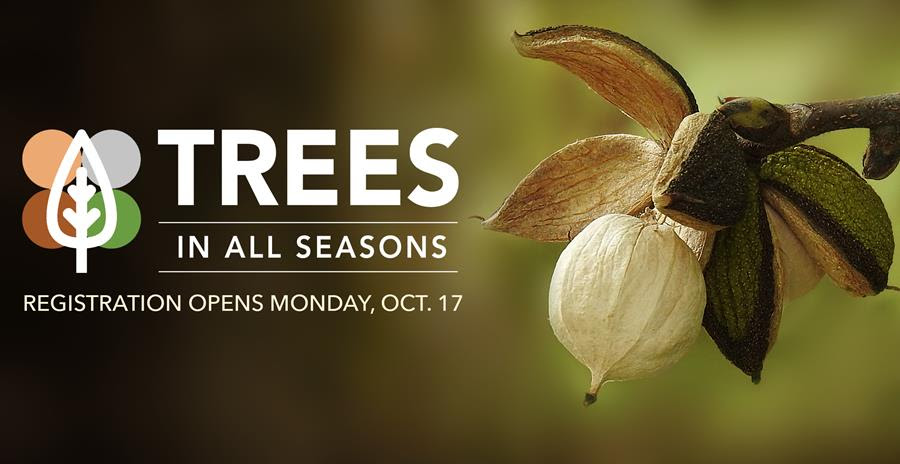
To help you hone your tree identification skills this autumn season, I am opening up registration for my online course next week.
Trees In All Seasons is a four-season online video course designed to help you successfully identify over 100 trees in every season — spring, summer, fall, and winter.
This course is presented entirely online and it features over 75 exclusive videos that lay the groundwork for successful tree identification. If you are interested in identifying trees but are finding it difficult to learn through field guides and apps, consider enrolling as a student in Trees In All Seasons.
Please note: Trees In All Seasons will be open for registration for one week only from Monday, October 17th to Monday, October 24th. Upon registration, you have immediate access to all course content and you can watch the videos at your own pace.
To register for Trees In All Seasons, mark your calendar for Monday, October 17th and visit this link.
All additional information (including course structure, outline, and cost) will be posted on Monday.








 Paths I Walk
You must be logged in to post a comment.