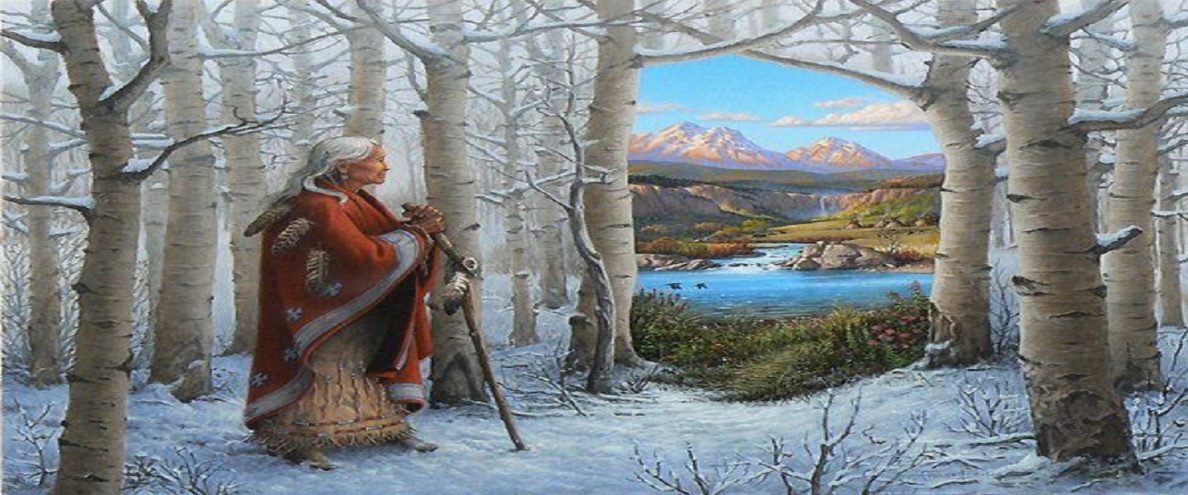
The Forest We Lost — And The One That Came Back

Years ago, I started reading books on Taoism.  One Taoist concept I learned early on was the inevitability of change.  Nothing stays the same, Taoists tell us.  Things move, shift, grow, and fade, whether we’re paying attention or not.

Years later, I became interested in ecology, and I began to wonder:  how do forests change?  Specifically, I began to wonder how forests in the northeastern United States have changed over the past 400 years.

Turns out, I wasn’t the only one wondering about this.  Ecologists have been trying to figure this out for a long time.  What they’ve found is somewhat surprising and even a bit paradoxical:  

After 400 years of intense land use, the northeastern forest is both largely unchanged and completely transformed.

How can that be?  In a brand-new video, I explore this remarkable paradox.

One last thing:  I have a surprise to share with you next Monday, so be sure to check your inbox!

— Adam Haritan

Humans Don’t Consciously Need Nature

There’s a question that runs through my mind almost every single day:

Why do things look the way that they do?

Of course, I’m mostly referring to why things in nature objectively look a certain way — why a particular forest is coniferous, or why calcium-loving plants grow in certain wetlands.

I think a lot of people ask related questions, but what I’ve noticed over the years is that some of us frame these questions through a negative lens.

We might wonder, for example, why bad things are happening to certain ecosystems, why some landscapes look rough, and ultimately why humans are so disconnected from nature.

I don’t claim to know with absolute certainty why these things are happening, but I think the answer has something to do with this:

Humans don’t consciously need nature.

In a brand-new video, I explain what I mean.

Thanks for reading and watching, and thanks for your continued support!

— Adam Haritan

Old-Growth Forest Myths Vs Reality

I really enjoy spending time in old-growth forests.

I admire the sights, I love the sounds, and I like that old-growth forests can make a human feel small, yet still important. 

Old-growth forests once covered large areas of land in North America, but these forests are far less common today.  

As a result, we might find ourselves imagining things that aren’t entirely true.

We might believe, for instance, that North America was an endless expanse of old-growth forest at the time of European settlement.  We might also believe that North America’s old-growth forests were — and still are — untouched and free from disturbance.

But how much of what we believe is true?

In a brand new video, I explore a few old-growth forest myths and discuss why our modern perceptions often miss the full story.

You can watch the video here.

Thanks for reading and watching, and thanks for your continued support!

— Adam Haritan

Are Pawpaws Neurotoxic?

First, I’d like to thank everyone who has registered for an upcoming ecology outing.  The Old-Growth Forest Ecology Outings are nearly full, and fewer than half the spots remain for the Summer Forest Ecology Outings.

If you’d like to join us on August 30 or August 31 for an exciting day of ecology and geology, you can register here.  These outings are great opportunities to explore beautiful ecosystems while learning tree identification, mushroom identification, forest history, geologic influences on plant communities, and much more.

I’d love to see you there!

And now on to the new video…

Are pawpaws neurotoxic?

It sounds like an absurd question to ask.  After all, many people eat these wild fruits every year without experiencing any apparent negative effects.

But let’s consider the following pieces of information:  

Studies have linked the consumption of fruits in the Annonaceae family to neurodegeneration in humans.  Pawpaw, it turns out, is in the Annonaceae family.

A compound isolated from pawpaws is neurotoxic in laboratory studies.

And a case report from 2020 describes a man who developed a possible variant of a neurodegenerative disorder called progressive supranuclear palsy.  The man was known to eat lots of pawpaws.

Of course, none of this information is conclusive, but it does make some people wonder.  Are pawpaws neurotoxic?  Should we avoid eating them?  Or is this issue overhyped?

In a brand-new video, I share my thoughts.

Thanks for reading and watching, and thanks for your continued support!

— Adam Haritan

Upcoming Forest Ecology Outings (New Events!)

I’m excited to announce that I’ll be leading a series of forest ecology outings, and I’d love for you to join me!

On August 30 and 31, 2025, I will be leading two Summer Forest Ecology Outings at McConnells Mill State Park in Pennsylvania.

Designated a National Natural Landmark for its outstanding features, McConnells Mill is a treasure trove for learning.  Central to the park’s landscape is the Slippery Rock Gorge — a deep ravine carved by powerful forces, exposing millions of years of ancient bedrock and currently supporting mature forest ecosystems.

On October 11 and 12, 2025, I will be leading two Old-Growth Forest Ecology Outings at Cook Forest State Park. 

Located in northwestern Pennsylvania, Cook Forest is home to one of the last remaining old-growth forests in the entire region, with 11 old-growth areas spanning over 2,300 acres.  One of the areas within the park, the Forest Cathedral, contains arguably the finest concentration of old-growth trees in the northeastern United States.

During these outings, we will walk through deciduous and coniferous woodlands while discussing forest ecology.  We’ll investigate big trees and big rocks.  We’ll see historic landmarks, and we’ll discuss important geological influences that have drastically shaped the landscape.

In addition to learning key characteristics of mature and old-growth forests, participants will learn tree identification, mushroom ecology and identification, the role of fire as an ecological agent, ways to interpret forest history, and much more.

These outings are great opportunities to learn, explore, and connect with nature in spectacular settings.  They’re also great opportunities to meet wonderful people.

Please note:  Each outing is a single-day event.  To maximize your learning experience, space is limited and registration with payment in advance is required to secure your spot. 

To learn more and to register, click here and choose the appropriate session.

I’d love to see you there!

—Adam Haritan

Can You Help Me Find Old-Growth?

Greetings,

I’d like to share one update and ask you a question.

Update:

For the past 7 months, I’ve been busy creating a brand-new online course on old-growth forest ecology.  During this time, I’ve been visiting different old-growth forests and documenting their trees, ecological indicators, geological influences, relationships, and stories.  

It’s coming together nicely, but I’d like to ask you for your help.

Question:

If you’re familiar with old-growth forests in western North America, can you offer any recommendations on places to visit?  

Up until this point, I’ve been documenting eastern North American old-growth forests.  In September of this year, I’ll be spending a few weeks in northern California and Oregon.  I may also consider visiting the state of Washington.

If you’ve visited any old-growth forests in western North America, I’d appreciate your recommendations!  Do you have any favorites?  Are there any “must-see” forests?  Can you point me in the direction of notable trees?  Is there any other advice you can share?  I’ve done quite a bit of research on my own, but I would still love to hear your thoughts.

You can simply reply to this email to reach me.

Thank you for your help!  I really appreciate it.

—Adam Haritan

Is Black Walnut Killing Your Plants

“Black walnut kills plants.”

I first heard this statement many years ago.  Occasionally, I still hear some version of this claim:  Black walnut engages in warfare by releasing a chemical into the soil.  This chemical kills or inhibits the growth of plants.

But is this entirely true?  Does black walnut actually kill plants?

Some people say yes.  Other people say no.

In a brand-new video, I share several key findings from scientific studies and personal observations that shed some light on this controversial topic.

You can watch the video here.

Thanks for reading and watching, and thanks for your continued support!

— Adam Haritan

Summer Forest Ecology Outing — New Event Scheduled!

I’m excited to announce that I’ll be leading a Summer Forest Ecology Outing in a few weeks, and I’d love for you to join me!

This outing offers a unique in-person opportunity to learn the fascinating ecology and geology of a remarkable area:  McConnells Mill State Park in Pennsylvania.

Designated a National Natural Landmark for its outstanding features, McConnells Mill State Park is a treasure trove for learning.  Central to the park’s landscape is the Slippery Rock Gorge — a deep ravine carved by powerful forces, exposing millions of years of ancient bedrock and currently supporting mature forest ecosystems.

During this outing, we will walk through deciduous and coniferous woodlands while discussing forest ecology.  We’ll investigate big trees and big rocks.  We’ll see historic landmarks, and we’ll discuss important geological influences that have drastically shaped the landscape.

In addition to learning key characteristics of mature forests, participants will learn tree identification techniques, mushroom ecology and identification, the influence of glacial activity on landscape development, ways to interpret forest history, and much more.

This outing is the perfect opportunity to learn, explore, and connect with nature in a truly spectacular setting.

Interested?  Here are the details:

When: Saturday, July 12 or Sunday, July 13, 2025 (Choose one date; both programs will cover the same material.)
Where: McConnells Mill State Park, Pennsylvania
Time: 10:00 am — 4:00 pm

To maximize your learning experience, space is limited and registration with payment in advance is required to secure your spot.

To learn more and to register, click here and choose the appropriate session.

I’d love to see you there!

—Adam Haritan

Does Living Near A Golf Course Increase Your Parkinson’s Risk?

Green isn’t always good.  In fact, green can sometimes be associated with neurodegenerative diseases.

This is especially true when we take a look at golf courses.  Golf courses use heavy amounts of pesticides to maintain uniform conditions.  These chemicals kill undesirable plants and insects, but they also weaken human health.

Researchers have known for a long time that pesticides pose significant risks to human health, ranging from acute poisoning to chronic issues like cancer and reproductive problems.  A brand-new study adds even more evidence to the growing body of research.

Published a few weeks ago, this latest study found an association between living close to a golf course and the odds of developing Parkinson’s Disease.  People living within 1 to 3 miles of a golf course were found to be at greatest risk.

What is it about living close to a golf course that’s associated with developing Parkinson’s Disease?  Is it breathing in airborne chemicals?  Is it groundwater contamination?  Does geology have anything to do with it?

In a brand-new video, I answer these important questions.  I also address whether or not it’s safe to forage and hunt near golf courses.

You can watch the video here.

Thanks for reading and watching, and thanks for your continued support!

— Adam Haritan

American Chestnut: Just How Massive Was It?

Every now and then, I’ll come across a decent-sized American chestnut and wonder:  “Just how big did these trees get?”

I’ve always read that American chestnut was a dominant tree throughout eastern North American forests.  I’ve heard people describe American chestnut as a tree that towered above all others.  I’ve even seen references to American chestnut as “the redwood of the east.”

But how much of this is true?  Was American chestnut an exceptionally massive tree?

Unfortunately, it’s difficult for us to know for sure.  A fungal disease known as chestnut blight killed nearly every large American chestnut throughout the first half of the 1900s.  Today, American chestnut still exists on the landscape, but almost always as a smaller tree.

Ecologists in recent years have been wondering about the size of American chestnut in pre-blight forests.  I’ve been wondering about it too, which is why I decided to film a video on the topic.  It turns out that we may have some answers after all.

Has the size of American chestnut been exaggerated in recent decades?  What do sources from the 1800s tell us?

You can watch the brand-new video here.

Thanks for reading and watching, and thanks for your continued support!

— Adam Haritan