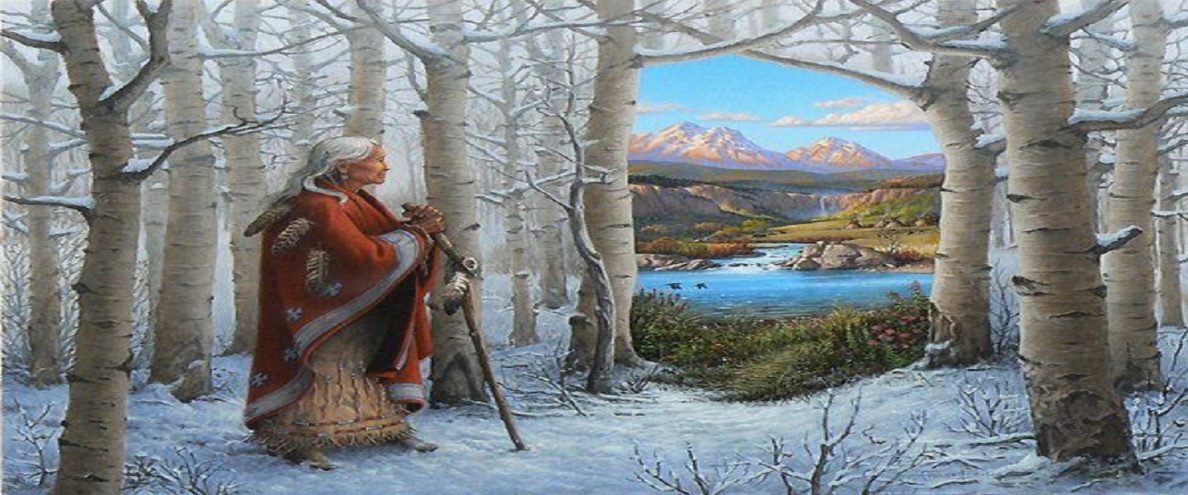
The Great Hemlock Decline


I can’t say I’m the biggest fan of Shakespeare, but a particular line from Hamlet has always stuck with me.
“There is nothing either good or bad, but thinking makes it so.”
These words come to mind particularly when I think about the current state of our forests.
Understandably, people are worried about the “unprecedented changes” occurring in woodland ecosystems. Invasive species are taking over, diseases are killing trees, and desirable organisms are failing to regenerate.
At any given moment, the state of our forests can seem rather bleak.
But when we recall the words of William Shakespeare, our perception of this matter shifts — especially when we consider something fascinating about eastern hemlock.
Many people know that an insect is currently threatening the health of eastern hemlock. Nothing about this situation seems good until we understand a critical piece of information: eastern hemlock is no stranger to threats.
In a brand new video, I discuss an important event of the past that may help us better understand modern-day forests.

Thanks for reading and watching, and thanks for your continued support!
— Adam Haritan
Sunny Lemon Tart : Midsummer Floral Reverie
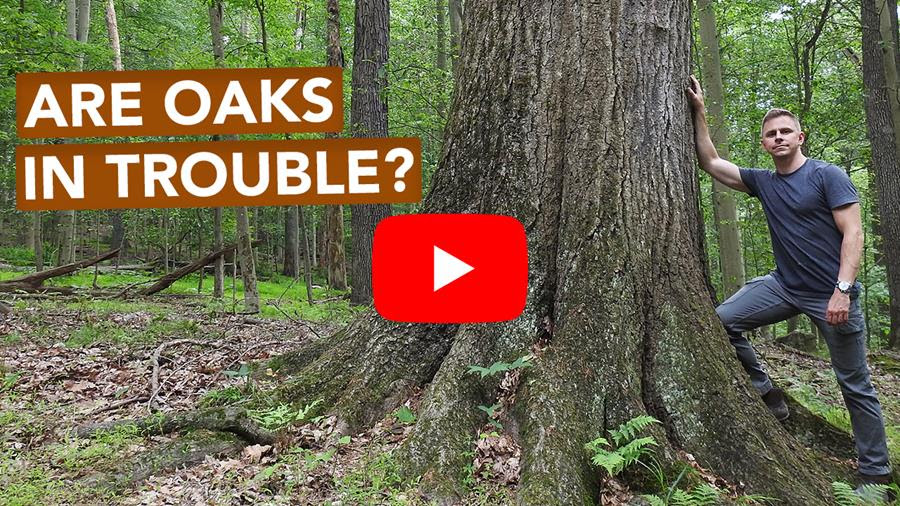
Are Oaks in Trouble?

Before I share a brand-new video with you, I’d like to remind you that enrollment for Exploring Wild Ecosystems closes on Monday, June 3.
This online course improves your knowledge of ecology by introducing you to fascinating terrestrial and wetland ecosystems.
If you want to develop ecological literacy and be able to read landscapes more effectively, consider enrolling in Exploring Wild Ecosystems today.
Speaking of reading landscapes more effectively, we can predict future ecosystems based on current observations.
Consider a mature oak forest, for example.
Looking at an oak forest today, we might hope that conditions will remain stable for many years. Any native plant enthusiast will tell you that oak forests are repositories of biodiversity. Without oaks, other organisms that depend on oaks suffer.
But a quick glance at mature oak forests today tells us that significant changes are occurring. These changes, it turns out, aren’t particularly favorable to oaks.
Ecologists are worried about something that’s occurring underneath the towering oaks. This phenomenon has been happening to oak forests for the past 100 years. According to ecologists, it will persist without active management.
In a brand-new video, I address this important ecological issue.
Thanks for reading and watching, and thanks for your continued support!
— Adam Haritan
I never met the man who wrote these words


“Each place is itself only, and nowhere repeated.” —Barry Lopez
I never met the man who wrote these words, but I imagine his definition of place wasn’t limited to cities, towns, and suburbs.
As a writer of various nature-themed topics, Barry Lopez undoubtedly included tundras, rivers, canyons, forests, meadows, and deserts in his definition of place. No two of them are alike, he wrote. Each place has a story we can learn.
When we visit a bog and decipher its origins; when we visit a savanna and study the role of fire; when we visit a swamp and see how different it is from a marsh, we learn how remarkable each place is.
For the past 18 months, I’ve been working on a new online course designed to highlight these fascinating ecosystems. I’m excited to announce that Exploring Wild Ecosystems will be open for registration on Monday, May 20.
If you want to strengthen your ecological skills and improve your understanding of nature, consider enrolling in this brand-new online course.
Please note: Exploring Wild Ecosystems will be open for a limited time. Upon registration, you can immediately access all course content and view the lessons at your own pace. To register, mark your calendar for Monday, May 20, and visit this link. All additional details will be posted on Monday.
I hope to see you in there!
—Adam Haritan
P.S. If you haven’t read any books by Barry Lopez, I encourage you to do so!
Herb of the Month: Love of Lavender
Foraging Wild Weeds & Seasonal Greens
Advice On Finding Morel Mushrooms


“Let it be still, and it will gradually become clear.”
To the best of my knowledge, Lao Tzu wasn’t a mycologist, but his famous text — the Tao Te Ching — could be considered a treatise on how to find morel mushrooms.
Reading the quote above, we are reminded that our desperation to find morels can complicate our search. A desperate mind, after all, is a muddied mind. A calm mind, on the other hand, is a clarified mind that can see what’s directly in front of it (in this case, a morel mushroom).
Here’s another quote from chapter 55: “The master never expects results; thus the master is never disappointed.”
Disappointment afflicts many foragers who struggle to find morels. Such disappointment can lead to sadness, anger, and frustration. It’s better to appreciate the sunshine, fresh air, and singing birds than to feel like the morel gods have cursed us.
Lao Tzu was a wise man. His words were very powerful. My words will never be as eloquent as his, but I still feel obligated to share some of my own advice on finding morel mushrooms.
What skills must we develop? Where do we look? How do we deal with FOMO (the fear of missing out)?
In a brand new video, I summarize my thoughts. You can watch the video here.

And in case you missed the announcement, I’m releasing a new online course in May. Exploring Wild Ecosystems is designed to improve your knowledge of ecology by introducing you to fascinating ecosystems — including alvars, barrens, bogs, dunes, fens, glades, savannas, vernal pools, and others!
To receive updates, please consider joining the notification list.
Thanks for reading and watching, and thanks for your continued support!
— Adam Haritan
 Paths I Walk
You must be logged in to post a comment.