Summer Savory – Herb of the Month

The Herb Society of America's avatarThe Herb Society of America Blog

By Maryann Readal

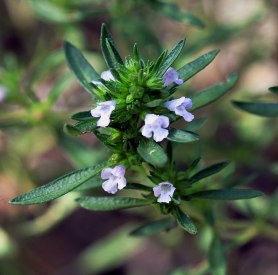
Satureja_hortensis_Prague_2011_3 by Karelj via wikimedia commonsIt is summer and a perfect time to learn about summer savory, Satureja hortensis. If you have this spicy herb growing in your garden, plan to start using it this summer. It is an easy-to-grow, low-growing annual with white to pale pink flowers and narrow leaves. When in full bloom, the plant looks to be “covered with snow” (Clarkson, 1990). Summer savory requires full sun and good drainage, and can easily be started from seed. It may reseed if given enough sun and water. The leaves are very fragrant and have a warm, peppery taste, which is stronger before the plant flowers. Trim summer savory throughout the summer to encourage new growth. The leaves dry easily and can be stored for later use. Winter savory, Satureja montana, is its stronger, perennial cousin.

Like mint, sage, rosemary, thyme, and oregano, summer savory is in the Lamiaceae…

View original post 879 more words

Sacred Trees in the Americas – Eastern Sycamore (Plantaus Occidentalis) – Magic, Medicine, Ecology and Uses

Dana's avatarThe Druid's Garden

The glorious sycamore tree! The glorious sycamore tree!

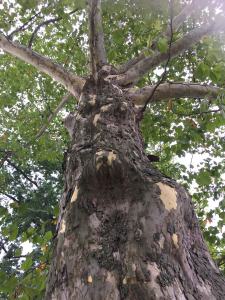
Here in Western Pennsylvania, we have a wonderful set of scenic rivers that lend themselves to kayaking, whitewater rafting, and overnight kayak camping trips. This is one of my favorite pastimes, especially as climate change has had the tick population skyrocket in the last 10 or so years and pushed us into more heatwaves. One of the quintessential features of our waterways here are the Sycamore trees. Sycamores are easy to spot even at a distance: the mottled bark, dark on the bottom and giving way in patches to light white tips; the craggy and interesting growth formation, making the trees appear whimsical and distinct. As you kayak through many parts of Western PA on our larger rivers, you will encounter these little islands that are held there by many old, weathered and small sycamores.  As you drive through the countryside, you will find many river…

View original post 1,709 more words

Herbal Trees and Shrubs of the Plains and Prairies

The Herb Society of America's avatarThe Herb Society of America Blog

By Katherine Schlosser

From place to place, season to season, and year to year,

the colorful mixtures and combinations of flowering herbs

are influenced by permutations of weather, grazing,

competition with grasses, and seed abundance.

~David S. Costello

Since childhood the words “For amber waves of grain, For purple mountain majesties, Above the fruited plain” colored my impression of the landscape of the western part of our country. Visits to grandparents, aunts and uncles, and masses of cousins didn’t disappoint my vision. It wasn’t until adulthood that I fully understood that those words were essentially a drone fly-over.

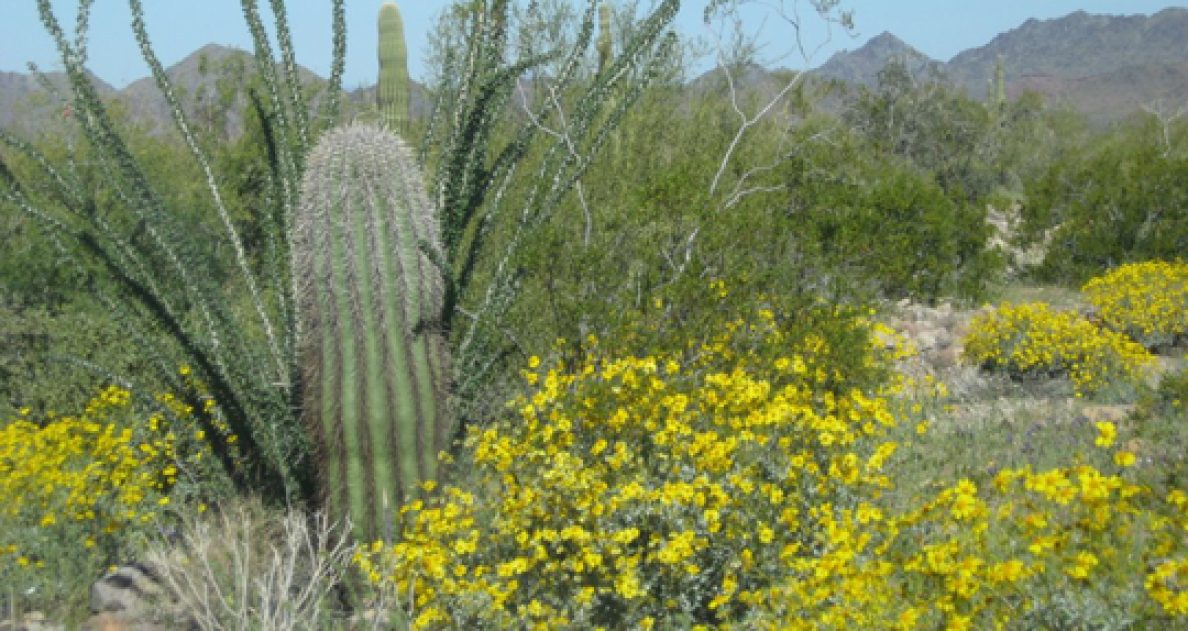
For some of us, it takes paying attention not only to the larger landscape, but to the details as well to appreciate the enormous botanical diversity of our country. From the tallest coast redwood (Sequoia sempervirens) to the tiny littleleaf pyxie moss (Pyxidanthera brevifolia)and its 1/4-inch flowers peering…

View original post 1,665 more words

The Practice of Deep Gratitude

Dana's avatarThe Druid's Garden

At the heart of the challenges, we face in transitioning from a life-destroying culture to a life-honoring one is to disentangle the many underlying myths and narratives that subconsciously or consciously drive our behaviors.  These myths include the myth of progress, the myth of infinite growth, the lure of materialism, and the assumption that nature is there only to serve our needs. These myths have, in part, been the underlying forces that have driven us to the present challenges of our age. I believe many of these myths are rooted in colonialism, and if we are ever to end this awful practice and its centuries-old impacts, we must address them. They drive both larger systems at play as well as each of us. And while we can look to broader

A nature mandala offered in thanks for our land that provides so much to us.

systems of power and privilege…

View original post 1,731 more words

Human Touch

Full Blessing Moon | Making Your Own Blessing Oil

Full Blessing Moon Ritual Blessing Oil DIY Spirit de la Lune

This full moon in Capricorn is a very optimistic and positive one! It will feel like a breath of fresh air after some of the heavier astrological influences of June.

This full moon is sextile Jupiter which adds to the cheerful nature. Mercury went direct and the Sun shifted into Cancer. The sun is high in the sky and this full moon week supports playfulness, pleasure and soaking in the good times of life.

Don’t forget to take time to smell the flowers this full moon week!

The keyword for this card is “contentment” which is a powerful word. Contentment represents being in a place of peaceful satisfaction.

Satisfaction, gratitude, appreciation, and contentment are powerful emotions that bring us right into the present moment where all of our power is.

However, sometimes when we struggle in life, it can be difficult to feel gratitude or appreciation even when we know it will help. That is why contentment is so important.

Read full article at: Spirit de la Lune ~ Full Blessing Moon | Making Your Own Blessing Oil

Wildcrafting Your Druidry: A Local Materia Medica and Herbalism Practice

Dana's avatarThe Druid's Garden

As we continue to explore the concept of wildcrafting druidry and sacred action that is, developing a spiritual practice and daily life that is fully localized and aligned with nature right outside your door, it is a useful time to consider the role of herbalism and developing a local materia medica.  In herbalism terms, a materia medica is a body of herbal and plant knowledge for the curing of diseases and the promotion of good health.  For example, any book on herbalism that includes entries on herbs and their healing properties is a materia medica.  By starting to develop a local materia medica for your area, you can learn more about the incredible healing properties of plants in your area and develop a sacred connection with them.  You can start entering into a mutually beneficial, reciprocal relationship with the land and support your own health–this is because not only are…

View original post 1,752 more words

Poison Hemlock — The Plant We Love To Hate

Poison hemlock gets an incredibly bad rap these days. 

It’s weedy.  It’s aggressive.  And it’s lethally toxic.

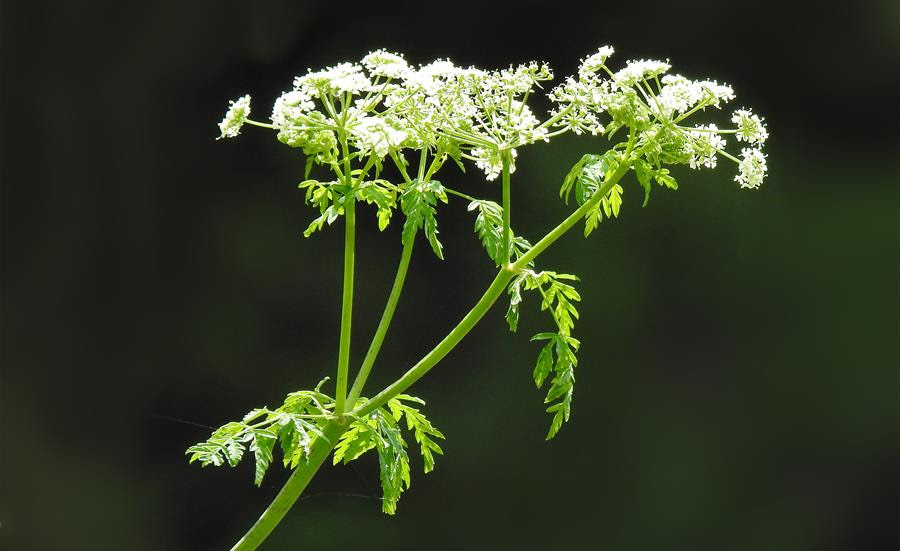
Here in the United States, poison hemlock grows in almost every single state.  Because many of us will inevitably encounter a naturalized population of poison hemlock, it’s important that we learn its key features and its effects on the human body.

The trend these days is to write scathing articles about poison hemlock where personal feelings eclipse objective information.  Today, however, I’ll offer something different.

In a new video, I don’t get too angry talking about poison hemlock, but I instead try to remain fairly neutral when discussing its attributes. 

If you’re interested in learning more about one of the most toxic plants in the world, check out the brand new video!

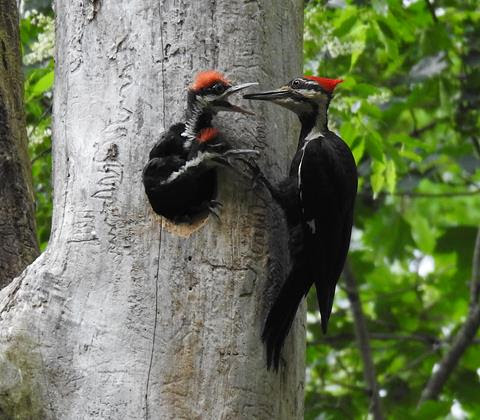
Last year, I stumbled upon a pileated woodpecker nest for the first time.  Exactly one year later, I encountered a second site in a different location.  To read about my recent experience, and to view more photographs of the nest, check out the latest Instagram post!Click to view post

Thanks for reading and watching, and thanks for your continued support!

-Adam Haritan

Where has the Goddess Gone?

Who are You?