One very special way that The Herb Society of America shares the gift of herbs is by awarding Samull Classroom Herb Garden Grants. Each year ten grants are awarded for $300 each. Read about some of the exciting projects from some amazing schools across the country that have received these grants.
The garden program at the Tucson Waldorf School recently completed an herb garden in their container garden area. This collection of stock tanks and pots is located near the entrance of the school and is available for people to admire, learn from, work on, and glean. It is their hope that community members will stop by the garden and collect herbs to complement their meals.
Somerset Academy Boco reported that with the HSA Samull Grant, they established an herb garden while implementing these learning objectives: 1. Apply practical knowledge in the form of gardening…
In 1959, a botanist named Ronald McGregor began a two-year search for a wildflower known as Tennessee purple coneflower.
He knew that Tennessee purple coneflower was rare, but he didn’t know how rare the plant actually was.
Despite his best efforts, Ronald McGregor didn’t find a single specimen. In 1968, he stated that Tennessee purple coneflower was possibly extinct.
Today, things are very different. Tennessee purple coneflower is far from extinct. Anyone who knows where to look can find hundreds of plants. The species is so abundant in some locations that it’s nearly impossible to miss.
What happened in the years between 1968 and 2023? How did Tennessee purple coneflower come back from the dead?
In a brand new video (filmed on location in Tennessee!), I share the remarkable story of this fascinating plant.
Any forager will tell you that mushrooms are abundant when rainfall is plentiful.
The reason for this correlation is simple: fungi love water.
Nearly every stage in the life cycle of a fungus requires water — from spore germination, to nutrient uptake, to reproduction, to spore dispersal.
But water isn’t always plentiful. Sometimes it’s scarce. During prolonged absences of rain, many foragers have difficulty finding mushrooms.
I count myself as someone who finds fewer fungi during dry spells, but I’ve also learned how to improve my chances of finding at least a few prized mushrooms when rain is scarce.
In a brand new video, I share 5 tips that will help you find mushrooms in dry weather.
Even when rainfall is plentiful, you probably won’t find many mushrooms in alvars. Instead, you’ll see rare plants that grow nowhere else. To learn about a federally endangered plant that thrives in alvars, check out this recent Instagram post.
Most of the teas that we drink these days are blended at some point. Even teas that seem simple such, as ginger or English Breakfast. The reasons for blending teas are varied but the most important one is this: blended teas taste good. My favorite reason is that when blending teas, the possibilities are endless!
There is nothing magical about the process of tea blending. Just like cooking, it mostly takes experimentation and creativity. Though big companies have whole departments dedicated to flavor experimentation and precise tea blending, there is no reason that we cannot all do this in our home kitchens. The hard part is knowing how to start.
Here are a few tips for blending:
Know your ingredients – not all herbs taste the same even if it seems like they should. Taste each ingredient individually so you can understand it before you start blending…
The summer solstice is a time when the natural world is ablaze with life, when the energies of light and warmth are at their peak. This celestial dance of light and shadow held profound significance for our ancestors. It was a time of celebration and thanks for the coming harvests, and a time to relax for a bit and play. Still today, some cultures celebrate by kindling fires, symbolizing the transformative power of the sun, and many communities gather to dance, sing, and rejoice in the abundance of the season.
Within the realms of folklore, the summer solstice is a moment in time when the veils between the human world and the realm of faeries grow gossamer thin. It is said that on the summer solstice eve, you may catch a glimpse of these ethereal beings, frolicking amidst the meadows and woodlands, their presence evoking a sense of wonder and…
Lovage, Levisticum officinale, is The Herb Society’s Herb of the Month for June. It can be a difficult herb to find in nurseries where I live in Texas. This spring, though, I did find a nice-looking lovage plant and decided to give it a try. After doing some research, I learned that lovage is native to the Mediterranean area and Southwest Asia. It is an easy-to-grow perennial that can reach a height of six feet and a width of three feet. Needless to say, I had it planted in the wrong place, and I had to move it to give it more room to grow. It dies back in the winter, but returns in the spring. It can be cut back in midsummer to control its height. Lovage thrives in sun or partial shade and needs well-watered soil. If it does not receive enough water during the…
Before I share a new video with you, I’d like to mention that I’ll be opening up registration for my online tree identification course on Monday, May 15.
Trees In All Seasons is an online video course designed to teach you how to successfully identify over 100 trees in every season. Registration will be open for one week only — from Monday, May 15 to Monday, May 22. Once you register, you will have immediate and unlimited access to the course.
If you’re interested in improving your tree identification skills, check your email on Monday for more information on how to register.
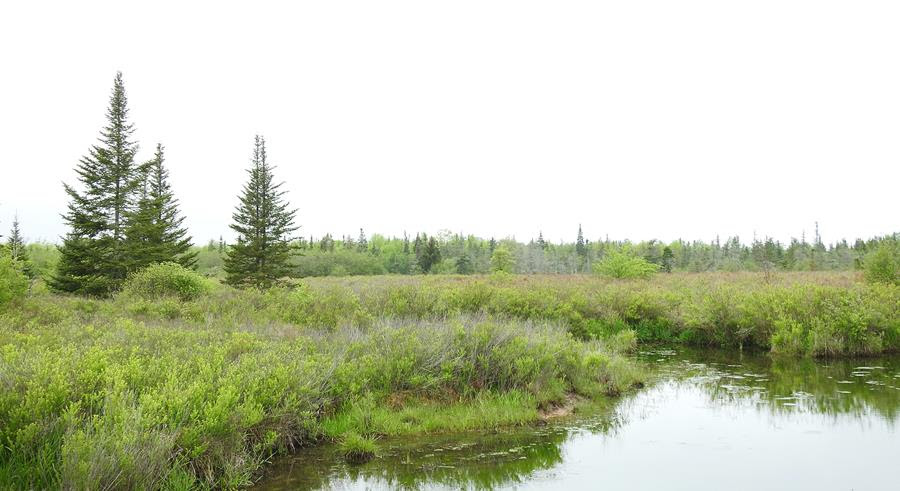
Two years ago, I explored a remote bog in northern Pennsylvania. It was the peak of the autumn mushroom season, but I wasn’t there to look for mushrooms. Archery season had just begun, but I wasn’t there to harvest deer either.
After a few hours of wandering through the bog, I eventually encountered the only person I’d see the entire day. His name was Bill and he was heading home for the day.
Taking one good look at Bill, I immediately knew why he was in this isolated part of Pennsylvania. He was hunting deer.
Bill, on the other hand, wasn’t too sure why I was there. He noticed that I had no hunting gear, no camouflage, no truck, and no apparent desire to look for deer.
Instead, I had a tripod, a camera, and a paper map printed off the internet.
After exchanging formalities, I explained to Bill why I was in the bog: to film and photograph balsam fir.
Bill was a lifelong woodsman. He hunted. He fished. He knew his way around the woods better than most people did. Bill spent his entire life in Pennsylvania, but he had never heard of balsam fir.
“We call them all pines,” he said as he watched me point out a few balsam fir trees.
Pines. I wasn’t too surprised to hear that response. Heck, I could even relate. Years ago, I called every conifer a “pine.” It didn’t matter if I was looking at a spruce or a fir. As long as the tree had evergreen leaves and woody cones, it was a pine.
Today, things are different. Disciplined tree study has allowed me to appreciate the beautiful differences between conifers. I now love observing the distinctive Christmas tree shapes of balsam firs. I love watching fir cones fall apart in the autumn season. I love smelling fir leaves (they smell better than any conifer I’ve ever smelled). And I love knowing that firs, despite being in the pine family, aren’t true pines. They’re firs, and thank God they are.
Noticing the distinctions between conifers is an important skill if you want to learn how to identify trees. Tree identification skills are important if you want to improve your ecological literacy.
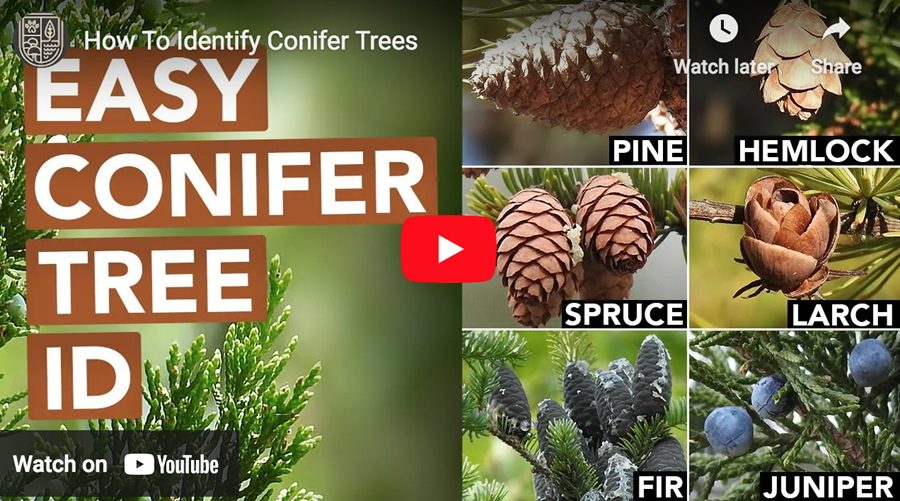
To get you started, I created a video in which I teach you the major differences between conifers.
Thanks for reading and watching. If you are interested in learning how to identify over 100 trees, check your email on Monday for information on how to register for Trees In All Seasons.

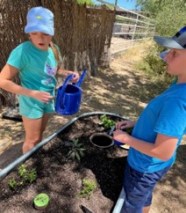 The garden program at the Tucson Waldorf School recently completed an herb garden in their container garden area. This collection of stock tanks and pots is located near the entrance of the school and is available for people to admire, learn from, work on, and glean. It is their hope that community members will stop by the garden and collect herbs to complement their meals.
 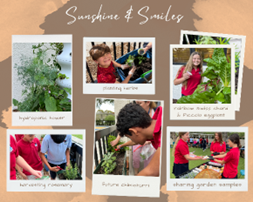 Somerset Academy Boco reported that with the HSA Samull Grant, they established an herb garden while implementing these learning objectives: 1. Apply practical knowledge in the form of gardening…


 Most of the teas that we drink these days are blended at some point. Even teas that seem simple such, as ginger or English Breakfast. The reasons for blending teas are varied but the most important one is this: blended teas taste good. My favorite reason is that when blending teas, the possibilities are endless!
 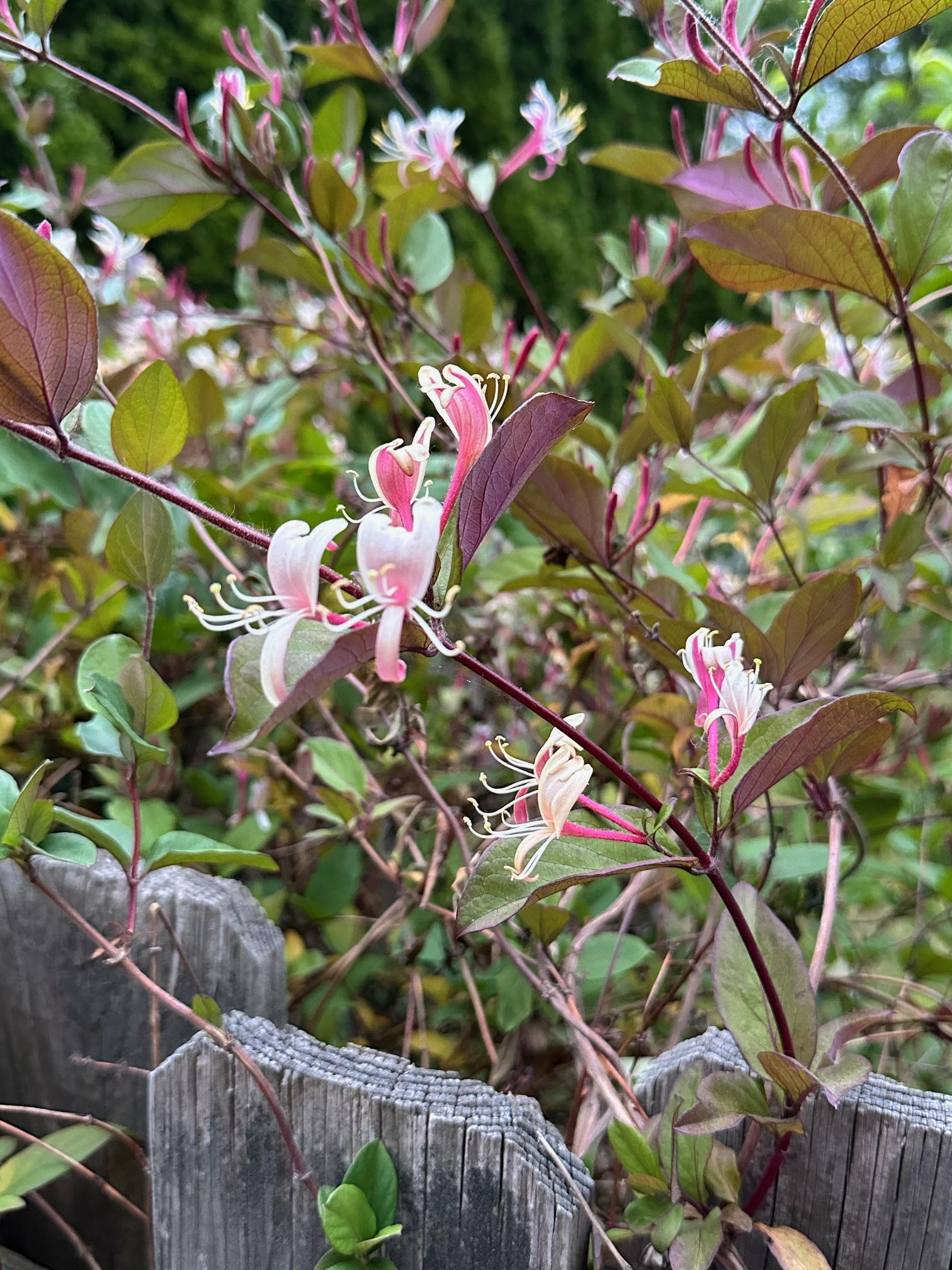 The summer solstice is a time when the natural world is ablaze with life, when the energies of light and warmth are at their peak. This celestial dance of light and shadow held profound significance for our ancestors. It was a time of celebration and thanks for the coming harvests, and a time to relax for a bit and play. Still today, some cultures celebrate by kindling fires, symbolizing the transformative power of the sun, and many communities gather to dance, sing, and rejoice in the abundance of the season.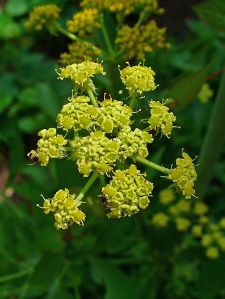

 Paths I Walk
You must be logged in to post a comment.