BLM plans to “zero out” Seaman & White River Herd Areas, while digging in heels to keep privately owned livestock grazing on these public lands

debbiecoffey's avatarStraight from the Horse's Heart

ACTION ALERT!

by Debbie Coffey, V.P. & Dir. of Wild Horse Affairs, Wild Horse Freedom Federation

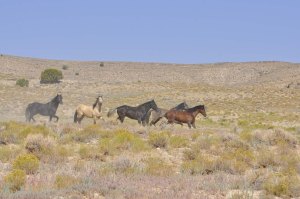
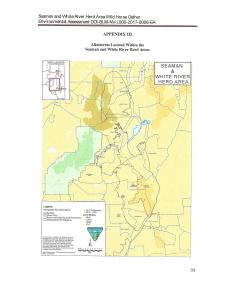
The Bureau of Land Management (BLM) changed the Seaman and White River HerdManagementAreas into Herd Areas in 2008.   Now, this proposed BLM Environmental Assessment (EA) is a 10 year plan for the BLM to “zero out” (remove ALL wild horses and leave “0” as the population) the Seaman and White River Herd Areas in Nevada.

Please be sure to send your personal comments to the BLM about their plans to remove the last, remaining wild horses from these two Herd Areas.  (DO NOT JUST SIGN A FORM LETTER PROPOSED BY ANY ADVOCACY GROUP.)  Write comments in your own words and email, mail or fax them to the BLM.

Comment submissions will be accepted until 4:30 p.m. Pacific Daylight Time on Monday, Jan. 22, 2018.  All comments received during…

View original post 1,229 more words
Donkey Sanctuary UK convinces ebay to stop selling ejiao (a traditional Chinese medicine) due to animal welfare disaster and health risks

debbiecoffey's avatarStraight from the Horse's Heart

fd894cda-b220-11e6-b17d-d6b2ebc6f34a_660x385

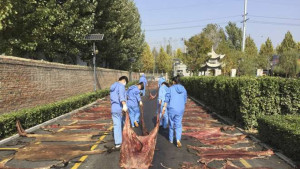
Workers lay the skins of freshly killed donkeys out to dry in Dong’e, northeast China, where they will later be boiled to produce gelatin sold as a fad health and beauty tonic (Photo: George Knowles)

Source: Indyonline.co.uk

Ebay bows to West charity pressure

Global giant eBay has bowed to pressure from a West Country charity and agreed to stop selling a controversial Chinese medicine.

The largest equine welfare charity in the world, The Donkey Sanctuary, based in Sidmouth, has persuaded the trading site to stop selling the Chinese medicine ejiao, which contains gelatin from donkey skin and is alleged to offer anti-ageing properties.

The Donkey Sanctuary’s chief executive, Mike Baker, wrote to eBay’s President earlier this month.

His letter highlighted the unfolding livelihood crisis, animal welfare disaster and potential consumer health risks associated with the unregulated ‘health’ product.

The Donkey Sanctuary said there were shocking consequences to the global donkey…

View original post 49 more words

Missing burros found alive but with burns after Custer Park fire

debbiecoffey's avatarStraight from the Horse's Heart

Source:  Twin Cities Pioneer Press

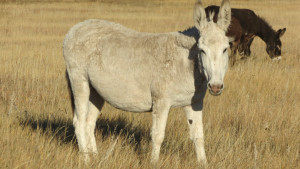
Burros in Custer State Park prior to a late season wildfire that injured a number of them. (Kobee Stalder/Custer State Park via AP)

Nine burros that are a favorite of visitors to South Dakota’s Custer State Park have been burned in a wildfire and it’s not known if all of them will survive, a park official said Saturday.

The park reported Saturday morning that all nine burros had been found — a day after three of them were reported missing and feared dead in the wildfire that has consumed more than 84 square miles (218 square kilometers). But all nine were burned and are being treated by a veterinarian. Some were not injured as badly as others, but their chances of survival and the severity of their injuries might not be known for some time, said park visitor services program manager Kobee Stalder.

“It’s a…

View original post 120 more words

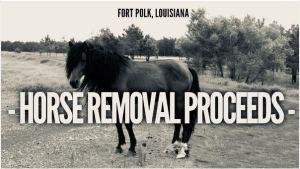
Update on Fort Polk’s Move to Eliminate More Free Roaming Wild Horses

debbiecoffey's avatarStraight from the Horse's Heart

Update on Fort Polk’s Move to Eliminate More Free Roaming Wild Horses

For Immediate Press Release
Fort Polk, Louisiana

Despite public outcry and a lawsuit through Tulane Environmental Law Clinic, the U.S. Army at Fort Polk is continuing to allow removal of the free roaming horses (many generationally wild ) from the areas at Fort Polk, where they have lived (along with other wildlife) for many years. Recently, at least 18 more wild horses were captured.

Click below for a detailed explanation of  U.S. Army’s Course of Action 7: U.S. Army’s Removal Plan Designed to Benefit the Kill Buyer COA 7

The Army at Fort Polk can build elaborate corral systems and call folks from their “list” to haul these free roaming horses to the unknown, (some to auction stockyards and sold for meat price for purposes of slaughter in Mexico). The U.S. Army at Fort Polk can and should do…

View original post 492 more words

The current EA, FLPMA, or NEPA legal process has not been met for Utah Roundup

Photographer -- Journalist's avatarPhotojournalist - Journalist

I find it interesting that the Bureau of Land Management, also allowed by the Department of the Interior (oversight agency), to complete such obvious Illegal Activities — as no legal process has been given to the taxpayer public that the Conger and Frisco Roundups are being done legally.

I.  Current EA legal process must be met and signed — a 2015 EA, whether updated or not, and left unsigned as well, is unacceptable legally to complete a legal roundup;

2. An unsigned EA does not fulfill the legal process for the BLM to conduct a roundup at the Conger and Frisco Heard Management areas;

3. FLPMA as well as no NEPA requirements, legally, have simply not been met for a legal roundup within these Utah HMA areas;

4. Population Research Control (BLM’s bogus title in an attempt to make it sound valid) is a false title and irrelevant, when the…

View original post 439 more words

BLM to begin 2nd Year of the Conger Wild Horse Roundup and Research Study

debbiecoffey's avatarStraight from the Horse's Heart

Note:  The BLM has set the AML (Appropriate Management Level) for the Conger HMA in Utah (170,993 acres) at ONLY 40-80 wild horses – not even a viable herd number.  How many stallions are they going to geld?

                                                                                                                (Photo: BLM)

From BLM News Release:

BLM to begin Year 2 of the Conger Wild Horse Gather and Research Study

Public welcome to observe gather operations

FILLMORE, Utah The BLM Fillmore Field Office is planning to begin gather operations on Tuesday, Nov. 28 in support of the research wild horse gather in the Conger Herd Management Area (HMA) west of Delta, Utah.

“This gather is in year two of a research study that is being conducted on wild horse behavior and ecology, said BLM West Desert District Wild Horse Specialist Trent Staheli.  “It will examine the behavioral effects of gelding, population dynamics, fertility, reproductive rate, recruitment rate, age-specific survival and…

View original post 404 more words

On Being an American Druid

Dana's avatarThe Druid's Garden

The quintessential image of a druid is a group of people, all in white robes, performing ritual inside an ancient circle of stones.  This image is probably the most known and pervasive of all visuzaliations of druidry, and for many, it shapes the our perceptions of what druidry should be. But taken in a North American context, this image presents two problems.  First, we have no such ancient stone circles and two, another group has already claimed the quitessential white robe, and its not a group with which we want to associate our tradition.  This kind of tension, along with many other unique features of our landscape, make being an American druid inherently different than a druid located somewhere else in the world.  In the case of any spiritual practice, context matters, and context shapes so much of the daily pracice and work.    And so today, I’m going to answer…

View original post 1,874 more words

Wild Horses & Burros Maintain Protections Says the US Senate

R.T. Fitch's avatarStraight from the Horse's Heart

by R.T. Fitch, president/co-founder of Wild Horse Freedom Federation

Finally, a bit of good news for our wild horses and burros; yesterday, November 20th 2017, the Senate Appropriations Committee released a draft version of their Interior Appropriations Bill with wording that maintains the current protection of our wild horses and burros, the same wording that the House stripped from their bill several months ago.

A big shout out of thanks to Senators Murkowski, Udall and the entire committee for their commitment to uphold the wishes and desires of the American people.

Likewise, many thanks to all of you who are the voices of the voiceless who have worked tirelessly to reach out to your elected officials to ensure that their voting represented what YOU, the tax paying American citizens, wanted versus a lobbying private interest group.

But the fight is not over, now the House and Senate will…

View original post 101 more words

Feel Good Sunday Video: 16-year-old boy drives through burning barn wall to save 14 trapped Clydesdale horses

R.T. Fitch's avatarStraight from the Horse's Heart

source: TNK

““He busted through like Rambo and opened up the end of the stalls…”

Macon Martin, 16, is being called a hero after his quick thinking saved the lives of 14 Clydesdale horses.
The family home, located about 60 miles east of Atlanta, Georgia, was struck by lighting in the middle of the night.

“It shook the whole house,” Macon’s mother, Shannon said. “One minute I am in bed; the next minute I am standing up next to the bed trying to figure out what bomb went off.”

Without power, the family could only see by the light of a fire that quickly engulfed their horse barn. To make matters worse, the barn doors were locked and there wasn’t enough time to find the key.

“I just ran right out. I had no clothes on, no shoes, no nothing,” Macon said. Without hesitation, the heroic teen jumped into a…

View original post 123 more words

The Three Great Myths about America’s Wild Horses

R.T. Fitch's avatarStraight from the Horse's Heart

by as published on HorseTalk

One of the favorite tools used by the cattle industry to push competing grazing animals off the lands they covet is that of supporting outright myths and also funding questionably designed studies and then promoting the highly questionable results.

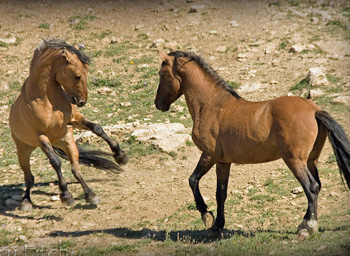
photo by Terry Fitch of Wild Horse Freedom Federation

Throughout American history, the cattle industry has been for the most part unreasonable to other livestock producers. The American range and Sheep Wars of the 18th and early 19th centuries are clear evidence of this statement, as is outlined in this summary:

Wikipedia: The Sheep Wars, or the Sheep and Cattle Wars, refers to a series of armed conflicts in the Western United States which were fought between sheepmen and cattlemen over grazing rights. Sheep wars occurred in many western states though they were most common in Texas, Arizona and the border region of…

View original post 62 more words