Last October, after an intense, bizarre and exhausting day covering the election, I came home and told my husband Peter I needed to regroup.
I was suffocating from superficiality. I needed to reset my heart, reconnect with him, and do something together as a couple to the benefit of other people.
So we booked a five-day trip. Our destination: Cotonou, Benin in West Africa, to visit Mercy Ships.
Mercy Ships is a surgical hospital ship whose mission is to bring health and healing to the forgotten poor. We’ve been involved with the group for several years. For this visit, we brought along Erin Landers, the sole employee of Dana Perino and Company. She’d never been to Africa, and it was fun to watch it through her eyes. “Did you see that?!” She loved it. And then some.
I wrote this on the long flight home:
The trip to Benin was our second visit to Mercy Ships. The first was in August 2013 when the ship was in Pointe Noir, Congo. We were there for the screening day, before the surgeries even started, when 7,500 people lined up hoping to be a candidate to be cured of what ailed them.
Some problems are not fixed by surgery, like cerebral palsy. Watching the gentle way the nurses turned non-surgical cases away was heart wrenching. But they were also able to say yes to many, and we shared their relief and joy as they moved on to scheduling. (As an example of how much need there is in this part of the world, Mercy Ships filled up all nine months of goiter surgeries before noon on screening day.)
That day, a little boy, two-years-old, was in and out of consciousness and the people in line raised up their arms and passed him to the front. His name was Emanuel.
A doctor looked at him and couldn’t see anything wrong — until she asked him to open his mouth. There was a tumor growing on his palate that was obstructing his breathing. The doctors got him stable, and Emanuel was the first to be operated on during the ship’s stay in Congo.
The surgeon was a friend we made on the ship, Dr. Mark Shrime (Assistant Professor of Otolaryngology and of Global Health and Social Medicine at the Harvard Medical School). Dr. Shrime volunteers two months a year on the ship, which he has that written into his contract (note to self).
When I talked to him in the fall of 2016, he said he’d be back on the ship in March, so we booked our trip to overlap with his.
At dinner one night, I asked how Emanuel was. Unfortunately, no one knows. They haven’t heard anything since he was treated.
We know he was a healthy and happy boy when he left the ship, and that he was loved by his mom and dad who were there by his side. But it’s also Africa — follow up is difficult, though technology will help the ship try to stay in contact with patients in the future.
We agreed that we must find out how Emanuel is doing. Someone at the table had a friend who was still there, and they knew someone who worked at the port where Emanuel’s dad worked. Six degrees of separation applies in Africa, too. I bet Dr. Shrime that he and Emanuel would be reconnected by April.
There were several volunteers still on the ship that we’d met on our first trip. Some of them stay for many years. All of them raise money from their churches and communities, including online ones, and they pay a ship’s fee to cover their expenses.
Some people, like Keith Brinkman, have spent 28 years on the ship — what a career he’s had (and one of his financial supporters follows me on Twitter. How about that!).
Others, like Dr. Shrime, come when they can. Surgeons, dentists, anesthesiologists and ophthalmologists, for example, can come for as little as two weeks, while other jobs require a longer commitment due to training requirements or for teachers.
One of the full-timers that works in the operating room says he loves having visiting surgeons on the ship, but if they are there for two weeks they want to work 24/7 and get as much done as possible, which means the others don’t get a day or two to recharge. And one of the reasons they brought their families on the ship was to have more time with them. There’s a lot of what we used to call “forced family fun!”
In Benin there’s a cultural custom that family members wear the same pattern of traditional African clothing. The ship knows a few tailors who come on and make special outfits for everyone.
When we went out one night, several of the couples dressed in matching clothes. When in Benin! (Though Peter, Erin and I had a bit of a uniform, too – khakis and blue shirts. “YOBOS!”, we learned, is the nickname for white people — it wasn’t an insult; rather more playful and we laughed, too).
We made some new friends, too — including a young woman named Renee Joubarne from Canada who is relatively new to Mercy Ships and works in the communications office.
She patiently drove us everywhere and served as our interpreter. Her first service was in Madagascar. Next stop, Cameroon. We told her that back in the States, they’d call her a “Girl Boss.” She isn’t prideful, but I think she kind of loved that title.
We met nurses from Michigan. One of them is going back at the end of this field service to work as a travel nurse and pay down her student loans. Her girlfriend opted to stay on and will work in Cameroon as a ward nurse.
The head operating room nurse is from Holland and such a great leader — I’d follow her anywhere.
The galley staff is amazing — they make so much food, buying local when they can, cooking birthday cakes for celebrations, making sure anyone with a food allergy has some options, and being so cheerful about it all.
The captain is John Barrow from Australia. Quite a character.
When we were touring the ship’s bridge, I said “What’s it like to be captain of a ship that stays in port for nine months at a time?”
He was a good sport and laughed.
Captain Barrow and his wife are raising two boys on the ship.
“What’s the hardest part about that?” I asked.
“Boys want to run. But there’s no running on the ship. And as the rule enforcer for everyone on the ship, I’m always telling them to stop running!” he said.
Captain Barrow said that recruiting for non-medical staff was really important, because without the support staff (both on and off the ship), the medical team can’t do their work.
For example, he said that they really needed a car mechanic for their fleet of vehicles. I asked if they’d tried to tap into returning veterans who want to continue doing good work with organized, meaningful missions, and he thought that sounded like a good idea.
So that night during a live hit with “The Five,” I made an appeal for a car mechanic. Well, the next day there was an application in from a 25-year-old veteran with the required skills who said he was interested in the job.
The night we left, he caught me in the hall and said, “You’re a woman that’s good for your word.”
Well, it’s better than being good for nothing!” I said.
I hope I see him again one day.
There was also Timmy Baskerville, who started as a mechanic and ended up on the communications team as a photographer. Remember his name — his art is powerful. He started on the ship doing one job and ended up realizing he had a hidden talent and has a future as an artist.
I loved talking with the dentist from Peru, and the couple from Pennsylvania who sold everything and decided to give this a go because retirement felt like a death sentence.
I also enjoyed a couple from Oklahoma that is raising their three kids on Mercy Ships. The father is an anesthesiologist who could make a big salary in the States, but they wanted this experience for their family.
Their 11-year-old son agreed to do an interview for my package on Fox News, but he had a question for me, too. I said, go ahead ask me anything. But he got too shy and looked to his mom for help.
It turns out he wondered if I knew anyone in the States that might be willing to donate some AstroTurf that can be rolled or folded up and put away to be stored on the ship. The only place for them to play is on the dock and he wants to play “American football” (not just soccer and frisbee).
“Who’s your team?” I asked.
“The Seahawks,” he said.
“Is that allowed when you’re from Oklahoma?”
“Well, I don’t want to support the Cowboys!”
“How about the Broncos then? That’s my team.”
He scoffed.
“Ok, the Seahawks it is.”
I told him I didn’t know any company off the top of my head that made that kind of AstroTurf project but that I would ask. I posted it on Facebook with a photograph of the cement dock where the kids play. The first response came immediately from a man who works for Shaw and said, “I think we can do that.” Lesson: don’t be afraid to ask.
The kids living on board attend a school called The Mercy Ships Academy. There are thirty-five students, from nursery school to 11th grade. The classes are taught in English. On my tour, I met fifth graders learning synonyms and eighth graders building apps.
I talked with a social studies teacher that was creating lessons about different forms of government.
One of my favorite teachers is Miss Beth Kirchner, who used to work for Disney and can draw Mickey for her students to color in. Dave is their principal — he’s from Australia. Wonderful chap. He’s leaving in a couple of months and the school needs a new principal ASAP (hint hint) so that the kids can keep attending the school on the ship with their parents. Otherwise they’d have to go to boarding school. “Do not want” is an understatement.
I met a William Wolfenberger from Kansas in his early 20’s who works in the engine room on the ship – before this job he’d never been on a boat or seen the ocean. The second youngest on board, he’s grown a beard and seems to always be in a good mood, even when we were talking about the cabin he had where his towels never completely dried.
He is friends with Tyler Shroyer, a young man from Ft. Wayne, Indiana. Tyler spent his time on the ship studying business and will be going back this year, the oldest of seven boys, to help his father grow his concrete company. He also has a blog called “From the Barnyard to Benin.”
For Christmas this year, he sold his beard at an auction — they get creative with gifts. Whoever won got to dye the beard purple or pink (he has red hair). The cost of this item? $25.
“So, if I put up $26, I could get you out of it?” I asked.
“Yes, I suppose you could,” he said, a bit hopeful.
“Not that I’m going to,” I said. “I don’t want to spoil the fun.”
There was a girl named Anna Psiaki. Tall and willowy, long blond hair. She’s from upstate New York, one of nine children. She’s a writer on the ship — a poet, too.
Her team says she’s the first to get to know all the locals and has amazing stories of how people just invite her in for a meal, ask her to babysit their children and make her special gifts.
We saw her off the ship, too, at the French Institute where a jazz concert was playing. She was wearing a red sweater despite the heat. It was hideous and I said so.
“It’s meant to be!” she said.
It was an ugly Christmas sweater a friend had left behind on the ship. She wore it with no inhibitions. Anna is fully herself. I admire and envy that.
“What number were you out of the nine?” I asked her.
“I was the fifth,” she said.
“So no one paid attention to you?”
“I don’t think anyone even knows I’m in Africa.”
That was one of the funniest things I heard on the ship.
Then there was nine-year-old (almost 10!) Harry. His dad is the second engineer who served in the Navy for New Zealand. Harry, according to his dad, “loves the ladies.” He was not shy about saying hello and telling me all sorts of things.
“You are quite something!” I said. “You have a way with words.”
“Well, my mom says I can be about as diplomatic as a starving rhinoceros.”
“Can I use that line back home on ‘The Five’?”
Permission granted. I started wondering who’d that best describe back in the States.
We met a British couple that really should have their own reality show. Ally and Amy Jones. He’s the human resources director and she’s the Nurse and Medical Capacity Building Manager. Everyone loves these two and their great senses of humor.
Ally even took Peter surfing one morning. Well, Peter said it wasn’t really “surfing.” It was more like “fell off a short board over and over again.” The waves are rough in West Africa, but the temperature was perfect.
The night before, Amy was the designated driver to get me back to the ship in time to do my Fox News TV hit. We had to leave early, and our vehicle was blocked in. The parking attendants shrugged and looked around without meeting our eyes. But Amy was determined to get me back to the ship. The guys got one car moved. That left about 14 feet of space for a 15-foot long vehicle. She started maneuvering the vehicle. The men were all yelling instructions at her in different languages (she speaks English, French and some of the local language, Fon). The French military guard across the street came over to assist – these guys seemed bemused by this red headed woman driving a big SUV. She was confident. When she gunned it, the military guy jumped out of the way and the others all were shocked into laughter and a little bit of cheers. We made it with about a centimeter of space on each side. I kept saying, “Don’t worry, Amy. If I miss my hit, this will be the best reason EVER.” She was another Girl Boss. And one with a huge heart.
They’ll be leaving the ship soon for Amy to give birth to their first baby. Ally told me her condition upon agreeing to marry him was that he had to be comfortable living out of a suitcase. She loves to get off the ship and work in the village, while he likes being on board (with air conditioning and showers). A perfect match.
“Is the baby going to have to live out of one suitcase, too? I asked.
“Yes,” Ally said. “Well, ok, maybe two.”
They’ll be great parents.
Besides meeting new people, we got to see a lot more this time as the ship has been in port for about nine months and is preparing to leave this summer.
The hospital wards were full. Dr. Shrime performed four surgeries our first morning (Peter and Erin went in and filmed, while I shied away and dealt with motion sickness that morning — which is not the same as having morning sickness, so let’s not start any rumors).
We went to a celebration of sight where seventy patients that very week had gone from blind to seeing in just a couple of days. They danced and told their entire stories – no one summarized (we had to duck out or we’d have been there all day).
Then we visited patients in the outpatient tents who were having physical therapy to make sure everything was going well after their surgeries. It’s not of much use to have a skin graft to repair a burn if you don’t do the exercises to ensure range of motion. I was impressed by the care — from start to finish. No one is urged to go home before they’re ready.
The most powerful event was a New Dress ceremony held for three women who had their fistulas repaired on the ship. I am particularly interested in helping to heal women who have a fistula after their pregnancies.
I first became aware of it at the Aberdeen Clinic in Sierra Leone where women there stayed for three weeks and got to attend classes. The day I was there, they were learning to count to ten. Pause. Think of that. Learning to count to ten after you’ve already had at least one baby, probably more.
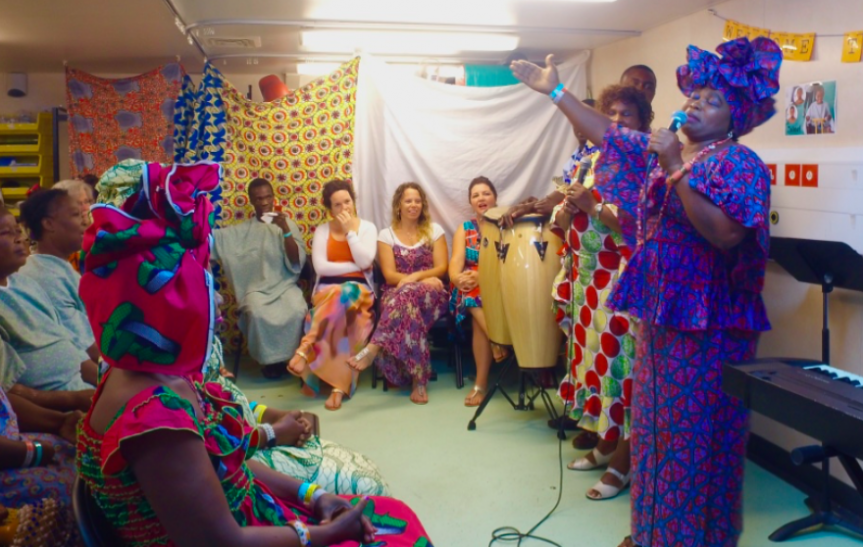
The patients get a new dress after their fistula surgery to celebrate the fact that they’re now healed. That morning on the ship, it was standing room only. The chaplain led the worship, the band played songs, and the patients and volunteers sang and danced. One of the songs lasted for twelve minutes — it had a good beat, and I was kind of bummed when it finished.
I was amazed that each of these women felt confident and strong enough to stand up in front of all of us, with no inhibitions, and give a speech — many fistula sufferers are ostracized for their condition and withdraw from society. Often they have their children taken away from them. They become broken, just shells of their former selves.
The first patient said she’d suffered from the condition for nineteen years — more than half of her life. She’d been shunned and no medical care was able to address her problem. Until the ship.
“Hallelujah!” she said. Indeed.
Then she led everyone in another song. I didn’t know the words, but I clapped and danced next to the patient who had beat me in Connect Four twice the day before.
“Rematch?” he said with his eyes.
“You bet,” I nodded. He was good though. A Connect Four ringer.
Despite those bits of humor, I cried for the entire ceremony — for their suffering, for the guilt of not being able to do more for them, and for the women who will not get this chance of a surgical remedy.
But mainly, mine were tears of joy. And maybe some tears of relief that my heart wasn’t as hard as it felt by the end of the election season. Then more guilt because with that thought I was making this about me. Is there no end to our self-absorption?
One of the African volunteers (a full-timer on the ship) who saw my tears stepped out to get me a tissue, a sweet gesture that, guess what? Made me cry even more.
As I tried to pull myself together, I was surprised to be called up to present one of the women with a gift. As self-conscious as I was since I really didn’t do anything to make her repair a reality, I wanted her to know how I felt.
I gave her an enthusiastic hug and she hugged me back as women who just understand each other.
“I’m so happy for you,” I said.
She didn’t speak English, but she knew what I meant.
She kissed my cheeks four times. Four is better than two in Benin.
At the end of the ceremony, the nurse in charge of the women’s clinic said to them. “All we ask is that when you leave here today, let God walk with you. You are not alone.” Yes, please do that. Don’t walk alone.
On Saturday, the ship held a party for kids from a local orphanage called Arbre de Vie, which means “tree of life”. The young couple that runs the orphanage is from Ohio. Ashley and John Reeves.
Ashley wore a black sleeveless dress, wedged sandals and a red straw hat. I liked her style. She held a toddler boy named Codjo. He called her mommy.
I wondered if they all did, but no, Ashley and John are adopting him.
He was brought to the orphanage when he was twenty days old. His mother had had a C-section and was sent home. But the placenta was still inside. Oh. Oh dear. What a tragic end to her young life. Story after story like this in Africa.
The orphanage has about thirty children under its care at any one time. They live way outside the city. I hear the place is joyous. They do all they can with what they have. They just got electricity last summer and a new kitchen, but their staff still prefers to cook outside over a fire. It probably does taste better anyway.
One of Ashley and John’s other kids is ready to go to university and wants to study medicine. They’ve done so many great things so far in their life, and being around people like that can make you really question your contribution to the world.
As we walked together after an interview, she thanked me for spreading the word.
“Well, none of us ever feels like we do enough,” I said.
She stopped walking, we shifted the babies we were holding from one hip to the other.
She said gently, “But you’re here. And not everyone can be here. You have unique talents that will help us be able to stay behind and do even more.”
I nodded, speechless, and was glad I was wearing sunglasses.
THE HOPE CENTER
Martha Rodriguez runs the Hope Center. She changed her name badge with a pen to go from public service to public servant. She grew up in Michigan and then worked for a chemical company in Houston.
She retired but wasn’t ready to settle. She was ready to do. And doing ended up being taking the lead at the Mercy Ships Hope Center. When she took us on a tour, she was full of joy and energy. “Can you believe I get to live here and do this?”
She loved every bit of it — the local day crew she hired all greeted her with big smiles. The children ran to her. The mamas met her gaze that to me said, “Thank you, thank you, thank you.”
The cooks make over 300 meals a day out of an outdoor kitchen, and they were washing beautiful lettuce leaves and had a huge bowl full of avocados (I kind of wanted one but I didn’t dare).
At one table, patients ready for surgery in the coming week were eating with their fingers, some with gigantic tumors on their faces that would be gone by Friday. In the heat, in their discomfort, they all stood to greet her, smiling. (Can you believe I got to come and see this?).
At the laundry area, several kids — some patients, others siblings or children of patients — played with whatever was handy — a stick, a broken race car.
I gave one little girl Felt Jasper to hold and she rubbed the soft material all over her face, put his pink Barbie stethoscope in his ears. Then the children saw Erin and the camera equipment and in unison they asked for what kids the world over want – a selfie! It turns out even little babies in Africa know how to swipe a phone.
Martha is an attractive woman. She has a long pony tail, letting her hair turn a lovely grey.
I thought I’d like to do that one day. Run a Hope Center and have pretty hair I don’t have to worry about coloring. And to have a heart that big.
As we were leaving to go back to the ship, an older couple came to the door. The husband was blind, walking with a cane and being led by his wife. They’d traveled from up country and said they were there to be pre-screened for his surgery. The problem was they were a day early and the center was full. It was only 2 p.m., and Martha said she’d figure it out, not to turn them away yet.
In the car, she called someone and explained that they’d come a long distance and needed a bed. But she was told there wasn’t a room that night and that they believed couple had a place to stay, perhaps with family.
Martha said good-bye and then, to no one in particular, said, “But they’ve traveled so far. There has to be a way. How could we turn them away?”
“I could never. Ever,” I said from the back seat, admiring and wanting to be more like her.
She was here and she was doing.
What was I doing?
A word about Benin. I’ve traveled to many countries in Africa, and to me Benin felt the most hopeful. It has a new president with a business background who is focused on the economy and expects results.
“But I am wearing the helmet, officer!”
I kind of appreciate the mix of compliance and defiance. But I do hope they start to wear their helmets.
With a stable government and a young population (65 percent of the country is under 35), and decent infrastructure in the main cities (that’s all relative in Africa), the city feels alive. And fairly safe.
Cotonou is the economic capital, and we ate at an Indian restaurant, Shamiana, whose pappadam were better than any I’ve had in the States.
Ouidah is the cultural city where millions of slaves died or passed through the Gate of No Return before the terrifying trip over the Atlantic.
When we were there, busloads of schoolchildren were there on field trips. They were colorful, loud, and funny.
Looked to me just like kids look anywhere. I got a photograph from behind as they all gathered at the sea, many of them seeing the ocean for the first time. And I wished them well — that they’d have peace and opportunity and that they’d keep giggling like that.
Finally, we met the U.S. Ambassador, Lucy Tamlyn and her husband Jorge Serpa, wonderful representatives of the USA in a country that aligns with America’s interest for freedom and opportunity. They are wonderful people who have both dedicated their lives to foreign service.
Peter and I feel lucky to know them – they have the best stories! (Like when Jorge was evacuated in Chad…TWICE). I finished my trip feeling like Benin had a hopeful future.
And not to be left behind on the ship, I took Caleb Biney with me. Caleb is fourteen and lives on the ship with his family. He’s a part of Scholastic’s young journalism program, and was able to interview Amb. Tamlyn for an article for Scholastic’s News Kids magazine. He was also taller than both of us.
As we left the ship, I told Peter I want my obituary to say, “Loved hellos. Hated goodbyes.”
Humans can make friends easily, if they are open to it and are interested in other people. There’s so much cultural and language diversity on the ship, but we all bonded over something that means a lot more than anything else I do every day — to serve others who need our help, and to do it selflessly and joyously.
It’s actually rather simple. It just took traveling halfway around the world for me to be reminded of it.
We accomplished what we set out to do — reset our priorities and reconnected with each other.
And now…back to our previously scheduled program, but with lighter hearts and renewed enthusiasm for the things that really matter.
Dana Perino currently serves as co-host of FOX News Channel’s “The Five” (weekdays 5-6PM/ET). She previously served as Press Secretary for President George W. Bush. She is the author of the new book “Let Me Tell You about Jasper : How My Best Friend Became America’s Dog” (October 25, 2016). Ms. Perino joined the network in 2009 as a contributor. Click here for more information on Dana Perino. Follow her on Twitter@DanaPerino.
Source: Dana Perino: How I reset my heart (after a brutal election) — My visit to Mercy Ships | Fox News




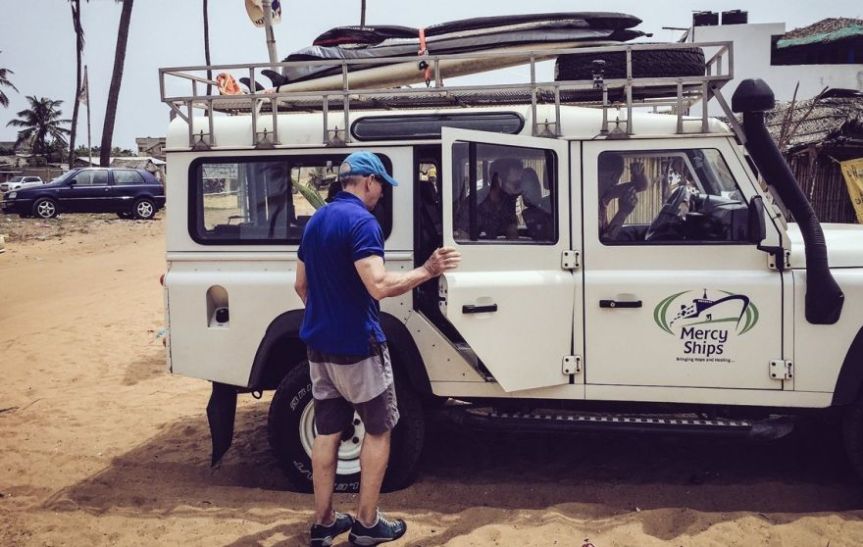 Peter’s surfing adventure
 By
By 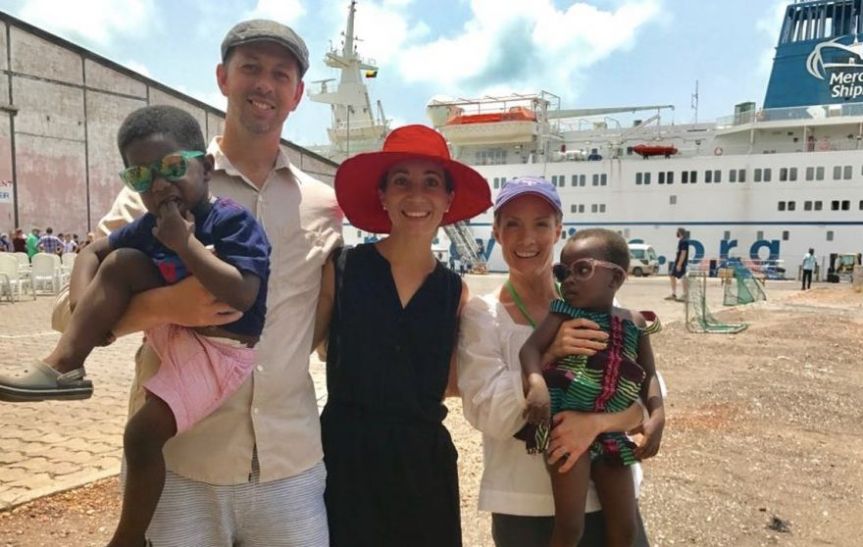

 One thing he likes is punctuality. So do I! But “this is Africa” is a phrase that even locals use to explain the inexplicable. He also tried to get everyone riding motorcycles to wear helmets. He signed a helmet bill into law. Now, you’ll see people on motorcycles with helmets – a few wearing them properly, but others wearing it on their knee, or on top of their headdress.





 Paths I Walk
You must be logged in to post a comment.