Feel Good Sunday: Home Sweet Home for Donkey Survivors of the Skin Trade | Straight from the Horse’s Heart

By the

The National Council of SPCAs in South Africa is delighted to report a positive, uplifting and heart-warming outcome relating to donkeys rescued from the horrific trade in their skins.

We report that five donkeys have arrived at a beautiful property in Bethlehem in the Free State where they will live out the rest of their lives. The donkeys were adopted according to the standard procedure, which involves a formal application to adopt an animal, including demonstrating that one is able to afford private veterinary fees and committing to looking after the animal for the rest of its natural life.

A further 14 donkeys will travel shortly to a new home. Their adoptions have been approved as all the required administrative procedures have been undertaken.

These donkeys were rescued in the Sani area in early 2017. They were initially cared for at the Sani SPCA, but since their operation is not far from the Lesotho border post, it was feared that the donkeys might be stolen. Their welfare and safety were top priorities, so a decision was taken to move the donkeys to other SPCAs.

The journey to their temporary homes started early on the morning of 24 February 2017, when they were safely loaded into trucks and their journey to the Benoni SPCA and the Kloof and Highway SPCA began. No issues were encountered. Several stops were made en route to Johannesburg to provide water and facilitate checks by our inspectors and veterinarian.

The end of the story is a very uplifting one not only for the donkeys, but for all the dedicated staff involved who worked tirelessly to ensure their safety and to secure their future.

Donkey hide contains a gelatine which is claimed to carry medicinal properties. The gelatine is a key ingredient in China’s ejiao industry, which produces tablets, tonics and a sweet syrup. Donkeys from all over the world are slaughtered, often illegally after being stolen, and their hides exported to China to fuel demand for ejiao.

The “donkey skin trade” continues, but so do our efforts to monitor situations, respond to information received and to take whatever steps may be appropriate when necessary. Criminal charges have been laid in several instances, cases brought before the Courts and convictions obtained. The National Council of SPCAs commits to combating the scourge of the donkey skin trade tirelessly and steadfastly.

http://animalpeopleforum.org/2017/04/22/home-sweet-home-for-donkey-survivors-of-the-skin-trade/

Source: Feel Good Sunday: Home Sweet Home for Donkey Survivors of the Skin Trade | Straight from the Horse’s Heart

SSRI antidepressants increase risk of intracranial hemorrhage « Jon Rappoport’s Blog

From healthline.com: “Intracranial hemorrhage (ICH) refers to acute bleeding inside your skull or brain. It’s a life-threatening emergency. You should go to the emergency room right away or call 911 if you think you or someone you know is experiencing ICH.”

By Jon Rappoport

The public has learned about the increased risk of suicide and violent behavior (including murder) stemming from the use of SSRI antidepressants. Now there is more:

Psychiatric News reports (4/7/17): “A study published in February in JAMA Neurology has found that patients taking antidepressants that are strong inhibitors of serotonin reuptake (SSRIs) may be at an increased risk for intracranial hemorrhage, particularly during the first month of use…”

“The results showed that compared with patients taking [the older] tricyclic antidepressants, patients being treated with SSRIs had a 17 percent increased risk of experiencing an intracranial hemorrhage. The risk was highest during the first 30 days the patients were taking the medications.”

SSRIs include: Celexa; Prozac; Paxil; Zoloft; Lexapro; Luvox.

Here are quotes from other Psychiatric News articles about SSRI use and bleeding:

“Physicians prescribing selective serotonin-reuptake inhibitors (SSRIs) should make patients aware of the possibility of gastrointestinal bleeding, especially if they have pre-existing risk factors or are taking other drugs that increase risk, said a University of Pennsylvania psychiatrist.”

From a January 2014 study in the American Journal of Psychiatry—“Short-term SSRI use—even as little as 7 days—elevated the risk of upper gastrointestinal bleeding, especially in male patients. Just as with NSAIDs and aspirin, physicians should carefully monitor for this side effect.”

Note: Suddenly withdrawing from these drugs can be very dangerous. Psychiatrist Peter Breggin publishes this warning: “Most psychiatric drugs can cause withdrawal reactions, sometimes including life-threatening emotional and physical withdrawal problems. In short, it is not only dangerous to start taking psychiatric drugs, it can also be dangerous to stop them. Withdrawal from psychiatric drugs should be done carefully under experienced clinical supervision. Methods for safely withdrawing from psychiatric drugs are discussed in Dr. Breggin’s new book, Psychiatric Drug Withdrawal: A Guide for Prescribers, Therapists, Patients and Their Families.”

rug Withdrawal: A Guide for Prescribers, Therapists, Patients and Their Families.”

Source: SSRI antidepressants increase risk of intracranial hemorrhage « Jon Rappoport’s Blog

From the Land Down Under: “China Wants Our Donkeys Dead or Alive!” | Straight from the Horse’s Heart

OpEd by Andrea Jenkins – Donkeys of Australia

Over the past few months I have read many articles about donkeys. There was one article I read a couple of weeks ago though that really hit a nerve.

The article included a stunning picture of a donkey, gazing out from his paddock. The barb wire that cut across in front of him indicated that he stood just behind a fence. It led me to imagine a stranger stopping road side with camera in hand, readying the exposure for the autumn sunlight and the yellow daisies. He waits, aware that the donkey has his ears pricked and stands attentive to this new energy invading his home. Curious, this gentle, wise creature meanders over to say hello. The stranger shoots and then is gone, taking a moment in time with him to use as he wishes.

I don’t know this donkey personally. Perhaps he is your donkey? Or someone you know? I imagine other photos he stands in, cuddled by the grandkids, lazing in the sun, a beloved family member that sits in frames on the mantelpiece for the world to see.

I’d love to own this donkey, yet I’m happy I don’t. I don’t think I could bare it. The stranger has not taken this particular photo to show how cherished and adored this donkey is. Mortified, I read the caption: good enough to export.

Yes, sadly, this donkey has become the latest face for donkey export to China. He is pitted next to the words of Barnaby Joyce as a creature with a price tag, an economic commodity, an edible product worthy of export. The nerve it struck was raw. It rocked me to my core. How can we be asked to look at this magnificent creature and see it as a dead product being shovelled into the mouths of those that search for a miracle elixir for eternal youth and vitality?

I guess I shouldn’t have been surprised. Like I said, I’ve read many articles about donkeys over the past few months. In fact, I’ve read, watched, spoken on the phone and data analysed the horrors the ‘insatiable’ appetite for Ejiao brings crashing to our shores.

It’s been extremely challenging for me to witness the creature I love more than anything get decimated in such a brutal way, but I feel I must walk with them through this struggle as they have walked with us through constant struggles throughout time. I must stand with them now and help their voices be heard. It is with their characteristic traits of love, compassion and humility that I proceed to further my education and, hopefully, the education of others, with regard to the issues facing Australian donkeys.

I am sure many of you have read the horrors that are linked with the donkey skin trade. I’m sure you have read that what is, essentially, donkey poaching, has become a regular occurrence in some parts of Africa. I’m sure you have read about the exorbitant prices donkeys are now selling for and the fact that those living in rural villages can no longer afford to replace their donkeys, leaving them without a means to collect their water or send their children to school. I’m sure you’ve heard of the donkey slaughter houses, the string of animal welfare concerns and the shocking statistics that draw many to believe our beloved donkeys are vanishing from this world. I am not sure, however, that you have been able to find much information on the current Australian situation and what it means for Australian donkeys.

So here I am, writing this article for you. It is my aim in writing that I am able to summarise what I have learned, to date, on Ejiao and how this skin trade is expected to affect our Australian donkeys . I am by no means claiming to be an expert on the matter. I am simply one girl who uses Google and the telephone and has been willing to dive into the hay stack, so to speak, and try and find some answers. This brings me to the second aim in writing this article. It is also a desperate cry for help. It is my wish that we may come up with a structure for research and action together as we venture forward with, and for, our beloved donkeys. What I write now details the journey Ejiao has taken me on so far.

When I first heard whispers that China wanted our donkeys, I wrapped myself in the safety net I, and many others, naively believed we had. It seemed that we did not have the numbers of donkeys required to make the idea of donkey export viable. That teamed with the vast and unforgiving landmass the donkeys inhabited seemed to make the cost too much for a return that was far too small. It still seemed that culling was the preferred method of eradication.

Yet, as time passed, donkey populations in China—and globally—started to dwindle, demand for Ejiao skyrocketed, pressure on global markets to supply the increase in demand grew exponentially and the viability of exporting donkeys to China suddenly changed as the price tag kept rising. Pressured with ongoing enquiries the Northern Territory Department of Primary Industry and Resources (NTDPIR) compiled a report into the potential of donkey farming in the Northern Territory (September 2016).

Again, even though the report ultimately found that donkey farming was viable, either as a stand- alone venture or complimentary to the cattle industry, I thought we had a safety net. The safety net seemed to be that there was no Tier 2 processing facility and no operational export protocols to China. Reading that the capital outlay required for such a facility would be somewhere between the $50-$100 million mark and knowing there were no operational protocols for export to China made it sound, again, that the donkeys were to stay on Australian shores.

Yet, as I researched further and talked to more people on the phone I began to understand the saying ‘where there’s a will there’s a way’ really does apply to the situation here. Everywhere I turned looking for the next piece of the puzzle I got offered a piece that didn’t fit. I found that when I stopped allowing myself to get distracted by the technical jargon of protocols I, instead, found a big picture with most of the puzzle already in place. Like I say, I am only one girl and I am fully aware that I have more research to go, yet this is how I have come to see the big picture so far.

China wants our donkeys. The Australian agribusiness sector wants to expand export opportunities and make as much money as possible. Station owners want the feral donkeys gone. Farmers want ways to diversify their stock to get them through tough times. Multi-species abattoirs are being built with heavy Chinese investment. Chinese investment in Australian agribusiness is seen as desirable. Trial kills of donkeys are currently happening. More wild donkeys are already being rounded up. The Coalition Government has recently signed a Joint Statement with China to hugely expand market access for Australia’s red meat and live animal export industries to China. Barnaby Joyce is publicly announcing that Australia will be providing edible donkey skins to China and pushing it as a big, new market. Tariffs on hides and skins exported to China are being eliminated between 1st January 2017 and 1st of January 2022. The price of wild donkeys being rounded up and sold has already drastically increased.

So what does this all mean? Yes, China will be getting our donkeys. There may be a few little things to sort out in terms of protocols but it is happening. No one is standing in the way and stopping things from progressing forward. Most of the information I have read indicates that wild donkeys will be rounded up and breed as livestock for the Ejiao trade. Edible donkey skins will be exported to China. Some of the donkey meat will be sold within Australia as pet meat. Some of the meat will be sold internationally for human consumption. It also seems that, as the export market to China opens up under these new trade agreements, donkeys could potentially be live exported to China as well.

Even as I write that last sentence, my heart breaks a new. Not only will I be living in a country that potentially has no wild donkeys left. Not only will I be living in a country with fields of donkeys tagged and fattened ready for the slaughterhouse truck. I will also be living in a country that makes the conscious choice to send sensitive, emotional, smart, alive creatures on a ship, destined for a place of unfathomable animal cruelty. Do you think you can live in the country I describe? Unfortunately, this is what we are facing.

Of course there are obvious animal welfare concerns as are always evident with creatures subjected to the tortures of live export, yet there are more subtle and insidious concerns at play too. One thing I am concerned about is that wild donkeys are to be rounded up and sold as breeding stock. Will the breeding jennies have any much needed maintenance and care? Will their hooves be trimmed? Will their health be attended to? An ongoing animal welfare issue with the Ejiao trade is the lack of donkey healthcare as it is only the skin that is deemed valuable making money spent on overall health a waste of finances.

Another concern is the distances donkeys will be transported to abattoirs. The multispecies abattoir being built in Charleville will apparently be transporting donkeys from the Northern Territory and perhaps even South Australia. Will these donkeys be given the required rests, food and water? How tightly will they be packed in? If rounded up from the wild and trucked, how are foals and pregnant jennies going to be cared for? How will they be treated as they are rounded up, trucked and, ultimately, slaughtered? As ‘pests’ donkeys are not given the same protective rights as other animals in Australia. I will admit that I don’t know how far their protective rights are striped due to their classification as pests yet it is important to ensure that their welfare is adhered to at all stages of transport and processing.

Yet another concern I have is how will this big, new market be regulated? Can anyone start farming donkeys? How is the government going to monitor who is involved in this trade and how this trade is carried out on a day-to-day basis? As the avenues for export open up, there needs to be regulation on this trade, right from the small, hobby farms to the largest stations in the country, along with any wild stock that are mustered and sent straight to slaughter. Many of the people who are going to be involved are experienced in the needs of cattle and are not educated when it comes to donkeys. It is my desire that, for those joining this industry, they are required to gain further donkey specific education.

Now I write about my biggest concern: that our wild donkeys will become extinct and we will either be left with donkeys stuck in a horrific cycle of breeding and slaughter or with no donkeys left at all. This concern comes from a couple of factors. One factor is that no one knows how many donkeys we have to start with. There has been no accurate headcount of donkeys in Australia ever. Yet those, like Barnaby Joyce, who are pushing donkey skins as the next big industry, claim on a very public platform that Australia has millions of wild donkeys. This is simply not the case. The NTDPIR has a far more realistic estimate of the number of wild donkeys, stating that they believe there are roughly 50 thousand donkeys in the Northern Territory—although this figure is thought to be about ten years old and is not considered reliable. If we don’t know how many donkeys we have in the first place, how can we know if this trade, and the way it is to be carried out, will be sustainable?

Another factor is that, with the current Ejiao demand, upwards of 4 million donkeys are already believed to be slaughtered each year and the global donkey population literally cannot keep up. This is being reported with the dwindling of numbers in different parts of the world. It is believed donkey populations in China have halved, Mexican donkeys are considered endangered and some are predicting that, if things don’t change, the African donkey could be extinct in as little as five years If indeed our donkey population is somewhere between 50,000 and 100,000 our donkeys could be wiped out be Ejiao demand in a matter of weeks. Even if farming does occur in the near future, stock numbers will need to be built up and stabilised. This will take time as donkeys have a long gestation period and do not breed well in stressful situations. If export opens up as we expect it could under these new trade agreements and wild donkeys are sent straight to multi-species abattoirs for processing it might not be long before they are all gone.

In conclusion, I would like to ask that we unite in action going forward. I know it might seem too big an issue to tackle or too graphic an issue to engage with. This does not have to be the case. No action towards this cause will be wasted. Everything counts. I know signing petitions may seem pointless but they are not. One petition to help Australian donkeys, that has over 5,000 signatures, has been mentioned in a news articles that details Barnaby Joyce and his new donkey skin trade desires. It is important that we continue to make our voices heard.

Another suggestion for action is to research a small part of the situation here and report it back to the various donkey societies, or to the facebook page I have created. An area for research might be to keep an eye on how many donkeys are being rounded up, record prices of donkeys at auctions and who is buying, figuring out if the abattoirs near you are exporting donkeys, monitor the news for further information etc. If you are happy to engage with media you could look for news reporters and TV hosts that are willing to run a section on Ejiao (in a respectful manner). You could apply pressure on different organisations to get an accurate population count so that we have more reliable information on the sustainability of the skin trade. You could help change the classification of donkeys as ‘pests’ so they are granted more protective rights.

There are so many ways you can help. Even if it means simply sharing your own donkeys with the wider public more and more in an effort to alter common misconceptions associated with donkeys, perpetrated by the Australian media. It is important that more people come to realise how smart, sensitive and loving these creatures are. The more that people connect with the donkeys, the more of a movement we will be able to create to support them through this crisis.

I thank you so much for taking the time to read the article I have put together and I hope it is has been informative. Below, I have added links to information I have collected and the points that have been touched on through this article. I have also attached the ‘Under the Skin’ campaign by the Donkey Sanctuary UK. If you would like to stay updated on the Ejiao trade, please sign up. Lastly, I would like to say feel free to follow my new Facebook page ‘Donkeys of Australia’. I have set it up with the aim of creating an information hub. Thank you once again for reading and I look forward to working with you to ensure a bright and sustainable future for our donkeys.

Links:

Under the Skin https://www.thedonkeysanctuary.org.uk/under-the-skin

Donkeys of Australia https://www.facebook.com/Donkeys-of-Australia-1088323071303237/

Petitions:

https://www.change.org/p/australian-donkeys-face-being-bludgeoned-to-death-with- sledgehammers-if-live-exported-to-china

https://www.change.org/p/adam-giles-please-don-t-allow-china-to-export-our-australian-wild- donkeys

Barnaby Joyce http://www.news.com.au/finance/business/other-industries/barnaby-joyce-eyes- potential-new-market-exporting-donkey-skins-to-china/news- story/0d2b690a54e020368b939192d97f5526

New Trade Agreements http://www.sbs.com.au/news/article/2017/03/24/donkey-meat-beef- agriculture-australia-china-trade-wider-ever

New Trade Agreements http://www.skynews.com.au/news/top-stories/2017/03/24/china-talks- trade–prosperity-with-turnbull.html

Donkey Farming Report https://dpir.nt.gov.au/primary-industry/agricultural-developments/donkey- farming

Multi-Species Abattoir Charleville http://www.abc.net.au/news/2016-11-08/charleville-processing- plant-set-to-open-2017/8004938

AACo Abatoir becomes multi-species abattoir http://www.abc.net.au/news/2016-11-11/aaco- darwin-abattoir-buffalo-slaughter/8012144

Application to export to China under new trade agreements http://www.abc.net.au/news/2017-04- 07/aust-agricultural-company-applies-access-china-beef-market/8417796

Old article indicating the tone of the media when commenting on donkeys-

http://www.brisbanetimes.com.au/queensland/queensland-to-become-the-ass-end-of-australia- 20090621-csw6.html

AusTrade-Information on Tariffs http://dfat.gov.au/trade/agreements/chafta/fact- sheets/Pages/chafta-opening-new-opportunities-for-australian-products-in-china.aspx

Source: From the Land Down Under: “China Wants Our Donkeys Dead or Alive!” | Straight from the Horse’s Heart

Wolves can be shot on sight in most of Wyoming after state takes over management | Straight from the Horse’s Heart

by as published at the Casper Star Tribune

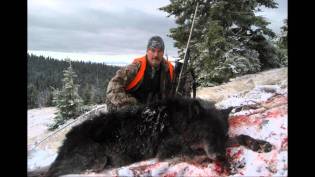
Wyoming assumed management once again of wolves within its borders on Tuesday, and those apex predators wandering outside the northwest corner of the state can be shot on sight.

The Circuit Court of Appeals in Washington, D.C., entered its final order in favor of Wyoming in a lawsuit that landed wolves back on the endangered species list in 2014. The court announced in early March that it had upheld the state’s plan but had not issued its final order.

Tuesday’s decision is what Wyoming wolf managers hope is the last legal battle in a roller-coaster legal process.

 “All indications are that this decision shows once again that Wyoming’s plan is a sound management plan,” said Brian Nesvik, chief of the Wyoming Game and Fish Department’s wildlife division. “They will remain in the hands of state management. For Wyoming this is, again, this is a time for us to celebrate. This is a good thing for Wyoming to be able to take on another wildlife resource.”

No changes were made to Wyoming’s wolf management plan from when the state oversaw the carnivores between 2012 and 2014, Nesvik said.

That means Wyoming will manage the 100 wolves and 10 breeding pairs outside of Yellowstone National Park and the Wind River Reservation.

Wolves in 85 percent of the state are considered a predator and can be shot on sight, similar to coyotes. They are classified as a trophy animal in the northwest corner of the state and subject to fall hunting seasons. Those seasons have not yet been set, Nesvik said, adding that wolves in those areas cannot be hunted right now. The Wyoming Game and Fish Commission will set those seasons after a public comment period…(CONTINUED)

http://trib.com/lifestyles/recreation/wolves-can-be-shot-on-sight-in-most-of-wyoming/article_b22f00b2-cc8e-50d0-99eb-fd2b24f8608d.html

Source: Wolves can be shot on sight in most of Wyoming after state takes over management | Straight from the Horse’s Heart

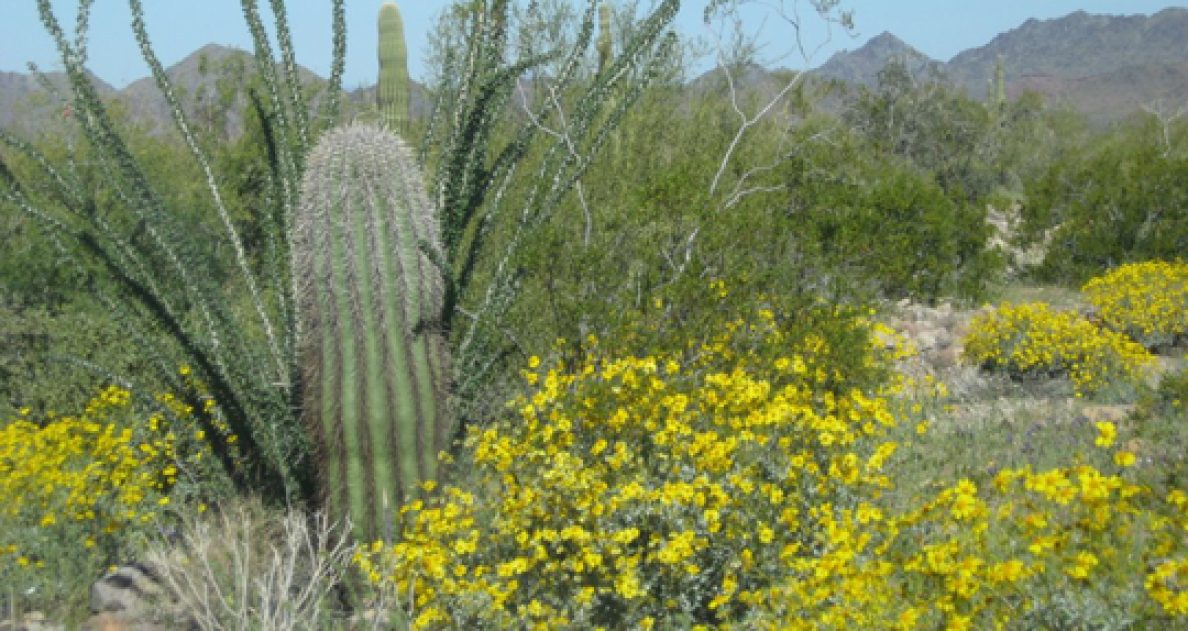
Cactus Fire Threatening AZ Salt River Wild Horses | Straight from the Horse’s Heart

Source: Cactus Fire Threatening AZ Salt River Wild Horses | Straight from the Horse’s Heart

A Tour Of The Charleston Capitol Market – A Gorgeous Farmers Market Like No Other! – Good Witches Homestead

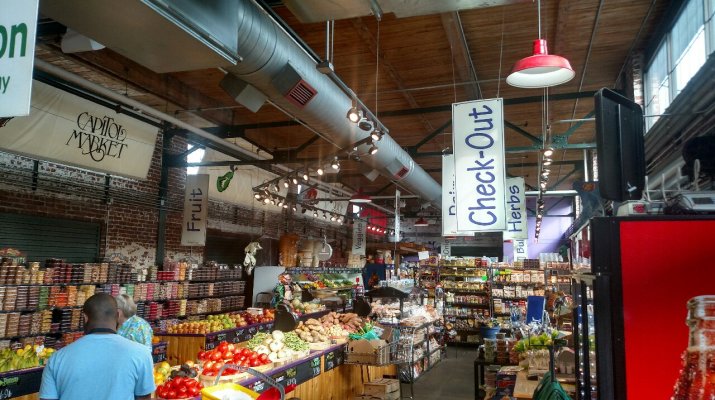
The beauty, activity and sheer size of the Charleston Capitol Market are simply stunning. Take a tour of this West Virginia showplace.

Source: A Tour Of The Charleston Capitol Market – A Gorgeous Farmers Market Like No Other! – Good Witches Homestead

FDA | Toxins – TheBreakAway

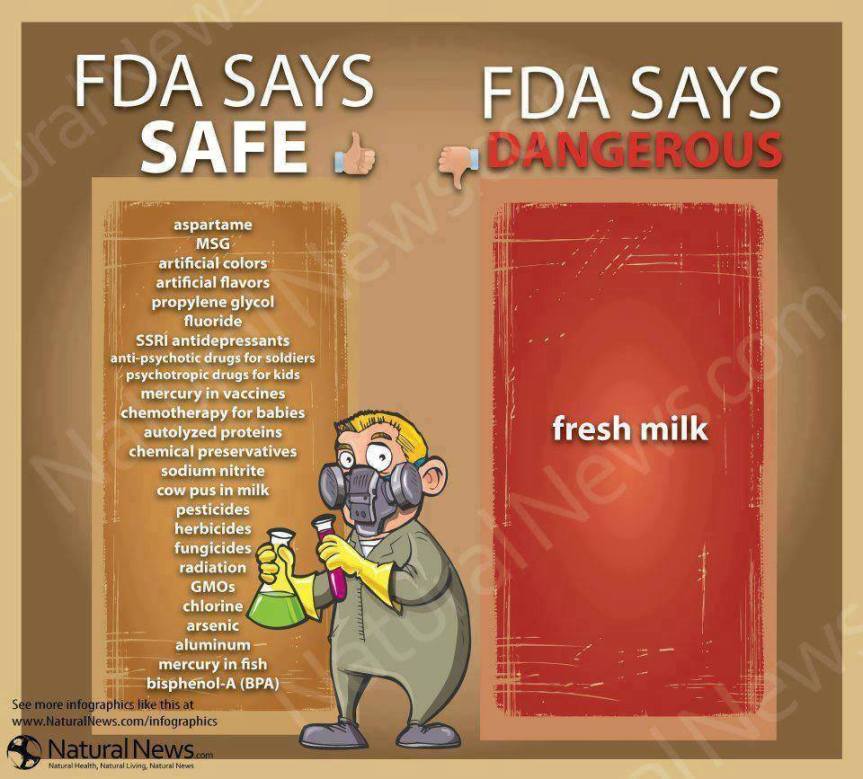
Photo post by @ZyMarquiez.

Source: FDA | Toxins – TheBreakAway

Nestle Paying Next to Nothing to Extract Water from San Bernardino National Forest – TheBreakAway

Source: RT
April 22, 2017

Mike Papantonio is joined by Farron Cousins, Executive Editor of the Trial Lawyer Magazine, to discuss Nestle’s water extraction efforts in the San Bernardino National Forest.

Source: Nestle Paying Next to Nothing to Extract Water from San Bernardino National Forest – TheBreakAway

More Fake News in Nevada about Wild Horses | Straight from the Horse’s Heart

Source: More Fake News in Nevada about Wild Horses | Straight from the Horse’s Heart

Wild horse & burro advocate Bonnie Kohleriter gives her opinion below about an article in Range Magazine written by Rachel Dahl, a sixth generation Nevadan.  Dahl worked as a campaign manager for the former Sen. John Ensign and served on his Senate staff by managing his Carson City office.  (Sen. John Ensign later resigned after an ethics investigation.)

The Queen of Fake News in Nevada

by Bonnie Kohleriter

Rachel Dahl is a writer for the Range magazine in Nevada, a pro cattle magazine, and is a resident in Mesquite, Nevada.

Grabbing a twisted tidbit from here and a twisted bit from there, Rachel Dahl attempts to impress her readers as a journalist. Having read her winter rant in the Range magazine, I feel compelled to retort with the following comments.

As Ms. Dahl reported, in the fall of 2016, at the National Wild Horse and Burro Advisory Board Meeting, the Board did not vote to remove excess horses nor did it vote to sell the animals with no limitations or to euthanize the sick and the aged.  The Board, on the other hand, voted to euthanize 47,000 wild horses and burros in holdings off the range.

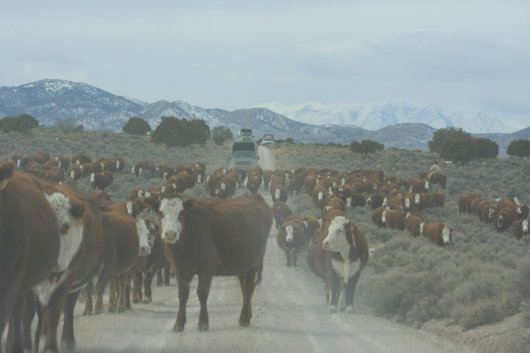
The horses, according to Ms. Dahl, are to blame for the ruinous condition of our public lands.  All hope is rested in removing them.  Or is all hope rested in removing cattle from the 27 M acres where the horses only are able to be and allowing cattle to be on the other 155 M acres of our public lands where they are currently.  It is understood cattle grazing on our public lands is a privilege and not a right as some ranchers want the public to believe.  Then, in addition, perhaps all hope is rested in the ranchers not being allowed to divert and cut off water from the horses.  Oh, horrors, Ms. Dahl, that there should be another way to look at managing our resources.

Again as Ms. Dahl reported, in the fall of 1916, the Board spent the day viewing where horses forage and viewing dead horses.  The Board spent the day viewing no dead horses and viewing where horses drink.  Dead horses were dramatically reported by Goicoechea who is a known horse hater and multi-generational cattle rancher.  The devastated land, according to the permittee, was done when overgrazing was done by  animals other than horses and burros and not by the horses themselves.

According to Ms. Dahl, Ben Masters, a member of the Board,  said the viewing that day was “one of the worst disasters he had ever seen.”  Ben is a young man who made a “movie” using Mustangs who were abused in the movie.  It is an absurdity that Ms. Dahl should use him as a source to substantiate her argument that horses have devastated our public lands.  Masters is no expert on our public lands.  He is also new to the wild horse and burro issues on our public lands.

Then Ms. Dahl brought up the name of Boyd Spratling to substantiate her argument as well.  Boyd Spratling had been on the National Wild Horse and Burro Advisory Board and is from Elko, where the Board was currently conferring.  Boyd is primarily a cattle veterinarian, represents cattlemen on the State Agricultural Board, promotes harvesting our wild horses, and presents falsified pictures to tug at the heartstrings to convince the public of those poor, poor horses on the range.  But he can’t tell you where he gets his pictures and the dates they were taken.  Boyd Spratling is a traitor to wild horses and burros.  He does not have their best interests in mind.

Ms. Dahl sounds the alarm wild horses and burros are dying everywhere on the range and in private sanctuaries in Nevada and even in WOW!   South Dakota.  Wild animals die in times of environmental disaster just as humans are dying due drought  and famine in Kenya, South Sudan, and Niger.  Is the answer to kill them?

Ms. Dahl has pulled out all stops to degrade horses using Mrs. Pickens and Mrs. Sussman, who have taken care of wild horses, but have nothing to do with our herd management areas for wild horse and burros on our public lands.  Can she find any other areas in which to attack horses or the people who have and/or care for horses.  Her article is like “Let’s talk about dinner foods, now think about Cheerios.”

“Every ranch kid learns you are responsible for taking care of an animal when you take custody of them,” says Ms. Dahl.  So Ms. Dahl, you are a part of the public who by law, has custody of our wild horses and burros?  Are you simply going to kill them for meat because some ranchers and politicians have manipulated their allowable numbers on the range to be less than genetically viable numbers for perpetuity?  Or are you going to try to come up with solutions for them to keep them on the range as healthy horses, celebrating their place on our public lands as part of our cultural, historical heritage?

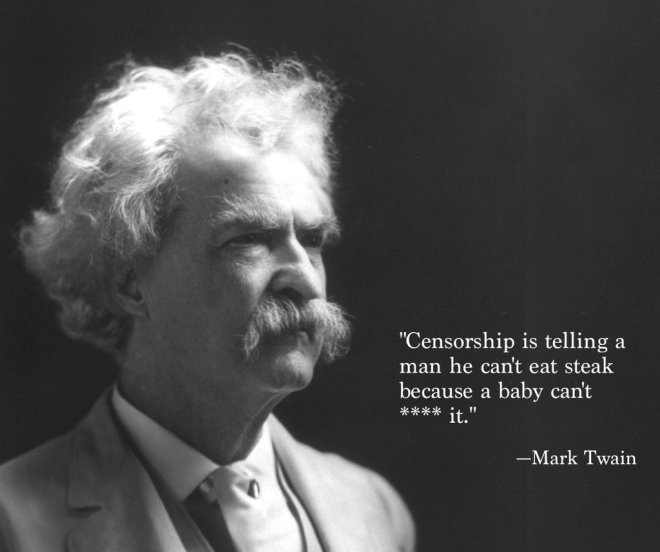
Censorship

“Censorship is telling a man he can’t have a steak because a baby can’t chew it.”  – Mark Twain*

Censorship

Source: Censorship