Your Apothecary Cabinet: Calendula Oil

By Crooked Bear Creek Organics

Crooked Bear Creek Organic Herbs's avatarCrooked Bear Creek Organic Herbs

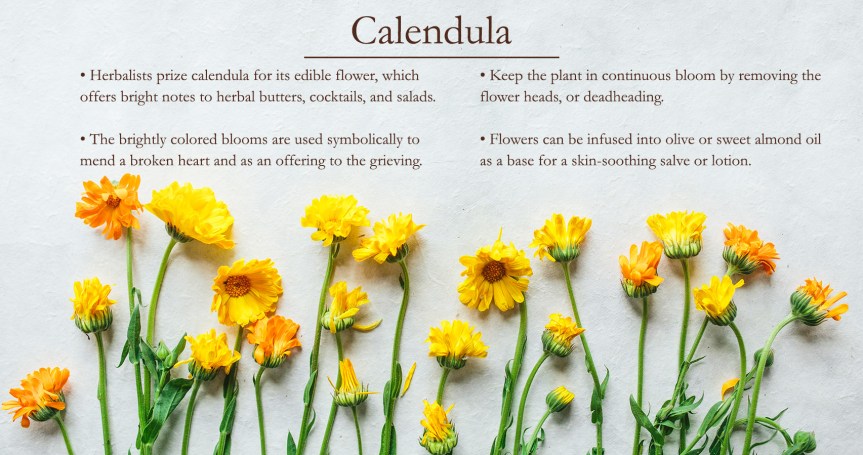
Marigold has much value today and in traditional cultures as a homeopathic remedy, but the oil extracted from the flowers, called calendula oil, is not far behind in providing benefits. Learn more about this oil distilled from the petals of the pot marigold or Calendula officinalis, and how you can harness its health and practical everyday uses.

What Is Calendula Oil?

Marigold is a genus of about 15 to 20 species of plants in the Asteraceae family. This flower is native to Southwestern Asia, as well as Western Europe and the Mediterranean. The common name “marigold” refers to the Virgin Mary, to which it is associated in the 17th century.

Apart from being used to honor the Virgin Mary during Catholic events, marigold was also considered by ancient Egyptians to have rejuvenating properties. Hindus used the flowers to adorn statues of gods in their temples, as well as to color their…

View original post 1,254 more words

Your Apothecary Cabinet: Common Base Oils

By Crooked Bear Creek Organics

Crooked Bear Creek Organic Herbs's avatarCrooked Bear Creek Organic Herbs

Vegetable and herbal oil are used in creams, lotions, massage, facial and body oils, gels, and salves.

Sweet Almond (Prunus amygdalis var. dulcis) and Apricot Kernel (Prunus armeniaca): emollients, can relieve itchiness and dryness.


Arnica (Arnica montana): indicated for bruises, varicose veins, burns, strains and sprains, arthritis, and myalgia.


Avocado (Persea Americana): wonderful oil for regenerative skin care, indicated for dry, itchy, or mature skin, antioxidant, nourishes the skin.


Baobab (Adansonia digitata) and Marula (Scelerocara birrea): emollient, soothes inflamed skin, dry skin, sunburn.


Borage (Borago officinalis) and Evening Primrose (Oenothera biennis): excellent regenerative skin care oils, nourishing, indicated for psoriasis, eczema, inflamed and dry skin conditions.


Calendula (Calendula officinalis): anti-inflammatory, wound healing, soothes dry irritated skin, insect bites, cell regenerative.


Coconut (Cocos nucifera): emollient, slightly occlusive to the skin, blend…

View original post 1,233 more words

Your Apothecary Cabinet: Herbal Oils

By Crooked Bear Creek Organics

Crooked Bear Creek Organic Herbs's avatarCrooked Bear Creek Organic Herbs

Herbal oils are simply oils infused with herbs, much as you would steep rosemary in olive oil for culinary purposes. Healing herbal oils can be taken internally for a variety of ailments, can be used externally for therapeutic or daily beauty routines, and can be incorporated into herbal salve recipes. Dried herbs are preferred since fresh herbs will sometimes ferment.

Basic Herbal Oil:

1 cup finely ground dried herbs {flowers, leaves, roots, barks, and/or seeds}

1 1/4 cups almond, jojoba, or olive oil

In a blender or food processor, combine the herbs and oil. Blend or process until puree for greater extractability. Pour the mixture into a clean glass jar with a lid, making sure the plant material is completely submerged in the oil. If it’s not, add more oil until the herbs are covered by about 1 inch of liquid. Cover the jar and store it in a dark…

View original post 775 more words

Your Apothecary Cabinet: Herbal First Aid Kit…

By Crooked Bear Creek Organics

Crooked Bear Creek Organic Herbs's avatarCrooked Bear Creek Organic Herbs

Being prepared with my favorite remedies gives me peace of mind on the road or trail, and keeps me from having to search out herbal products in an unfamiliar town — or from having to resort to padding my heels with mullein leaves to ease the agony of a broken blister while on a backpacking trip.

I’ve had plenty of opportunities to put my first-aid kit to use, from treating blisters and bug bites to motion sickness and colds. I choose simple, multipurpose remedies and store them in a small padded nylon lunch box that’s always ready to toss into the car. For backpacking trips, I pare my kit down to arnica gel, echinacea, peppermint and chamomile tea bags, crystallized ginger, insect repellant, a tin of herbal salve, a tiny bottle of lavender essential oil, and an assortment of bandages and moleskin.

With the following herbs and essential oils, you…

View original post 1,626 more words

The History of Herbal Medicine and Essential Oils

By Crooked Bear Creek Organics

Crooked Bear Creek Organic Herbs's avatarGood Witches Homestead

The history of essential oils is intertwined with the history of herbal medicine, which in turn has been an integral part of magical practices. Herbal medicine has been used for more than treating minor ailments and disease; it has been instrumental in providing life-enhancing benefits. In most ancient cultures, people believed plants to be magical, and for thousands of years, herbs were used as much for ritual as they were for medicine and food. According to medical herbalist and healer Andrew Chevallier, the presence of herbs in burial tombs attests to their powers beyond medicine. In addition, fourth-century BCE Greek philosopher Aristotle noted his belief that plants had psyches.

Aromatic plants in the form of oil and incense were elements of religious and therapeutic practices in early cultures worldwide. In addition, anointment with perfumes and fragrant oils was an almost universal practice. Burning incense in rituals provided a connection between…

View original post 1,460 more words

Know Your Herbal Chemistry

By Crooked Bear Creek Organics

Crooked Bear Creek Organic Herbs's avatarCrooked Bear Creek Organic Herbs

A herbalist should be fully aware of details about the pharmacology of herbs, a basic understanding of it is more than enough. Herbs are used for healing the human body, they are considered to be holistic agents, and they are used on a physical and biochemistry level. Many pharmacologists try to find out the constituents of herbs, place them according to their chemical groups and have done numerous research and have found herbs to be very complex in their characteristics. Herbs contain a huge variety of chemicals like water, inorganic salt, sugars, carbohydrates, proteins that are highly complex, and alkaloids.

Plant Acids:

An example of weak organic acids is generally found among plants, lemon is the perfect example of citric acid. Organic acids can be split into those based on a carbon chain, and those, which contain a carbon ring in their configuration, but what both have in common is the…

View original post 2,106 more words

Know Your Underground Roots

By Crooked Bear Creek Organics

Crooked Bear Creek Organic Herbs's avatarCrooked Bear Creek Organic Herbs

Underground Stems

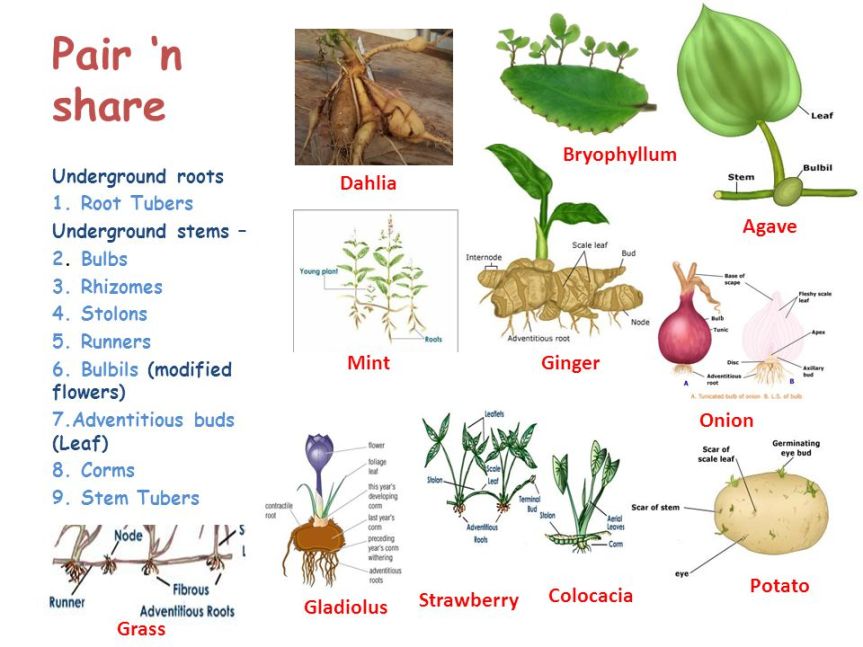
The underground stems, by being situated below the surface of the soil, protect themselves against unfavorable conditions of weather and the attack of animals and serve as storehouses for reserve food, and in vegetative propagation. Their stem nature can be distinguished by the presence of nodes and internodes, scale leaves at the nodes, axillary buds in axils of scale leaves and a terminal bud. Further, the anatomy of the underground stem resembles that of an aerial stem. The underground stems are of four types namely rhizome, tuber, bulb, and corm.

Rhizome

A rhizome is a thick horizontally growing stem which usually stores food material. It has nodes and internodes, scale leaves, axillary buds, adventitious roots and a terminal bud. Scale leaves enclosing the axillary buds are seen arising from the nodal points of the stem. Some of the axillary buds develop into branches which grow upwards into the…

View original post 338 more words

Your Apothecary Cabinet: The Healing Properties Of Herbs

By Crooked Bear Creek Organics

Crooked Bear Creek Organic Herbs's avatarCrooked Bear Creek Organic Herbs

There have been lots of pharmaceutical studies to evaluate the active elements present in herbs to discover the reason as well as the manner in which they work. A relatively outmoded method is to classify the herbs by exploring the types of health conditions that they can aid in curing. Identifying the actions of the herbs and the manner in which they may be employed together forms the basis of a comprehensive approach.

For example, in a number of instances, the action of herbs is owing to certain chemical or a blend of chemicals present in them – the sedative herb valerian is a perfect example of this. Alternatively, the action may also be owing to a multifaceted synergetic interaction between the different elements of the herbs. Nevertheless, the best way to comprehend the actions of the herbs is to consider them as characteristics all together and to interpret the chemical…

View original post 2,900 more words

Endangered Species; Herb Guide: Goldthread

By Crooked Bear Creek Organics

Crooked Bear Creek Organic Herbs's avatarCrooked Bear Creek Organic Herbs

Health Benefits of Goldthread

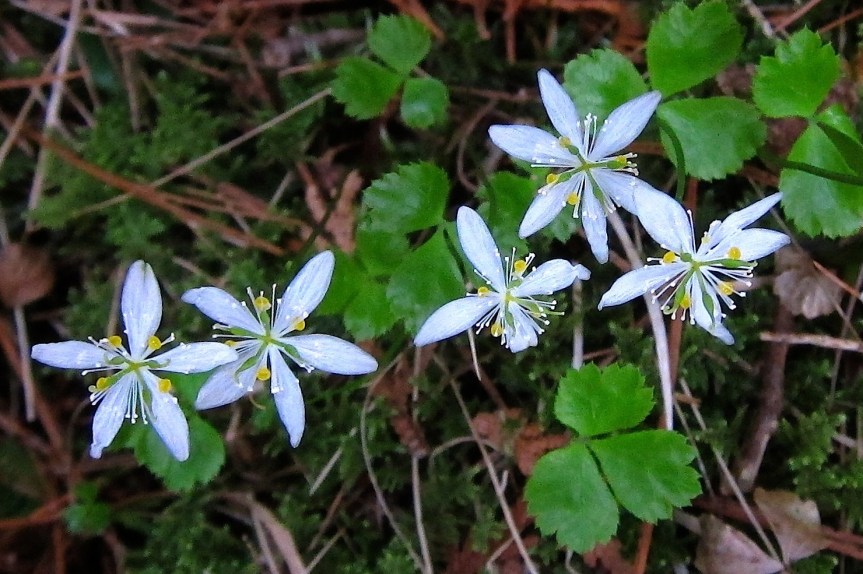
Goldthread, also known as coptis or canker root, is a genus of perennial herbs that have been part of Asian and North American traditional medicine for hundreds of years. The roots of the plant look like a tangled mass of gold thread, hence its name. Herbal goldthread is actually the powdered rhizome, or underground stem, of the goldthread plant.

View original post 580 more words

Herb Guide: Senna

By Crooked Bear Creek Organics

Crooked Bear Creek Organic Herbs's avatarCrooked Bear Creek Organic Herbs

Cassia senna syn. Senna Alexandria

Also, Known As:

  • Alexandrian Senna
  • Senna

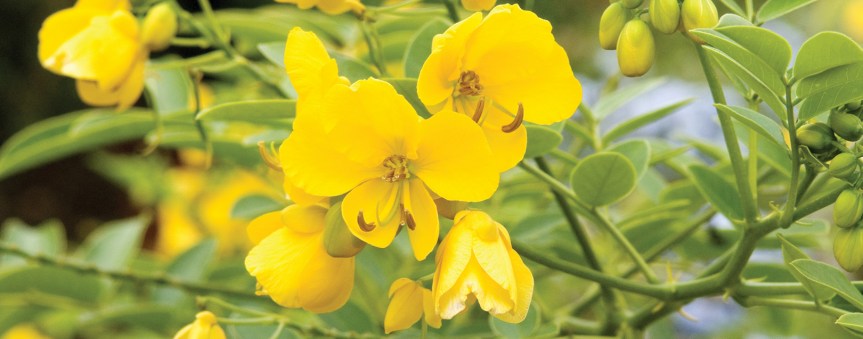
The senna plant is a small shrub belonging to the Caesalpiniaceae family. Incidentally, the senna belongs to two genus of Cassia – C. senna is also known as Alexandrina senna and C. Angustifolia that is also called the Tinnevelly senna. While the first variety of senna is found along the Nile River in Egypt and Sudan, the second type is widely cultivated in southern and eastern parts of India. It may be noted here that some experts are of the opinion that both the varieties of senna belong to a single species – Senna Alexandrina. Despite such claims, it may be said that the two varieties of senna differ greatly both according to morphology (structure of the plants) and histology (tissue study). Hence, the theory that Senna belongs to one single species is yet to get the pharmacognosists’ sanction.

View original post 1,844 more words