The Samhain of our Lives

Dana's avatarThe Druid's Garden

Just last week, we had our first hard frost. After homesteading for a number of years, you grow to be vigilant for the signs of the first frost. The air smells different somehow in the two or so weeks leading up to it. The bird and wildlife patterns change.  The nights have a crisp bite to them that they didn’t even a few days before. And then, just like magic one day, the frost is there, glistening in the morning light. The garden radically changes overnight–even for those things you covered–the entire landscape lies in disarray.

Sunrise at First Frost Sunrise at First Frost

I could feel it on the air, and for the last few mornings, have been going to to see if it had arrived. That morning, I turned the corner and first saw it first on the strawberry patch–white and glistening. The frost is beautiful, magical, and yet, destructive. While the…

View original post 1,466 more words
A Druid’s Guide to Herbalism, Part I:Harvesting by the Sun, Moon, and Stars, and Sacred Intent

Dana's avatarThe Druid's Garden

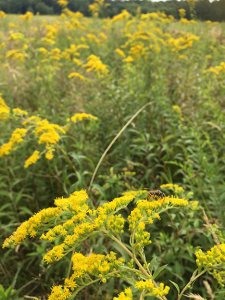
Field of Goldenrod in Fall Field of Goldenrod in Fall

A field of goldenrod, nettle, and aster greet me on this warm post- Fall Equinox day.  As the moon comes up with a sliver in the afternoon sky, I joyfully take my basket and harvest knife into the field for my fall plant preparations. The breeze has change on the air–winter is coming soon, and the sacred medicines I prepare will bring my family nourishment and strength for the coming dark half of the year. As we are well into the harvest season at this lovely Fall Equinox, I thought I’d take the time to talk about harvesting and preparation by the sun and moon and honoring the harvest. Next week, I’ll talk about the most basic plant preparations and we’ll end this series with talking about energetic preparations through the creation of flower and leaf essences.  That is, we’ll talk about the medicine of…

View original post 1,533 more words

Watch Webinar on Native Wildflowers

The Herb Society of America's avatarThe Herb Society of America Blog

By Jen Munson, HSA Education Chair

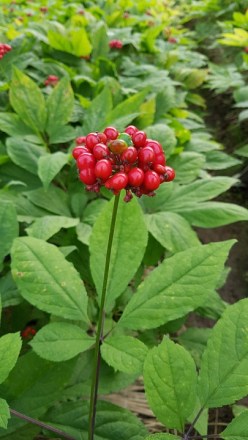
ginseng American ginseng (Panax quinquefolius) a globally rare plant species
The diversity of the world’s plants has dwindled and/or is threatened. In fact the International Union for the Conservation of Nature estimates that 54 percent of the 19,000 plant species they have identified are at risk. In New England it is estimated that almost 20 percent of New England’s native plants are on the verge of being lost and  another 5 percent has already disappeared. Native plants are under threat from invasive species, habitat loss, climate changes among other impacts.

The New England Wildflower Society seeks to preserve New England native plants. Based at the Garden in The Woods botanic garden in Framingham, Massachusetts, their mission is, “to conserve and promote the region’s native plants to ensure healthy, biologically diverse landscapes.” They secure and preserve seeds from rare plants to protect genetic diversity…

View original post 196 more words

Building Soil Fertility with Fall Gardening at the Equinox

Dana's avatarThe Druid's Garden

Leaves - nutrients AND enjoyment! Leaves – nutrients AND enjoyment!
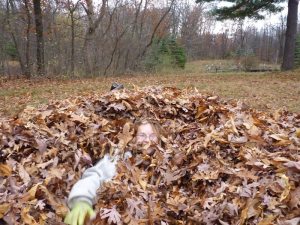
In the druid wheel of the year, we have three “harvest” festivals.  Lughnasadh, the first harvest.  So much of the garden produce starts to be ready at this time–and also at this time, the garden is still at its peak, but quickly waning. In the weeks after , our pumpkin patch died back with beautiful orange pumpkins and said “ok, I’m done for the year!” Then we have the Fall Equinox, where things are continuing to be harvesting, but many of the plants are in serious decline. By Samhain, everything is dead, the hard frosts have come and the land goes to sleep. It seems then, on the surface, that what we should be doing in the fall is primarily harvesting and sitting on our laurels and watching fall and winter come.

However, as a gardener and homesteader, my busiest time, by far, is the…

View original post 2,163 more words

The Plant Spirit Oracle Project

Dana's avatarThe Druid's Garden

Spirit of the Oak! Spirit of the Oak from the Plant Spirit oracle!
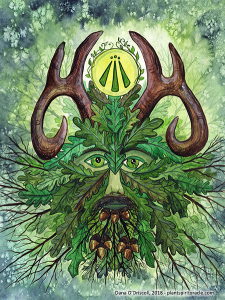
As we’ve been exploring over the last few weeks, plant spirit communication can take many forms.  The rustle of leaves outside of your window, the inner knowing, or the song a plant sings to you as you honor it for the harvest. These simple messages weave a complex landscape beyond what we can sense with our fives senses, and invite us deeper into the mysteries of the earth and all living beings. And as we’ve explored, the voices of the plants, the spirits of the plants, take a number of forms and can appear to each of us uniquely. What is clear is that the more that we open ourselves up to understanding them, honoring them, and working with them, the more connection we have with the living earth in her many forms.

Part of the reason I’ve been sharing so…

View original post 1,559 more words

Plant Spirit Communication, Part II: Communication in Many Forms

Dana's avatarThe Druid's Garden

I remember taking a drive with some friends and friends-of-friends some years ago. As we were driving through a really nice forest preserve with some old trees, one of my friends in the car said, “There’s so much money there in the trees, some of them would be worth more than $1500.” He went on to talk about how his family had recently logged their property and earned over $25,000. Other people in the car jumped in and talked about the forest’s beauty and argued against him; and I just listened. Finally, I responded and said, “Every living being has a spirit. I hope that forest stands forever. They deserve to live as much as you or I.” Before this conversation had started, I was listening to the singing of that forest, so happy, so safe to be preserved. This experience stayed with me, and was a good reminder about…

View original post 2,288 more words

Our Pantry Profile: Rosemary

Crooked Bear Creek Organic Herbs's avatarCrooked Bear Creek Organic Herbs

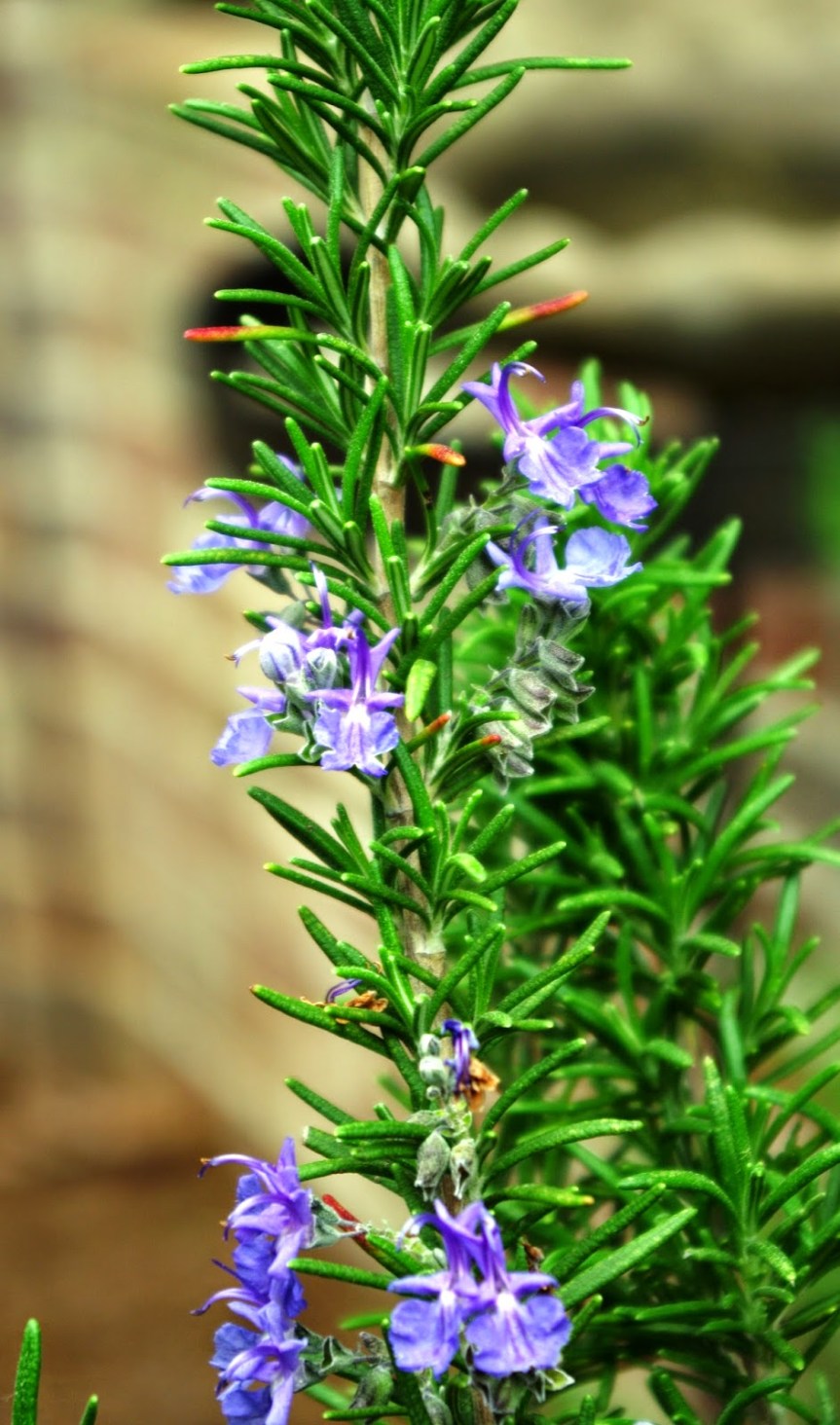
Rosemary {Rosmarinus officinalis}

The name Rosmarinus loosely translates to “dew of the sea,” given to rosemary because of its affinity for the wind-swept cliffs of the Mediterranean coast, where it originates. Beloved for centuries for its aroma and health benefits, this strongly aromatic member of the mint family is now cultivated worldwide.

Greek scholars wore garlands of rosemary to improve their memory and concentration, and many ancient herbalists recommended rosemary for failing mental acuity. During the Middle Ages, some would wear it around the neck to protect from the plague. Thirteenth-century Queen Elisabeth of Hungary claimed at 72 years of age, crippled with gout and rheumatism, that she had regained her beauty and strength by using “Hungary Water” {largely rosemary-infused}, compelling the King of Poland to propose marriage to her. Along with juniper, rosemary was frequently burned by the tub-full to disinfect the air from disease, from ancient times through…

View original post 827 more words

Our Pantry Profile: Thyme

Crooked Bear Creek Organic Herbs's avatarCrooked Bear Creek Organic Herbs

Thyme {Thymus vulgaris}

Common garden thyme has been used for protection, courage, food, and medicine since the beginning of recorded history. A low-growing, aromatic shrub native to the rocky hills of the Mediterranean and Southern Europe, it’s now a staple of herb gardens around the world.

Roman soldiers bathed in thyme to maintain their courage and strength before a battle, and in medieval times, departing knights received thyme-embroidered scarves from their lady loves to keep up spirits and inspire courage. A popular belief was that thyme tea prevented nightmares and even encouraged dreams of fairies. Carrying thyme warded off evil spells and witchcraft, while sewing thyme and fern into the hem of a dress kept the Devil from taking a woman as his bride. Placing a sprig of thyme in one shoe and a sprig of rosemary in the other on the Eve of St. Agnes {January 20} was said…

View original post 827 more words

Plant Spirit Communication, Part I: Your Native Langauge

Dana's avatarThe Druid's Garden

When I was  new to my first job, a colleague had given two of us both who had been recently hired an elephant ear plant seedling for our offices. Our offices were next to each other, both with the same window. Each plant was planted in an identical pot and in identical soil. My elephant ear plant grew quite large and beautiful, while my colleague’s plant kept sending up small shoots and dying back. Finally, she said to me, “Why is your plant doing so much better than mine?” And I responded as a druid, totally without thinking, “I just talk to the plant and it tells me what it needs.” She rolled her eyes at me, let out an exasperated sigh, and walked away. She was never a very pleasant person, but she was particularly nasty to me for some time after that. Perhaps she thought I was mocking…

View original post 1,837 more words

A Druid’s Guide to Connecting With Nature, Part III: Nature Engagement

Dana's avatarThe Druid's Garden

Leading you in deeper! Leading you in deeper!

I’ve heard a lot of conversation in the nature spirituality community, including the druid community, about not touching nature, leaving it alone, to simply “be”.  I remember one influential druid speaking at an event and saying, “The best thing you can do in nature is pick up the garbage and get out.”  From a certain standpoint, this perspective makes a lot of sense. It is the same perspective held by many conservationists trying to preserve pristine lands or lands that have been replanted and are healing; the best thing that can be done is figure out how to keep people from mucking them up, pick up garbage, and leave them undisturbed. Because people have a tendency to come in, move things about, pick things, disrupt ecosystems, and generally cause havoc.  Or worse, much, much worse. Further, in a world where most humans can’t identify even five…

View original post 2,628 more words