Enchanted Crabapple Galette for Morgan Le Fay — Gather Victoria

Oh my, it is almost the Autumn Equinox! This means it’s time to share this rustic Crabapple Galette inspired by the Great Mother goddess Modron and the great Fairy Queen Morgan Le Fay. Crabapples and berries have long played a role in the magical lore of the Second Harvest or Mabon. (You can learn more…

Enchanted Crabapple Galette for Morgan Le Fay — Gather Victoria

A 21st Century Wheel of the Year: Cultivating Receptivity at the Fall Equinox

Dana's avatarThe Druid's Garden

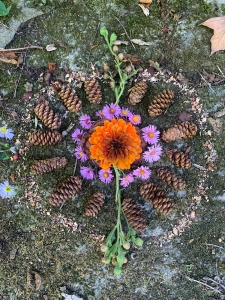
Nature Mandala

The Fall Equinox is traditionally about harvest, harvesting the fruits of your labor and the fruits of the land in preparation for the coming of winter. This model of the wheel of the year focuses on earned outcomes: you’ve planted your crops, you’ve tended them all season, you’ve invested the time, and now, you are able to receive the rewards of your efforts. And a lot of our own understanding of the celebration of these seasons works on that narrative: planning, planting, tending, harvesting, and the cycle of the seasons. This same cycle is expected, perhaps, anticipated, in our everyday lives. For example, if you put the effort into getting degrees and starting a career, or if you put in a ton of hard effort at your workplace, you will eventually be rewarded with a harvest, a payoff, and a sense of stability. There’s this large sense that…

View original post 2,724 more words

Sacred Trees in the Americas: Paw Paw (Asimina triloba) Medicine, Myths, and Meaning

Dana's avatarThe Druid's Garden

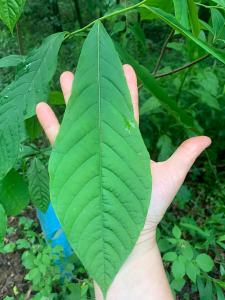
PawPaw leaf - as big as your hand! PawPaw leaf – as big as your hand!

The PawPaw is a tree that is so wild and unique and wonderful, and yet, is often quite unknown–it is the only native citrus tree we have in the upper east East Coast and midwest areas. Like some of the other trees I have recently shared in this series, Paw Paw is an underappreciated and under-recognized tree. Within the bushcraft and permaculture circles, it is quite well known as an amazing tree to find, plant, and tend. One of the reasons that PawPaw is probably not more well known has, unsurprisingly, everything to do with the commercial viability of the fruits. PawPaw fruit is absolutely delicious but it only stays good for a few days after picking–so it would never survive the rigors of modern industrial agriculture.  You can occasionally find it at a good farmer’s market, and it is well worth…

View original post 2,240 more words

Horehound – Herb of the Month

The Herb Society of America's avatarThe Herb Society of America Blog

By Maryann Readal

Horehound leavesThe fuzzy, light gray, deeply-wrinkled leaves of horehound (Marrubium vulgare) offer a nice contrast to other colors and textures in the garden. I love that contrast around the base of the red roses in my garden. Horehound is a perennial herb that grows from one to two feet tall, and can spread in the garden. It prefers dry sandy soil and a sunny location, tolerates poor soil, and is hardy in USDA Zones 4‒8. It may be started from seed in the spring, although germination is slow and sometimes not reliable. Cuttings can be taken from a mature plant or the established plant can be divided. Its leaves have a very bitter taste. Horehound produces whorls of small white flowers at the top of the stalk in the second year. The flowers are very attractive to bees, which makes for a tasty honey. The barbed…

View original post 914 more words

Starting a Successful Front Yard Garden and Avoiding Legal Trouble: Interview with Linda Jackson of Natures Harvest Urban Permaculture Farm

Dana's avatarThe Druid's Garden

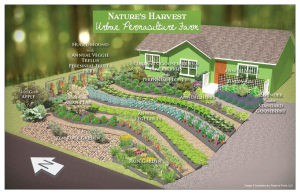
Original design for Nature’s Harvest Urban Permaculture Farm

Six years ago, I shared about Natures Harvest Urban Permaculture Farm, a front-yard garden located in the Detroit metro area. When I shared this post, Linda was in her first year of gardening in this new location, and was regularly selling her produce at a local farmer’s market and engaging with her community.  Here are links to my first two posts about her incredible garden that discusses the original process, design: Nature’s Harvest Urban Permaculture Farm and Return to Nature’s Harvest Urban Permaculture Farm.

A few weeks ago, when I was visiting Linda, I shared some photos of her garden to my social media, and many people responded by saying “she must not have a homeowners association”, “ how did she not get in legal trouble?”, or “my township would make me tear that down!” The questions and comments of…

View original post 3,138 more words

Wild Food Profile: Yellow Dock (Rumex crispus) Seed Flour & Yellow Dock Pancake Recipe

Dana's avatarThe Druid's Garden

Harvested dock seed with a ready-to-harvest yellow dock plant

This past month, I had a chance to visit Silver Acres, my friend’s 5 acre farm in the thumb of Michigan, where she is practicing rewilding, restoration agriculture, and permaculture.  We were walking through her field and found a good deal of yellow dock that was in seed form–which for the Midwest US, usually happens around Lughnasadh (August 1st) and continues to the Fall Equinox.  While I’ve eaten the young leaves and used the roots as medicine, I haven’t had a chance to try making any seed flour yet–so we set about our task joyfully.  I’m quite impressed by how easy this flour is to make (compared to say, acorn flour) and it cuts nicely with other flours.

Foraging for wild foods is not only a fantastic way to connect deeply with the land but also allow us to reconnect…

View original post 1,166 more words

Three Principles for an Ethical Foraging

Dana's avatarThe Druid's Garden

Foraging for wild foods, mushrooms, and wild medicines is something that is growing as a pastime for many people. The joy of foraging from the land connects us to our ancient and primal roots and allows us a chance to build a more direct connection with nature. But with any practice rooted in nature comes the need for balance and responsibility. Thus, the following principles can help wild food foragers and wild food instructors harvest ethically, sustainably, and in a way that builds wild food populations rather than reduces them.  I share both the principles in text below as well as graphics.  The graphics are (full size and web-sharable versions, see links) and they are licensed under a Creative Commons license.  Anyone who teaches plant walks or wants to use them in foraging, wild foods, and herbalism practice is free to download them, print them, and share them! The…

View original post 2,431 more words

Cayenne Pepper – Herb of the Month

The Herb Society of America's avatarThe Herb Society of America Blog

By Maryann Readal

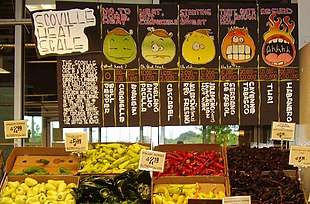
Hot! Hot! HOT! – but not the hottest! Cayenne pepper, Capsicum annuum, is hot, but it reaches only 30,000 – 50,000 Scoville Heat Units (SHU) on the Scoville Heat Scale. For comparison, the ‘Carolina Reaper’ pepper reaches 1.4M – 2.2M SHU, and the jalapeño pepper just a meager 2,500-8,000 SHU. The Scoville Scale was developed by pharmacist Wilbur Scoville in 1912 to determine heat levels based on subjective sensitivity to capsaicinoids in peppers. Although modern lab methods are used today to determine the heat level of peppers, the Scoville Scale is still the common way to classify pepper heat intensity (Mountain Rose Herbs, 2021).

Cayenne pepper, a member of the Solanaceae, or nightshade, family, is native to tropical North and South America. The term “cayenne pepper” can generically refer to any of a number of peppers within the Capsicum annuum Cayenne Group, which is characterized by being…

View original post 882 more words

Summer Savory – Herb of the Month

The Herb Society of America's avatarThe Herb Society of America Blog

By Maryann Readal

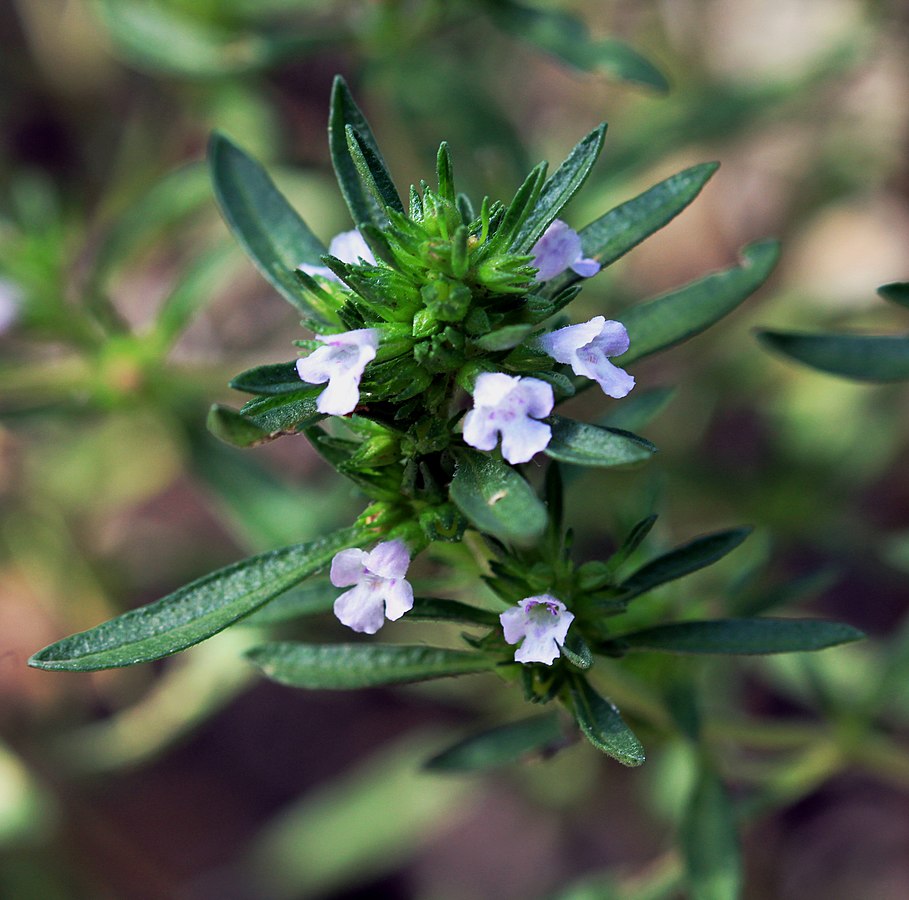
Satureja_hortensis_Prague_2011_3 by Karelj via wikimedia commonsIt is summer and a perfect time to learn about summer savory, Satureja hortensis. If you have this spicy herb growing in your garden, plan to start using it this summer. It is an easy-to-grow, low-growing annual with white to pale pink flowers and narrow leaves. When in full bloom, the plant looks to be “covered with snow” (Clarkson, 1990). Summer savory requires full sun and good drainage, and can easily be started from seed. It may reseed if given enough sun and water. The leaves are very fragrant and have a warm, peppery taste, which is stronger before the plant flowers. Trim summer savory throughout the summer to encourage new growth. The leaves dry easily and can be stored for later use. Winter savory, Satureja montana, is its stronger, perennial cousin.

Like mint, sage, rosemary, thyme, and oregano, summer savory is in the Lamiaceae…

View original post 879 more words

Herbal Trees and Shrubs of the Plains and Prairies

The Herb Society of America's avatarThe Herb Society of America Blog

By Katherine Schlosser

From place to place, season to season, and year to year,

the colorful mixtures and combinations of flowering herbs

are influenced by permutations of weather, grazing,

competition with grasses, and seed abundance.

~David S. Costello

Since childhood the words “For amber waves of grain, For purple mountain majesties, Above the fruited plain” colored my impression of the landscape of the western part of our country. Visits to grandparents, aunts and uncles, and masses of cousins didn’t disappoint my vision. It wasn’t until adulthood that I fully understood that those words were essentially a drone fly-over.

For some of us, it takes paying attention not only to the larger landscape, but to the details as well to appreciate the enormous botanical diversity of our country. From the tallest coast redwood (Sequoia sempervirens) to the tiny littleleaf pyxie moss (Pyxidanthera brevifolia)and its 1/4-inch flowers peering…
View original post 1,665 more words