Feel Good Sunday: Old Horse At ‘Kill Lot’ Decides To Rescue Himself | Straight from the Horse’s Heart

by as published on The Dodo

“He was intent that this was his ride out of there.”

BubblesAn old horse was at a “kill lot” in Texas when he realized he would simply have to save his own life.

So when he spotted a group of people who were there to rescue some mini donkeys in the same life-threatening predicament, he decided to go with them.

“This skinny, grey gelding walked straight up to our trailer, past the gates, disregarding the commands of the kill lot employees,” Becky’s Hope Horse Rescue in Frisco, Texas, wrote earlier this month. “He was intent that this was his ride out of there.”

Sarah McGregor, a spokesperson for Becky’s Hope, explained that the “kill lot” in North Texas where the horse, named Bubbles, comes from is the last place animals get a chance to be rescued before heading to Mexico for slaughter.

“Oftentimes, the horses or donkeys are old, or the owners lost their property, or the owners passed away or simply are unable to care for them and they are sold to auction,” McGregor told The Dodo. “If they are not bought at auction by people or other farms, the slaughter pipeline will buy up all of the animals and resell them.”

This was very nearly Bubbles’s fate — before he decided to adopt his own rescuers. “We stood there staring as this old guy with crumbled ears from frostbite waited patiently for the group of mini donkeys to catch up so he could jump on the ‘freedom trailer’ out of there,” the rescue wrote. “There was just no way we could leave him behind!”

Luckily, the rescuers had just enough money from donations to Becky’s Hope to rescue this old guy — so they did. “This sweet, old man won our hearts the minute he decided it was the perfect time to escape the kill lot,” the rescue wrote. “It seems that he thought nobody would notice him escaping if he simply mixed in with the mini donkeys!”

Now he’s safe and happy at Becky’s Hope, meeting people who want to stroke the nose of the horse who rescued himself. “He is adjusting so well as if he knew that this rescue was where he belonged all along,” McGregor said. “He loves attention, loves grazing and getting special treats.”

Click (HERE) to read more.

Source: Feel Good Sunday: Old Horse At ‘Kill Lot’ Decides To Rescue Himself | Straight from the Horse’s Heart

Knowledge & Experience …

Logical thinking cannot
yield us any knowledge of
the empirical world;
all knowledge of reality
starts from experience
and ends in it.
Propositions arrived at by
purely logical means are
completely empty of reality.
~ Albert Einstein


Related Article:

The Life of Albert Einstein ~ At Emily’s Quotes or her page of Albert Einstein’s Quotes

English: Albert Einstein Français : Portrait d...

English: Albert Einstein Français : Portrait d’Albert Einstein (Photo credit: Wikipedia)

via Knowledge & Experience — Apanache

Our National Mammal Under Fire: Bison Slaughter | Straight from the Horse’s Heart

by the Buffalo Field Campaign

“Here at Wild Horse Freedom Federation our primary concerns lie with the government’s full blown assault against our free roaming wild horse and burros on public lands and trust me, that in itself is a full time job.  But with that being said we are not blind to the similar plights of other fellow passengers on Spaceship Earth such as whales, dolphins, wolves, coyotes and in the case of this information Bison.

Right now, there is massive concern over what is happening to the wild Bison in Yellowstone and the information below speaks to this issue.  We share this story, not to dilute our work with the wild equines but to further demonstrate the abject stupidity of government be it local, state or federal.  It is a shame that the court system does not allow us the capability to sue such entities for the simple cause of just being “STUPID”.  If that were possible the courts would be clogged beyond imagination and I would be first in line with case in hand.  Keep the faith.” ~ R.T.


The horror of what is happening daily to these buffalo families are events that could fill thousands of pages…

2017-01-26-02-003-mourning-bfcsesay2017800The very same government who declared the American bison our National Mammal with such pomp and ceremony is hell bent on destroying the last wild, migratory population. Approximately 190 Yellowstone buffalo have been trapped by Yellowstone National Park employees who wear the image of buffalo on their badges. These and hundreds more of the world’s most beloved and important buffalo are destined to be reduced to meat within the cold walls of slaughterhouses. Just this week, however, Montana Governor Steve Bullock issued an executive order prohibiting Yellowstone from moving buffalo through Montana to slaughter until Yellowstone finds a “temporary home” for the forty young buffalo who have been held captive in Yellowstone’s trap since last February. These buffalo don’t need a “temporary home.” They have a home, the Yellowstone Ecosystem, where they roamed freely until last winter. While this executive order may stall the slaughter, it will not prevent it, and will likely result in the nearly 200 buffalo who have been captured for slaughter being confined in the trap for a longer period of time.  This is a game of political chess being played with the sacred buffalo used as pawns in an attempt to push a quarantine (domestication) plan through. Quarantine is not a solution, and does not prevent slaughter; it is part of the larger problem of control and manipulation of wild, migratory buffalo which results in buffalo being repeatedly tested, many slaughtered, and survivors living behind fences until they are reduced to meat or die in captivity.  Some quarantined buffalo have even been sent to zoos. Yellowstone’s trap serves a livestock model paradigm — quarantine and slaughter — and is an extreme danger to these wild gentle giants, the last of their kind. Buffalo who are able to evade capture by slipping past the trap face another imminent danger just a mile north of the trap at Yellowstone’s north boundary, and also along the park’s west boundary, in tiny portions of southwest Montana where so-called hunting is taking place. At least 185 buffalo have been stopped dead in their tracks with bullets. By the time you read this, that number will likely have risen.

he horror of what is happening daily to these buffalo families are events that could fill thousands of pages, and while we can’t share every detail, here is some of what has been happening to the buffalo:

The other morning we supported a solitary bull buffalo who was walking along dangerous part of U.S. 191. Following at a safe distance with our hazards on, we stayed with him to warn traffic. There is so much snow piled up on the sides that it is very difficult for any buffalo to vacate the highway, so on he went. Unfortunately, a group of passing state hunters spotted him too, and they immediately positioned their truck just ahead of the bull, moving at his speed, their exhaust blowing in his face. This part of the highway runs through Gallatin National Forest, so the hunters only needed to get him to move a few feet off the road in order to kill him. Their opportunity came when he got spooked by a passing vehicle. The bull jumped into the snowbank and the hunters — if you can call them that —  parked their truck (illegally, it turns out) and the man with the tag grabbed his rifle and post-holed though the deep snow after him. We mistakenly thought they needed to be much further off the road before they could shoot, and we told them so. They yelled at us, saying we were interfering, and the man with the rifle screamed “I’ve waited fifty-seven years for this!” and pressed on, trudging a few more feet after the bull who had moved a little deeper into the tree line. But the bull got away. At least for the moment. Authorities arrived and gave the hunters a warning for parking illegally, and asked us to move on. We were elated in thinking that this handsome bull who had struggled so hard to just walk down the road had escaped with his life. Disaster narrowly averted. Or so we thought. Afternoon patrols took over, and when they came home they shared the bad news that the hunter had gone after the bull again, shooting and injuring him without pursuing him. Instead he sat in the warmth of the truck waiting for him to emerge from the forest. How could the hunter anticipate where the wounded buffalo might go and how could he not pursue him? The bull did emerge again, limping. He kept falling and getting up, disoriented and badly hurt. He was heading down a road that leads to the town dump, where he could not legally be shot. Authorities arrived, and, because the bull was so badly wounded, the hunter was given special permission to kill him in the road. He took four shots at close range to finally end the life of this bull he had injured earlier…(CONTINUED)

http://buffalofieldcampaign.org/bfc-news/our-national-mammal-under-fire-act-now

gave the hunters a warning for parking illegally, and asked us to move on.

Source: Our National Mammal Under Fire: Bison Slaughter | Straight from the Horse’s Heart

Stop Operation Soros (SOS): Massive Movement To Overthrow George Soros Explodes In Macedonia – The Geller Report

A major new initiative called Stop Operation Soros (SOS), a movement dedicated to stopping the evil machinations of Nazi collaborator billionaire George Soros, has taken off in Macedonia.

The SOS founders called on citizens around the world to “fight against one-mindedness in the civil sector, which is devised and led by George Soros.” The movement has been set up to expose the ‘subversive activities of all of George Soros’s organizations. Hungary has also taken to steps to clamp down on Soros funded organizations by banning them from the country.


‘Stop Operation Soros’ movement begins in Macedonia

RT, 19 Jan 2017 15:36

A new initiative, Stop Operation Soros (SOS), dedicated to countering the influence of American billionaire activist George Soros, has been launched in Macedonia.

In a press conference on Tuesday, the founders of the group called on all “free-minded citizens,” regardless of ethnicity or religion, to join them in the “fight against one-mindedness in the civil sector, which is devised and led by George Soros,” the Vecer newspaper reported. The movement says it will first focus on uncovering ‘subversive’ activities by Soros-funded NGOs.

According to Nikola Srbov, a columnist for pro-government news portal Kurir and co-founder of SOS, Soros-funded NGOs have monopolized civil society in Macedonia and used their position to suppress dissenting views.

“We’ve witnessed the takeover of the entire civil sector and its abuse and instrumentalization to meet the goals of one political party. That is unacceptable and goes beyond the principles of civic organizing,” Srbov said at the press conference.

“The Open Society Foundation, operating under the Soros umbrella, used its funding and personnel to support violent processes in Macedonia. It has monopolized the civil society sector, pushing outside any organization which disagrees with the Soros ideology,” he stated.

Another co-founder, Cvetin Cilimanov, editor-in-chief of the state-run MIA news agency, accused Soros’s Open Society Foundations of undermining Macedonian sovereignty by working not only with the opposition center-left SDSM party, but also with outside interests. By cooperating with foreign embassies and organizations such as USAID, Cilimanov believes Soros-backed groups have interfered in the political process of Macedonia.

“This is unacceptable and has largely contributed to a feeling in the public that the traditional relations of partnership Macedonia enjoyed with some countries are being undermined,” Cilimanov told journalists.

A third founder of the initiative and editor-in-chief of the Republika news portal, Nenad Mircevski, declared that the group would work towards the “de-Soros-ization” of Macedonia, echoing a speech made by former prime minister and leader of the ruling VMRO-DPMNE party Nikola Gruevski in December. In the speech, Gruevski accused foreign powers and Soros-backed organizations of meddling in Macedonian politics.

Opposition figures have expressed concern at the rhetoric used by Gruevski, fearing the start of a crackdown on dissent and advocacy groups.

The Open Society Foundation (OSF) was set up by Hungarian-born Soros between the mid-1980s to early 1990s with the stated aim of helping former Eastern bloc countries transition from communism. However, aside from its support for progressive causes such as drug policy reform, the OSF has also been involved in political activities and Soros publically supported the violent overthrow of the legitimately-elected government in Ukraine during the ‘Euromaidan’ revolution. This has earned him the ire of Russian authorities, which in 2015 banned Soros and his foundations as a threat to national security.

Soros and his foundations have come under scrutiny elsewhere as well. In an interview with the internet portal 888.hu in December, Hungarian Prime Minister Viktor Orban said that 2017 would bring about “the extrusion of George Soros and the forces symbolized by him.” Orban has accused Soros of undermining European borders and values by helping facilitate the flow of refugees and asylum seekers from the Middle East and elsewhere. During a Reddit AMA (Ask Me Anything), WikiLeaks’ Julian Assange also blasted the Organized Crime and Corruption Reporting Project, funded by Soros, for focusing “exclusively on negative stories about Russia and former Soviet states.”

Source: Stop Operation Soros (SOS): Massive Movement To Overthrow George Soros Explodes In Macedonia – The Geller Report

Update on ISPMB Wild Horse Hearing | Straight from the Horse’s Heart

By Elaine Nash

16195789_10212724812901777_3398401177923305476_n

The hearing regarding final resolution to the ISPMB case- which was first scheduled for January 27 and then changed to January 26 and 27, has now been canceled. The State Attorney decided to make a deal with ISPMB, allowing them to keep some of the horses- from 12-30, we’re told. The terms will be official by the close of business today, we’re told Fleet of Angels and our partner organizations didn’t participate in the deal making, and had no voice in the negotiations. We will release an official statement as soon as we receive our copy of the new court order, so that we’ll be providing the most accurate information possible. In the meantime, the final points of the deal are being worked out between ISPMB attorneys and State Attorney. Anything said by others in the press or on social media right now is based on speculation.

We’re preparing to pick up the rest of the horses and relocate them to a new, much more appropriate adoption hub. That’s our big news, really, and we’re eager to share the details ASAP!

Although this new deal comes as a surprise to us, we are pleased that by the end of this mission, we will have been able to save approximately 96% of the ISPMB horses. Think about that- 96% of the horses will be leaving ISPMB very soon. With YOUR help, we’ll keep them fed and cared for while we work to get them to their new adoptive homes!

Source: Update on ISPMB Wild Horse Hearing | Straight from the Horse’s Heart

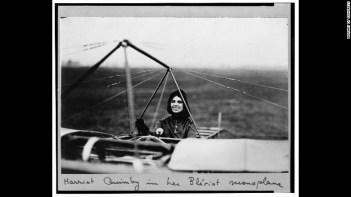
The women pilots that history shouldn’t forget …

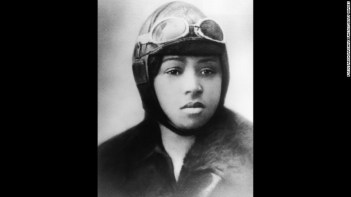
Queen B: Bessie Coleman

Bessie Coleman broke multiple barriers when she took flight in 1921, and became the first African-American woman to earn a pilot’s license.

Today’s Google Doodle commemorates the 125th anniversary of her birth. Coleman was among a small group of female aviators in the early 20th century who successfully flew around the detours of racial prejudice and sexism to become queens in the air.
Worldwide, only 3 percent of airline pilots are women, the Royal Aeronautical Society said last November.
Recently, there’s a move to change that.
The obvious place to begin is by highlighting the achievements of those long-forgotten — the women who ignored the men who scorned them, broke through the restrictions society placed on them, and paved the way for Amelia Earhart.
Bessie Coleman set her sights high when she left rural Texas in her 20s. She moved to Chicago and worked as a manicurist, but it was her brothers’ stories from from World War I that piqued her interest in flying. They’d make jokes about about how French women were better than African-American women because they could fly. Those taunts became inspiration, but flight schools in the US denied her entry because of her race and gender, according to the Smithsonian.
Very few American women of any race had pilot’s licenses by 1918, but those who did were often white and rich. Undeterred, she learned French and moved to Paris. In 1921, Coleman became the first female pilot of African-American and Native-American descent.
Upon her return to the US she still faced discrimination and found work barnstorming, according the Chicago Defender newspaper. As a stunt pilot she dazzled crowds as she parachuted from planes and performed aerial tricks. The pioneering daredevil was given the nickname “Queen Bessie.”
She died at 34 in 1926 during a practice run with another pilot. About 10 minutes into the flight, as they were doing a dive, the engine stopped working and Coleman fell from the plane. While she never fulfilled her dream to open a flight school for future black pilots, Coleman’s imprint on aviation history lives on.
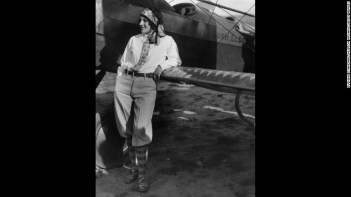
Here are some of them, whose stories researcher and author Laurie Notaro dug up for her book, Crossing the Horizon.

Miss America of Aviation: Ruth Elder

Ruth Elder was known for her beauty and acting, but her real dream was to become the female version of transatlantic aviator Charles Lindbergh.
Newspapers at the time loved to describe her as ‘the pretty American girl‘ who refused to give up her dream of flying from New York to Paris.

Elder refused to disguise herself as a man to become a pilot. Her popular hairstyle was known as 'Ruth Ribbons.'

A woman out of her time, she even put flying above marriage.
“Her husband complained that she devoted all her attention to aviation and none to her home,” reported The Scotsman in 1930.
But mechanical problems caused her monoplane, and dream, to crash in her last attempt on October 11, 1927.
She survived, floating in the Atlantic Ocean, 360 miles from land before she was rescued. At the time, it was the longest flight ever made by a woman.
“I knew if the venture succeeded it would lift me from obscurity. If it failed, and I went down, it would only be another useless life lost,” Elder told the Sunday Mail.
Her name, while often overlooked, will forever linked to the title “Miss America of Aviation”.

A British Earl’s daring daughter: Elsie Mackay

The daughter of British Earl James Mackay, Elsie Mackay insisted on being both an actress and a flier.
She was better known by the public as Poppy Wyndam. That’s the name she picked to avoid her father’s ire in her career choices.

Mackay, better known as actress Poppy Wyndham, was so famous that candy companies gave away trading cards with her photo on them. Her, dream, however, was to fly.

But while Mackay stared in eight films, she died trying to accomplish her true dream: becoming the first woman to cross the Atlantic by air in March 1928.
Mackay flew under a male pseudonym and planned her entire flight in secrecy, researcher and author Laurie Notaro told CNN. This included “bringing an airplane over from the United States because no one would sell her one in England.”

The queen of diamonds and air: Mabel Boll

Mabel Boll, got her nickname — the Queen of Diamonds — because she loved her sparkly jewelery. But the American socialite loved flying even more. She wanted to be remembered as the ‘Queen of the Air.’
When living in Paris as a young widow, she tried to find a pilot to fly with her across the Atlantic in January 1928.
“Mabel Boll was also Amelia Earhart’s closest and fiercest competitor. She and Earhart were stationed 90 miles apart on Newfoundland, depending on the same weather reports to make their transatlantic attempts,” Notaro told CNN.
Boll didn’t succeed. Earhard made the crossing six months later, in June.

Why remember these women?

“Everyone knows about Charles Lindbergh, but that’s not the case for these women,” Notaro said. “History turned its back on them. I very much wanted to right that wrong.”
“We have to remember the other pioneering aviatrixes who paved the way for Amelia Earhart as well as all of the woman pilots that came after them,” she added.
For Hamilton, the aviation researcher, focusing on these women can inspire young girls.
“It helps young women see that they can actually follow their aviation or aerospace dreams because they see the face of a woman trailblazer,” Hamilton said.

Source: The women pilots that history shouldn’t forget – CNN.com

Cannabis medicine will soon be legally available in UK : RT Question More. – DWPExamination.

Cannabis medicine will soon be legally available in UK

CBD has been used in trials to fight epilepsy. © Mario Anzuoni / Reuters

One of the main ingredients in cannabis, cannabidiol (CBD), is to be classed as a medicine in the UK. The decision by the Medicines & Healthcare products Regulatory Agency (MHRA) stems from claims that the drug successfully treats serious diseases.

The new classification means products containing CBD can now be legally distributed across the UK. Gerald Heddel from MHRA told Sky News that the change came about “based on the fact that we noted that people were making some quite stark claims about serious diseases that could be treated with CBD.”

Alongside Tetrahydrocannabinol (THC), CBD is one of the main components of cannabis, accounting for 40 percent of the marijuana plant’s extract. Unlike THC, which is psychoactive, CBD is non-psychoactive, antipsychotic and does not cause anxiety.

READ MORE: Marijuana use jumps among pregnant women in US – report

The compound’s lack of a high makes it less appealing to recreational users but of particular interest to the medical community, with campaigners claiming it aids in easing pain related to diseases including cancer, depression, Crohn’s disease, and post-traumatic stress disorder (PTSD).

“It was clear that people are using this product with the understandable belief that it will actually help,” Heddel said.

Read More : RT Question More.

Source: Cannabis medicine will soon be legally available in UK : RT Question More. – DWPExamination.

Equine Vampire Farms Exposed! | Straight from the Horse’s Heart

“Cruel horse hormone scandal as pregnant mares’ blood is injected into British Meat supply…”

Crammed into pens and ­repeatedly forced into pregnancy, these are the pitiful horses whose blood is extracted on horrific “vampire” farms to boost meat production.

Tens of thousands of mares have giant needles stuck into their jugular veins to suck out a powerful fertility hormone which is later injected into other animals so they can have more babies much quicker.

Meat sold in Britain comes from animals that have been given the hormone, known as ­Pregnant Mare’s Serum Gonadotropin.

It is used in the farming of pigs for meat ­products such as bacon, sausages and chops.

Sign the petition (here).

In concentrated form the powerful hormone is more valuable than gold.

Known as pregnant mare’s serum gonadotropin (PMSG), it is injected in to pigs to speed up their natural fertility cycle.

It brings females back in to season just two days after their piglets have been taken away from them giving their bodies little time to recover.

PMSG is used mainly in pigs but also sheep and cows to increase production of a wide range of meat products.

There is no obligation on farmers or supermarkets to declare which products were produced using the hormone drug, where it was produced and under what conditions.

It is unclear how widespread PMSG use is in the UK.

Campaigners and politicians are now demanding a transparency and a legal requirement to reveal what meat sold on our supermarket shelves was prduced using it.

Kerry McCarthy MP, former shadow environment secretary, said: “Consumers quite rightly want to know what is going into the food that they eat, and it is wrong that such controversial practices can be kept secret.

“Many meat-eaters would not eat meat produced in this way by choice, but they are being kept in the dark.

“We also need to look at the animal welfare issues and impact on human health. We cannot do this unless we are told what is really going on.”

Tens of thousands of horses are thought to be on blood farms, based mainly in rural Uruguay and Argentina as well as Chile.

Campaigners say horses are forced in to stalls where a large bore needle is inserted directly in to their jugular vein.

The hormone can only be found in the blood of mares in their early pregnancy.

When the mares can no longer fall pregnant they are slaughtered and sold as meat.

The Mirror can reveal seven PMSG products are now being sold here in Britain.

Five of the seven UK registered PMSG injections are for use on pigs on farms. The other two injections can also be used on sheep, goats and cattle.

The National Office for Animal Health (NOAH) said suppliers undergo audits and ensure veterinary supervision of horses.

It insisted suppliers “adhere to blood collection limits” but would not specify what these were.

But campaigners have questioned the ethics of keeping mares continually pregnant to harvest their blood at facilities largely hidden from international scrutiny.

The EU does not require farmers to record amounts of PMSG imported or used on factory farms.

Reports in German media from 2015 estimated that 80% of pork farmers there use PMSG.

The body representing the UK animal medicine industry claims it is “not widely used in the UK” but there is no national record.

Wendy Higgins, spokeswoman for Humane Society International, said: “Consumers are often unaware of the animal suffering hidden behind their food choices, particularly in factory farming.

“But the hideous suffering of horses to enhance bacon and pork takes such suffering to a whole new level that will surely shock British shoppers.

“The lives of deprivation and distress that these perpetually-pregnant horses seem forced to endure is obscene.

“Awareness of how animals can suffer for our food is the first step towards avoiding it.

“Knowledge is power and with it consumers can refine their diets to avoid the worst factory farming practices.”

Since the use of PMSG was revealed in mainland Europe a campaign has been launched to have the import of pregnant horse blood products which involve cruelty banned from the EU.

In a fortnight since animal welfare campaign group Avaaz launched a petition more than 1.6 million have signed up.

Oliver MacColl, Avaaz campaign director, said: “It sounds like something from a vampire film, but pregnant horses are having their blood drained to supply a gruesome global trade.

“Now this sickening secret is out more than a million people are demanding that the EU ends this horse horror show for good.”

German-based AWF, which first exposed the horse bleeding practice in 2015, obtained footage at horse blood farming facilities in South America showing staff beating mares with boards and electric rods to force them in to stalls.

It also showed horses so weak they fall down as their legs give in.

One mare is seen resting her head on railings still trembling. A worker climbs the railings and kicks her three times in the face before she collapses.

The AWF claims up to 10 litres of blood can be taken a week per horse on some farms.

This the risk of anaemia, hypovolemic shock, miscarriage and death.

The investigation by AWF also found horse bones and a dead mare on land linked to a blood farm which it claimed provides PMSG for European pharmaceutical firms.

Former workers reportedly told the AWF that 12 litres could sometimes be taken in a single extraction.

European safety guidelines state between 3.4 and 4.5 litres should be taken in a single sitting. Extracting too much can lead to hypovolemic shock and even death.

The European Union does not have specific legislation on standards for drawing blood from pregnant horses.

It is believed mares are bought at livestock auctions in South America and start being ‘bled’ when they are three years old.

Some foals are delivered to ensure a steady supply of horses while others are miscarried or aborted.

The UK National Office for Animal Health said: “Animal welfare, supported by high standards of animal health, is a primary concern of NOAH and its member companies.

“Whilst blood plasma products are not widely used in the UK, such products are available for both human and animal health and provide therapeutic benefits for a range of conditions.

“The principle of recovery of the natural hormone from horses is an authorised practice around the world.

“Member companies employ suppliers, who are experts in blood plasma collection, and have to ensure veterinary supervision and adhere to blood collection limits.

“Audits of suppliers take place to ensure they meet these standards, which includes checking animal health and welfare, both during the collection process and the conditions in which they are kept.”

A spokeswoman for the National Pig Association said: “We are aware that a small number of products containing PMSG are authorised for use in pigs in the UK for the induction and synchronisation of oestrus.

“However, our understanding is that these products are used very little, if at all, in UK pig production as good management of pigs negates the need to use them.”

A spokesman for Defra said: “The import of PMSG is agreed at EU level. The Veterinary Medicines Directorate assesses veterinary medicines to assure their safety, quality and effectiveness.”

What happens on the vampire farm?
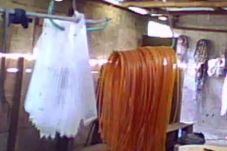
Blood bags and drain lines

Blood bags and drain lines

Pregnant mares secrete PMSG from their endometrial cups between 40 and 130 days into their gestation.

Once their blood is removed the plasma is extracted, deep frozen and developed in to PMSG drugs by European pharmaceutical firms.

This drug, often in the form of an injection, is then used alongside progestogen to induce ovulation in livestock.

As soon as the young livestock are separated from the mother after weaning she is injected to bring her back “on heat”.

Critics of this intensive factory farming practice argue it does not give mothers’ bodies time to recover naturally.

Pharmaceutical companies promote PMSG as a way to “synchronise oestrus” and reduce none productive days (NPDs).

It can also be used in fertility drugs for humans.

Legal grey area abandons animals without protection

Sabrina Gurtner, project manager at Animal Welfare Federation (AWF), was one of the investigation team who travelled to South America to first expose the practice of horse blood farms in 2015

As one of the team who travelled to South America to expose these horse blood farms in 2015, I can say categorically that an animal-friendly production of PMSG is not possible.

The production of PMSG has been moved to South America because that is the only way to keep it profitable for the companies involved.

Pasture is cheap while the horses are half-wild and not used to human handling.

Production in the EU in compliance with the animal welfare standards would be far more expensive. Only by force can they be moved into the extraction stalls, and only by force can the cannula be inserted into the jugular vein.

PMSG is produced in a legal grey area where no specific legislation for the protection of horse blood mares exists.

The mares stay in production for up to 11 weeks. During this time, blood is drawn from the pregnant mares once or twice a week, at a rate of around 10 litres in 10 minutes. Far too much for the mares to stay healthy.

EU regulations for the maximum blood extraction per mare and per month do not exist.

How you can help

Source: Equine Vampire Farms Exposed! | Straight from the Horse’s Heart
start your engines


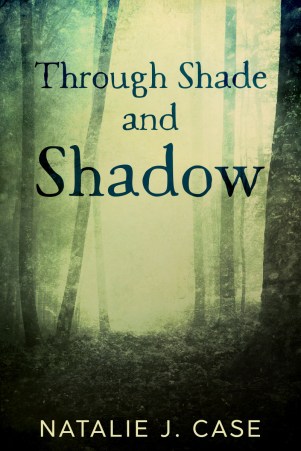
A new book from my longtime online acquaintance, Natalie J. Case. I’ll be ordering my copy soon, but just want to let everyone know this is a great story … There might have been a sneak peek a while back …

We’re getting closer to the release date of February 1st, and you can pre-order your Kindle version of Through Shade and Shadow right now.  You can also get a paperback from Amazon right now. If you have Amazon Prime, you could be reading it this weekend!

I find it a little amusing that I don’t even have my first copy of it (I should have it soon) and there are people who have purchased it and are reading it.

I wanted to do a local book launch party in February, but haven’t been able to secure a location yet.  I will, however, have a table at the Bay Area Book Fair in June in Berkeley.  For my Pagan fans, I will be at Pantheacon in San Jose February 17-20 and I’ll likely have copies on me, so if you see me and want one, please ask.

If you want a signed copy and aren’t local, I am working on getting a system set up to order directly from this site.  I hope to have it up and functional by the time I get my box of books.

I also have a giveaway set up on Goodreads.  It will open on the first of February.

And if you want to chat, come by my facebook page or hit up my Goodreads inbox.

.…

Source: start your engines

Scotts-Monsanto GM Grass Threatens National Forests, Rivers, Ranchers, and Farmers

by ANH-USA

Now biotech companies want local residents to pay the costs of clean-up! Action Alert!

Over a decade ago, Scotts partnered with Monsanto to market a GM bentgrass resistant to glyphosate (Roundup). It was planted next to the Malheur National Forest in test plots ostensibly controlled by Oregon State University. Unbeknownst to most people, it was also planted all over the US—in California, Iowa, Maryland, Pennsylvania, and seventeen other states.

It was supposed to be confined and controlled, but it very quickly escaped and spread out of the test plots in Oregon into Idaho, and crossbred with natural grasses to create new breeds that were also resistant to glyphosate. It clogged up irrigation ditches, threatening food crops and contaminating pasture-raised cattle with GMOs. In addition to the immediate threats to farmers and ranchers, grass seed—which is among Oregon’s top five commodities—is now under threat.

Initially, Scotts-Monsanto tried to stop the spread and clean up the contamination. But it was unable to do so because the original bentgrass (and now the other grasses it cross-pollinated with) are glyphosate-resistant. More toxic herbicides have been brought in to try to keep irrigation ditches clear, and to stop the grasses from clogging and eventually killing waterways important to wildlife and humans.

Now, according to The Oregonian, Scotts-Monsanto is walking away from the monster it created, leaving farmers, ranchers, wildlife, and eventually the fishing industry (if it spreads to the Columbia River) to deal with it. The current conundrum is that herbicides necessary to kill the invasive GM grasses are toxic to aquatic life, including fish. Soon the grasses will become resistant to even the most toxic chemicals, and nothing will eradicate the invasive grasses but heavy equipment.

Worst of all, the effects of GM products replacing natural grasses and plants on wildlife were completely predictable.

Scotts-Monsanto was fined $500,000, the maximum penalty under the Plant Protection Act, and agreed never to sell GM bentgrass. In addition, the companies were ordered to eradicate the GM nuisance in irrigation districts so farmers could continue farming.

But the federal government is apparently stepping in to help Scotts-Monsanto avoid liability. The US Department of Agriculture (USDA) recently deregulated the GM grass, a move that shifts the burden of controlling GM bentgrass from Scotts-Monsanto to local landowners and American taxpayers.

The law is clear: if a plant poses a risk, the USDA is not to deregulate it. Scotts-Monsanto has already signed an agreement not to sell the product. So why is the USDA violating the law and deregulating GM bentgrass? Why would Scotts-Monsanto ask that it be deregulated when it has agreed not to sell it? It may be because GM bentgrass has been planted all over the United States, and when it’s discovered that the Oregon scenario is happening in every state, Scotts-Monsanto can pin it on the government and the taxpayers avoiding responsibility for costly clean-ups.

There are precedents for farmers and consumers holding biotech companies legally accountable in these scenarios. Midwestern corn growers filed a class-action lawsuit against Syngenta last year, claiming the company’s GM corn contaminated their crops and cost them billions in international sales. In 2011, Bayer paid $750 million to Southern rice growers in a similar scenario.

We hope justice is done in Oregon, and the parties responsible for this mess are forced to clean it up.

Action Alert! Tell the USDA to stop offering legal liability protection to biotech companies. Please send your message immediately.

Source: Scotts-Monsanto GM Grass Threatens National Forests, Rivers, Ranchers, and Farmers