
Are Oaks in Trouble?

Before I share a brand-new video with you, I’d like to remind you that enrollment for Exploring Wild Ecosystems closes on Monday, June 3.

This online course improves your knowledge of ecology by introducing you to fascinating terrestrial and wetland ecosystems.

If you want to develop ecological literacy and be able to read landscapes more effectively, consider enrolling in Exploring Wild Ecosystems today.

Speaking of reading landscapes more effectively, we can predict future ecosystems based on current observations.

Consider a mature oak forest, for example.

Looking at an oak forest today, we might hope that conditions will remain stable for many years.  Any native plant enthusiast will tell you that oak forests are repositories of biodiversity.  Without oaks, other organisms that depend on oaks suffer.

But a quick glance at mature oak forests today tells us that significant changes are occurring.  These changes, it turns out, aren’t particularly favorable to oaks.

Ecologists are worried about something that’s occurring underneath the towering oaks.  This phenomenon has been happening to oak forests for the past 100 years.  According to ecologists, it will persist without active management.

In a brand-new video, I address this important ecological issue.
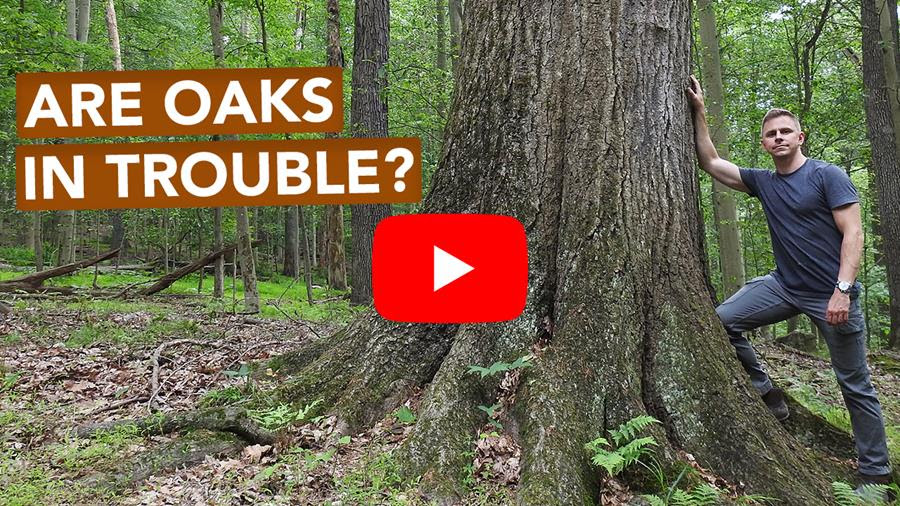
You can watch the video here.

Thanks for reading and watching, and thanks for your continued support!

— Adam Haritan

I never met the man who wrote these words

“Each place is itself only, and nowhere repeated.” —Barry Lopez

I never met the man who wrote these words, but I imagine his definition of place wasn’t limited to cities, towns, and suburbs. 

As a writer of various nature-themed topics, Barry Lopez undoubtedly included tundras, rivers, canyons, forests, meadows, and deserts in his definition of place.  No two of them are alike, he wrote.  Each place has a story we can learn.

When we visit a bog and decipher its origins; when we visit a savanna and study the role of fire; when we visit a swamp and see how different it is from a marsh, we learn how remarkable each place is.

For the past 18 months, I’ve been working on a new online course designed to highlight these fascinating ecosystems.  I’m excited to announce that Exploring Wild Ecosystems will be open for registration on Monday, May 20. 

If you want to strengthen your ecological skills and improve your understanding of nature, consider enrolling in this brand-new online course.

Please note:  Exploring Wild Ecosystems will be open for a limited time.  Upon registration, you can immediately access all course content and view the lessons at your own pace.  To register, mark your calendar for Monday, May 20, and visit this link.  All additional details will be posted on Monday.

I hope to see you in there!
—Adam Haritan

P.S.  If you haven’t read any books by Barry Lopez, I encourage you to do so!

Herb of the Month: Love of Lavender